Tucson Safe City Initiative turns 1 as traffic deaths drop
Tucson’s Safe City Initiative marked its first year with 22 treatment deployments and fewer traffic deaths, even as drug arrests drew criticism.
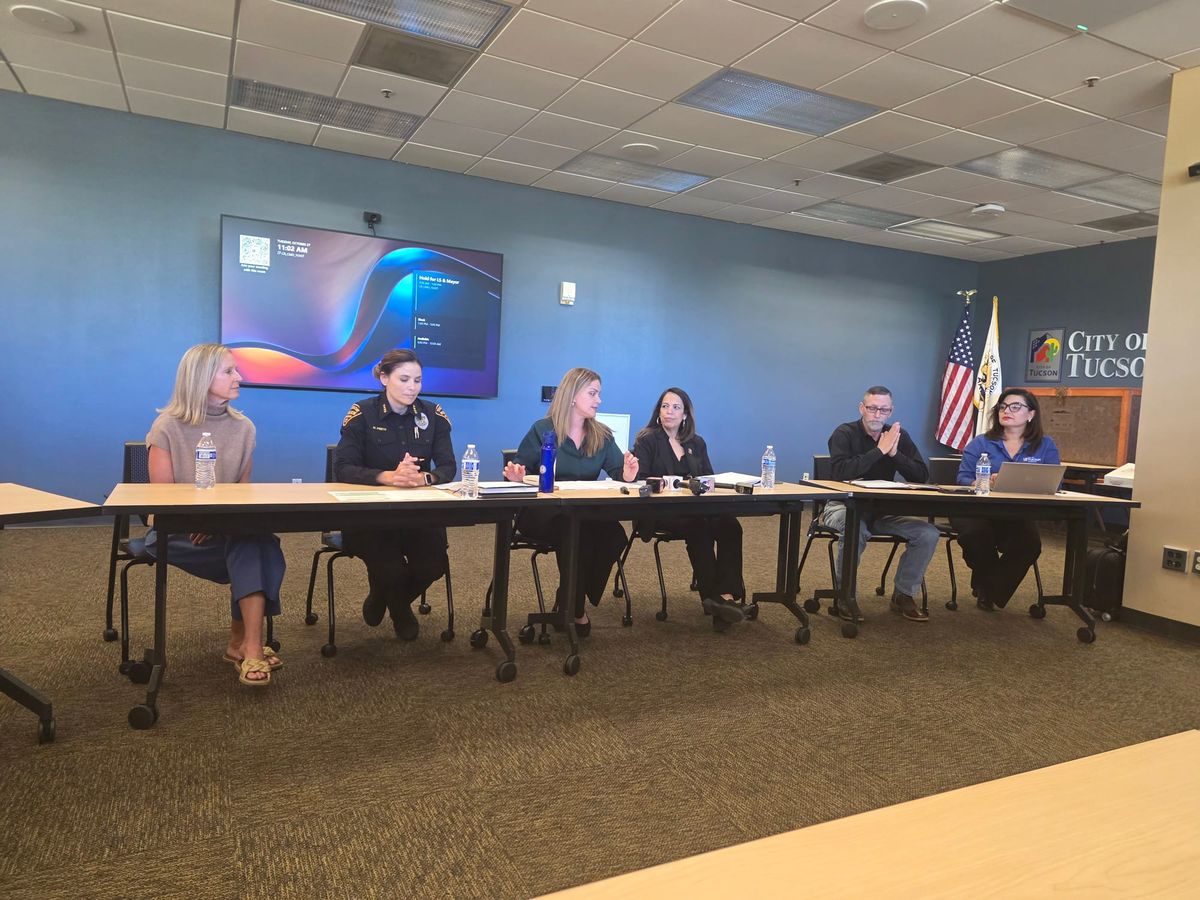
Tucson leaders marked the first year of the Safe City Initiative on Oct. 27 by pointing to treatment connections and fewer road fatalities, while defending a policing strategy that has drawn criticism for drug arrests.
Tucson Mayor Regina Romero said she launched the initiative after hearing concerns from businesses and residents and feeling “exasperation,” along with the rest of the council, over problems on city streets. She said the city was already doing a lot to address issues such as homelessness but wanted to respond directly to the concerns.
“As mayor, one of the most important things that I can provide with the help of our team is safety, security and a good quality of life for our residents,” Romero said.
The initiative is a collaboration among city partners, police and local nonprofits and has resulted in 22 deployments. The city has adjusted the deployments based on feedback. They aim to connect people to treatment, including the city’s sobering alternative for recovery program, which uses opioid settlement funds; the Pima County Jail transition center; and the Desert Cove Treatment Facility, which received $300,000 in settlement funds. The deployments also bring the partners together so they can combine their specialties.
Under the initiative’s video alternative to jail program, people arrested by police see a judge by video at the scene and are referred to community court and services. The initiative has focused on alternatives to incarceration, with Romero saying it has been “absolutely about connecting people to resources, not incarceration.”
The initiative has drawn public criticism over a sharp increase in drug-related arrests reported in the first quarter of 2026. Tucson Police Department Chief Monica Prieto said the department’s strategy has not changed in the months since. She said police have concentrated their efforts, which has increased possession arrests.
Prieto said the department is working with partners on new approaches to deterrence, including identifying people with multiple arrests so they can be offered services first. There would still be consequences for those who continue to offend, she said.
Your gift keeps local news free, bilingual and built for real life.
Assistant City Manager Liz Morales said the arrests are one side of a multifaceted approach to hold people accountable and discourage bad behavior, and are accompanied by a more compassionate side with diversion programs.
The initiative also includes a traffic safety component to address the city’s high fatality rate.
Prieto said this has involved a “culture change” in the department to get every officer accustomed to also being a traffic officer, doing proactive enforcement and education and making traffic stops. Police hope that education and warnings, along with citations, will change driving behavior in the city.
TPD also automatically dispatches officers to the areas where its data shows the most traffic collisions and fatalities for 20-minute deployments, during which they respond to no other calls for service and only make traffic stops. The city’s motor officers have done 14 deployments since March, 13 of them within city limits, which produced 4,000 stops.
TPD runs “zebra” deployments, in which officers working overtime saturate areas with traffic problems. The department is also working with the Department of Transportation and Mobility to redesign roadways to make them safer for drivers.
The city has reported 69 traffic fatalities so far in 2026, including 26 pedestrians, which marks a 48% reduction from the previous six-month period and a 17% decrease in collisions.
TPD has completed 3,300 traffic deployments since March, resulting in 2,300 warnings and citations, a 35% increase from the previous six-month period.
Ian Stash is University of Arizona alum and freelance journalist in Tucson. Contact him at ianjgs16@gmail.com.
Tucson Spotlight is a community-based newsroom that provides paid opportunities for students and rising journalists in Southern Arizona. Please consider supporting our work with a tax-deductible donation.