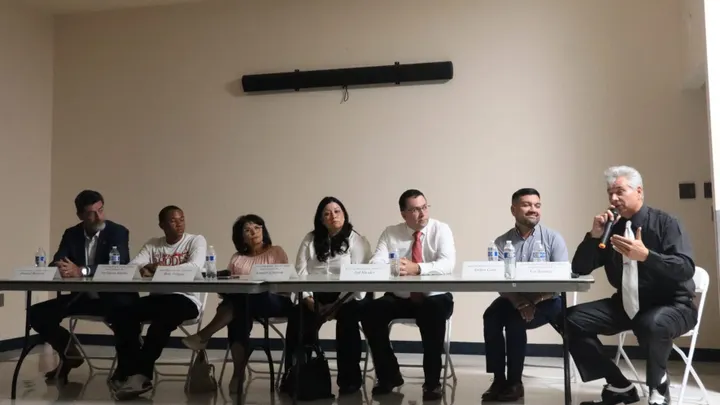
Southern AZ incumbents lead in tight primary night
Southern Arizona incumbents fend off primary challengers as Biggs wins the GOP governor nod; LD20, LD21, Marana, Oro Valley and South Tucson results, still unofficial.
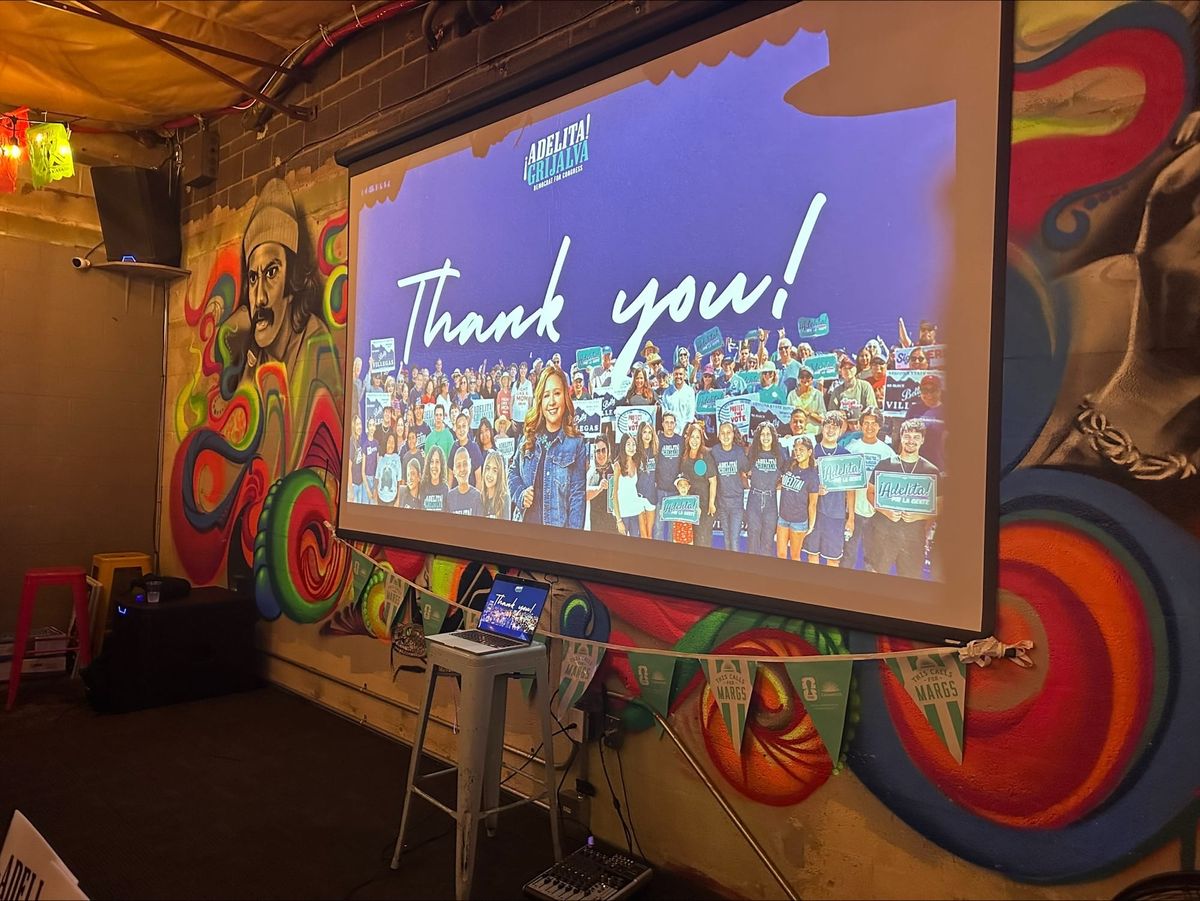
Southern Arizona's incumbents largely turned back primary challengers Tuesday, with state Rep. Alma Hernandez and Rep. Betty Villegas both leading in Legislative District 20 and Marana Mayor Jon Post leading challenger Greg Johnsen.
Statewide, U.S. Rep. Andy Biggs won the Republican nomination for governor and will face Democratic Gov. Katie Hobbs, who ran unopposed, in November.
The results, still unofficial as Pima County continues counting mail and drop-off ballots, cap a primary season that turned unusually contentious in Southern Arizona: a Marana council fight over a data center and a contracted ICE detention facility, a Legislative District 20 Senate race that split the local Democratic Party, and an open LD17 Senate seat both parties see as pivotal to control of the Legislature.
Arizona moved its primary from August to July this year, meaning final, canvassed results likely won't be certified for several days.
Legislative District 17
Republican Christopher King led Anthony Dunham, 63.5% to 36.5%, for the chance to face Democrat Edgar Soto in November for the open Senate seat being vacated by Sen. Vince Leach.
The race had split Republicans between Dunham, who ran with Turning Point Action's endorsement and leaned into border security and school choice, and King, who positioned himself as the more establishment pick.
Both parties' House primaries were uncontested. Democratic Rep. Kevin Volk and fellow Democrat Holly Lyon advance for the Democrats, while Republican Reps. Rachel Keshel and John Winchester advance for the GOP. All four will compete in November for the district's two House seats.
Legislative District 20
With no Republican having qualified for the ballot, the Democratic primary will decide the LD20 Senate seat outright. Alma Hernandez led challenger Rocque Perez, 53.5% to 46.3%, with all Pima County precincts reporting.
The race turned bitter this spring after the LD20 Democratic Committee issued a formal statement of concern over more than 150 votes Hernandez cast alongside Republicans, and after Perez sued unsuccessfully to remove her from the ballot over unpaid campaign-finance fines. Alma Hernandez has called those efforts a coordinated attempt to damage her campaign.
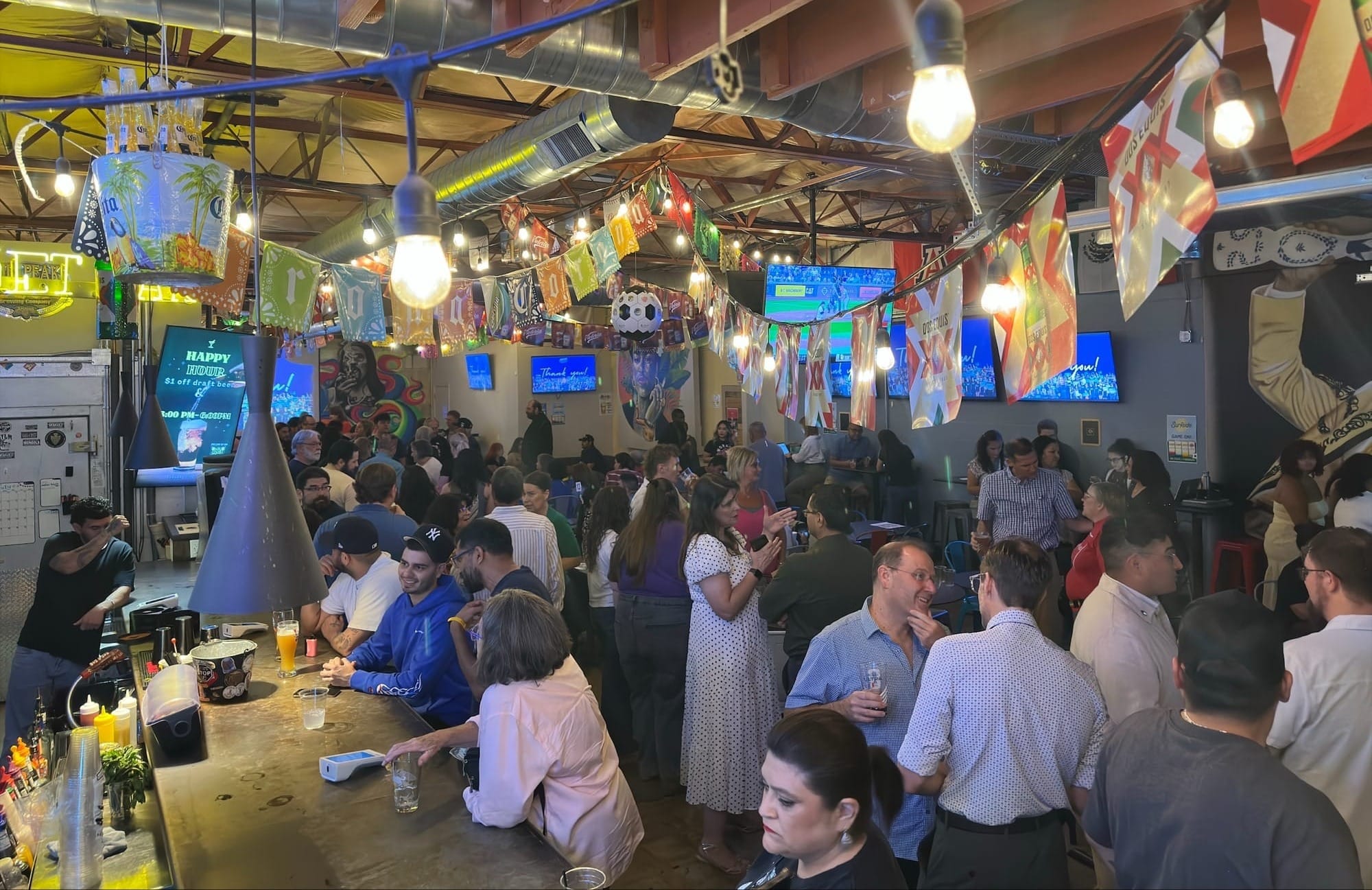
"Legislative district 20 … encompasses what I call the heart of Tucson and within that heart, we have our largest public school district, we have a monumental amount of land that we treasure and a… number of water resources, desert land," Perez told attendees of a party at American Eat Co. "I think in a district where ... we have a predominantly-low income and Hispanic community, that representation ought to be someone who will advocate for the interests of our Hispanic community, that will advocate in the interests of our public education, and that will put our interests first."
Tucson Spotlight trains the next generation of Southern Arizona journalists and publishes their work free for everyone. No paywalls, no corporate backing — just readers who believe this community deserves better local news.
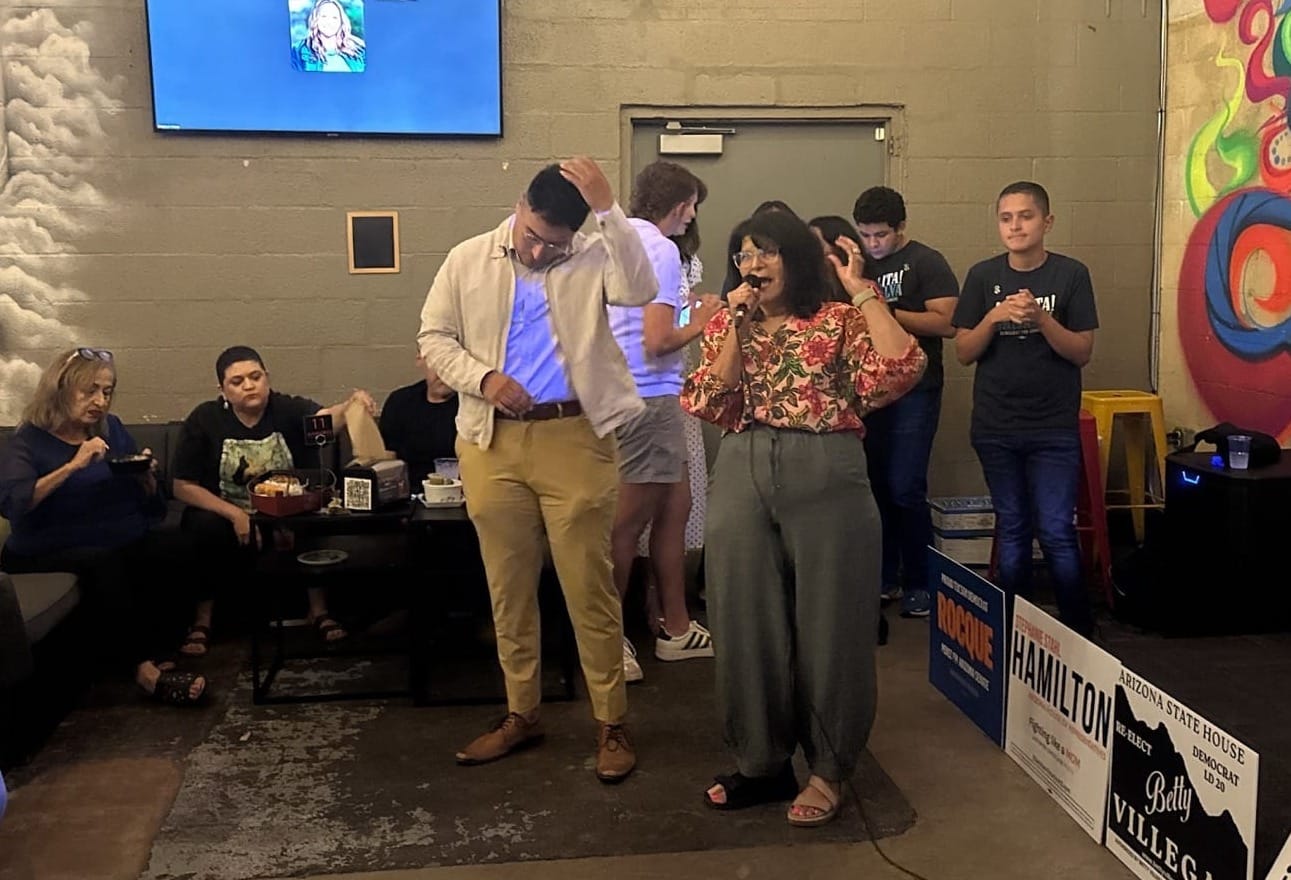
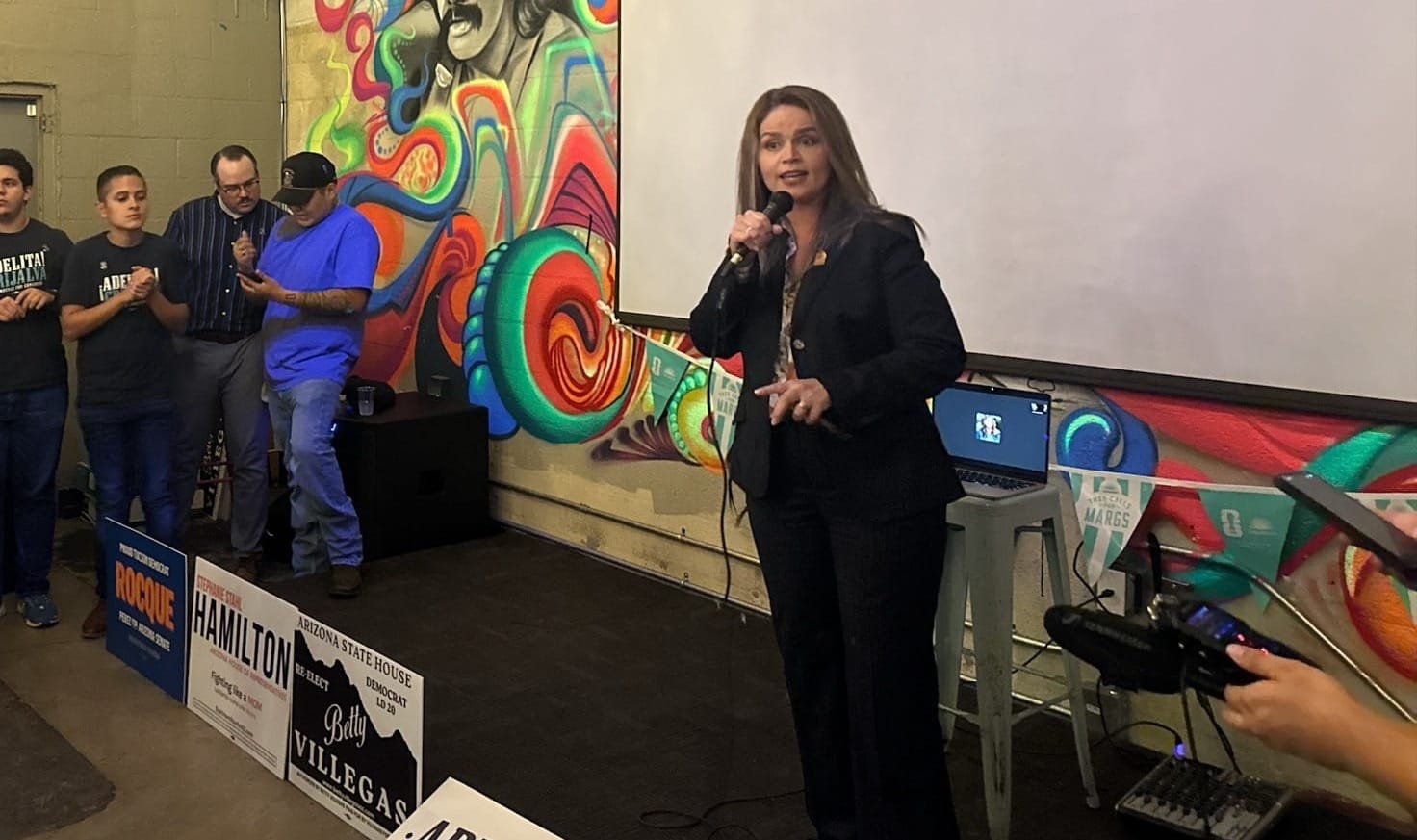
U.S. Rep. Adelita Grijalva cohosted the party along with LD21 Rep. Stephanie Stahl Hamilton, who said her district shares similar issues with LD20.
"My husband's a public school teacher, my children came up through the public school system, never had the benefit of a fully funded education. So I'll never stop beating that drum," she said. "I have also worked hard and focused in on water and I have always said that if we do not get our environmental decisions, clean air to breathe and ample water, we do not get those policies right, none of the other policies we make will matter."
With no Republican having qualified for the ballot, the Democratic primary will decide LD21's two House seats. Incumbent Rep. Consuelo Hernandez led the four-way field with 31% of the vote, followed by a tie between fellow incumbent Stahl Hamilton and challenger Miranda Lopez at 25% each, with challenger Maritza Higuera trailing at 20%.
If the final gap between Stahl Hamilton and Lopez stays under half a percentage point, it would trigger an automatic recount.
Retired immigration attorney Isabel Garcia attended the event to support Grijalva, who faces a General Election challenge for her seat in Congressional District 7 by Daniel Butierez, saying she's focused on immigration this election cycle.
"Now there's a private army, ICE, that is thousands by the thousands… That have killed US citizens. They've been killing us here at the border for a long time," Garcia said. "It's time that we … understand that migrants have been and are vital to our economy and our society. Unfortunately we don't teach that in our history books, but it's a very necessary chapter. Without migrants we'd be at the bottom."
In the House race, incumbent Villegas and Sen. Sally Ann Gonzales, who is moving to the House after terming out of the Senate, led the district's four-way Democratic field, with all Pima County precincts reporting: Gonzales at 33.4%, Villegas at 31.8%, ahead of Genoveva Diaz (19.3%) and Ben Koehler (15.4%).
Republican write-in candidate Katherine Weasel advances to November regardless of the primary outcome and will face whichever two Democrats emerge from this primary.
Local Races
In Marana, Post led challenger Johnsen, 54.0% to 45.7%, with 15 of the town's 16 precincts reporting. In the four-seat council race, incumbents Herb Kai (15.9%), Teri Murphy (15.5%) and John Officer (15.4%) were all leading, along with challenger Jackie McGuire (15.3%).
McGuire was the only one of the three "Marana for the People" candidates running competitively for a seat, on a platform opposing further data-center development and the town's contracted ICE detention facility. McGuire's two slate-mates, Sue Ritz (14.3%) and Julie Prince (14.2%), trailed behind the top four, with write-in votes taking the remaining 9.4%.
In Oro Valley, council member Melanie Barrett led former Pima County Sheriff Mark Napier, 57.4% to 42.5%, for the open mayor's seat being vacated by Mayor Joe Winfield, who chose not to seek a third term. In the three-seat council race, Rosa Dailey (23.0%), Rhonda Pina (21.0%) and Matt Wood (19.8%) led Chris Desimone (18.2%) and Jacob Herrington (17.8%).
In South Tucson, all three incumbents — Mayor Roxanna Valenzuela (19.3%), Cesar Aguirre (15.7%) and Brian Flagg (15.2%) — were leading in the eight-candidate field for three council seats, with all precincts reporting.
Valenzuela, Aguirre and Flagg campaigned together on their "Defend Nuestro Barrio" platform, touting their efforts to bolster police and fire presence, eliminate the city's grocery tax and file a lawsuit against the owner of the former Spanish Trail Motel.
Election monitors from the Department of Justice were on hand at South Tucson's polling place to observe, document and report on federal voting law compliance.
Acting Mayor Pablo Robles said the DOJ officials present in South Tucson asked polling officials questions about wheelchair access and materials in Braille, but said he found some questions to be odd.
"We heard some reports that some questions asked ... (were) 'How long have you been been doing this, how long you've been working here, what other languages you speak do you speak which' to me definitely struck a chord," Robles said. "It was just things that I'm in agreement did seem to go a little bit beyond just accessibility."
The announcement that DOJ officials would be present in Arizona came before President Donald Trump's prime-time address last week, where he questioned the country's election legitimacy and his 2020 election loss. There is no substantial evidence supporting these claims.
"Ultimately … we're just happy that folks are coming out and voting." Robles said.
Statewide Races
The Associated Press called the Republican gubernatorial primary for Biggs, who defeated David Schweikert, Ken Miceli and Scott Neely. Biggs will face Hobbs, who ran unopposed in the Democratic primary, in what's expected to be one of the country's most closely watched governor's races.
Republican Alexander Kolodin won the secretary of state nomination over Gina Swoboda and will face incumbent Democrat Adrian Fontes, who ran unopposed, in November.
In the attorney general's race, Republican Warren Petersen led Rodney Glassman in early results; the winner will face incumbent Democrat Kris Mayes, who ran unopposed.
Republican Elijah Norton led Katherine Haley, 55% to 45%, in the treasurer's race. The winner will face Democrat Nick Mansour, who ran unopposed, in November.
The superintendent of public instruction race produced one of the night's bigger surprises: State Treasurer Kimberly Yee led four-term incumbent Tom Horne, roughly 55% to 45% statewide, in early returns within their own party.
Locally, the race was closer. In Pima County, Horne narrowly edged Yee, 49.9% to 49.5%. On the Democratic side, the AP called the race for Teresa Leyba Ruiz over Brett Newby. Whoever wins the Yee-Horne contest will face Leyba Ruiz in November, in a race that's expected to center on Horne's recent crackdown on Empowerment Scholarship Account (ESA) voucher expansion.
What's Next
Pima County will continue counting mail and drop-off ballots in the coming days before results are canvassed and made official.
The outcomes above set up a November 3 general election with a marquee governor's race, several competitive legislative contests and local runoffs still to be decided in places where no candidate cleared 50% outright.
Full, continuously updated results are available at results.arizona.vote. Tucson Spotlight will update this story as more ballots are counted.
Nya Belcastro is a University of Arizona student and Tucson Spotlight intern. Contact her at nya2005@arizona.edu.
Topacio “Topaz” Servellon is a reporter with Tucson Spotlight. Contact them at topacioserve@gmail.com.
Tucson Spotlight is a community-based newsroom that provides paid opportunities for students and rising journalists in Southern Arizona. Please consider supporting our work with a tax-deductible donation.