Republican Anthony Dunham runs for open LD17 Senate seat
Republican Anthony Dunham is running for Legislative District 17's open Arizona Senate seat, facing Christopher King in the primary, with a platform on taxes, border security and school choice.
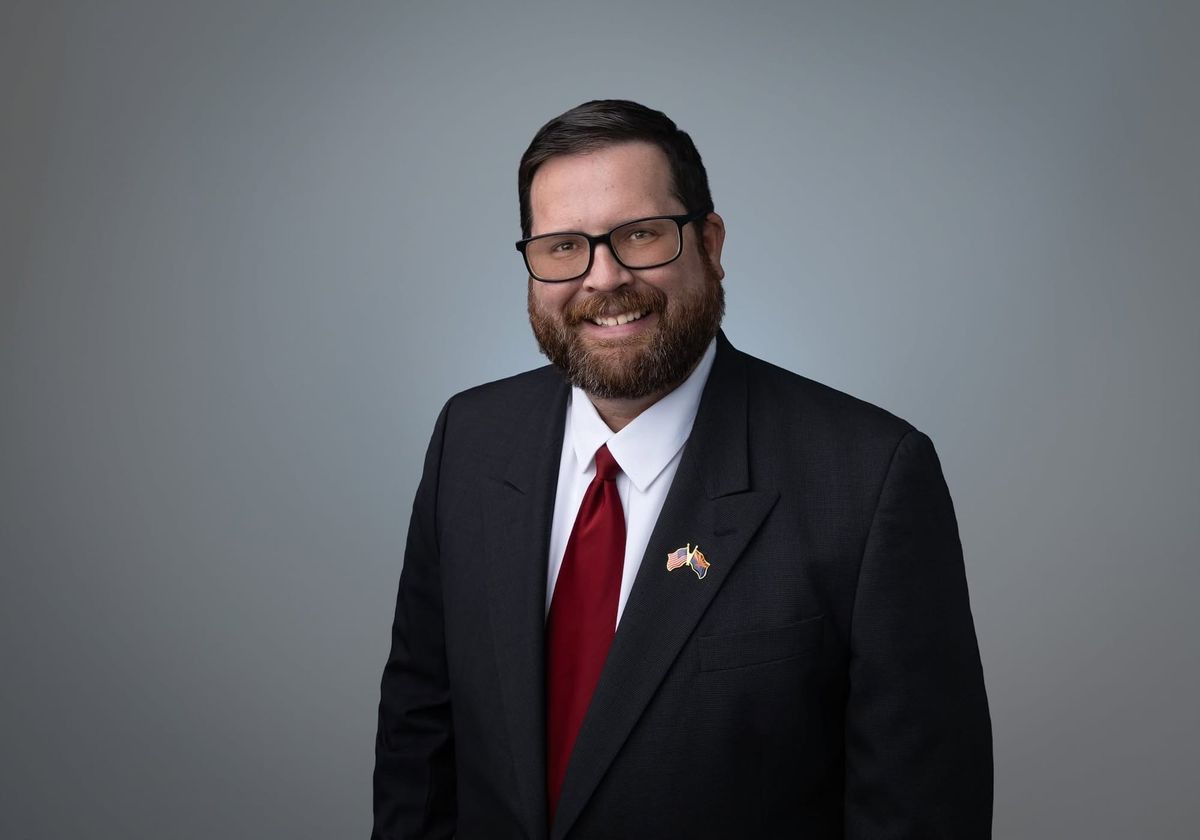
Anthony Dunham, an Iraq War veteran and retired law enforcement officer, is running as a Republican for Legislative District 17's open Arizona Senate seat, facing Republican Christopher King in the July 21 primary.
The winner will face Democrat Edgar Soto in the Nov. 3 general election.
The seat is currently held by Republican Vince Leach, whose two-year term ends Jan. 11. Leach is not seeking reelection.
Legislative District 17 covers large portions of Tucson and surrounding areas, including parts of Oro Valley, Catalina Foothills, Catalina and the Rincon Valley.
Dunham's campaign website describes him as a Christian conservative, father of three and lifelong volunteer in his church and for fellow veterans, with a platform focused on border security, the economy, crime and protecting children.
His campaign platform centers on lowering taxes, cutting government regulation, opposing illegal immigration and border security, supporting law enforcement, and expanding school choice for parents.
The Arizona Republic reported that Dunham temporarily lost his parental rights earlier this year after a family court found he allowed his then-wife to force his daughter to drink vinegar until she vomited. Dunham told the newspaper he filed for divorce shortly afterward and has not spoken with his ex-wife since.
Tucson Spotlight asked all LD17 candidates their positions on groundwater regulation, affordable housing and public school funding.
Your membership pays emerging journalists to cover Southern Arizona the way it deserves.

Though Arizona is experiencing prolonged periods of heat and drought and an influx of water-intensive businesses, groundwater regulations outside Active Management Areas remain limited.
AMAs are regions where groundwater is most heavily overdrawn and therefore most tightly regulated, with mandatory conservation programs, annual water use reporting and a requirement that new developments prove a 100-year water supply. Tucson sits within one of the state's eight AMAs, but outside those boundaries, groundwater pumping faces far fewer restrictions.
"We need to be sure that businesses that use large amounts of water, such as data centers, have a plan to produce and use their own water (and) ensure they don't affect the water usage of the local community in a negative way," Dunham said.
Rising rents in Tucson and its surrounding areas have limited the supply of affordable housing.
Dunham's approach targets Arizona's property tax. He said he believes the state should put the tax on a decreasing scale or eliminate it altogether, that large corporations need to stop purchasing houses and communities, and that government-subsidized housing should be very limited.
Education is another issue facing Arizona voters this cycle.
Arizona ranks 49th in the nation in per-student spending at $11,987 per student, down from 48th last year. The national average is $17,250, a difference of more than $5,200.
Dunham disputes the idea that Arizona underfunds education.
"(Arizona) spends nearly 55% of the state's total budget on education, that is more than any one singular department in the rest of the state," Dunham said. "There needs to be a serious audit and accountability done on education spending."
Arizona's 2026 budget includes $17.57 billion in total General Fund spending, according to the Arizona Joint Legislative Budget Committee. Of that, $8.29 billion went to K-12 education, $974.6 million to universities, $103.9 million to community colleges and $353 million to the School Facilities Division, meaning education accounts for 55.3% of General Fund spending.
Dunham's figure refers to General Fund spending, not Arizona's total budget, which reaches about $71.26 billion when federal and non-appropriated funds are included. Education's share of that broader total is far smaller.
Dunham also weighed in on the state's school voucher program, the Empowerment Scholarship Account program, which allows qualifying families to redirect state per-pupil funding that would otherwise go to their local public school and use it for private school tuition, homeschooling costs or other approved education expenses.
"We have failing districts whose superintendent is making $300,000 annually," Dunham said. "ESAs need to be funded at a 1-to-1 ratio, empowering parents to choose where and how their child(ren) are educated."
Nya Belcastro is a University of Arizona student and Tucson Spotlight intern. Contact her at nya2005@arizona.edu.
Tucson Spotlight is a community-based newsroom that provides paid opportunities for students and rising journalists in Southern Arizona. Please consider supporting our work with a tax-deductible donation.