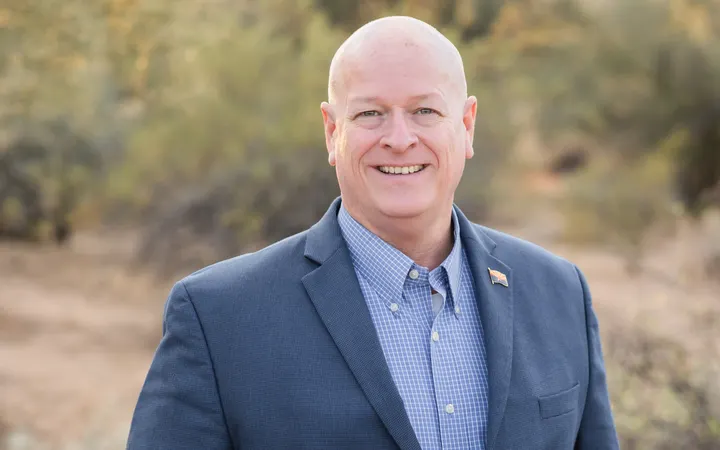
Perez on schools, water and housing in LD20
Former Tucson City Council member Rocque Perez is facing off against state Rep. Alma Hernandez for the open LD20 Senate seat, arguing that Southern Arizona needs leaders willing to say no to corporate interests and yes to public education.
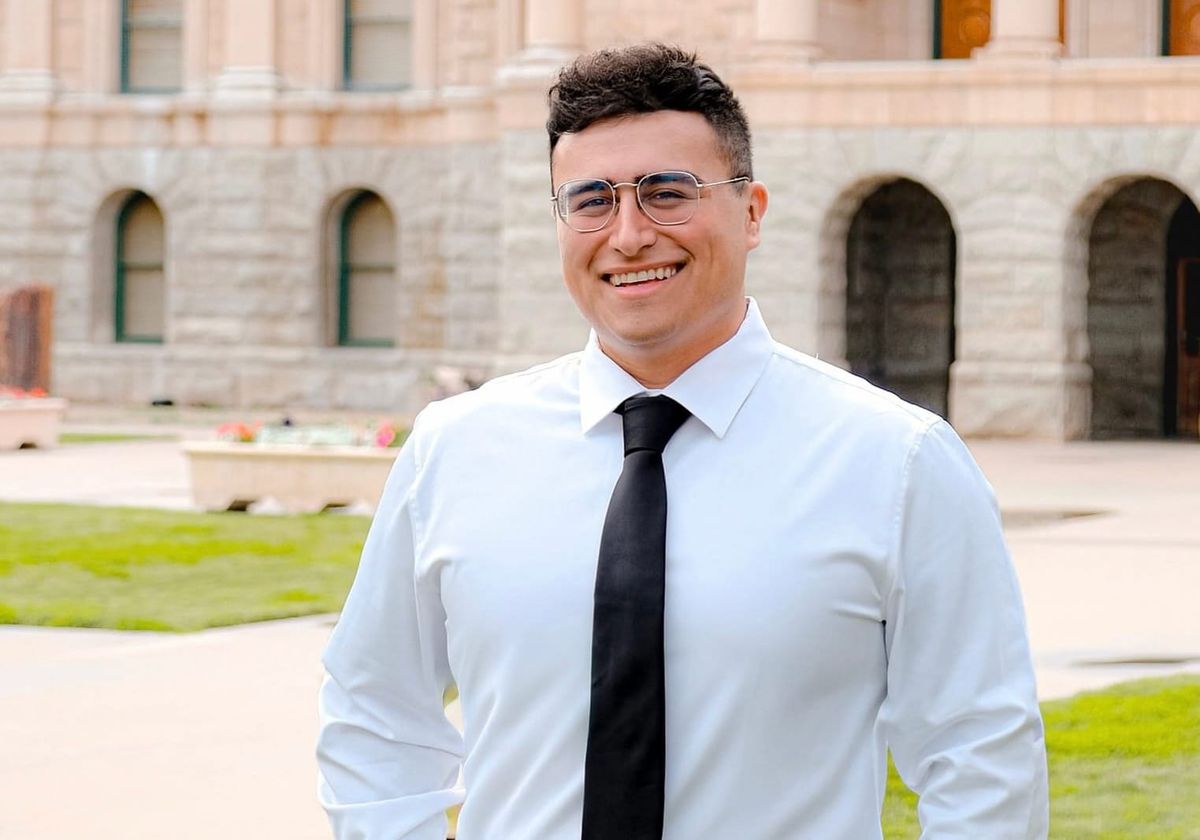
Rocque Perez is facing off against state Rep. Alma Hernandez for the open Arizona Senate seat in Legislative District 20, running on a platform of transparency, public education and community control over natural resources.
With no Republican in the contest, the July 21 primary will decide the seat.
Legislative District 20 covers parts of Tucson's south and west sides and is a majority Latino district, with 53% of residents identifying as Hispanic or Latino.
A fourth-generation Tucsonan and product of the city's public schools, Perez, 27, served as CEO of the Southern Arizona Education Council before being appointed to the Tucson City Council in 2025 to fill a vacancy, becoming the youngest municipal official in Arizona at the time.
Perez challenged Hernandez's candidacy in April, filing a lawsuit alleging she owed more than $20,000 in unpaid fines by filing several campaign finance reports hundreds of days late between 2018 and 2023. Perez said in a press release that he was attempting to set a standard for transparency of campaign finances.
Tucson Spotlight spoke with both candidates about water policy, ESA vouchers and affordable housing. On all three issues, Perez's answers centered on the same theme.
Perez said voters in Southern Arizona want transparency and accountability, whether on water use or how public school dollars are spent.
The controversial Project Blue data center project has drawn attention to resource demands by large companies. Despite community pushback, the project's developers have made deals with local leaders and infrastructure providers to secure the energy, land and water the project requires, leaving many LD20 residents feeling that decisions about their natural resources are being made without them.
"I've seen firsthand how outside corporate interests try to shape local decision-making around large-scale development," Perez said. "Especially when it comes to water and energy-intensive projects."

Perez said he faced pressure campaigns and lobbying from supporters of the data center project, and that the experience made clear to him that Arizonans are often asked to bear the burden of large corporate projects without sharing in the economic gains.
"Water has to be protected through stronger guardrails, more transparency, and leaders who are willing to say no when a deal is not in the public's interest," Perez said. "Growth cannot come at the expense of the people who already live here."
Perez said he will not support corporate projects driven by speculative gain without assurance of long-term benefit to the community.
Voters in LD20 are also concerned about the Empowerment Scholarship Account program, which allows parents to redirect taxpayer dollars that would otherwise go to public schools toward private or alternative education. Opponents of the program argue it is a pipeline to defunding public education.
"Arizona's voucher system has gone far beyond what many people were originally told it would be," Perez said. "It is draining money from public schools while creating a much less accountable pipeline of public dollars into private education."
Perez said he is not only a product of the public school system, but that as current leader of the Southern Arizona Education Council, he knows too well the financial strain public school systems are under.
Perez said the solution is to stop ESA expansion, impose real transparency and accountability on the program and reinvest in public education.
"That means funding teachers, counselors, school infrastructure, early learning, and affordable pathways to college," Perez said. "Voters have repeatedly stepped up through bonds and overrides because they believe in public education. I was an active participant in those campaigns. Alma was not."
Both candidates agree that there need to be additional solutions to affordable housing. With the country still mired in a housing crisis, record-breaking temperatures are already threatening the lives of Tucson's unhoused population before summer has even begun.
"I believe the state has to treat housing as essential infrastructure," Perez said. "We need to expand affordable and workforce housing, support shelter and supportive housing, strengthen tenant protections, and stop undercutting local governments when cities try to respond to the crisis in real time."
Perez said local governments like Tucson have expanded zoning to allow more housing options, only to have the state legislature override those changes.
"During my time on the Tucson City Council, I supported low-barrier and affordable housing because I believe people need stability, not punishment," Perez said. "At the Legislature, I would bring that same approach: more urgency, more investment, and more respect for the fact that people cannot survive Arizona's heat without safe and stable housing."
Perez and other candidates in Legislative Districts 17 and 20 will be available for public questions at a free, nonpartisan meet-and-greet hosted by Tucson Spotlight and the Arizona Luminaria on June 10 at the Community Foundation for Southern Arizona. The event is supported by Press Forward Southern Arizona, an initiative of the Community Foundation for Southern Arizona.
RSVP required. See website for details and to RSVP.
Quentin Agnello is a University of Arizona alum and freelance journalist in Tucson. Contact him at qsagnello@gmail.com.
Tucson Spotlight is a community-based newsroom that provides paid opportunities for students and rising journalists in Southern Arizona. Please consider supporting our work with a tax-deductible donation.