
Westside Tucson voters hear candidates at El Rio forum
Seven candidates for Congress, the Legislature, county supervisor and the TUSD board took questions from Westside Tucson voters Oct. 15 at El Rio.
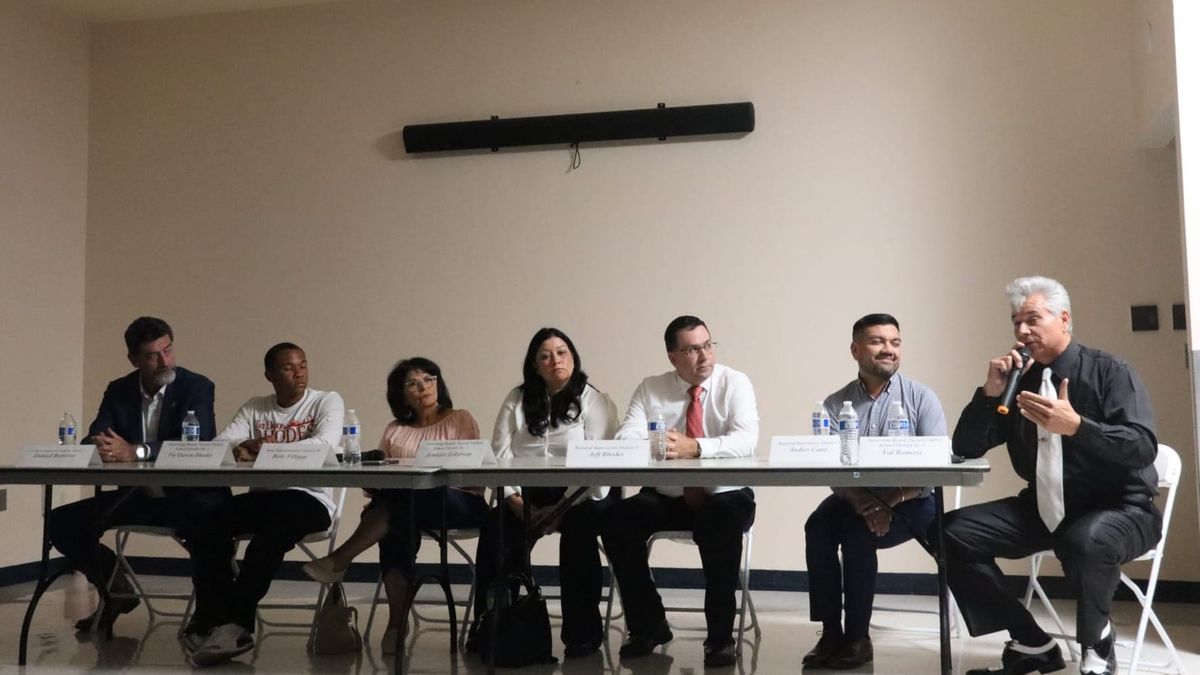
From gas prices to data centers to school safety, Westside voters heard from seven candidates for Congress, the Legislature, the Pima County Board of Supervisors and the Tucson Unified School District board at a forum Oct. 15.
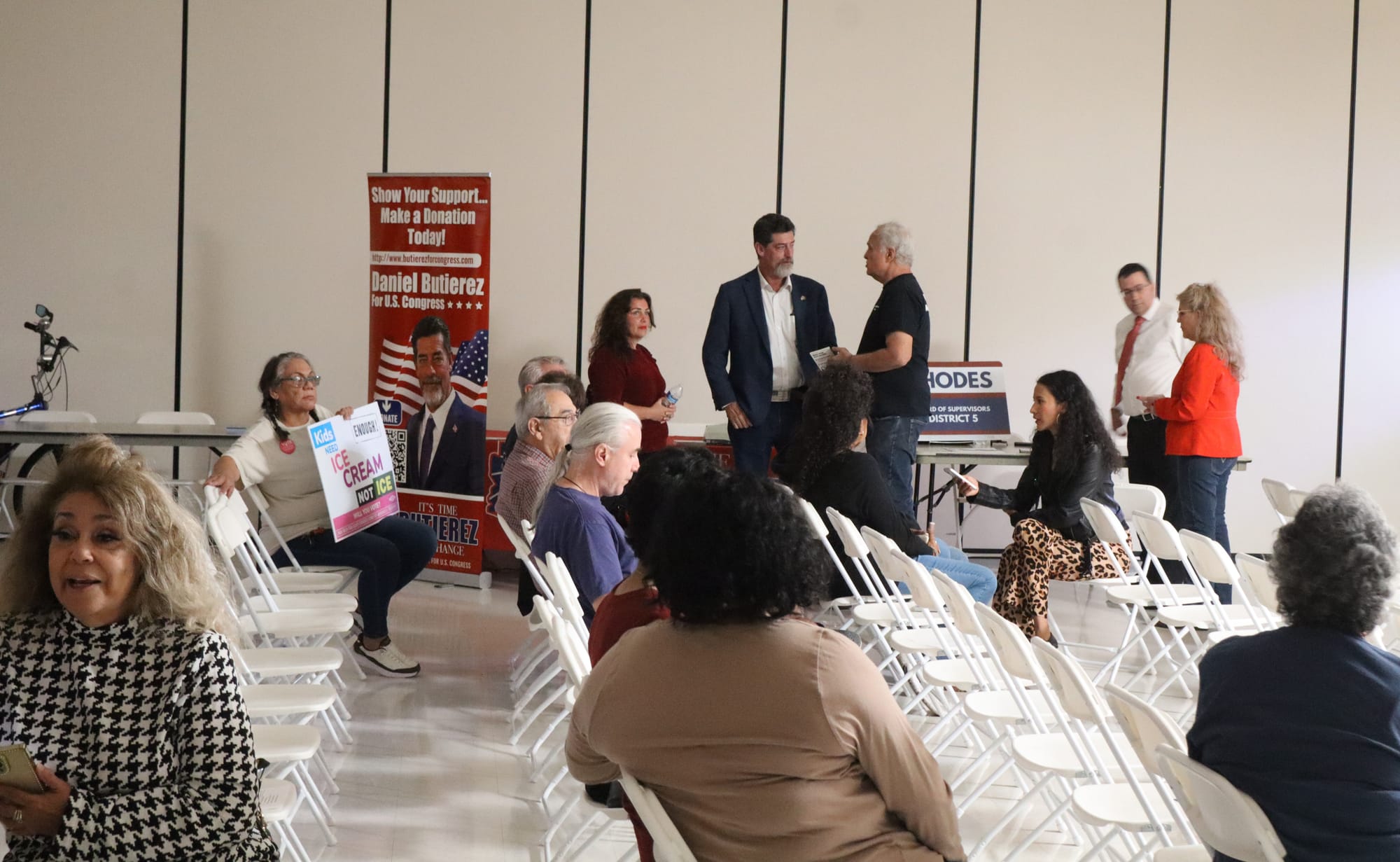
The event was hosted by America’s Future Project and the El Rio Neighborhood Association, which said they wanted to give residents a chance to meet candidates directly and ask about issues affecting working-class families. America’s Future Project moderated the forum portion of the evening.
Now in his third consecutive campaign for Congressional District 7, Republican Daniel Butierez said he decided to run because his family has a long history in the region and because he isn’t a politician.
Butierez spoke about high gas prices, saying he feels the strain as the owner of two paint businesses when he pays to refuel his fleet of vehicles. He said he hopes to support small businesses by bringing industry to the region, which would add new revenue. Government jobs, by comparison, do not, he said.
He believes that this approach will empower consumers to purchase goods and services from small businesses, in turn allowing small businesses to offer better benefits to their employees.
“It all starts with revenue coming in,” Butierez said. “Right now, our economy is getting worse and worse and communities are getting poorer and poorer. It’s because they just keep getting taxed more and more, and that tax money is going in to pay for these government NGOs and government employees, and we can’t sustain it.”
Butierez did not answer directly when asked if he supported cuts to SNAP funding, but said it was very important to go after fraud in the system. He said he had himself witnessed “hundreds” of local residents commit SNAP fraud after they were kicked out of their apartments during COVID-19 for not paying rent.
Butierez’s Democratic opponent, U.S. Rep. Adelita Grijalva, did not attend the event due to a prior commitment.
Tucson Spotlight is free for every reader because donors make it possible. Join them.
In Legislative District 20, State Rep. Betty Villegas, a Democrat seeking re-election to the state House with no opponent on the ballot, spoke about her experience helping South Tucson families with housing issues and how she hopes to apply it to the state’s housing problem.
Villegas criticized the argument by some legislators that deregulating the housing sector would spur private development, saying it leaves no assurances of accountability.
“If we’re giving incentives, if we’re giving tax breaks, if we’re giving waivers to the developers on the front end, we need accountability to make sure that whatever they’re saving is being passed onto the end user,” Villegas said.
In the race for Pima County Board of Supervisors District 5, Republican challenger Jeff Rhodes said he is running because he felt “discouraged” by the downturn of Tucson and Pima County due to rising taxes and what he felt was a lack of accountability, which he hopes to provide.
Jeff Rhodes has also promised to vote against any tax increases in Pima County if elected.
Data centers, one of the region’s most contested issues, were another topic.
Jeff Rhodes said he doesn’t support a moratorium on data centers and that cases should be judged individually for their economic benefits. But he favors strong regulations, including requiring them to generate at least 110% of the power they consume and send the excess into the system to help lower utility costs for the rest of the grid. He also favors requiring closed-circuit cooling systems to minimize water consumption, along with a water source of their own. Rhodes also said any data center in the county should be built only in industrial areas or outside the city.
Incumbent District 5 Supervisor Andrés Cano, who was appointed in April 2025 to finish the term of his predecessor, Grijalva, said his three most pressing issues are the economy, education and environmental protection.
Cano was one of two supervisors who voted against the controversial Project Blue data center in December 2025, when the board approved an agreement with developer Beale Infrastructure by a 3-2 vote. The planned data center near the Pima County Fairgrounds would cover 290 acres. Cano cited the immense uncertainty he heard about from constituents.
The agreement promised 180 permanent jobs and thousands of construction jobs. Cano said it would be better to keep investing in small businesses to attract jobs.
“Instead of going after these major San Francisco-based companies that are making billions off of us, why not invest in mom and pop stores in district 5? The restaurants, the storefronts that right now need our support,” Cano said. “I think there’s always a way for us to have really strong, healthy economic development in our region and not have to sacrifice our Sonoran deserts as a result of it.”
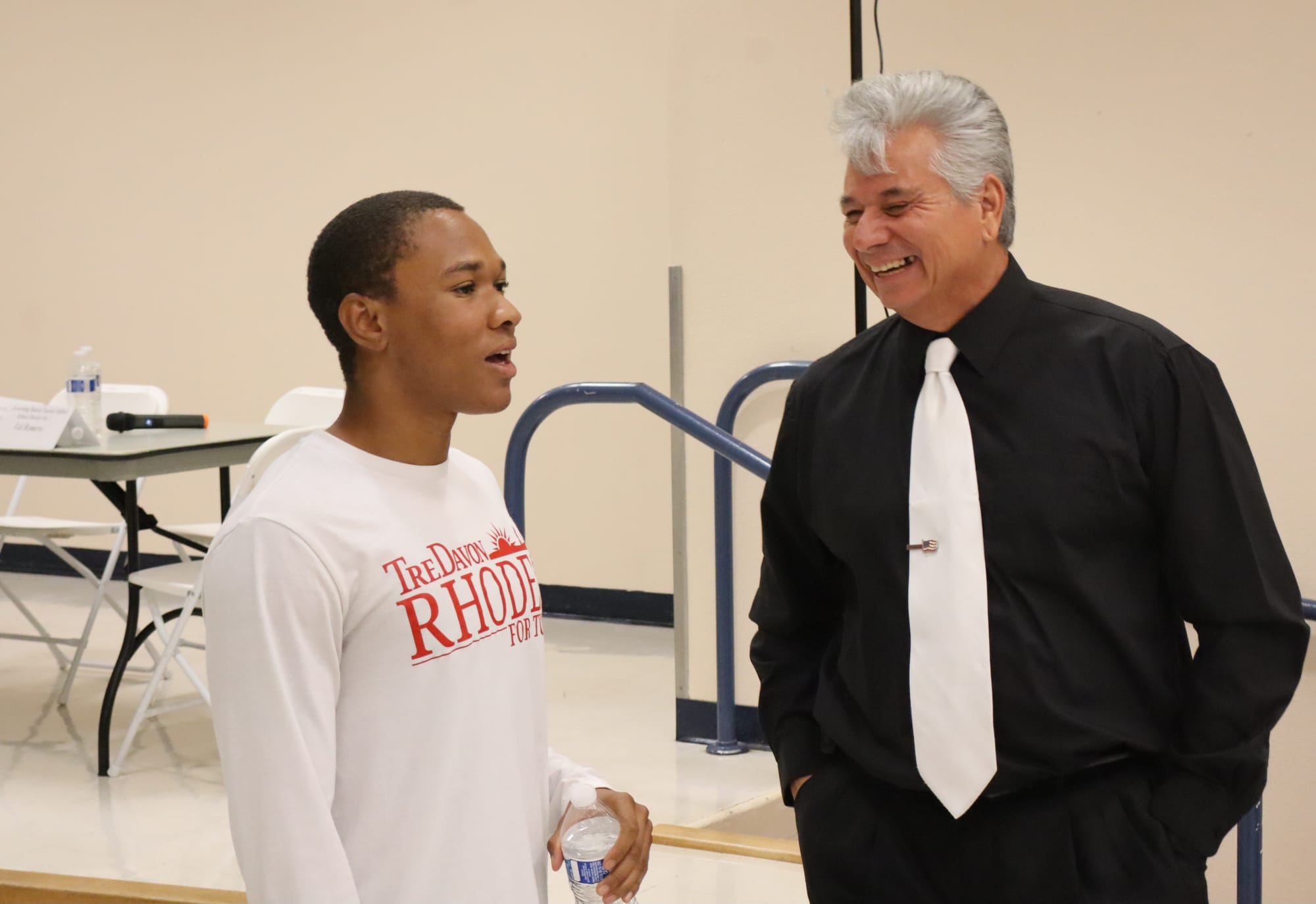
In the TUSD governing board race, Tre’Davon “Tre” Rhodes, a University of Arizona student, talked about his personal story. He credited his success to the education he received in TUSD schools and to supportive teachers, counselors and principals.
Raised by a single mother while his father was incarcerated, Tre Rhodes is campaigning for more diverse education pathways, stronger learning environments for students and staff and a better mindset in the district.
“I think we have to do away with this message of a ‘dying district’ or that the district is just failing,” Tre Rhodes said. “That’s not going to bring us success moving forward. We need to show folks that TUSD is going to be the place where your students will be the most successful, it’s going to be the place where you can offer them the greatest amount of opportunity for their future and it’s going to be the place where their students can do great. So I would urge them to look at my story and use that as inspiration to bring their students into TUSD.”
TUSD governing board President Jennifer Eckstrom said she has supported initiatives such as extending some TUSD schools from fourth grade to sixth grade to retain families, and credit recovery programs.
After a school shooting in Oregon on the day of the forum, Eckstrom also emphasized her support for school safety measures such as improved fencing and a panic button that all staff members could press at any time to contact authorities in a safety or health emergency.
TUSD governing board member Val Romero, who was elected in 2022, said he was surprised by how much work needed to be done when he took office. Since then, he said, a lot has been done, but a lot of work remains, particularly in attendance, student achievement and career and technical education.
Romero said he learned a lot about how to serve the district by visiting schools. He also stressed the importance of the district’s specialty programs, such as mariachi, sports medicine and culinary, along with innovation and tech diesel at Santa Rita High School.
“We know that not everybody is going to be able to go to college,” Romero said. “And we’re losing a lot of our students to other communities that are paying more, that can give them more opportunities.”
Ian Stash is University of Arizona alum and freelance journalist in Tucson. Contact him at ianjgs16@gmail.com.
Tucson Spotlight is a community-based newsroom that provides paid opportunities for students and rising journalists in Southern Arizona. Please consider supporting our work with a tax-deductible donation.