
UA researcher turns endometriosis diagnosis into career
University of Arizona epidemiologist Michelle Valenti spent years searching for an endometriosis diagnosis. Now she's dedicated her career to researching the condition that went undetected in her own body for years.
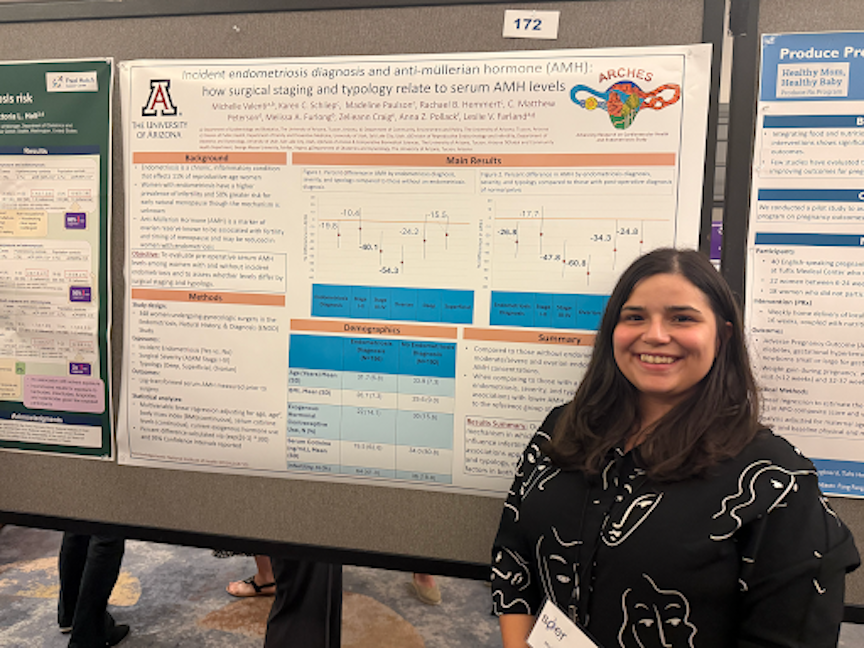
For years, Michelle Valenti was told that her pain was normal. It wasn't.
Valenti, who recently earned her Ph.D. in epidemiology from the University of Arizona, spent years searching for a diagnosis before learning she had endometriosis, a condition that affects roughly 10% of women worldwide and often goes undetected for years.
Like many young women, Valenti had been told that some people simply experience worse period pain than others. In her early twenties, she began to suspect that wasn't the whole story.
"It wasn't until college that I was starting to talk and feel more comfortable talking to other girls and women, and I found out, 'Oh, wait, what do you mean you don't experience it this way? What do you mean you don't have pain?' That blew my mind," Valenti said.
When she first went to the doctor for her pain, she was prescribed birth control and told to try at-home remedies to manage any discomfort, like heating pads and over-the-counter pain medication.
But her pain progressed.
"I didn't really push it. And then, there was a time where I had really, really, severe pain all of a sudden, and I went to the emergency room," she said. "All of my scans were normal, so they had said that 'Maybe you had a cyst that burst, we don't really know. Here's some pain meds, go home, come back if it gets worse.'"
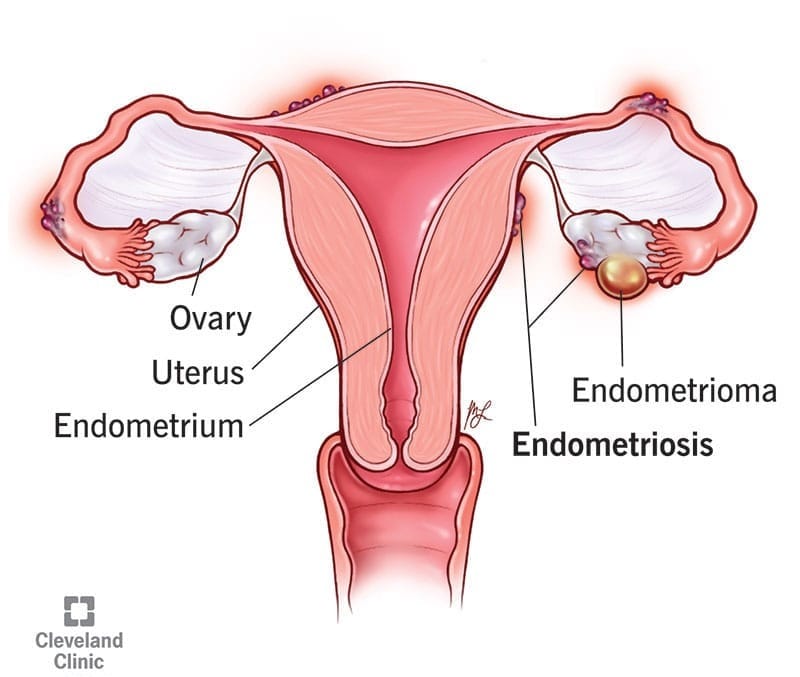
But the condition that was affecting Valenti doesn't always show up on scans. Endometriosis occurs when tissue similar to the uterine lining grows outside of the uterus, often causing chronic pain and inflammation.
Symptoms can include severe pain during menstruation, heavy periods, chronic pelvic pain, abdominal bloating, nausea and, in some cases, infertility.
Her pain continued to get worse and she returned to the emergency room. The response she was met with on that second visit is something that still affects her to this day.
"I was accused of being a drug seeker. One of the physicians told me that they would not give me any more morphine if I were to come back to the emergency room because all of my scans were normal," she said.
It took years, and eventually a surgery, for Valenti to finally receive a diagnosis.
By then, her lived experience had reshaped how she viewed her health and the healthcare system.
"I think when I woke up one of the first things I asked was if they had found anything. When they said yes, I cried. I'm not making this up. It has been real, this pain I've had," she said.
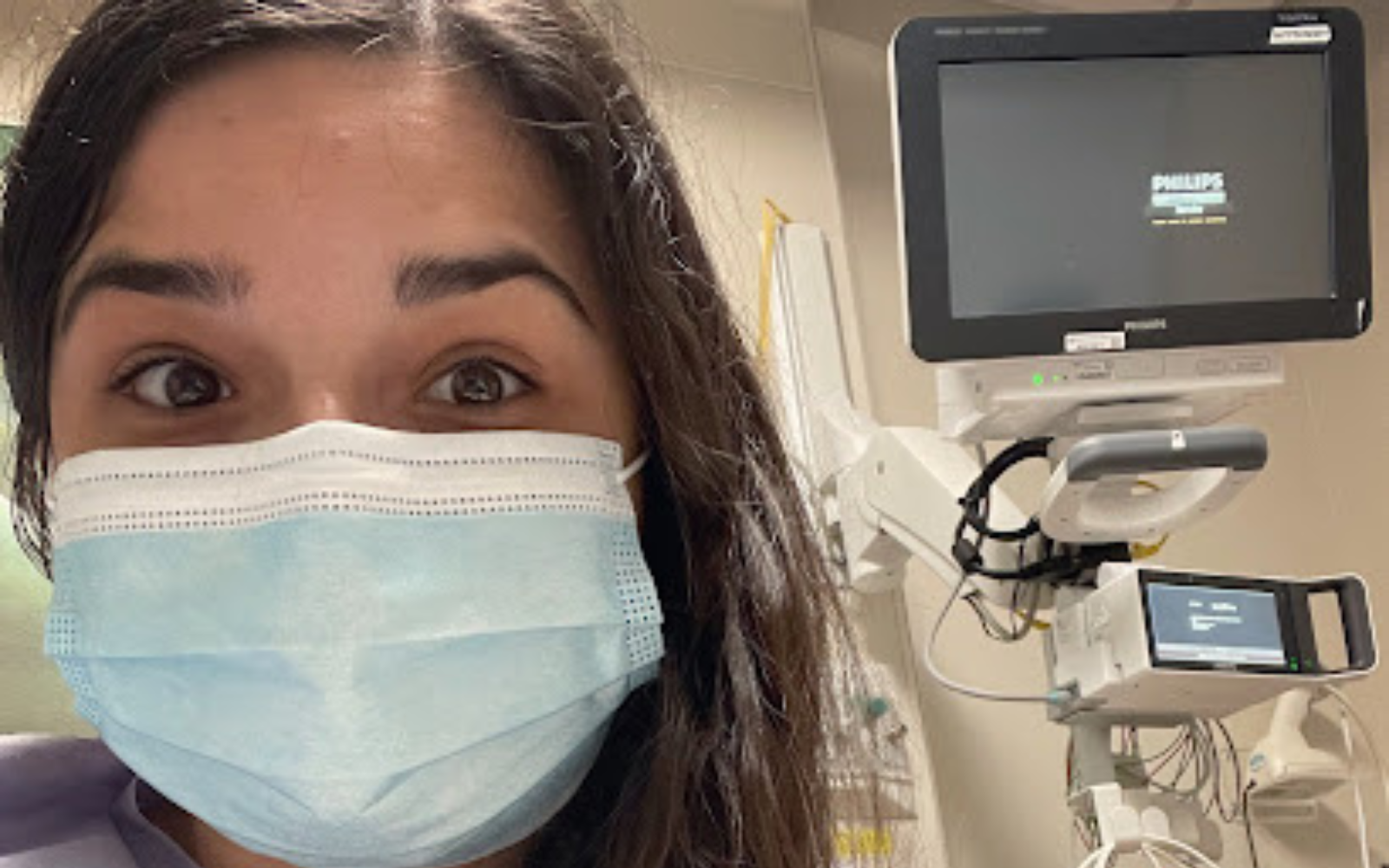
Her own search for answers became the foundation of her career as an endometriosis and women's health researcher. She recently received her Ph.D. in epidemiology from the Mel & Enid Zuckerman College of Public Health at the University of Arizona.
"When you have that firsthand experience, you relate to the research more," Valenti said. "I think at a certain level, it's more than just numbers and data to you, it's like real life."
For Valenti and many women like her, the years-long wait for a diagnosis comes down in part to the lack of non-invasive tools to detect the condition.
As many as six out of every 10 cases of endometriosis go undiagnosed, with laparoscopy surgery considered the "gold standard" for diagnosis, according to the American Medical Association.
Historically, endometriosis research has focused on surgical severity as a proxy for pain, a measure Valenti says doesn't tell the whole story.
"A lot of the research in the realm of endometriosis really focuses on new diagnosis, like whether or not you have it, and then surgical severity. But surgical severity is not correlated with pain severity or symptom severity," Valenti said.
Through her research, Valenti is trying to make sense of the condition beyond the diagnosis alone. Her work focuses on how environmental factors, including man-made substances, stress and mental health, play a role in symptom severity and gynecological health as a whole.
Valenti's dissertation was published in the American Journal of Obstetrics and Gynecology, where she and her team investigated the levels of Anti-Müllerian Hormone, which indicates how many eggs a woman has left, in women with and without endometriosis.
Valenti and her team found that women with more severe types of endometriosis tended to have lower levels of Anti-Müllerian Hormone than those without.
Valenti was also part of a team that conducted a study with female firefighters, uncovering a connection between poor mental health and reduced Anti-Müllerian Hormone levels in women.
"I do think we need more research looking at both these mental health and environmental exposures. I like to think of them as exogenous and endogenous, exogenous exposures are things outside of your body, like PFAS, these chemicals you're getting exposed to. Then endogenous is like mental health. When you have these conditions, there's things that happen in your body that can lead to these downstream effects," Valenti said.
For Valenti, having her dissertation published is more than an academic milestone, it's personal.
"When I first started, I was really afraid that my pain was going to make it so I couldn't finish, but I was very stubborn. So, in a way, it feels like a (middle finger) to endometriosis, to my disease, like 'Hey, you can't stop me. I can still do this,'" she said.
Zoey Oberstein is a University of Arizona student majoring in journalism and a Tucson Spotlight intern. Contact her at zoeyoberstein@arizona.edu.
Tucson Spotlight is a community-based newsroom that provides paid opportunities for students and rising journalists in Southern Arizona. Please consider supporting our work with a tax-deductible donation.