New map charts ICE activity across Tucson
A new community-driven map tracks ICE activity across Tucson, documenting more than 300 reported incidents including surveillance, vehicle stops and raids.
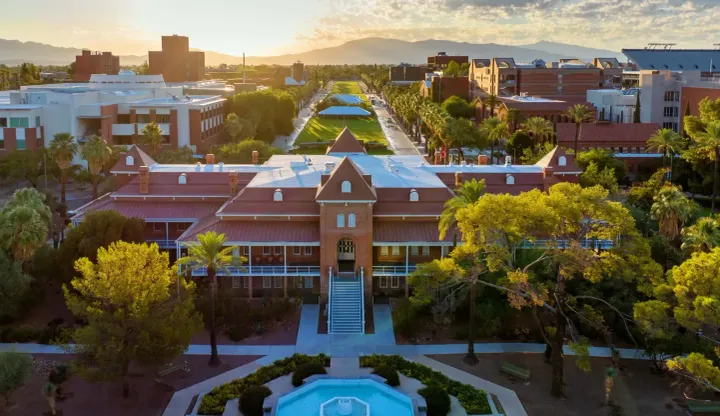
Every day, in parking lots, apartment complexes and grocery store aisles across Tucson, federal immigration agents are watching and waiting. Now, a University of Arizona researcher wants the public to watch back.
Dugan Meyer is a Ph.D. student in the University of Arizona's School of Geography, Development and Environment, where his research examines how policing shapes communities, from border enforcement to housing to the emotional experiences of everyday life.
That work eventually led him to help build a community-driven tool to track the growing wave of ICE activity in Tucson.
Meyer built the Tucson Migra Map in response to an influx of local ICE reports and sightings, from groups including Tucson's Rapid Response Team and everyday Tucsonans using social media and online forums to document activity.
"It was the accumulation of all these different moments (that) illustrated the scope of what's happening," Meyer said, describing the map as a community-based collaboration. "I don't have an exact number of the contributors, but it is definitely dozens and likely more than 100. Contributors are anyone who reported incidents to the Rapid Response hotline or through a variety of other channels … other local ICE watch groups, to social media posts, etc."
In 2025, more people died in ICE custody than in any year since 2004, according to NPR. As of mid-April 2026, 16 people have died in ICE custody this year, including Emanuel Cleeford Damas, who was held at the Florence Detention Center. His brother told the Associated Press that his death stemmed in part from an untreated toothache that developed into a worsening infection.
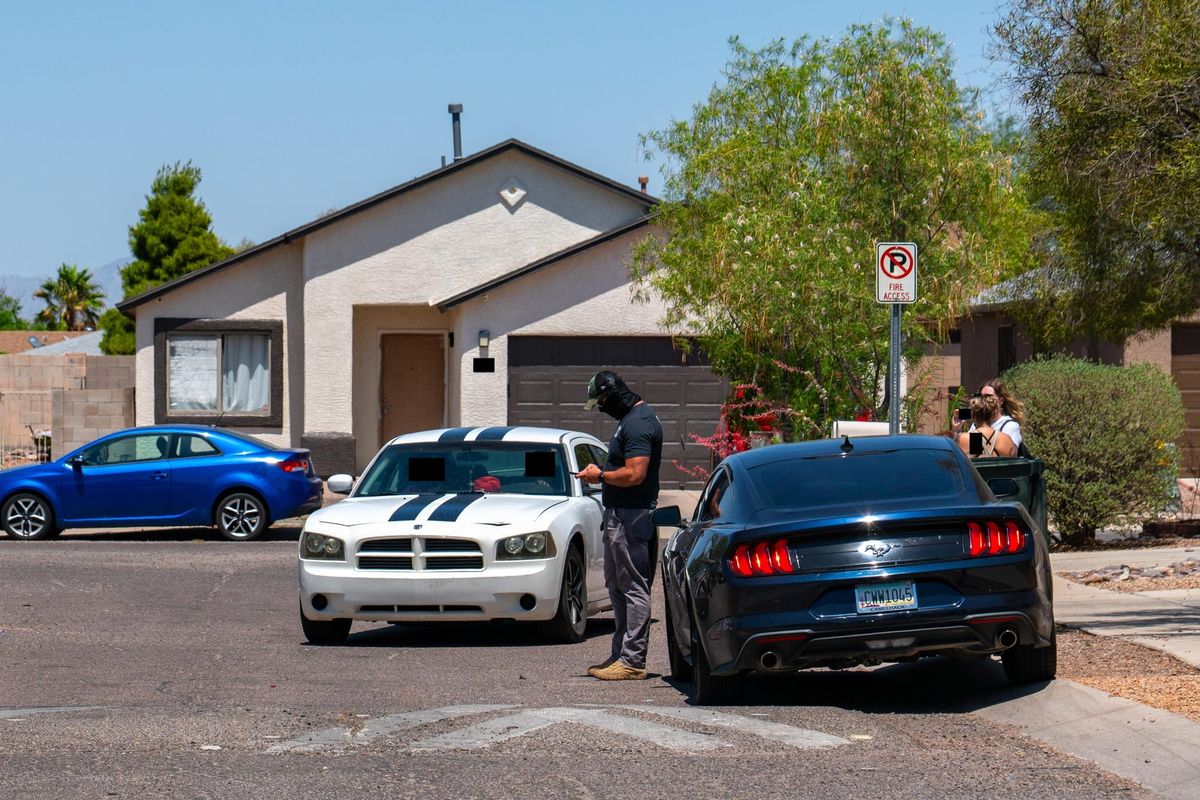
Tucson is no stranger to ICE presence. In recent weeks, community members reported agents at the Walgreens at the corner of S. Sixth Ave. and W. 29th St., where video circulating on social media shows a civilian filming ICE being approached by a masked man in plain clothes before being maced in the face.
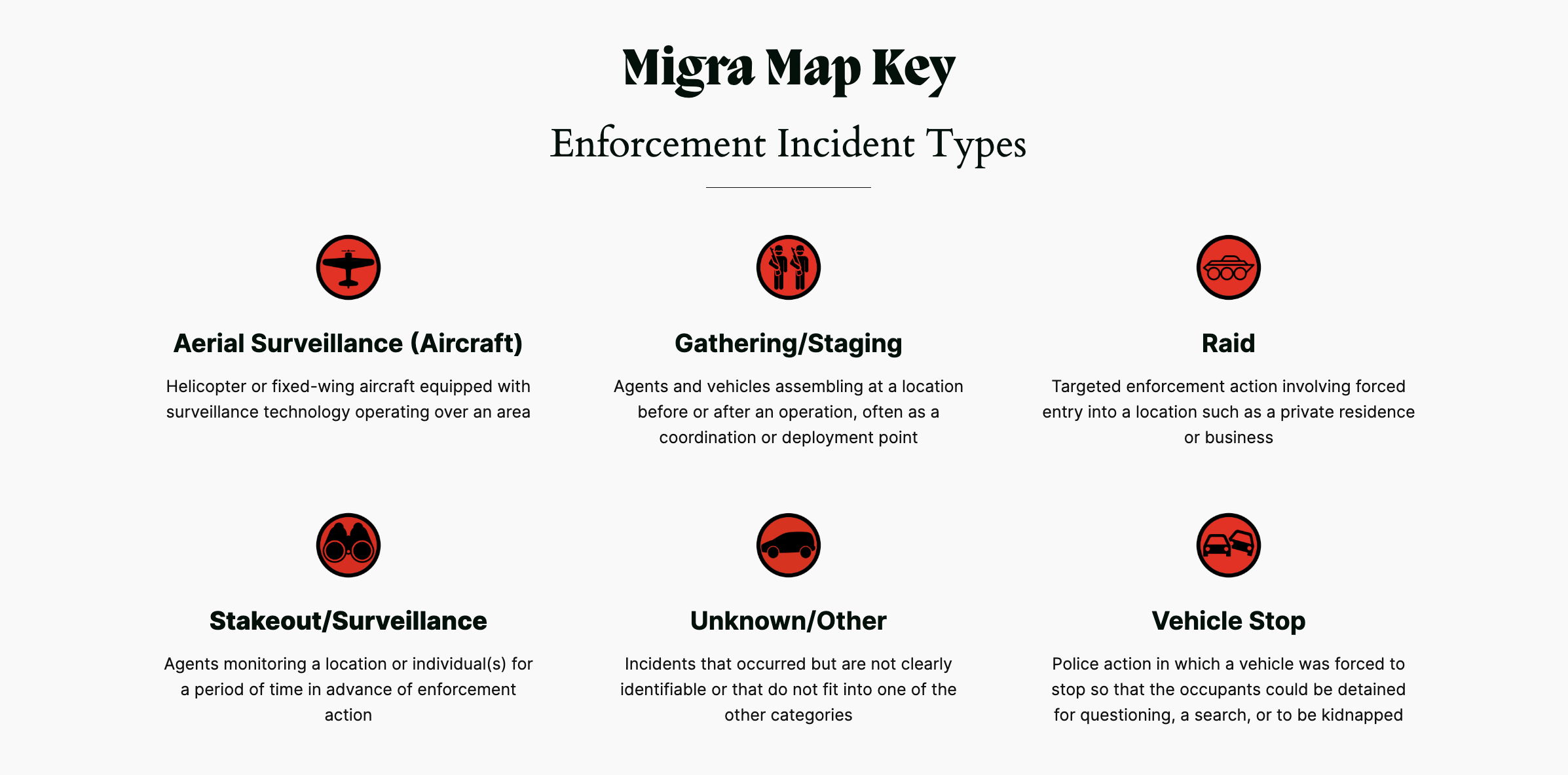
The map uses icons to document reports of ICE activity, including stakeouts, aerial surveillance, vehicle stops and raids. It also includes a heat map, with dark red areas indicating higher concentrations of reported ICE activity.
As of April 15, the map shows more than 300 reported instances of ICE activity since January 2025, including recent reports of surveillance, vehicle stops and at least one instance of aerial surveillance.
In one report, a community member said an unmarked vehicle was conducting surveillance on a home that had been targeted by Border Patrol five days earlier, though the vehicle ultimately left the neighborhood without incident. Other reports claim ICE agents have used gas stations, including Shell and Circle K, as staging points for vehicle stops and informal meetups before operations.
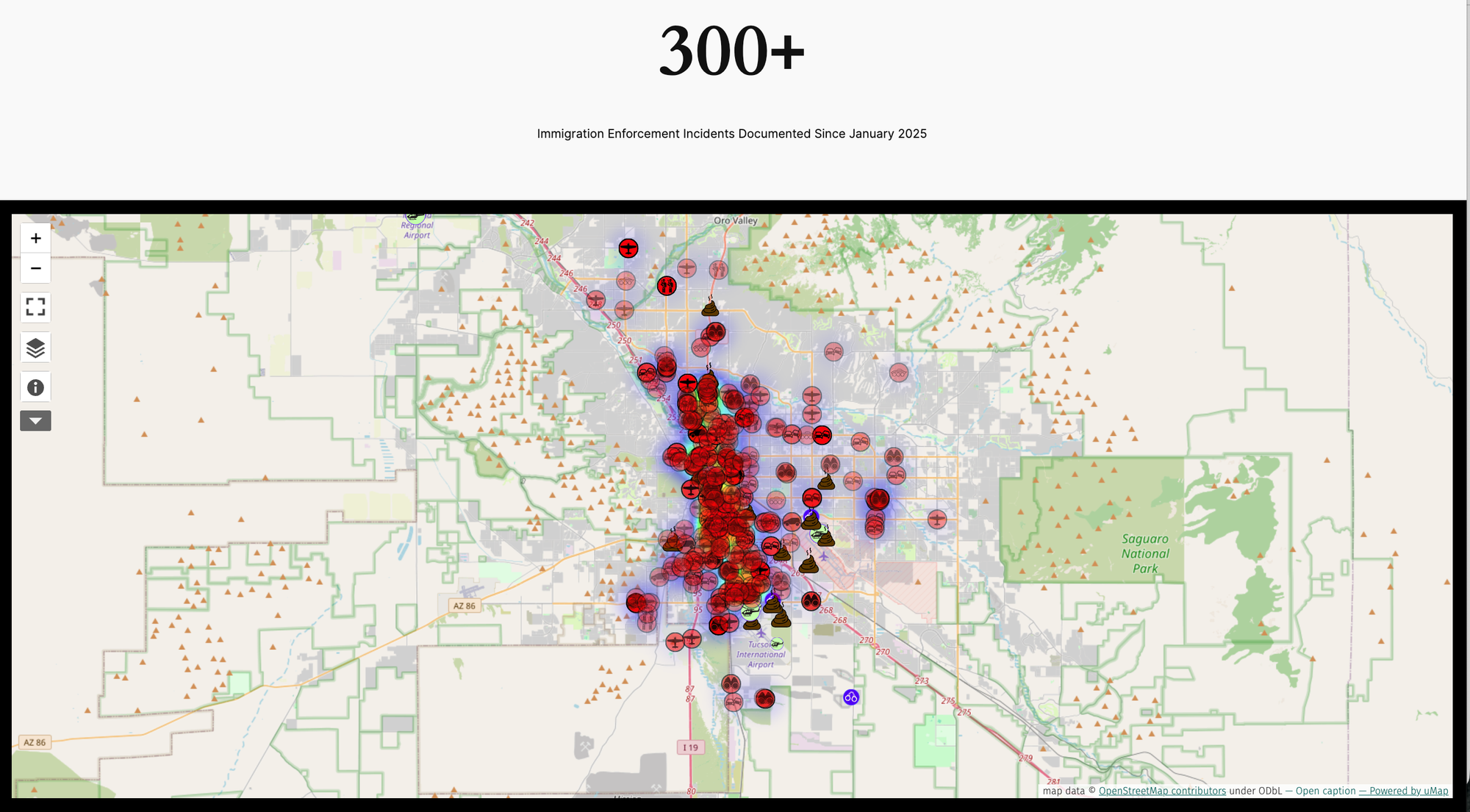
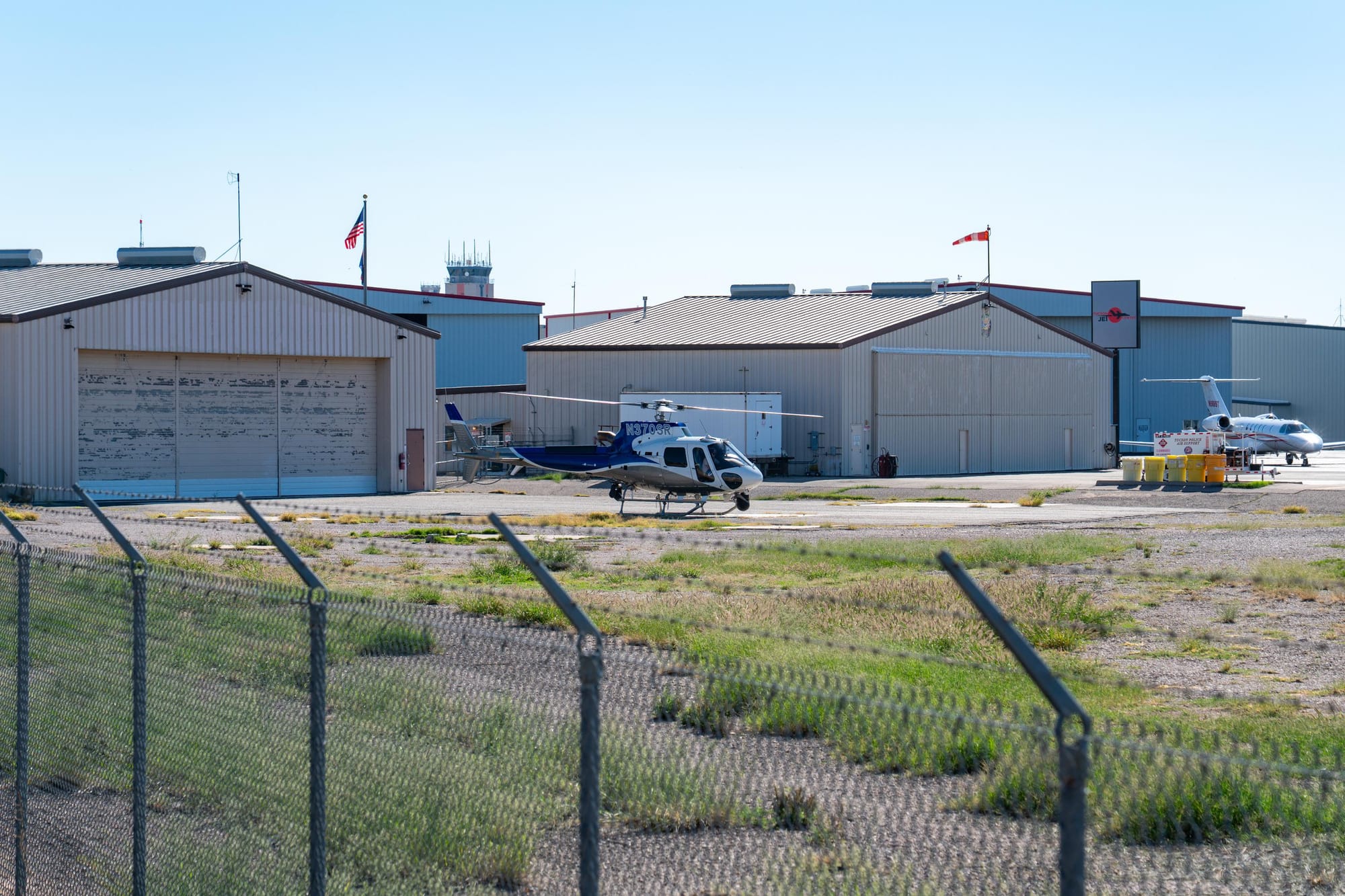
The map also tracks federal and local police facilities, aerial support sites and immigration detention facilities.
Meyer volunteers with Tucson's Rapid Response group and has responded to and witnessed reports of ICE presence. He said most Tucsonans have indirectly witnessed ICE presence without being aware of it. The map can help illustrate those events.
"There are so many (incidents) that a lot of people have experienced, and they aren't even looking for (them,)" Meyer said. "This project developed out of a desire to make it possible for a broader number of people to kind of see that scope."
Rapid response groups across the country have adopted the SALUTE method (Size, Activity, Location, Units, Time and Equipment) to outline what witnesses should look for when documenting ICE activity in their communities.
Witnesses are encouraged to document the number of agents and vehicles, including makes, models and license plates, as well as whether other agencies are on the scene.
A precise description of the activity, whether someone is being arrested, handcuffed or a vehicle has been pulled over, is also important information to report, along with the exact address or intersection and the time the incident occurred.
Any patches, letters or insignia visible on uniforms, clothing or vehicles can help identify the units involved, such as HSI, CBP, DHS or ERO.
Equipment on the scene, including weapons, dogs or tools for door-breaching or crowd dispersal, should also be noted.
The First Amendment protects everyone's right to record and document ICE agents performing their duties in public, regardless of citizenship status. This includes capturing agents' faces, badges, license plates and any documents they present, such as warrants. Observers should maintain a reasonable distance and avoid physically interfering with or obstructing ICE operations, as doing so could constitute a criminal offense.
A major motivation behind Meyer's creation of the map is agency accountability. ICE agents have been documented covering their faces, wearing plain clothes during arrests and using covert vehicles.
"ICE and these other agencies are acting with secrecy, and they are trying not to be seen by the public. I think that should alarm people. It alarms me," Meyer said. "Part of the effort of the community to document is a demand for accountability and transparency for these public agents in our neighborhood. When you're documenting that, you're contributing to that."
Meyer said documenting ICE activity requires no special training, only a willingness to pay attention.
Missing information, most crucially the lack of a precise location, can prevent reports from being verified and added to the map, though any details provided are still useful.
"We see a lot of documentation that is just incomplete, of people driving by incidents, and because they don't have enough time to slow down to make a note of what's happening," Meyer said. "It's really important that even if people can't take videos, that they make a report."
Meyer said incomplete reports often become more valuable over time, as additional witnesses or video footage can surface later to fill in the gaps.
There are several reported hotspots of ICE activity in Tucson, including El Super on W. 44th St. and S. 6th Ave., which has seen a notable amount of activity.
"We have seen over the past year, a lot of a particular kind of surveillance and vehicle stops conducted by ICE agents and unmarked vehicles in this parking lot," Meyer said.
Another hotspot is the Flowing Wells neighborhood.
"A lot of times, the agents will be doing this kind of surveillance at apartment complexes or neighborhoods, and they will wait for people to leave their homes and drive to a parking lot and then pounce on them," Meyer said, adding that the concentration of activity in these areas is no coincidence, but rather the result of deliberate enforcement strategies. "They will often lie and wait for people so they can stake out, or conduct surveillance at places like grocery stores, especially larger kind of shopping center areas like Tucson Marketplace, Walmarts around town, places like that where they can sort of blend in in parking lots or try to they can do that."
While several hotspots are noted on the map, Meyer warned they will likely shift over time.
"(Hotspots can) become a little less hot," Meyer said. "Looking at the reports, we can sometimes see potential sort of changes in strategy."
The map can also help identify trends in behavior by ICE and partner agencies, including Border Patrol and the U.S. Marshals Service.
"In general, we see things happening every day of the week, at all times a day," Meyer said. "We see more activity during the working week, Monday through Friday, but that's not something that we can go off of, because we've seen it every day and time of day, it also happens at all at different times."
Based on the reports, it is uncommon to see ICE activity in the middle of the night, with most activity peaking during the early morning and late afternoon. This, Meyer said, is also no coincidence.
"A lot of people are going to and from work at those times. They're picking times when they think they can connect people when they think people are vulnerable, and at times a day that people are often vulnerable when they're going to and from work or dropping kids off at school," Meyer said. "We've had many different documented cases of workers who have been taken when they may be somewhere like Home Depot or another kind of supply store on their breaks, like at 11 or 11:30 (a.m.) … to go get more supplies for their work. We've documented ICE waiting at those places for them and following them or trying to follow them back to job sites to get more people. It's opportunistic."
In other cities, maps similar to Tucson Migra Watch have been removed. LAist reported that People Over Papers, a crowdsourced ICE map created by several grassroots organizations across multiple states, was taken down without warning after its host site, Padlet, said it violated its content policy.
This came after then-U.S. Attorney General Pam Bondi called for Apple to remove the app ICEBlock, an app used to report and view the locations of federal immigration activity, saying it was "designed to put ICE agents at risk just for doing their jobs."
"What these agencies are doing (is) troubling, in my opinion," Meyer said. "Federal judges across the country have highlighted hundreds of instances in which ICE is breaking the law. Is anyone surprised that they don't want us to know about that and to have no ability to hold them accountable? Of course not."
It is that lack of accountability that drives projects like the Tucson Migra Watch map, even if it remains a work in progress, Meyer said.
"What we're trying to do is create this map as a tool," Meyer said.
Meyer cautioned that while the map compiles and visualizes data, it has limitations. Maps can create a false sense of certainty, obscuring what they can't show as much as revealing what they can.
"We're just starting to do some more analysis," Meyer said. "We invite people to get involved (so) they can help us learn what's happening."
That invitation is already being answered.
Local organizer Isabella said she was inspired to act after a raid at several Taco Giro locations in December. She called a community assembly to discuss how residents could defend themselves and their neighbors, and about 250 people showed up.
The turnout reflected a broader push by Tucsonans to organize within their own neighborhoods and communities in response to the surge in ICE activity.
"Over the last five months people have formed about a dozen neighborhood councils that independently organize local initiatives, primarily focused on observing and responding to ICE presence in their neighborhoods," she said.
Isabella said the councils have been joined by groups focused on specific efforts like canvassing businesses, organizing protests, pressuring companies that cooperate with ICE, coordinating among educators and providing direct aid to those affected. She called the response inspiring.
Matt, a participant in one such council, said he got involved because he wanted to move beyond frustration and take action.
"I started going to the assemblies because I wanted to actually do something about all the terrible things I see on the news every day," he said. "If ICE comes to my side of town I know we are prepared to confront them and we have the support of people across the city."
Carl said the councils have become about more than immigration enforcement, evolving into a broader conversation about community.
"I'm here to stop ICE, but after getting to know my neighbors, it's become about more than that," he said.
Carl said the group now discusses neighborhood projects and ways to improve residents' lives beyond responding to ICE.
Paisanos Unidos, a Tucson-based community defense and support organization, has seen firsthand the impacts of ICE presence in Tucson.
"This map is a tool for all of us, created with much love and dedication so we can feel a little safer and alert everyone to areas of greatest focus, raids, checkpoints, and immigration agents," Paisanos Unidos said in a news release. "It shows where there has been increased ICE and Border Patrol activity targeting our people, hunting down workers and single mothers struggling to put food on the table and pay rent—mothers who may leave home but never return, leaving behind children waiting for them."
Rosa Martinez, director and founder of La Ristra Healing & Art, an emotional support network and nonprofit for children of immigrant families, said these types of incidents reinforce the group's mission and commitment to serve "a community seriously damaged and threatened in every possible way."
"Since this wave of crackdowns began, I've seen that the primary targets are the most vulnerable: heads of households whose only 'crime' is going out to work to support their families," local social worker Sandra Alvarez said in a news release. "I witness daily how our community neglects its healthcare for fear of being brutally treated, separated from their families, and left destitute; literally kidnapped, even when they offer no resistance."
Alvarez said the fear has reached children, who are growing up waiting to lose a parent, a neighbor or a friend instead of enjoying their childhood.
"It is precisely because of this crisis that mapping the areas where these operations are occurring is urgent," Alvarez said.
The map is publicly available in English and Spanish at tucsonmigramap.com.
Topacio “Topaz” Servellon is a reporter with Tucson Spotlight. Contact them at topacioserve@gmail.com.
Tucson Spotlight is a community-based newsroom that provides paid opportunities for students and rising journalists in Southern Arizona. Please consider supporting our work with a tax-deductible donation.