TPD targets street racing networks as traffic deaths climb
Tucson police detailed a new intelligence-led strategy to combat street racing at the May 5 city council meeting, alongside an update on efforts to reduce 911 call volume and improve emergency response times.
Tucson police have shifted from reactive crowd dispersal to an intelligence-led strategy aimed at dismantling the organized networks behind street racing events, officials told the city council last month.
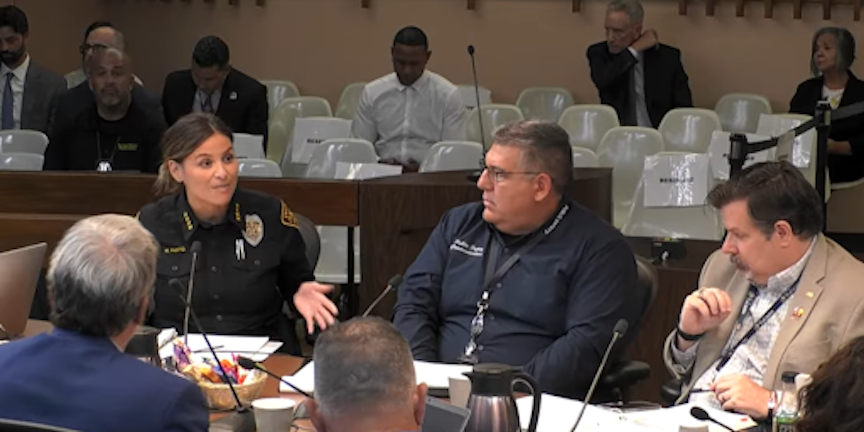
Tucson Police Chief Monica Prieto spoke about the department's new strategy during the council's May 5 meeting, saying it emphasizes proactive enforcement and advanced technology, while also working with partners and prosecutors.
The numbers underscore the urgency.
Prieto said there have already been 38 traffic fatalities in 2026. This includes 16 pedestrian fatalities, an exponential increase since last year, and 14 vehicle fatalities. In 13 of the 16 pedestrian deaths, the victim was an average of 128 yards away from a crosswalk.
"We can't talk about street racing without talking about the unsafe culture of the driving behavior here in Tucson as we know," Prieto said. "It's most strikingly evident when we talk about our year-to-date traffic fatalities."
Prieto said the department would increase enforcement around crosswalk compliance.
TPD's recent traffic safety efforts include a March 4 deployment in which officers spent at least 20-minute intervals on traffic enforcement and education to help the city identify where collisions were occurring. TPD hopes to complete 10,000 such deployments in 2026.
Additional deployments will be completed through the Regional Traffic Enforcement Task Force, with partner agencies targeting major corridors where collisions tend to occur.
The third approach uses 21 motor officer units, including five new additions, for data-driven deployments that extend coverage into nighttime hours.
Tucson Spotlight is the only newsroom in Southern Arizona built around training diverse, emerging journalists to cover the communities they come from. Get their work free in your inbox.
Prieto said TPD's newest traffic program is their "traffic zebras," a volunteer group of six officers completing three- to five-hour deployments every other week that include traffic education and enforcement, while also addressing specific complaints from patrol officers. One zebra deployment resulted in 92 citations and two arrests for high-speed driving.
Prieto said TPD received intelligence about a planned gathering on Houghton Road and responded with a deployment that included 22 traffic stops. The effort was cut short when a wrong-way driver nearly struck officers before crashing into a median. That driver was charged with 10 counts of felony endangerment and felony DUI.
Prieto called street racing takeovers "completely reckless and unacceptable," saying that while organizing and attending such events is criminal on its own, they often draw additional criminal activity including drug use, gunfire and organized racing networks.
"Our past approach was predominantly reactive with the primary goal of clearing the roadways and dispersing the crowds," Prieto said. "Our newest response, though, is grounded in a robust intelligence-led framework designed to identify, track and dismantle organized street racing networks."
Beginning Jan. 9, the Threat Mitigation Unit took over intelligence collection and management, gathering 88 crime tips alongside information from patrols and social media monitoring.
That intelligence confirmed Tucson street racing is highly organized, with defined roles for organizers, spectators and drivers. TPD shifted to proactive enforcement targeting organizers, participants and repeat offenders.
Prieto said TPD uses automated license plate readers as part of their investigations, which she said were instrumental to their effort.
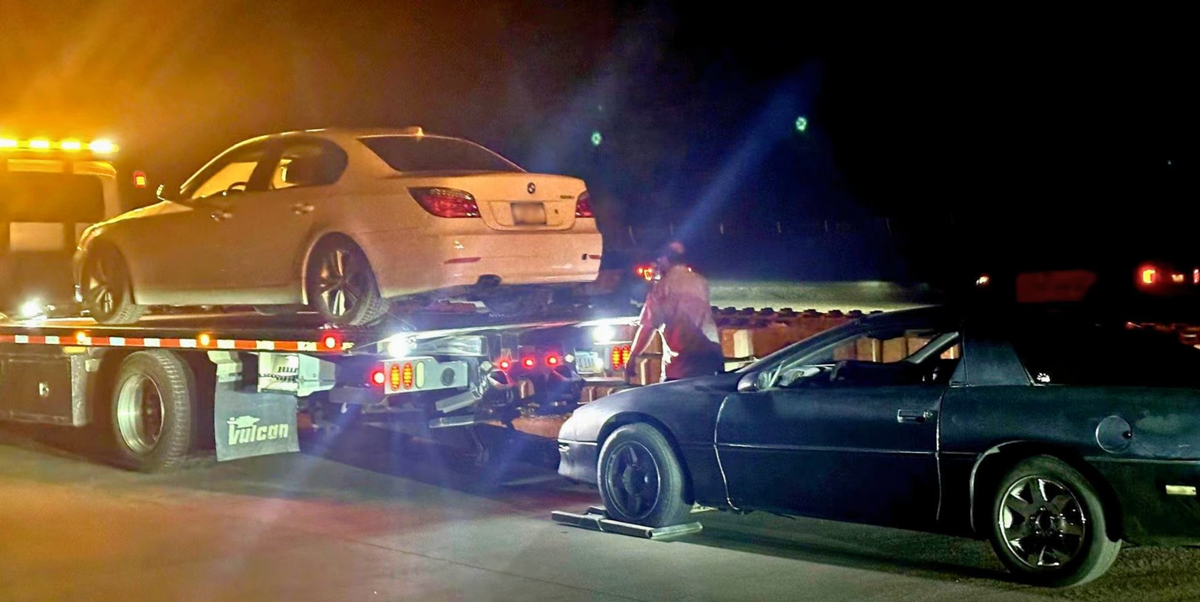
TPD also executed search warrants for evidence and seized 18 vehicles, efforts that could support criminal syndicate charges.
On Feb. 22, TPD identified seven vehicles, seized six and made multiple arrests for unlawful flight, with one suspect found carrying a modified handgun. On March 15, another wave of takeovers erupted, with 45 rounds fired.
The largest operation came April 18 at South Kolb Road and East Valencia Road, where officers seized five vehicles, impounded one and made dozens of arrests, including 23 for trespassing, three for participating in a criminal syndicate and two parents charged with contributing to the delinquency of a minor for bringing young children to the event.
A regional street racing task force is being developed to better coordinate with partners.
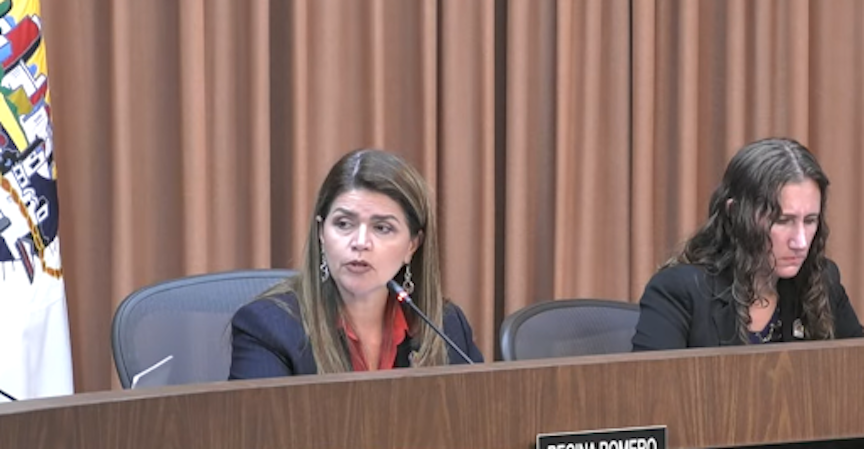
Mayor Regina Romero said the council decided to press the street racing issue harder following the recent death of 3-year-old Anna Garcia in a street racing crash, and spoke about the proposed "Anna's Law" that has gathered 23,000 signatures. The law is meant to impose stricter penalties for street racing.
"I'm in awe of the family's courage and strength to transform their pain into power and calling for Anna's law," Romero said. "The petition for Anna's law sends a clear message that street racing is not harmless, that street racing is reckless and violent, and that it destroys lives. One death from street racing is too much, and the life of Anna Garcia mattered."
The council also heard an update on a separate public safety challenge: emergency response times.
Tucson established the Public Safety Communications Department in 2017 to consolidate police and fire dispatch, primarily 911 services. The department handles more than one million 911 calls annually across more than 280 lines, and reducing that call volume is a priority. Delayed response times mean as many as 75% of high-acuity emergency calls do not reach an immediate responder.
Public Safety Communications Department Director Mike Garcia attributed the volume in part to callers using 911 as a first resort even when a different service would be more appropriate.
Garcia said that prompted the department to pursue alternatives through the Safe City Initiative, including a partnership with Arizona's Regional Behavioral Health Authority and the Coalition for the Co-location of Crisis Professionals, as well as improved connectivity between 911 and 988 calls, which previously routed to Phoenix before returning to a local center, a process that contributed to calls being lost.
The department also routes eligible calls to crisis center workers, which Garcia said reduces the number of police and fire responses to behavioral health incidents better handled by crisis professionals. Garcia said emergency calls — for an ambulance or a robbery, for example — should not have to compete for line capacity with calls that belong on 311.
Garcia also spoke about the role 311 plays in connecting residents with services including encampment reporting and housing and food referrals. The city also works with MD Ally to redirect some 911 calls to a care provider who can prescribe or deliver medications, with Garcia saying that sometimes ambulances take patients to the hospital only to discover that they actually needed a dentist.
Garcia said the efforts have saved time and money: 2,000 calls referred to medical providers instead of emergency care saved 1,700 hours of fire and EMS runtime and 4,100 hours of emergency room wait time.
"This program is now a very proven model that's being studied from around the country, and having a crisis professional right here in the room means that a caller in crisis gets a better resource and better outcomes sooner," Garcia said.
The council also unanimously voted to adopt a resolution opposing the proposed Immigration and Customs Enforcement detention facility in Marana.
Ward 6 Councilmember Miranda Schubert noted that legacies of government abuse appear throughout the region, pointing to the Gordon Hirabayashi Campground on Mount Lemmon, named for a man who resisted Japanese American internment during World War II and was sentenced to penal labor on that same site.
Schubert compared the struggle against internment to the current struggles undocumented immigrants face, saying those internment camps were run by Immigration and Naturalization Services and guarded by border patrol agents.
"The detention center in Marana should not even be a discussion (for the Tucson City Council,) but here we are," Schubert said. "By moving forward with the contract, the Town of Marana condones federal policies that tear apart families and allow private prison industries to profit under the dog whistle of national security."
Other council members echoed that opposition.
"I was not willing to take this sitting down without saying how much I am opposed to these ICE detention facilities, especially anything coming close to the city of Tucson," Romero said. "We have always been a welcoming community, and this resolution affirms our values, the human dignity of immigrants, family unity and respect for all people no matter their legal status."
Ian Stash is University of Arizona alum and freelance journalist in Tucson. Contact him at ianjgs16@gmail.com.
Tucson Spotlight is a community-based newsroom that provides paid opportunities for students and rising journalists in Southern Arizona. Please consider supporting our work with a tax-deductible donation.