UA lecture examines surveillance over tribal lands
A University of California, Santa Cruz professor told a University of Arizona audience that drones, helicopters and surveillance towers crowding the skies above the Tohono O'odham Nation are eroding indigenous sovereignty.
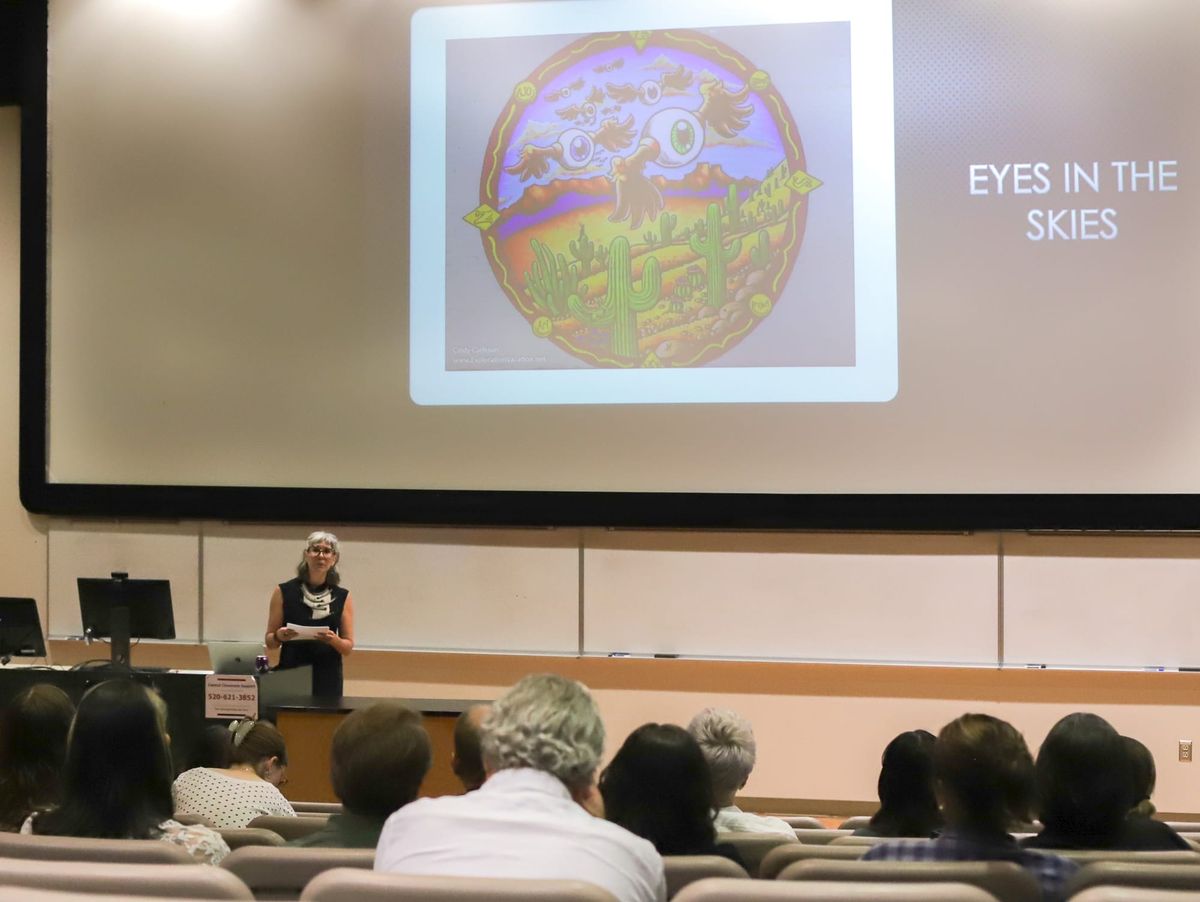
A University of California professor brought a pointed message to the University of Arizona last month: the skies above Arizona's tribal lands are so crowded with drones, helicopters and surveillance towers that they amount to an assault on indigenous sovereignty.
Felicity Amaya Schaeffer, who teaches critical race and ethnic studies and feminist studies at the University of California, Santa Cruz, visited the Tohono O'odham Nation to research how U.S.-Mexico border enforcement, including the Department of Homeland Security's aerial surveillance, has impacted tribal lands.
Residents told her that a clear and quiet sky is essential to the Tohono O'odham people, who regard it as a sacred connection to the sky world.
"The airscape being so crowded with all of these surveillance, drones, and helicopters, it was like an assault on the aural landscape, like this quiet land was just assaulted by these surveillance machines," Schaeffer told attendees of the March 24 event hosted by the Confluence Center. "This really did something to their sovereignty, and their sovereignty was so connected to this sky."
The lecture was part of a three-speaker series on surveillance cultures hosted by the UA Graduate Interdisciplinary Program in Social, Cultural, and Critical Theory.
"In Tucson, we are within the 100-mile border enforcement zone, which grants the U.S. Customs and Border Protection agency enhanced authority for surveillance policing, subjecting our university community and neighbors to unique scrutiny," Harris Kornstein, assistant professor at the UA College of Humanities and the series' organizer, told Tucson Spotlight in an email. "Additionally, our area along the U.S.-Mexico border has historically been, and continues to be, a testing ground for many new surveillance and military technologies."
For Schaeffer, that history of surveillance and militarization is inseparable from a longer pattern of colonial control over indigenous land.
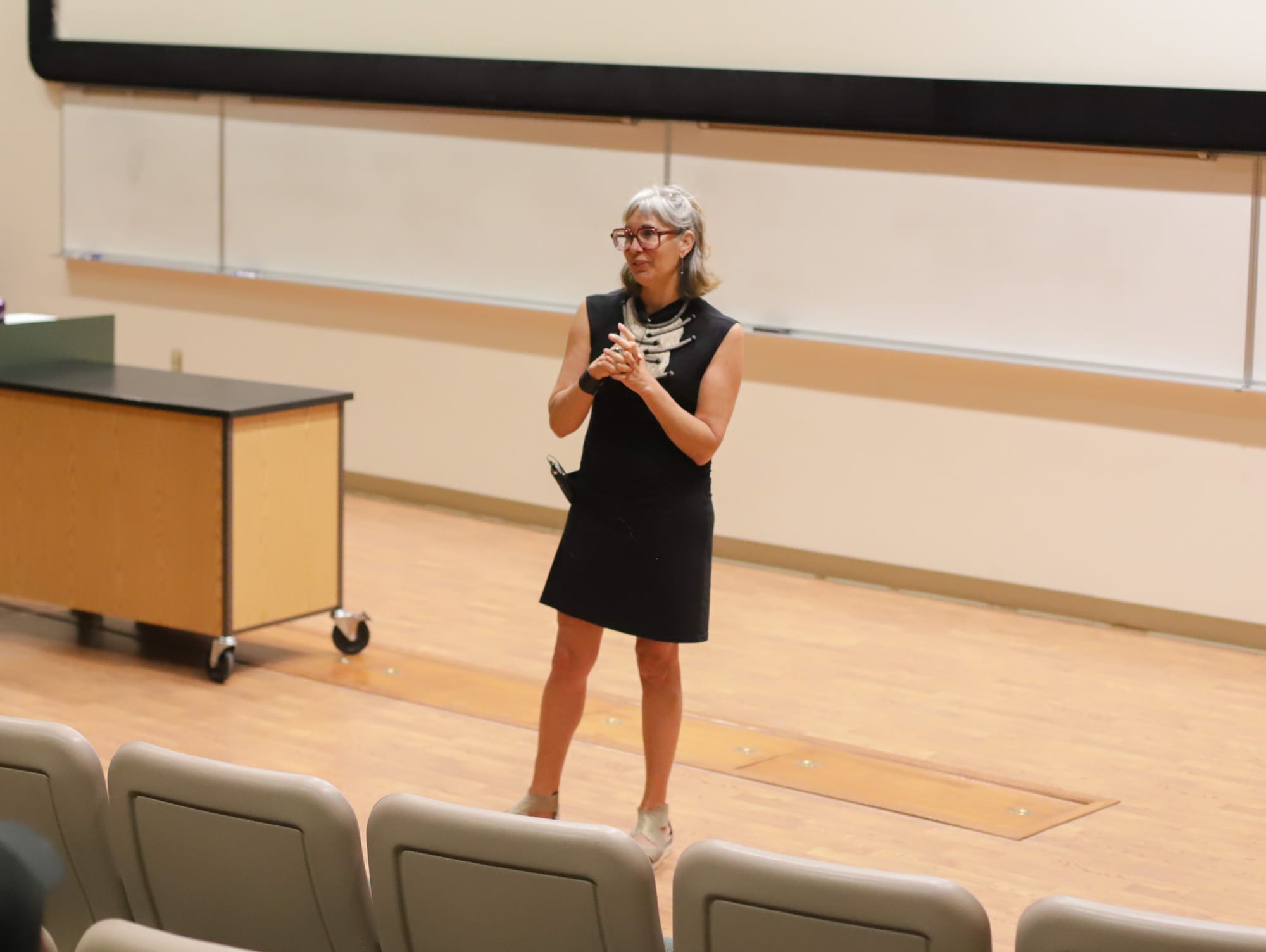
She used the term "astro-colonialism" to describe how astronomy has functioned as a force of colonization, treating indigenous land as dead space to be developed and brought to life through water, agriculture and infrastructure.
Occupations of tribal lands began in the 1970s and continue today, and a 2021 study found that indigenous peoples have lost 99% of their land. For years, the Tohono O'odham Reservation, situated along the U.S.-Mexico border, was considered an area with little federal oversight.
"Media articles reflected the growing fear that the O'odham Reservation was an unmonitored zone where 'illegal aliens' could easily traverse, given the absence of security personnel checkpoints, or even border signs, warning, would be processors that they were now entering US territory," Schaeffer said.
Many members have been detained or deported simply for traveling through their ancestral lands, according to the Tohono O'odham Nation's website.
Following President Donald Trump's executive orders targeting immigration enforcement and border security, the Tohono O'odham Nation's Office of the Chairman and Vice Chairwoman released a statement encouraging Nation members to carry identification at all times, preferably a tribal ID, as tribes nationwide urged members to carry tribal identification cards and Certificates of Degree of Indian Blood amid concerns about heightened enforcement on and near reservation lands.
"The Sonoran Desert is one of the most surveilled places in the entire United States," Schaeffer said. "Ironically, it's a homeland where my immigrant 'aliens' cross 'alien' land. Bridging together Latinx, immigration, and indigenous borderland studies. An important framework for me, personally, as my own family, migrated across the desert."
Diana Ramos is a University of Arizona alum and Tucson Spotlight reporter. Contact her at diana@tucsonspotlight.org.
Tucson Spotlight is a community-based newsroom that provides paid opportunities for students and rising journalists in Southern Arizona. Please consider supporting our work with a tax-deductible donation.