Tucson voters to decide on TEP energy deal in November
Tucson voters will weigh in November on a first-of-its-kind franchise agreement with Tucson Electric Power that would direct millions in shareholder funds toward climate projects and low-income energy assistance.
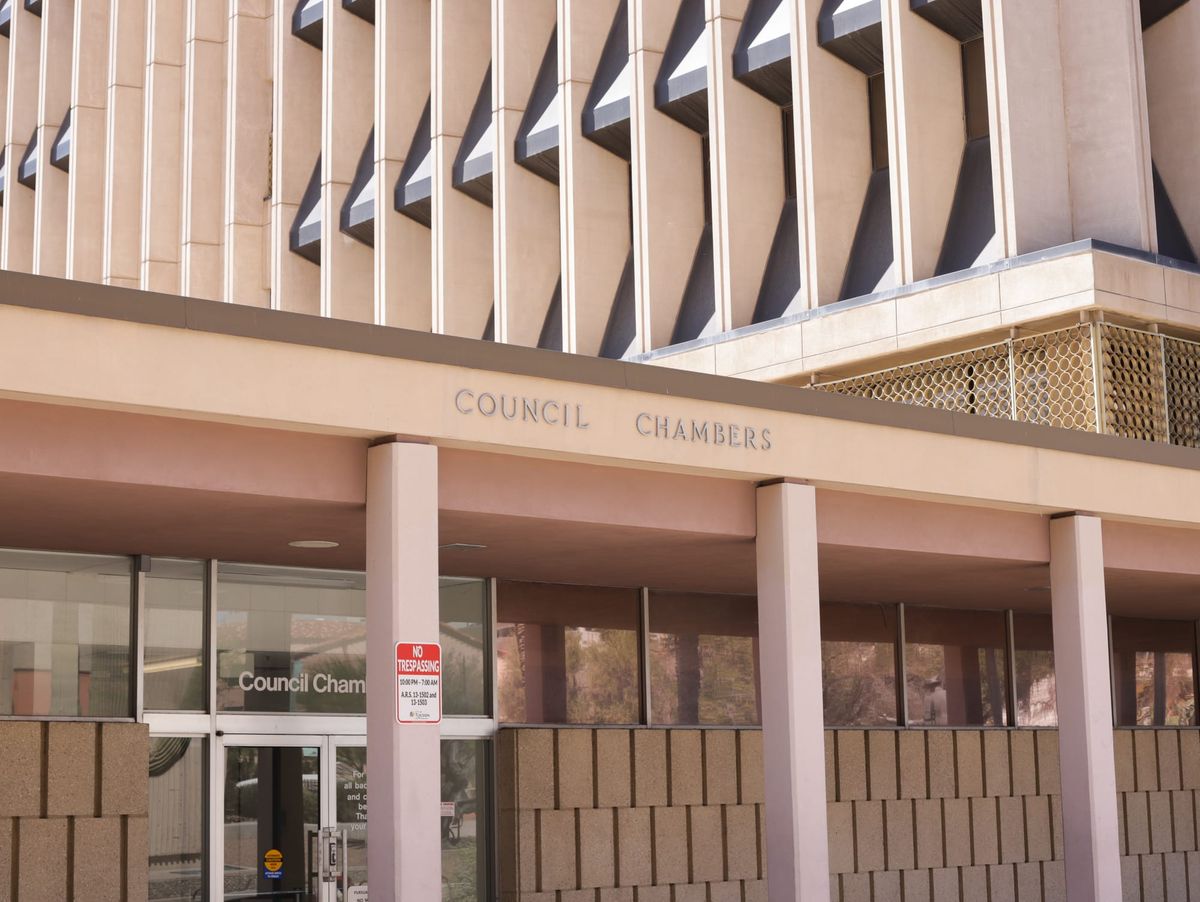
Tucson voters will decide this November whether to formalize a first-of-its-kind energy partnership with Tucson Electric Power that would direct millions in shareholder funds toward climate projects and low-income energy assistance.
The Tucson City Council voted unanimously April 7 to place a proposed franchise agreement with Tucson Electric Power on the November ballot.
If approved by voters Nov. 3, officials say the agreement would help lower costs for residents, advance the city's climate goals and mark the first deal of its kind in Arizona.
The energy collaboration agreement would direct TEP shareholder funds toward the city's climate initiatives. Approving the franchise agreement would allow those dollars to flow and legally bind the two agreements together.
Chief Resilience Officer Fatima Luna said the city held numerous town halls during the drafting process, drawing strong public support and feedback that shaped several changes. One revision increased TEP's annual payment from a 2% raise every other year to a 2% raise every year over the agreement's 25-year duration.
That change, made in response to town hall feedback, increases the agreement's total expected revenue from $56 million to $64 million over its 25-year term.
The agreement also shifts project decision-making from a mutual approval process to sole city control, and requires the city to develop an implementation strategy to ensure transparency and flexibility as technology evolves.
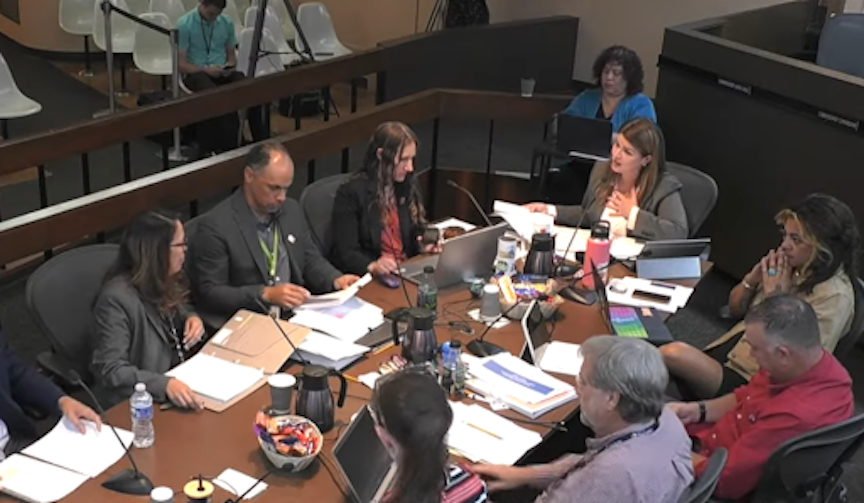
The city's Commission on Climate and Energy Sustainability will serve as the formal advisory body overseeing the agreement's implementation.
"These investments will allow the city to directly invest in communities and people's homes, not only through retrofits, weatherization, solar power and assistance programs," Luna said. "It really goes directly into our community's needs and priorities."
City Attorney Roi Lusk traced the agreement's origins to the failure of Proposition 412 in 2023, which would have imposed a 0.75% fee on TEP customers to raise $5 million for infrastructure and the Climate Action Plan. Lusk credited that defeat with spurring the current approach, saying the city "wouldn't be here without" the community's rejection of it.
Ward 3 Councilmember Kevin Dahl called the energy collaboration agreement "the cat's meow," though he acknowledged receiving emails from constituents who believe it disproportionately benefits TEP.
Dahl said he hopes the city can partner with TEP on solar projects and low-income bill assistance while still challenging the utility on its ongoing rate increase case.
"I recognize TEP is the brunt of a lot of people's anger right now," Dahl said.
TEP supports the franchise agreement, saying the negotiated terms governing its use of public streets and rights-of-way would improve reliability and response times during power outages. The utility warned that without the agreement, right-of-way access could face new requirements or delays, potentially worsening outages.
Not everyone is on board. Public Power Tucson issued a press release April 8 calling the $2 million in annual TEP funds "chump change" and a "bribe" to protect the company's profits, and argued it is irresponsible to lock the city into a deal that cannot be renegotiated for 25 years.
The council also took up the city's fiscal year 2027 budget at the same meeting, including a proposed $7.1 million cut to the Tucson Fire Department that would potentially close fire stations 3 and 6 and eliminate fire public education programs and the Tucson Collaborative Community Care program.
Station 3, the closest fire station to the University of Arizona, would reduce the budget by $3.6 million, while Station 6, adjacent to the Tucson Police Department Academy and the Arizona State Prison Complex Tucson, would save $2.5 million.
City officials argue that major institutions near both stations are not contributing their fair share to local fire service. An existing memorandum of understanding between the city and the University of Arizona acknowledges the UA's responsibility for campus fire service, which officials say could form the basis of a funding agreement that might keep Station 3 open.
A similar arrangement could be explored with the state prison for Station 6, given that many of the station's calls serve the prison system.
The Tucson Collaborative Community Care program, a Tucson Fire Department initiative aimed at reducing inappropriate 911 calls by addressing their root causes, would also be cut. Combined with the public education reductions, eliminating the program would save $1,035,000 annually.
"This is very useful and important work," said City Manager Tim Thomure. "It is also work that we know we have other resources within the city to provide that or similar services."
Thomure pushed back on rumors of firefighter layoffs, saying any station closures would result in staff being reassigned to other parts of the fleet. The savings would come through overtime reductions, he said, though he acknowledged the closures would slow response times in parts of the city.
Ian Stash is a journalism major at the University of Arizona and Tucson Spotlight intern. Contact him at istash@arizona.edu.
Tucson Spotlight is a community-based newsroom that provides paid opportunities for students and rising journalists in Southern Arizona. Please consider supporting our work with a tax-deductible donation.