Tucson bets on partnerships to battle climate change
As federal climate funding shrinks under the Trump administration, Tucson is leaning on public-private partnerships to expand solar access, grow its urban tree canopy and protect residents from deadly heat.
As Earth Day approaches Wednesday, Tucson officials say public-private partnerships have never mattered more. The city spent more than $160 million on climate-related projects in 2025 and secured nearly $94 million in grants, even as federal funding continues to dry up under the Trump administration.
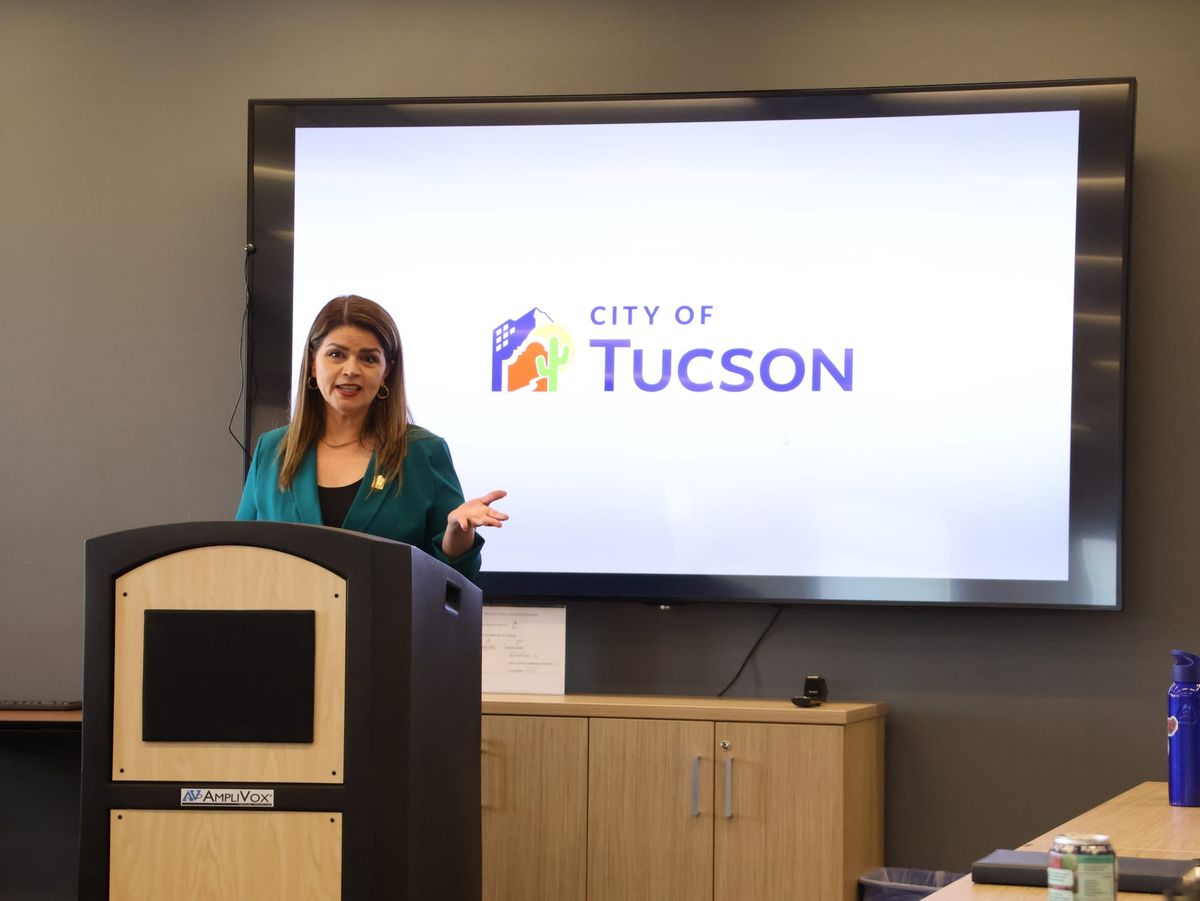
"Whether it's expanding green infrastructure, supporting heat relief efforts, advancing water conservation or engaging residents in meaningful ways, these partnerships have been critical every step of the way," Tucson Mayor Regina Romero said during an April 2 town hall.
Established in 2023, Tucson Resilient Together outlines strategies to reach net-zero emissions by 2030, identify communities most vulnerable to the impacts of climate change, and provide long-term strategies to adapt to climate change.
But the city has taken additional steps beyond the plan, including pushing for summer utility cutoff moratoriums with Tucson Electric Power and Tucson Water and blocking new data center development, which can worsen heat island effects in surrounding neighborhoods.
"Climate change is not a joke. Sustainability is not optional for Tucson. It's essential to our health, to our economic development and our future economic development opportunities that we have as a city," Romero said.
Strategies highlighted include expanding the city's shade canopy through the Tucson Million Trees Initiative, identifying areas in need of heat relief using the Heat Action Roadmap and establishing water conservation strategies.
At the county level, Senior Advisor Sarah Davis of the Pima County Administrator's Office said residents have raised concerns about air quality, emission reductions, drought and green infrastructure, and that those concerns have driven efforts to collaborate with neighboring jurisdictions.
In 2023, Davis said, the city and county joined Oro Valley, South Tucson and the Tohono O'odham Nation in a regional climate coalition funded by the Environmental Protection Agency, which produced a comprehensive climate action plan setting shared emissions goals for the next five years.
Locally, the Pima County Board of Supervisors and Tucson Mayor and Council set a goal to reduce emissions 60% from 2021 levels, using heatmap data to establish workforce heat protections and coordinate with partner organizations.
Fatima Luna, the city's chief resilience officer and the plan's lead overseer, said 85% of its initiatives are now underway.
"In 2025 alone, city departments invested more than $160 million in climate-related projects, and they were able to secure nearly $94 million in grants for climate-related projects," Luna said.
One goal, reaching 30 megawatts of solar power across the city's 74 installations, is close to being met, Luna said.
"The mayor and council invested $900,000 in the solar empowerment program. That really helps bring solar directly into low-income homes, in partnership with SARI and also Technicians for Sustainability," Luna said. "We're also working with Tucson Electric Power and the Pacific Northwest National Lab to design and install an energy battery storage system at the Donna Liggins Center, and when fully charged, it would be able to carry the center for up to three days, ensuring that a trusted community space can provide residents with immediate respite during power outages with preparedness programming."
A recent agreement with TEP will direct $2 million in shareholder funds annually toward clean energy projects, workforce development and youth climate education.
The progress toward the city's 2030 carbon neutrality goal is already measurable.
"(We) reduced about 44% of our emissions that are now (from) renewable energy," Luna said. "We're also transitioning the (bus) fleet to a zero-emissions fleet. We have 10 (green) existing city buses and 10 more on the way."
Still, officials say funding remains one of the biggest obstacles to the city's climate resilience efforts.
"Since Trump won, we did know that there was going to be dismantling of a lot of the funding that had been created by the Biden-Harris administration, which the city of Tucson was very lucky to apply for, and be very successful at bringing funds to Tucson," Romero said.
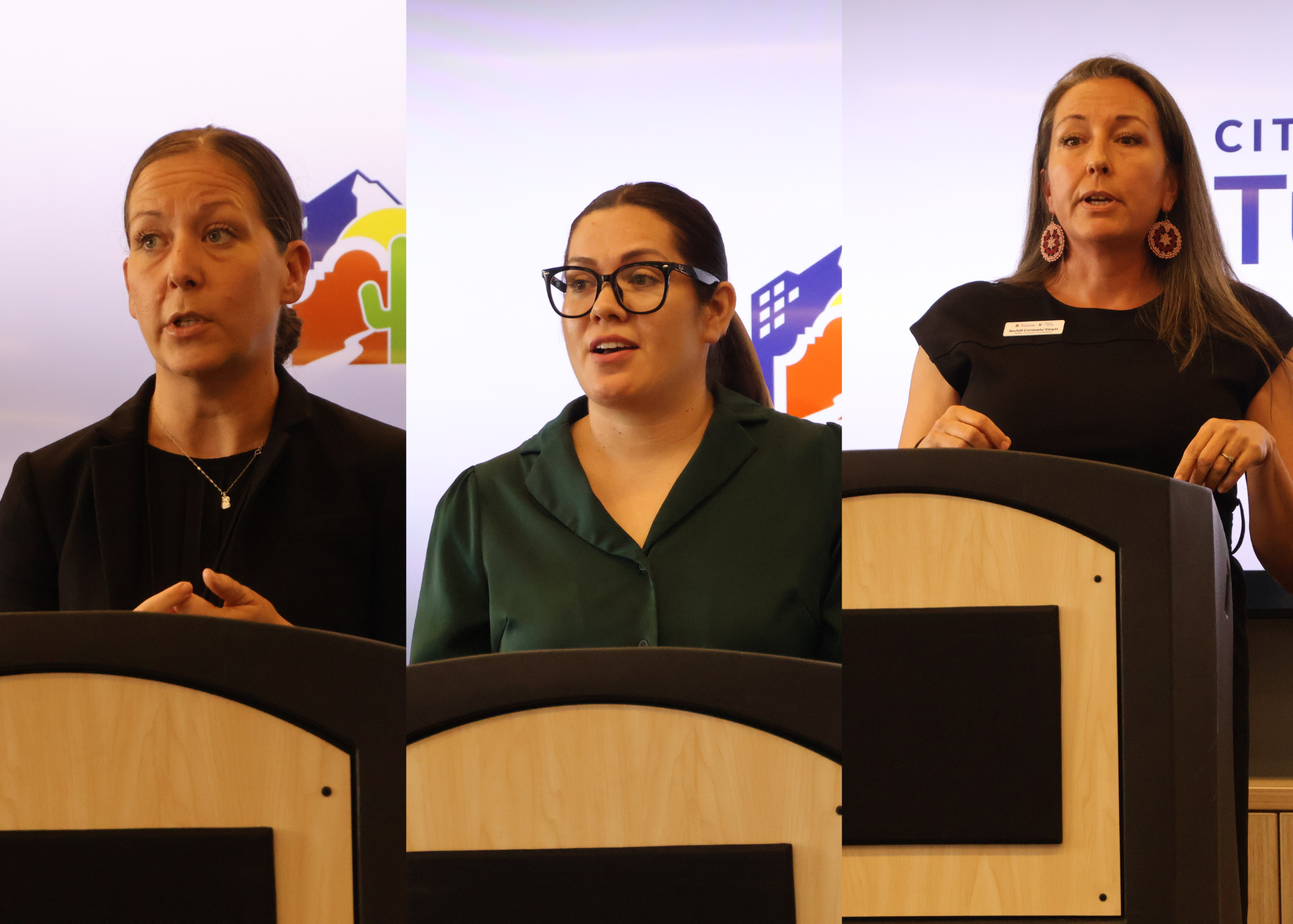
Though the administration has dismantled tax and EV credits, Tucson has retained some federal funding in support of urban forestry efforts through the U.S. Forest Service. Xochitl Coronado Vargas, public outreach coordinator for the Storm-To-Shade Program, said Tucson Water and the city are working together to expand the urban tree canopy while reducing municipal water use.
"When it rains, stormwater runs off of any hardscape here in Tucson, be it a roof or a road," Vargas said. "Green stormwater infrastructure allows stormwater to enter that landscape in order to be able to utilize stormwater as a method of irrigation for new native plantings, rather than continuing to rely on municipal water to water these landscapes."
Tucson Water customers pay about $1 a month to fund green stormwater infrastructure across parks, public property and public housing, with the program prioritizing neighborhoods with lower tree equity scores, areas with higher socioeconomic vulnerability, less tree canopy and higher surface temperatures.
All spaces created by Storm-To-Shade, as well as green stormwater infrastructure that predates the program, are maintained in perpetuity. By expanding tree canopy and other green spaces to collect water, the program improves air quality, prevents flooding and supports native wildlife. Twenty projects are complete and 20 more are under construction.
"There's one at Rudy Garcia Park in the parking lot. There's a project that is about to break ground at El Pueblo Neighborhood Center, a very wonderful beautification project that takes stormwater off of the roofs of those buildings, puts it in the ground and adds all of this new native vegetation," Vargas said.
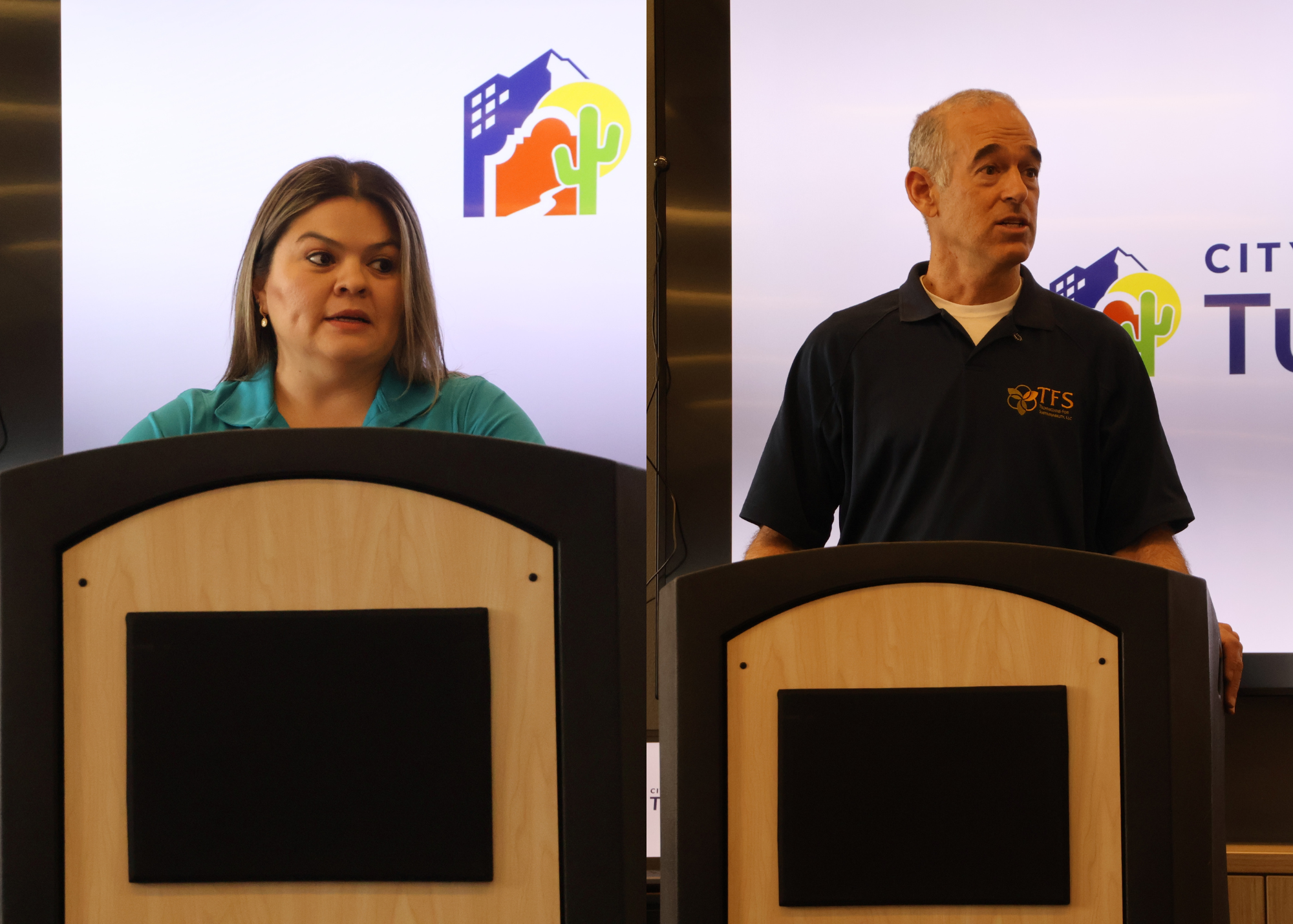
Storm-To-Shade is one of several programs pairing water and green infrastructure in Tucson's lower-income communities. The Sonora Environmental Research Institute's Flor Sandoval has partnered with Kevin Cook of local solar installer Technicians for Sustainability to provide low-income families with water harvesting infrastructure and solar power to offset electricity costs.
"Our water conservation program promotes both rainwater harvesting and gray water reuse, helping families capture, recycle and make the most of every drop of rainwater in our desert environment," Sandoval said. "While these systems may not always reduce water bills immediately, they are critical for long-term conservation, reducing outdoor water use and increasing drought resilience."
Cook said Technicians for Sustainability launched the Solar Empowerment Program in 2022, offering grants that cover up to 60% of rooftop solar installation costs to make solar more accessible for low-income families. TFS has already installed 15 solar energy systems on low-income housing properties this year.
Still, both organizations face challenges: deteriorating roof conditions, financial gaps even with partial grants, and keeping technicians safe in extreme heat.
With the federal 30% residential solar tax credit gone, Cook said, some residents are being pushed into predatory leasing agreements.
"We've been working with about 80 solar installers around the country to create our own lease product that we are now launching here in Tucson, that has the homeowner as the primary party," Cook said. "Last year in 2025, (we) produced 26% of the energy used in this community by renewable energy, wind and solar either owned by the utility or owned by and operated by community members.
One key theme of the city's climate action plan is direct communication with the community about the impacts of climate change. Monique Vallery, interim executive director of the American Red Cross, has been canvassing and talking with residents about how heat is impacting them.
"We had about 1,000 households in the community last year that got the opportunity to have face-to-face engagement," Vallery said.
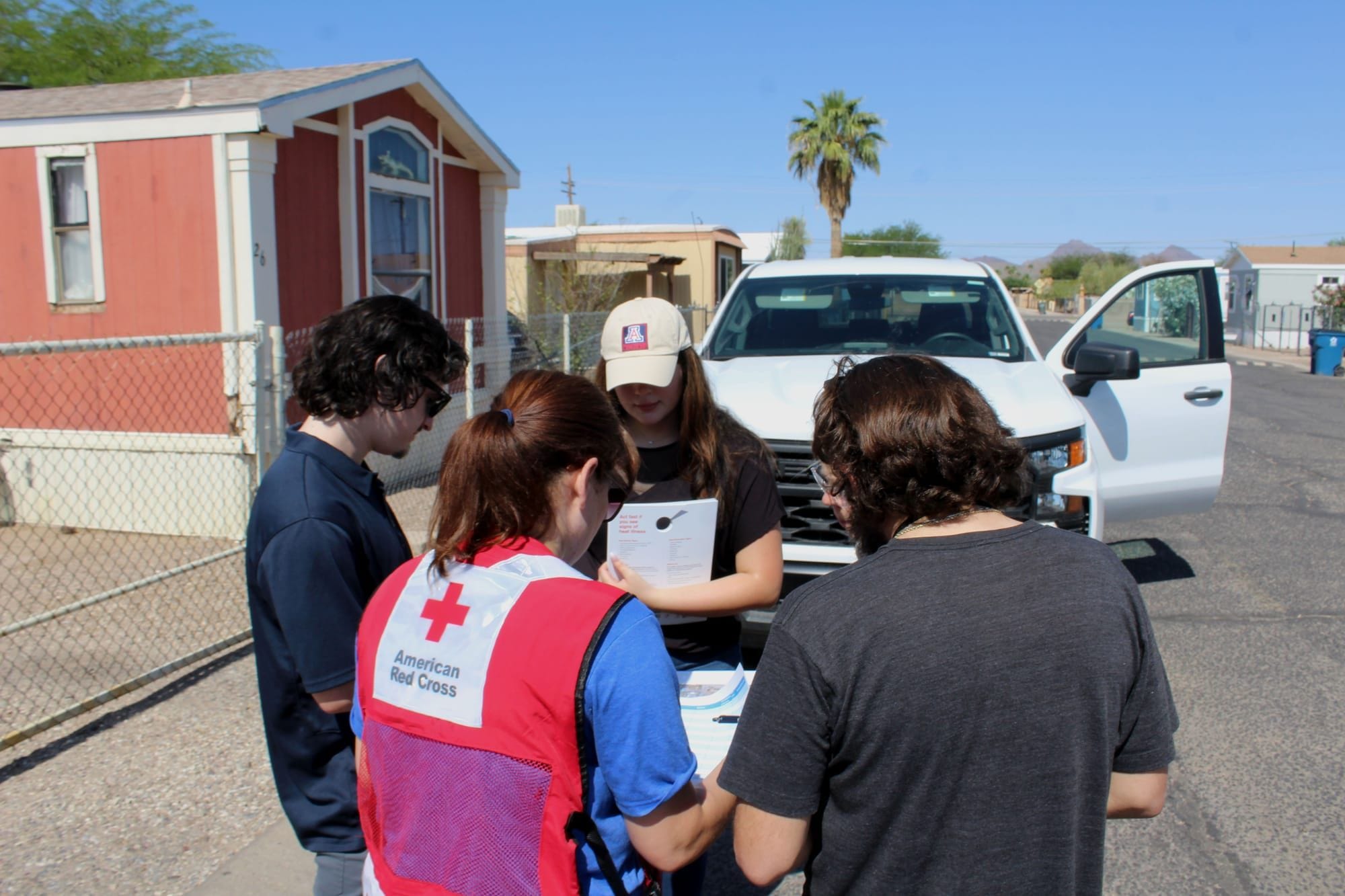
These heat walks, a collaboration with the Pima County Health Department, target communities with the most heat-related 911 calls, including mobile home parks and senior living communities.
The outreach reflects a broader push to have extreme heat recognized at the federal level. The city has sent yearly letters to FEMA requesting that extreme heat be classified as a natural disaster.
"So far, in our first five walks in these targeted zip codes, we've reached almost 800 households," Vallery said. "We have more heat deaths than all other disasters combined. If we're mobilized, the best way to be mobilized is to know your neighbor, know your partners, know those resources."
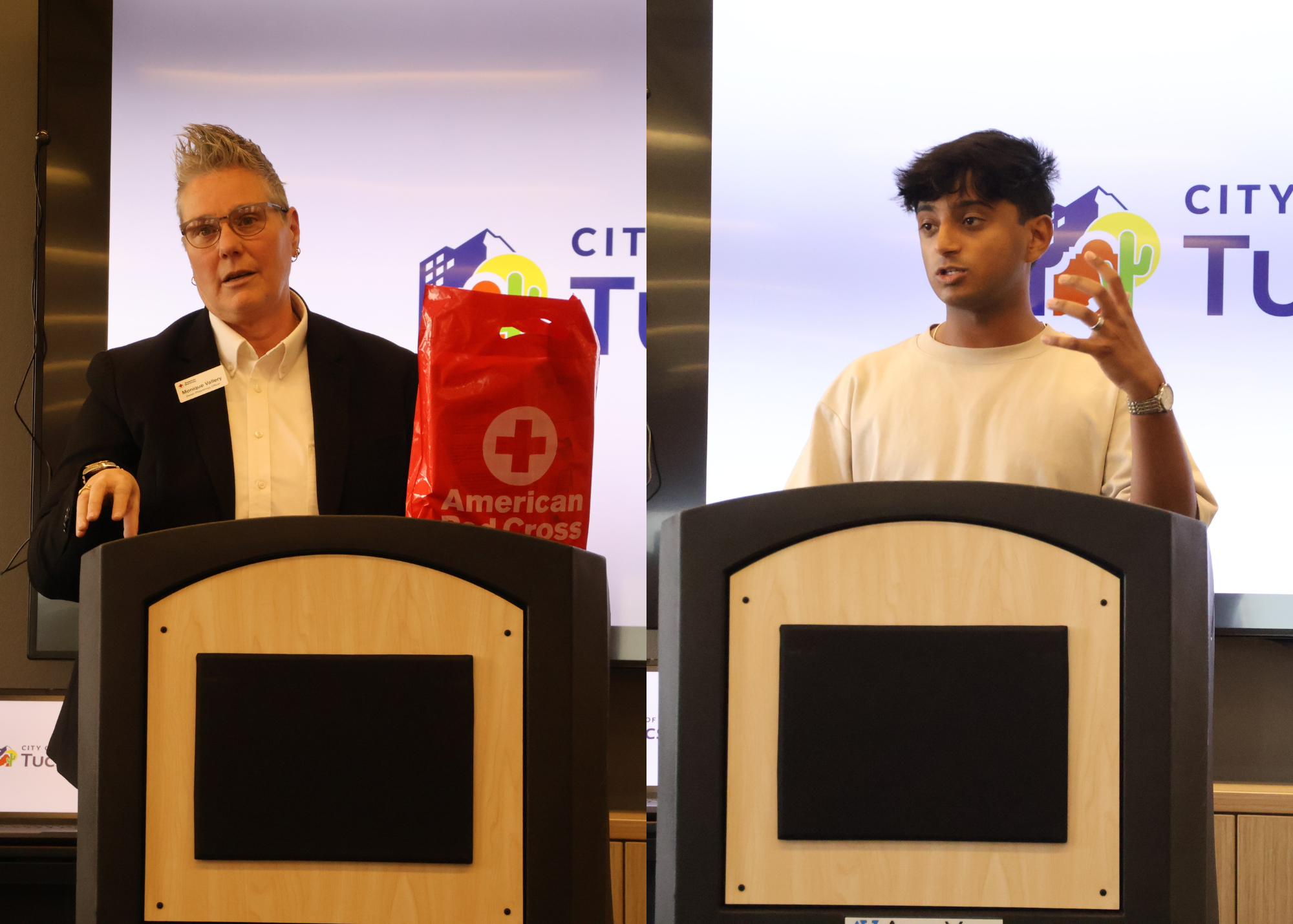
Amistades representative and co-lead of the Arizona Youth Climate Coalition Ojas Sanghi talked about efforts to help develop long-term climate solutions. Amistades is a Latino-led nonprofit that promotes social justice, equity and community empowerment in Southern Arizona.
Sanghi said he was inspired to pursue climate work after growing up in India and returning to Tucson for high school, where he noticed the disparities and impacts of climate change firsthand.
"I didn't really remember what life was like in the U.S., and then I moved back to Tucson for high school, and I was like, 'Oh, my God, I can breathe, I can see the stars, that's crazy,'" he said.
Sanghi talked about Amistades' Justicia Juntos, or Justice Together, program that uses culturally grounded outreach strategies to educate Latinos about the urban heat island effect, responses to extreme heat and access to resources to keep them safe.
"That means two climate resilience hubs in those communities, a 15-member Youth Climate Coalition, a new one to implement climate resilience measures, and 10 trained Latino climate advocates engaged in regional action," Sanghi said.
Raices Vivas, or Live Roots, is a program that transforms underused spaces in schools into green areas for urban forestry and environmental learning, intending to restore the native tree canopy and school gardens while engaging students and families.
"One school in particular that we're working with right now is Apollo Middle School," Sanghi said. "This project inherently leans a lot into intergenerational connection. Members of AZYCC are going to be running activities and teaching classes. We believe it's easier for students to connect with and learn from peers who are just a few years older than them."
Topacio “Topaz” Servellon is a reporter with Tucson Spotlight. Contact them at topacioserve@gmail.com.
Tucson Spotlight is a community-based newsroom that provides paid opportunities for students and rising journalists in Southern Arizona. Please consider supporting our work with a tax-deductible donation.