EcoFlight brings students face to face with Arizona mining
Students got a firsthand look at southern Arizona's copper mining country from the air, joining conservation experts and tribal representatives on an EcoFlight tour of the region's most contested mine sites.
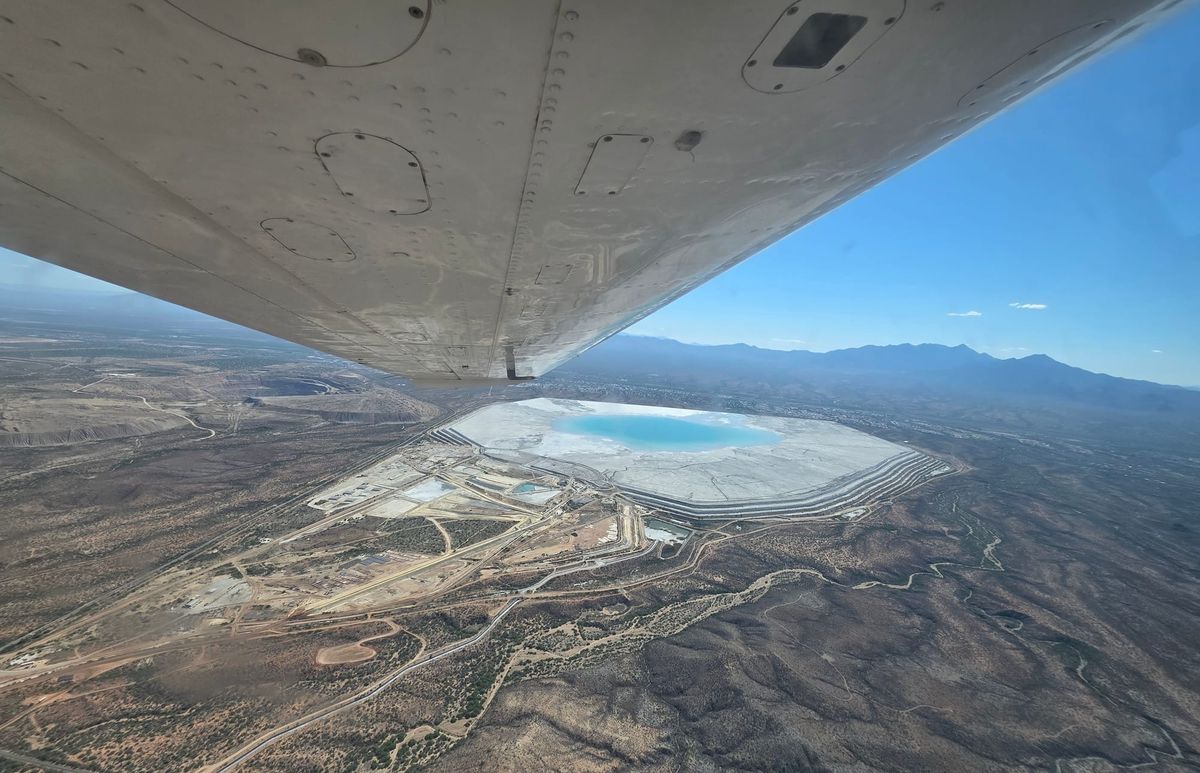
A group of college and graduate students got a bird's-eye view of Southern Arizona's copper mining country last week, joining local experts aboard an aerial tour of some of the state's most contested mining terrain.
The flights swept over the open pits of the Green Valley Mining Complex near Sahuarita and the proposed Copper World expansion in the Santa Rita Mountains, landscapes that sit at the intersection of the state's mining economy and growing environmental and tribal concerns.
The experience was part of EcoFlight's annual Flight Across America program, which brings students into the field to study Indigenous leadership, conservation and the environmental complexities facing the American West.
EcoFlight is a conservation aviation nonprofit that uses small aircraft to educate and advocate for the protection of wild lands and wildlife habitat across the West.
Now in its 20th year, the Flight Across America program was conceived by EcoFlight founder and chief pilot Bruce Gordon and fellow pilot and folk singer John Denver, who originally designed it to bring national attention to conservation issues through aerial tours ending in Washington, D.C. on Earth Day.
The goal, organizers say, is to send students home not just informed, but ready to act.
EcoFlight works with around 100 students a year, including those who participate in Flight Across America.
"Flight across America is … a more intensive trip, since we're flying for days," EcoFlight's Amanda Grimsted told Tucson Spotlight. "We have a lot (of students) from Colorado and a lot from Arizona (in this cohort). That's where we focused our outreach this year, but we always like to make it a diverse group of people that can experience and take it back. We try to just be reaching out to different schools so that way we're not just catering to the same participants."
In addition to students, EcoFlight also works with tribal and youth groups, partnering with the Intertribal Environmental Professionals last year to engage more Native American students.
"We worked with the Blackbeat Nation and also the Round Valley Indian tribe last year," Grimsted said. "We also worked (with) students and the youth that ran the Klamoth River once it was free flowing. They removed the dams and they went on a 300-mile journey, which is just incredible. They were able to kayak the river and then we flew them above it - and their family members, too - to show them the big extent that they just did."
Arizona is the top copper-producing state in the U.S., but the industry has brought with it environmental and cultural concerns, according to Mike Quigley, Arizona state director of The Wilderness Society.
Quigley gave students an overview of the region's conservation challenges before the flights.
The Wilderness Society, founded in 1935, works primarily on federal public lands, including Bureau of Land Management and U.S. Forest Service land, though Quigley said the organization is also working with the city and county of Tucson to establish a new national wildlife refuge along the Santa Cruz River.
In Arizona, he said, the biggest threat isn't oil and gas. It’s copper.
"Here in southern Arizona, mining is the thing," Quigley said. "The big deal is hard rock minerals, and especially copper."
One of the organization's current priorities is fighting a proposed expansion of the Silver Bell Copper Mine into the adjacent Ironwood Forest National Monument, where the company wants to dump mining tailings. The fight is a familiar one; the same battle played out during the first Trump administration.
"We fought that the last time. We're fighting that again now," Quigley said. "It's probably one of the things we're spending the most effort on in Arizona currently."
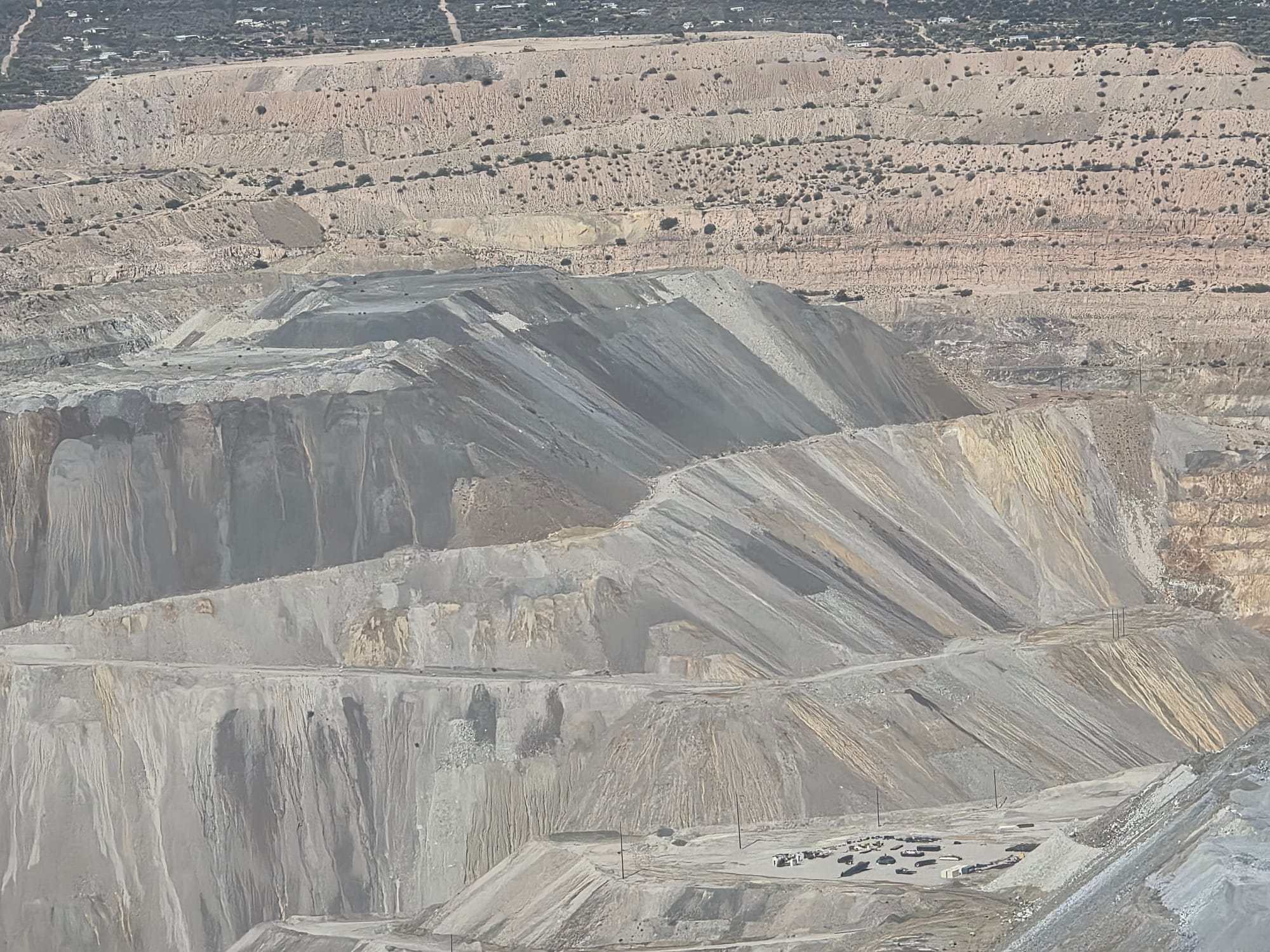
Quigley also walked students through the region's two major river systems. The San Pedro, he said, is the last free-flowing river in southern Arizona and a critical north-south flyway for migratory birds. The Santa Cruz, by contrast, went dry sometime between the 1950s and 1970s due to groundwater pumping and diversions, but is now being restored with treated effluent water.
"The river is coming back to life kind of on its own, by us just putting water into the river," he said.
He also touched on the Sky Island region, calling it a global biodiversity hotspot where tropical and temperate species overlap.
"You're kind of going from Canada to Mexico in terms of biogeography, but you're going vertically instead of latitudinally," Quigley said, noting that jaguars have been documented in the mountain ranges students flew over within the past year.
Students heard from several members of the Tohono O'odham Nation, whose 2.8 million acres of land shares a 62-mile border with Mexico.
Tohono O'odham Vice Chairwoman Carla Johnson told students the Nation has been consistently opposed to federal encroachments, from border wall construction to transmission lines, but described the frustration of advocacy that is often ignored.
"You do all that work, you do all that lobbying, you do all that networking, and then you see these things being updated on federal websites," Johnson said. "It's heartbreaking when you know they're still going to go do what they want to do."
Also joining the group was Roger Featherstone, president of the Arizona Mining Reform Coalition, who has worked to stop what he described as inappropriate mining proposals across the state since 2006.
"We're not anti-mining," Featherstone said. "But we are anti-stupidity. And most of the proposals we're seeing are just plain stupid."
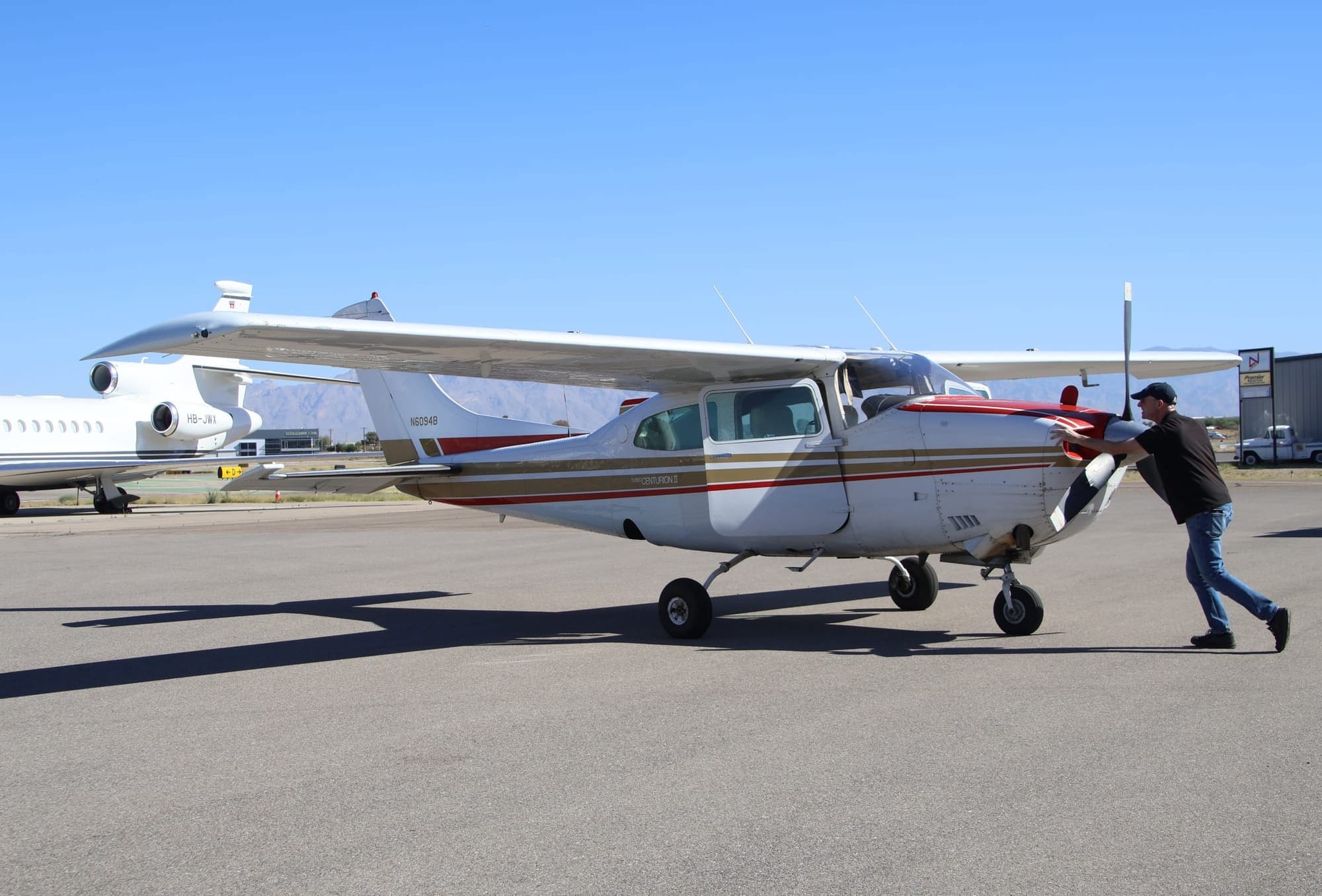
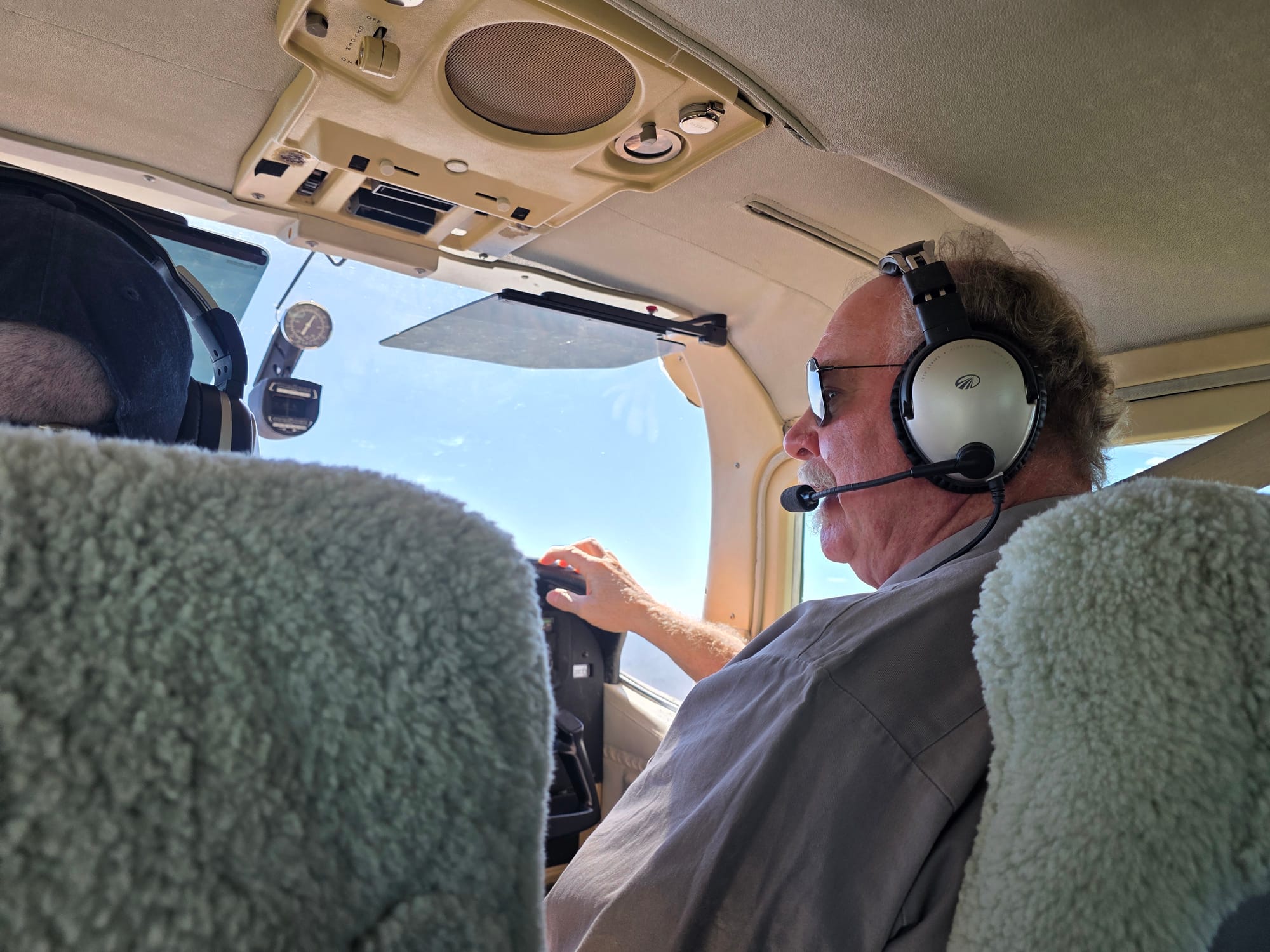
Featherstone joined students Kenzo Kimura and John Felix aboard a Cessna 210 for an aerial tour of the Green Valley Mining Complex and the proposed Copper World expansion, offering on-the-ground expertise on the mining industry's footprint across southern Arizona.
The Green Valley mining operation began after World War II. As mineral deposits weaken, modern mines may operate with only 1% minerals, resulting in 99% waste, Featherstone said.
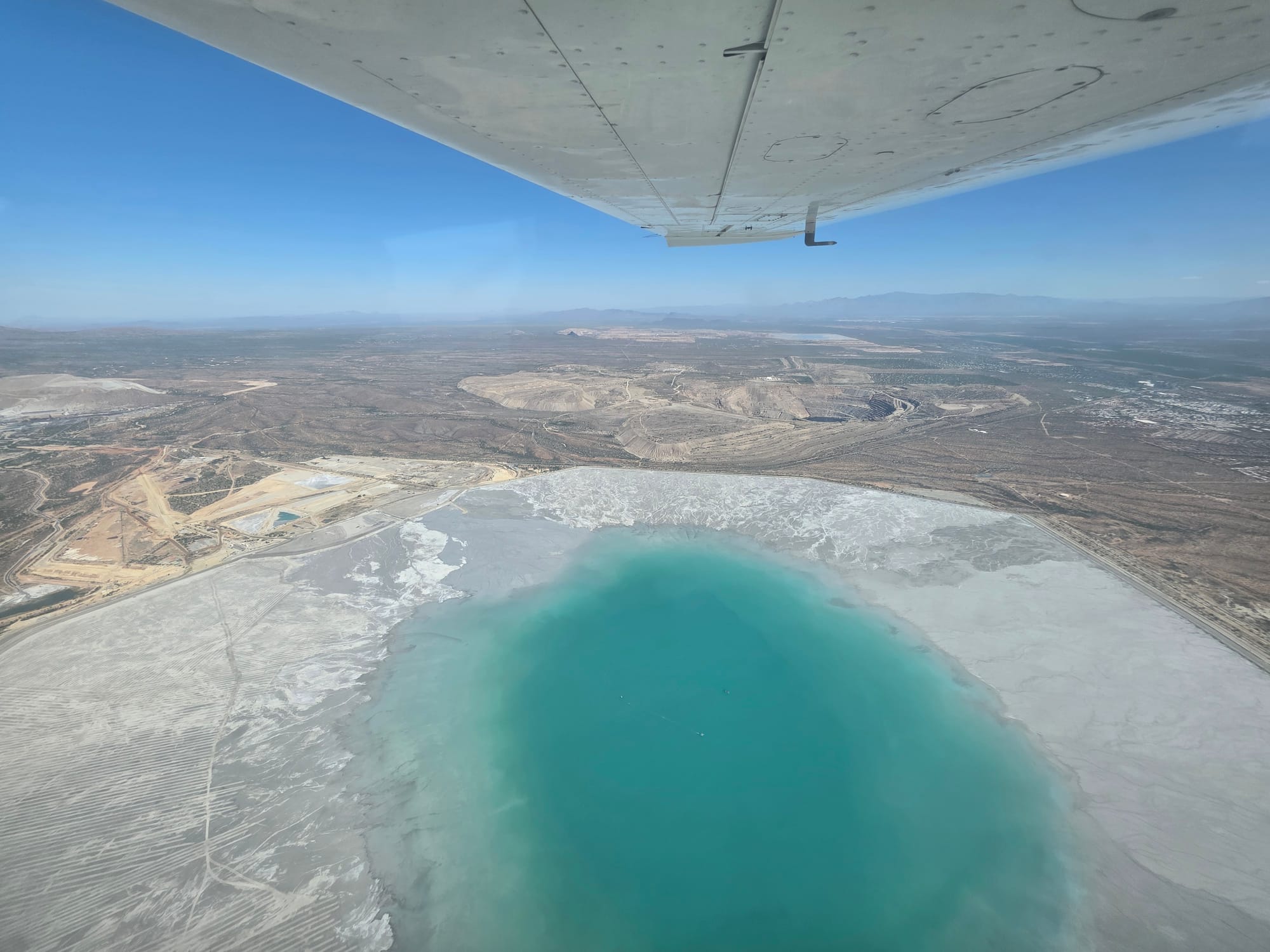
This waste, known as tailings, is crushed to the consistency of talcum powder, mixed with water and stored in massive piles. For every 100 pounds of ore, only one pound of finished material is typically produced, Featherstone said.
Residents near Green Valley have faced issues including water pollution and toxic dust from tailings piles, which can be so corrosive that mining companies sometimes pay for residents to have their cars detailed. A sulfide plume has also been documented in the groundwater.
"As a coalition, we haven't focused that much on these problems," Featherstone said. "Our biggest problem is basically triage and what we want to work on giving our limited resources."
He pointed to the tailings dams, which are often made of the waste material itself, and warned that these dams are only stable when dry.
"The rule of thumb is a tailings dam will at some point in time collapse; it's not a question of if, it's a question of when," Featherstone said. "If they collapse, it would cause some problems. Some of the larger ones, like the Pinto Valley mine, would have a tailings dam over 1,000 feet tall. If that would fail, there would be toxic tailings in Roosevelt Lake flowing down Pinto Creek. In the case of the Resolution Copper project, the tailings dam would be 490 feet tall. If that were to fail, you would have toxic tailings flowing down the Gila River all the way to the Sea of Cortez."
Freeport-McMoRan, which operates the Green Valley Mining Complex, did not respond to Tucson Spotlight's request for comment.
While flying over the Copper World project, Featherstone said Hudbay, the current operator, has already begun scraping and blading for exploration, impacting the landscape on the west side of the mountains.
Hudbay, in a statement to Tucson Spotlight, said Copper World is a fully permitted brownfield project designed to the "highest engineering and environmental standards" and that it has worked with tribal monitors to survey and protect cultural artifacts before any ground disturbance.
The company said it operates under continuous air and water quality monitoring overseen by the Arizona Department of Environmental Quality and has partnered with an intergovernmental working group to address dust generated by a public road leading to the site.
Hudbay also noted that its first state permit was a Mined Land Reclamation Plan approved by the Arizona State Mine Inspector, which designates post-mining land use for ranching and wildlife habitat and requires the company to post a financial bond covering the full cost of reclamation. The company said it also runs a voluntary water mitigation project designed to replace 105% of the water it pumps from the aquifer.
Featherstone was less convinced.
"Pima County had a chance to actually buy the property for consultation but did not," he said. "As weak as federal laws are, Arizona has the weakest state mining regulations in the United States. Basically, the state will do anything the mine wants."
The area is ecologically unique, home to endangered species including the jaguar, a rare orchid and rare insects, Featherstone said.
These sites, including Oak Flat and Hermosa, hold high significance for Native American tribes, containing archaeological sites and ancient ball fields.
Adding to those concerns, Featherstone points to water. Mines essentially "export water," he says, because copper is often sold overseas as concentrate rather than being finished domestically, and mining companies may eventually ask the U.S. government for subsidies to build new copper smelters.
"The mining industry in Arizona is pretty much exempt from groundwater restrictions," Featherstone said. "These companies can pull as much water as they want out of the ground regardless of the impacts to the area. From a legal standpoint, there's really not much the communities can do."
Kimura, a Harvard University graduate student studying global health and humanitarianism, said the experience was illuminating.
"I focus on public health and medicine, so this is) definitely something different," Kimura said. "I'm usually on a raft or on a boat. Not in the air."
Pachynne Ignacio, a community organizer with Indivisible Tohono and a recent graduate of Northwest Indian College with a degree in native environmental science, was among the students who flew with EcoFlight. She described growing up in the shadow of the Sky Islands and watching mining and data center development encroach on sacred land. She said her mother had flown with EcoFlight the previous week.
"She said the vast difference between all the greenery from the untouched places to seeing those mines is devastating, and it made her cry," Ignacio said. "And my mom does not cry."
Caitlin Schmidt is Editor and Publisher of Tucson Spotlight. Contact her at caitlin@tucsonspotlight.org.
Tucson Spotlight is a community-based newsroom that provides paid opportunities for students and rising journalists in Southern Arizona. Please consider supporting our work with a tax-deductible donation.