Rio Nuevo faces June 30 deadline as budget fight continues
Rio Nuevo is moving forward with the reopening of Gibson's Shopping Market in downtown Tucson, but the district faces another legislative fight over its funding as the June 30 budget deadline approaches.
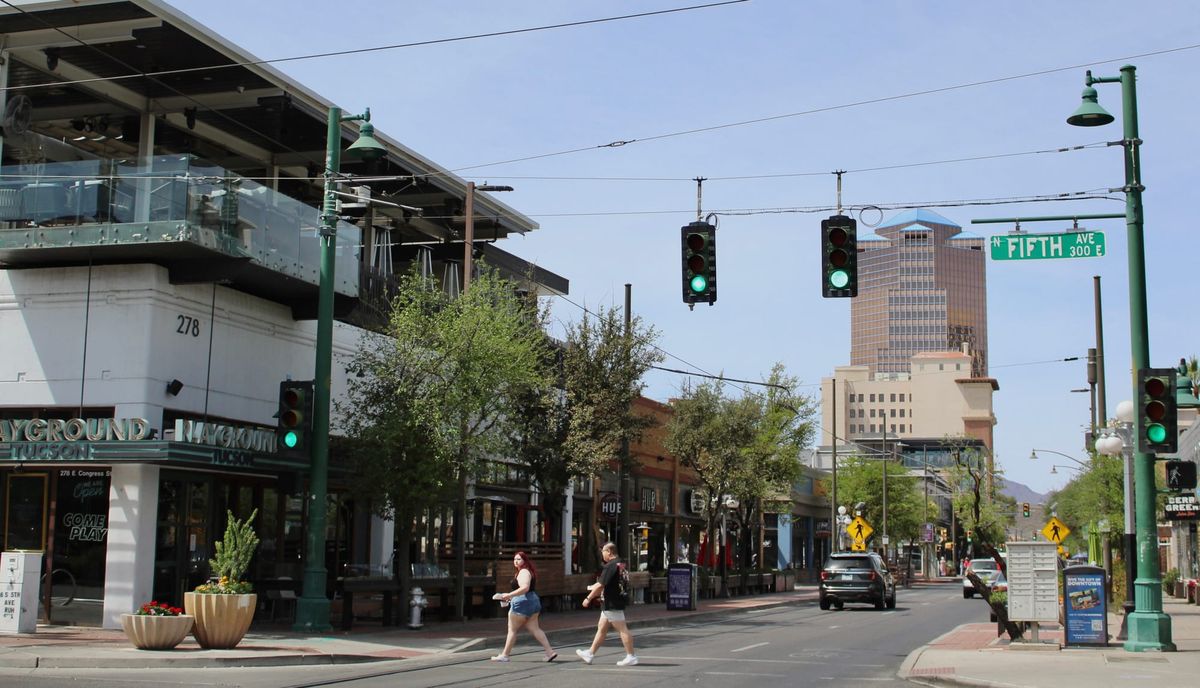
Downtown Tucson is getting a new grocery market, a speakeasy and four food trucks. Whether Rio Nuevo will be around to fund what comes next is less certain.
Rio Nuevo's board is bracing for another fight with the Republican-led legislature over its funding, even after Gov. Katie Hobbs vetoed a repeal earlier this year.
Hobbs vetoed a Republican budget proposal in May that would have eliminated Rio Nuevo by diverting its sales tax revenue back into the state treasury, but budget negotiations are ongoing and the legislature has until June 30 to pass a new plan.
"We doubled the tax base by investing in projects that create new tax (revenue)," said Chair Fletcher McCusker during the board's May 12 meeting.
For every $2 of taxpayer dollars invested by Rio Nuevo, $6 are invested by private businesses in Tucson, including restaurants, hotels, retail stores, mixed-use properties and more.
The investment is less of a handout to businesses and more of a catalyst for private development, McCusker said.
"If for some reason our income stops, it's just going to be a legal nightmare," McCusker said. "I don't think they understand anything about how we work."
Fiscal projections from 2026 show a decrease in Rio Nuevo's tax base, not nearly as severe as the decline during the COVID-19 pandemic, but noticeable given the project's previous year-over-year growth.
The board attributes this loss to what McCusker called "the Amazon Factor."
Amazon has historically disrupted Arizona's tax revenue base. Due to the decentralized nature of its business, the company was able to sidestep transaction privilege taxes that traditional brick-and-mortar stores face.
Amazon paid a $53 million settlement to the state for lost tax revenue. Now the new disruption is the tax exemptions and incentives provided to companies for data center construction.
Hobbs previously supported such incentives but has since reversed course, denying future data center subsidies and attempting to repeal existing ones.
Those same TPT funds are helping finance the reopening of Gibson's Shopping Market in downtown Tucson.
The reopened storefront will include an upstairs bar operated by Highwire Tucson, a speakeasy downstairs, a coffee bar inside and four food trucks outside: Kaiju Burger, Samurai Sushi, Don's Ribs and Barbecue and Barrio Bites.
The project's projected tax revenue jumped from $1.5 million to $8.9 million. Despite running over budget and behind schedule, Gibson's is projected to open in July.
"It's been … lately, a lot of harsh words and hurt feelings," said Nick Wayne, who presented project details to the board. Wayne said he has had many difficult conversations with contractors whose estimates were inaccurate.
Wayne said he was not concerned about opening during Tucson's slow season, pointing to the successful June 2015 launch of Highwire Tucson as precedent.
"I know Fourth Avenue and the university suffer in the summer," Wayne said. "I think locals feel more comfortable coming downtown when students aren't here. So we, just in any of our other businesses have not seen a drastic drop because of summer."
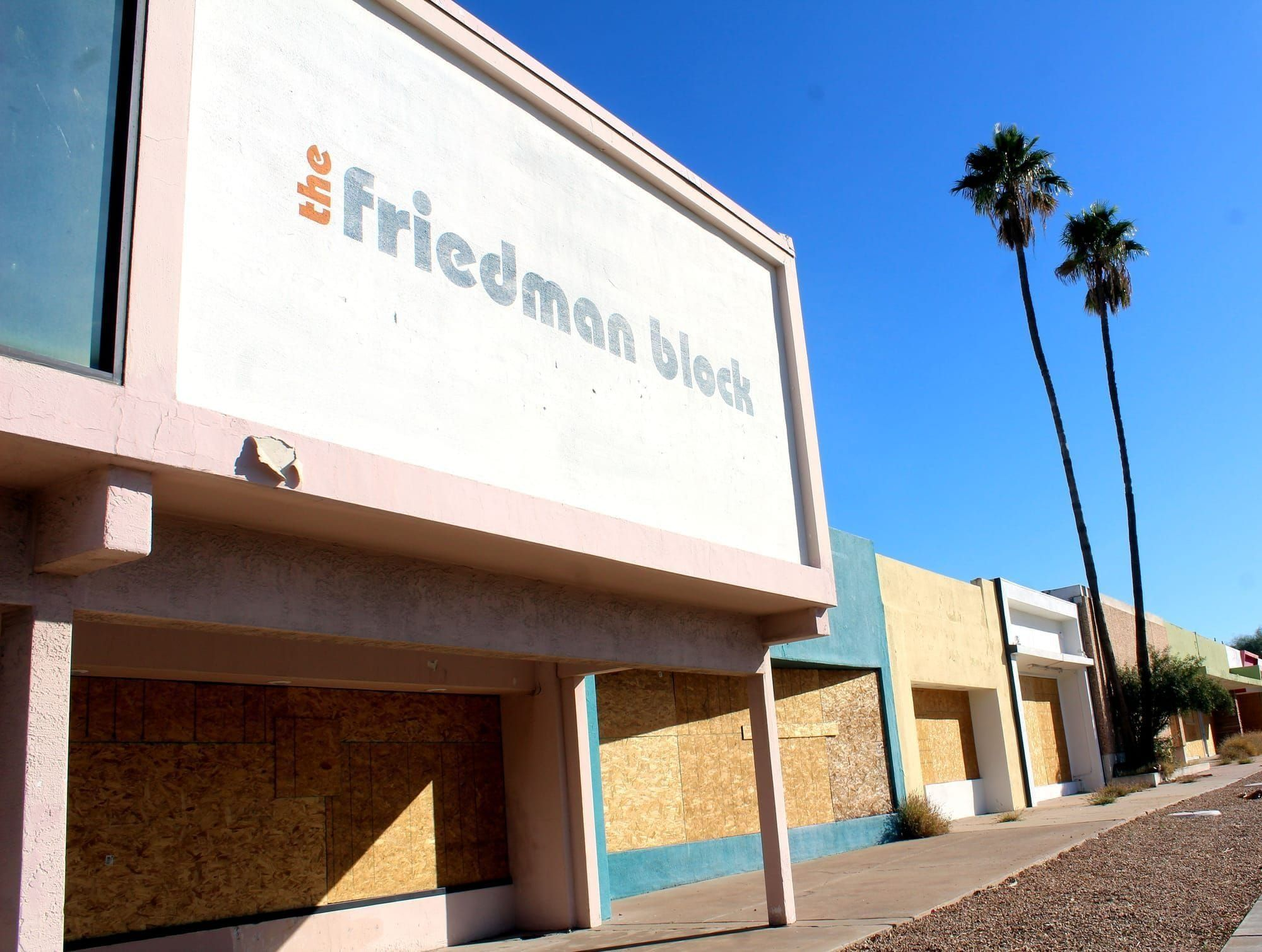
The Gibson's delays pale in comparison to those of the Friedman Block project, which has sat vacant and deteriorating for three and a half years, drawing concern from city officials and legislators.
"We're certainly willing to continue the fight and go through the processes of making the Friedman Block a workable and viable project here in Tucson," said restaurateur and Union Hospitality Group owner Grant Krueger.
Rick McLain, a partner at Repp + McLain Design and Construction, estimated 12 to 14 months for construction and another 9 to 12 just for permitting. Nothing has begun due to a lack of a development agreement, delays in the city permitting process and unresolved parking issues around the lot.
Krueger said the project has moved more slowly than the Solot shopping center because, unlike that project, the Friedman Block does not have a neighboring lot like the DeConcini parcel that was willing to provide additional parking.
Given the mounting pressure, the board gave Krueger and his team a 90-day deadline to draft a development plan and approved fencing off the Friedman Block to address concerns about the property's condition.
Quentin Agnello is a University of Arizona alum and freelance journalist in Tucson. Contact him at qsagnello@gmail.com.
Tucson Spotlight is a community-based newsroom that provides paid opportunities for students and rising journalists in Southern Arizona. Please consider supporting our work with a tax-deductible donation.