Tucson skate park project breaks ground after 10 years
Construction has begun on Tucson's Cushing Street Skate Park, which will become Arizona's first shaded skate park beneath an Interstate 10 overpass after nearly a decade of community advocacy.
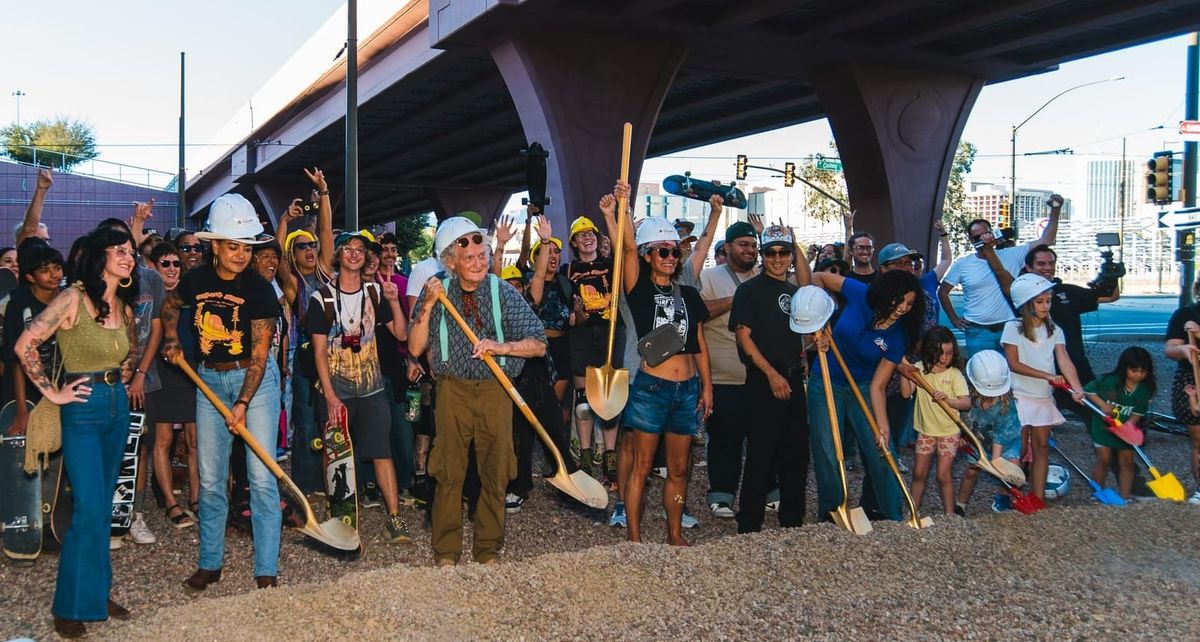
A decade after Caleb Gutierrez first pitched the idea at a Tucson City Council meeting, the Cushing Street Skate Park broke ground June 30, setting the stage for Arizona's first shaded skate park beneath the Interstate 10 overpass west of downtown.
Gutierrez said he attended countless meetings and presentations with various elected officials, and now, all his work to get the idea off the ground has paid off.
A temporary fence was installed around the site at the start of June, with the June 30 groundbreaking marking the official start of construction.
Over the next six months, crews will work on both the skate park and lighting improvements to the area, with completion estimated by the end of the year, according to Tucson Parks and Recreation.
Gutierrez said the park is designed to mimic a street-style course, and its location under the Cushing Street underpass takes advantage of empty space in Tucson's metro area.
"There won't be anything like it, this would be the first one in Arizona," he said. "It definitely will change the way we use the urban lifestyle of using these empty spaces and lots to have free shade while putting in new projects like other cities."
In addition to advocacy from Gutierrez and the Skateboard Alliance, the project received funding from a combination of community donations, tribal support and public initiatives.
Tucson Spotlight is free for every reader because donors make it possible. Join them.
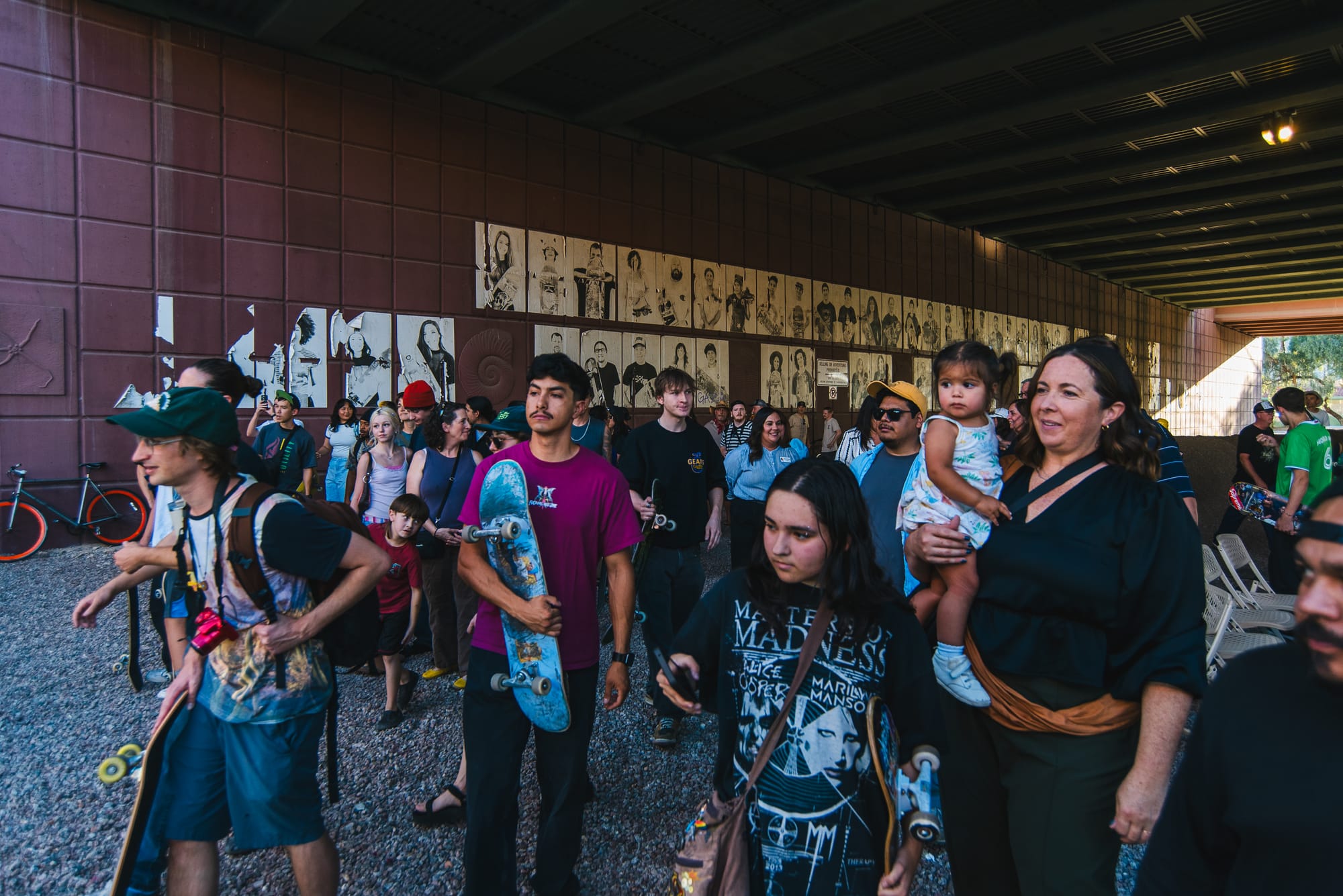
The park's roughly $2.6 million price tag included $1.5 million from the city of Tucson's capital improvement program. The remainder came from grants and donations from the Tohono O'odham Nation, the Mayor's Office, Ward 1's Budget de la Gente, Rio Nuevo, the Pascua Yaqui Tribe and other local supporters.
Despite city funding and local grants, Gutierrez said community support ultimately made the project possible.
"With the community and the driven creativity with everybody, we've had events at hotels, parking lots, theaters, galleries, bars, you name it," he said. "We've just been having everyone reach out."
Vice Mayor Lane Santa Cruz has been a big supporter of the project since before they were elected, saying there aren't many places where it's legal to skateboard, especially downtown. Santa Cruz hopes the park is a way to invest in the skating community.
"To use this dead space to bring community back together is so important," they said. "Our skateboarding community is intergenerational, it's all ages, all genders, so we need more of this activation in our public spaces to keep all of our communities safe."
Gutierrez first suggested the city invest in a skate park during a city council meeting in 2016. At the time, he was working at a Vans shoe store and was inspired by Vans' passion projects, an initiative where employees could submit video proposals for ideas and receive grants to help make them a reality.
Gutierrez submitted his proposal for a skate park. He didn't win a grant from Vans, due to the lack of city approval and permits, but putting his idea out into the universe inspired him to keep pushing for the project at a local level.
He said the project has been plagued by obstacles from the start.
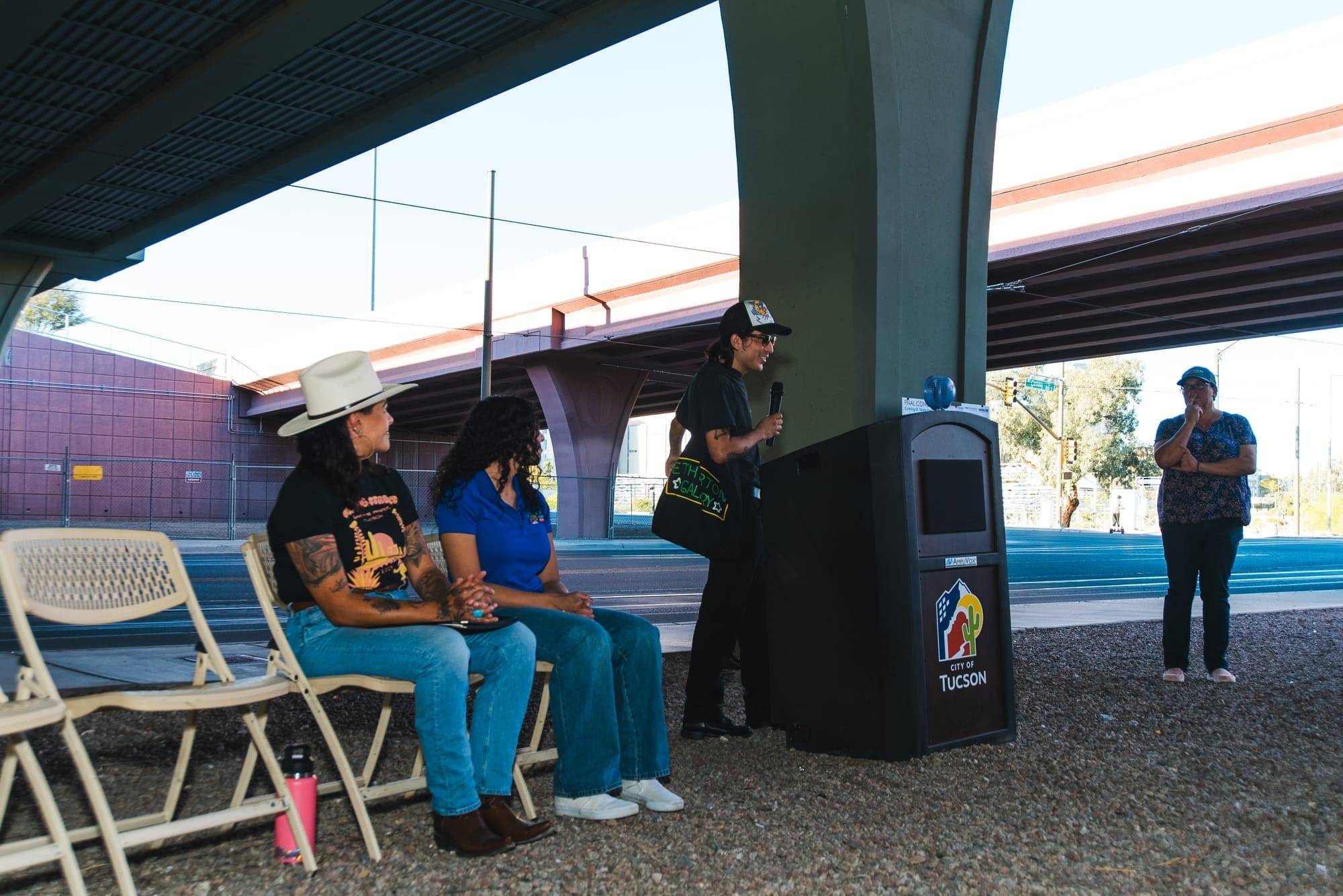
The park's location underneath a highway underpass means it requires approval and permits from multiple government bodies, including the Tucson City Council and Arizona Department of Transportation.
Progress stalled in 2020 and 2021 because of a funding pause due to the COVID-19 pandemic.
For Gutierrez and his supporters, it felt like the project was never going to happen.
"Every time you go out somewhere, people are like 'When's the park going to happen?' There are people that just kind of gave it up and said it's never going to happen," he said.
But the waning energy for the project only inspired Gutierrez to push harder.
"Hearing the community say that, it kind of just makes you think of how to move forward and motivates you to keep going," he said. "Now they're seeing all the groundbreaking posts and everyone's thrilled now."
The project was set to break ground last March after it was given the green light by ADOT and the Tucson City Council in February, but it was delayed again due to the need for approval from the Federal Highway Administration.
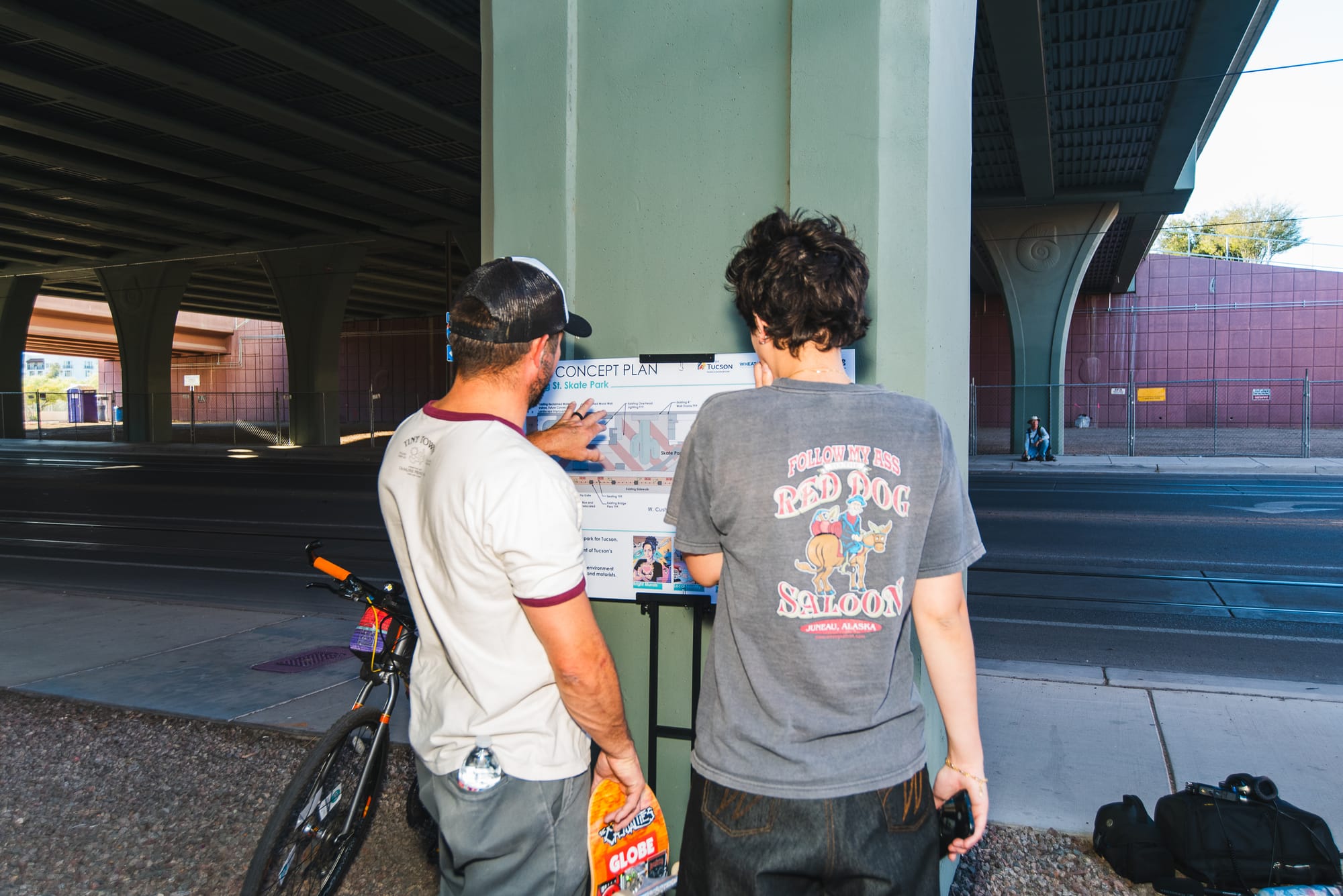
Fifteen months later, the space is finally ready for construction to get underway.
A decade after first pitching the idea, Gutierrez is still heavily involved with the skateboard community, now working as a freelance graphic designer and artist for two different skateboard companies.
He hopes the skate park will inspire the next generation of Tucson skaters.
"The park's going to be there for younger skaters to thrive and for people to go there everyday," he said. "The younger generation has the park to help them grow and develop their style wherever they decide what path to take with skateboarding."
Santa Cruz said they hope this park shows people more projects like this are possible with advocacy and community support.
"These things don't just happen on their own, it really takes the community leading the charge, working alongside their local government, their local elected officials to bring it to life," they said. "It needs a lot of coordination, a lot of fundraising, but at the end of the day, the benefit is immeasurable."
Community members can track the park's construction progress on Instagram at @cushingstreetskatepark.
Elias Bonilla is a journalism and political science major at the University of Arizona and Tucson Spotlight intern. Contact him at ebonilla1500@gmail.com.
Tucson Spotlight is a community-based newsroom that provides paid opportunities for students and rising journalists in Southern Arizona. Please consider supporting our work with a tax-deductible donation.