Pima County funds jail GED program after sheriff's cut
Pima County is funding a decades-old GED program at the county jail after Sheriff Chris Nanos canceled its contract with Pima Community College, citing cost and unproven results.
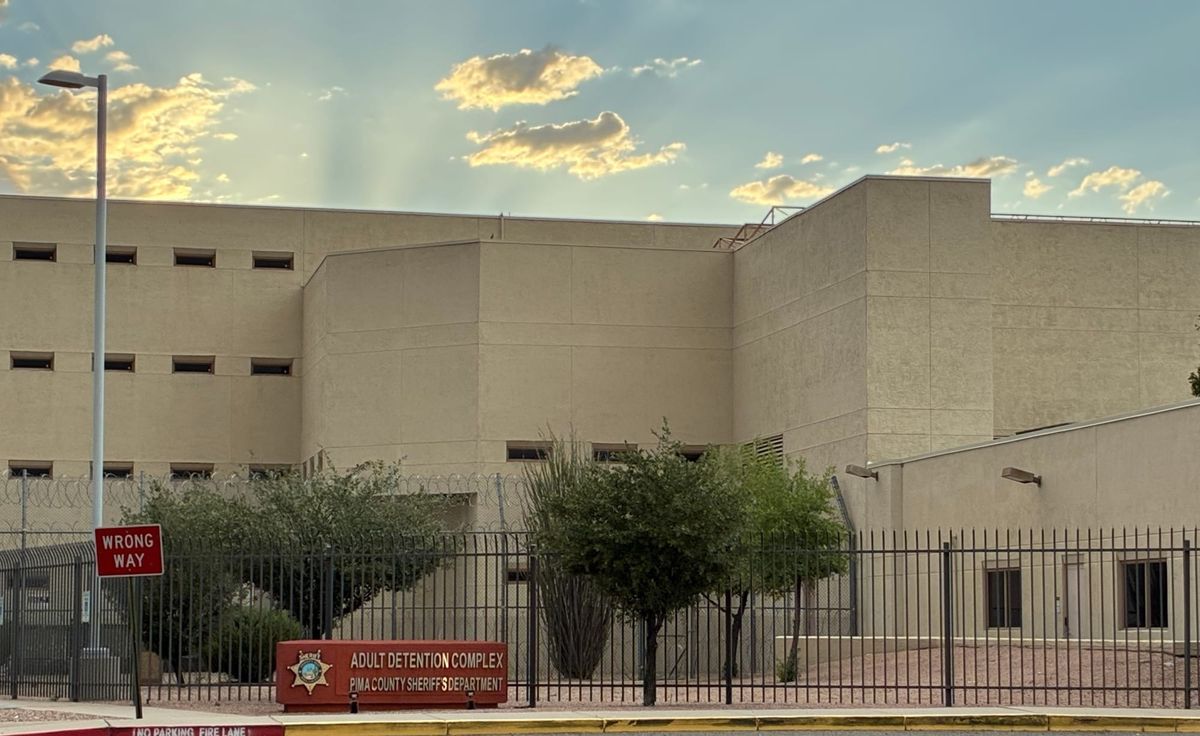
Pima County has stepped in to fund a decades-old GED program at the county jail after Sheriff Chris Nanos canceled its contract with Pima Community College, arguing the $170,000 annual cost outweighs its unproven benefits.
Supervisors voted 4-0 during their last meeting to fund the program through June 30, 2027, with Supervisor Steve Christy abstaining, citing concerns that the change would open the door for the sheriff's department to offload more of its spending to the county.
The county will work with Pima Community College staff to build a more systemic approach to GED completion for formerly incarcerated individuals, extending the progress they made while incarcerated.
Despite Christy's concerns, other board members said that since the sheriff's department already terminated the contract, the county had no choice but to step in and fund it themselves or see the program end.
The program cannot resume in its previous form until a new contract is drafted and approved.
The adult basic education program's primary goal is to help people in jail prepare for and pass GED testing to achieve high school equivalency. The partnership between Pima County and Pima Community College dates back 35 years, including 32 years operating on-site at the jail.
In a letter to the board, Nanos cited concerns from sheriff's department officials about the program's impact on staff who must escort incarcerated individuals to class, the cost of what is advertised as a "free service," and uncertainty over how effective the program actually is.
Pima Community College Chancellor Jeffery Nasse said in a letter to the board that college officials met with Nanos after he told them he'd terminated the contract in an effort to preserve the program. Nanos said during the meeting that he supports the program but believes the sheriff's department could no longer fund it, suggesting the county pick it up instead.
Share Tucson Spotlight with a friend. Every signup earns you a raffle entry to win a gift card to a local Tucson favorite. Four winners drawn August 1.
The $170,000 pays for a full-time and part-time instructor, a classroom, supplies and 16 days of GED testing each year.
The classroom can accommodate 24 students per day, holding two classes daily, six days a week.
Pima Community College said the program is in high demand, receiving 2,800 requests, including 1,700 for testing, from inside the jail since July 2025. The program has served 240 learners and administered 150 single-subject GED tests.
The program nets a variety of positive effects for those it serves, including a 13% increase in likelihood of employment following release and a 43% reduction in recidivism.
PCC's letter offered the board four options to expand services, though none were adopted.
Laurie Kierstead-Joseph, assistant vice chancellor of Pima Community College for Adult Basic Education, urged supervisors to approve the funding, citing the previous 35 years of success.
Kierstead-Joseph pointed to the program's impact on recidivism and employment outcomes for formerly incarcerated individuals. Of the 240 people served by the program in the past year, 150 GED subtests were taken, with about 80% passing, a higher rate than seen outside the jail, she said. She added that the program returns between $4 and $5 in reduced incarceration costs for every dollar invested.
"Adult learners who have not yet finished high school often did not have the most positive educational experiences in the past and many have struggled with learning disabilities," Kierstead-Joseph said. "Adult learners need more than access to tablets with educational apps. They need expert guidance and support. Ultimately, this program, it plants a seed, helping learners believe in themselves again and motivating them to follow the motivation that follows them beyond the jail and onto our PCC campuses."
Nanos disputed the benefit of the program, saying he believes it would be better suited for a prison rather than a jail. Anyone seeking a GED is required to pass five tests, meaning the program lasts much longer than the average jail stay of three weeks.
He said that as a result, the program awards few GEDs, only one since the start of 2025.
"To spend $170,000 on a program that has no measuring stick to show any success makes no sense," Nanos wrote, also noting that the training is already provided for free for incarcerated individuals 21 and under by the Arizona Superintendent of Schools and offered by Pima Community College for free online.
He said this type of program would be better carried out by the superintendent's office or the Pima County jail's Transition Center.
Pima Community College said the program is a good opportunity to introduce adult education to people within the jail, adding that it can be continued and built on after release.
Many of the students reported being out of school for a very long time, saying the experience motivated them to move forward with their education.
District 2 Supervisor Matt Heinz said the three- to four-week jail stay presents a difficult circumstance for many incarcerated individuals, and that connecting them to Pima Community College could offer a lifeline they can use after release.
He called for consideration of doubling the funding, given that the program receives far more requests than it can currently accommodate.
"Remember the prison system, the carceral system, the jail, all of that (...) it's rehabilitation. It's supposed to be a rehabilitation process," Heinz said. "Part of that is to help these folks find other opportunities that they can engage in, and education is really crucial for that."
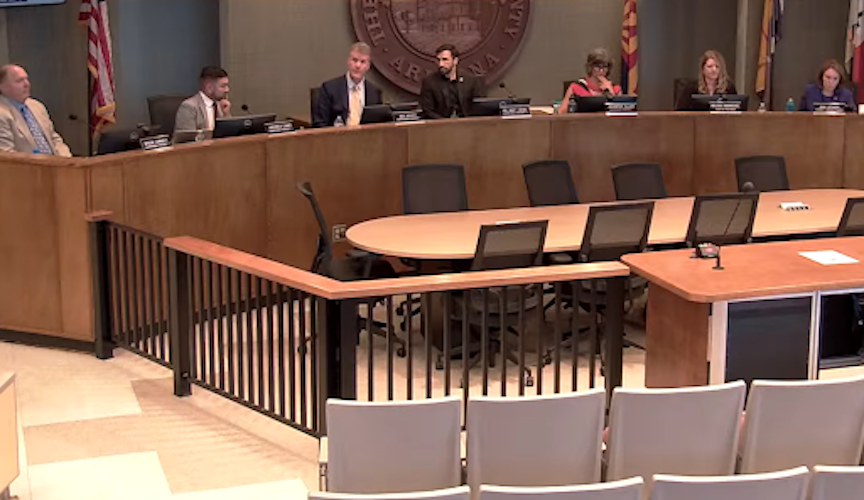
Christy said he had a long conversation with Nasse about the benefits of the program, expressing his support for its continuation. He questioned Nanos' motivations for canceling the contract, saying he believes Nanos anticipated the board would be willing to pick up the expense, given the well-known interest by supervisors in education initiatives.
He suggested Nanos may use this as a precedent to end his support for other programs in order to force the county to choose between paying out of its own fund or letting the programs be eliminated.
"Why suddenly is our sheriff cloaking himself in the flag of fiscal responsibility by deciding that he can't afford $170,000, a mere rounding error in his multi-hundred million dollar budget?" Christy asked. "That makes no sense to me, and it leads me to believe that is this the camel's nose in the tent where from this point forward, he's going to be looking at items and decide that he doesn't want to have to spend them or he can trim his budget by refusing to implement them as we go along. Today, it's the GED program. Tomorrow, it's something else."
Christy also suggested the county use this incident as pretext to look into the sheriff's budget and ask for justification of every piece of funding.
District 1 Supervisor Rex Scott, who completed a GED program, also expressed his support for the continued funding, reaffirming the idea that the goal of the adult basic education program is not necessarily to hand out GEDs, but to begin the journey that people in jail will be able to continue after their release.
Scott suggested working toward a more systemic program for GED completion, noting it would advance the program's ultimate goal while easing the staffing concerns raised by the sheriff's department.
District 5 Supervisor Andrés Cano said he wanted to discuss tracking outcomes for people leaving jail in order to "celebrate their completion of their GEDs," as well as the state's defunding of adult education, to work out the county's role in filling that gap and its potential impact on staffing.
Cano said the county has a duty to invest in the local workforce through programs like this, especially as many residents struggle with nutritional and health care access.
Ian Stash is University of Arizona alum and freelance journalist in Tucson. Contact him at ianjgs16@gmail.com.
Tucson Spotlight is a community-based newsroom that provides paid opportunities for students and rising journalists in Southern Arizona. Please consider supporting our work with a tax-deductible donation.