Tucson transit crashes fall, but fatalities on the rise
Tucson's first quarterly transit safety report shows fewer overall crashes but rising fatalities, as the city rolls out transit ambassadors and other safety measures.
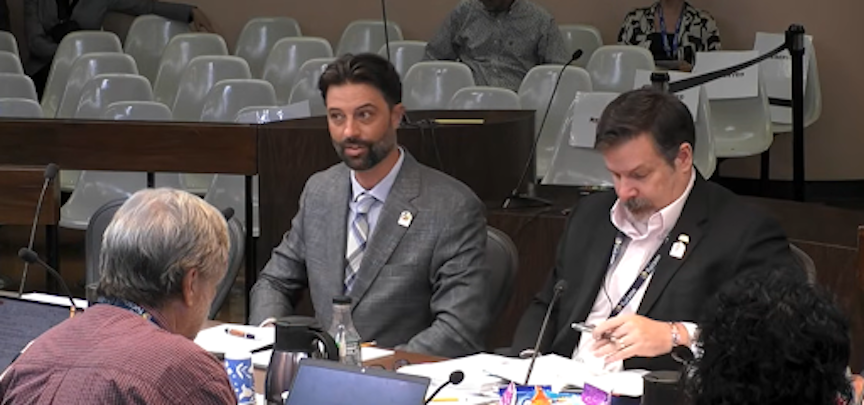
The Tucson Department of Transportation and Mobility reported fewer crashes overall in its first quarterly safety review, but rising fatalities and serious injuries, as the city moves forward with transit ambassadors and other safety measures on public transportation.
The department reported a 3.2% reduction in crashes this year compared to the same time period in 2025 and a 10.7% reduction from the five-year average.
The report also noted a 4.2% increase in fatalities and a 6.1% increase in serious injuries this year compared to the same time last year.
The report, which included data as recent as Aug. 13, analyzed 3,018 crashes. Of those, 1,342 involved no injury, 50 were fatal, 104 caused serious injuries and 643 caused minor injuries. The rest lacked definitive information.
Roughly 2,340 of the crashes involved two or more vehicles, with another 354 involving a single vehicle and 132 listed as "pedestrian-involved."
City staff also reviewed changes to the proposed budget for the RTA Next Transit Safety Plan during the Sept. 9 meeting, including additional funding for bus driver barriers, now costing $400,000, an increase for the transit ambassador program, elimination of the budget for additional contracted security guards on public transit, and a reduction in the budget for bus cameras.
Additional expenses include $449,280 to hire six transit ambassadors and $221,580 for environmental improvements at bus stops to help prevent crime, such as lighting and clear sightlines.
Staff also made an effort to better track transit safety data, developing 10 key performance indicators collected through operator reports, transit ambassador surveys and feedback on the city's transit app. These indicators include security incidents, assaults on transit workers and the percentage of riders who feel "good" about safety on buses.
Tucson Spotlight trains the next generation of Southern Arizona journalists and publishes their work free for everyone. No paywalls, no corporate backing — just readers who believe this community deserves better local news.
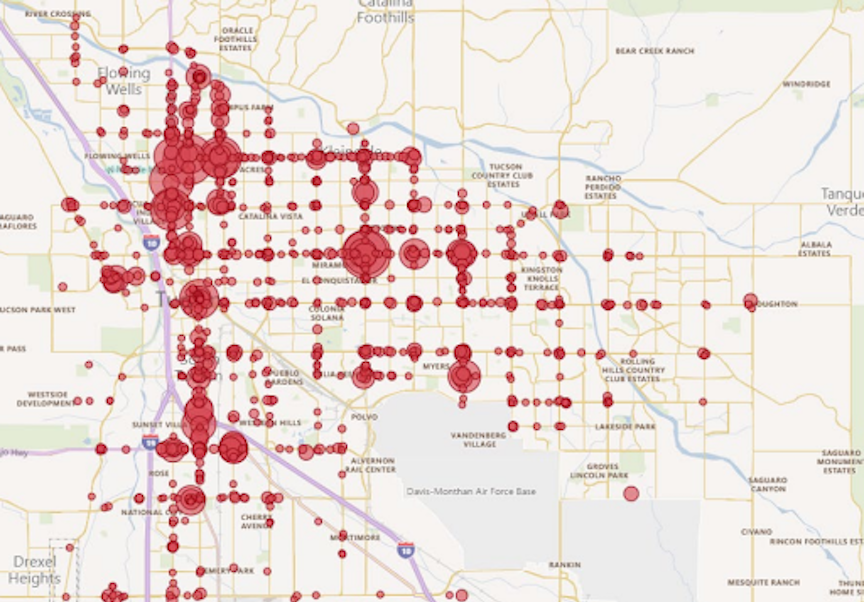
The number of incidents over the past year totaled 15,301, or 96 per 100,000 rides. Reported offenses peaked in January 2026, with 1,499 that month, or 113 per 100,000 boardings.
Nearly 70% of incidents, or 10,588, were loitering, and another 4,137 involved substance use. There were 421 incidents of disorderly conduct, 94 welfare checks and 20 assaults or fights.
The Tucson Police Department initiated 96 special duty deployments between March and July, issuing 2,080 warnings and 171 citations, arresting 305 individuals, and making 161 service referrals.
The city has also used its transit app to collect rider feedback, with riders reporting feeling safer on buses than at bus stops. About 14,000 riders reported feeling "all good" onboard and about 1,000 said they felt "a bit worried" about the safety of themselves and others. At bus stops, 11,000 reported feeling "all good" and 2,300 "a bit worried," with another 700 saying they felt "very concerned."
The city hired six transit ambassadors over the summer who will ride buses and streetcars and try to deescalate incidents. Onboarding and training is expected to begin soon.
A handful of city staff and council members will be traveling to Albuquerque, New Mexico, to learn from its transit safety action plan and a transit ambassador program that is several years old.
Mayor Regina Romero said she's heard many residents express a desire for more consistent and visible enforcement on public transit and more follow-through on unreported incidents, as well as a desire for more mental health services for unhoused individuals.
“I'm really looking forward to putting our transit ambassadors to work to work for all of us, whether you are a student and you need to connect and you're a little lost or whether you're a person that needs a resource and connecting to uh from the pilot safe rides to school pilot we learned that they're you know taking care of the issues that our ambassadors were able to see immediately and taking care of them immediately,” Romero said.
Romero credited the RTA Next plan for the ability to include an additional $2.1 million in the budget for the plan, saying she hopes it will bring about positive results.
Ian Stash is University of Arizona alum and freelance journalist in Tucson. Contact him at ianjgs16@gmail.com.
Tucson Spotlight is a community-based newsroom that provides paid opportunities for students and rising journalists in Southern Arizona. Please consider supporting our work with a tax-deductible donation.