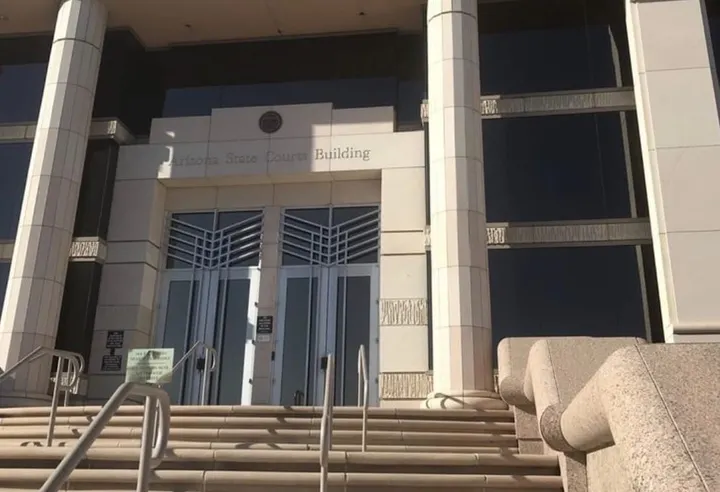
South Tucson cuts food tax amid $1.6M budget deficit
South Tucson's city council voted to eliminate its food and consumption tax, rename Cesar Chavez Day and explore a free community wifi network, all while grappling with a $1.6 million budget deficit.
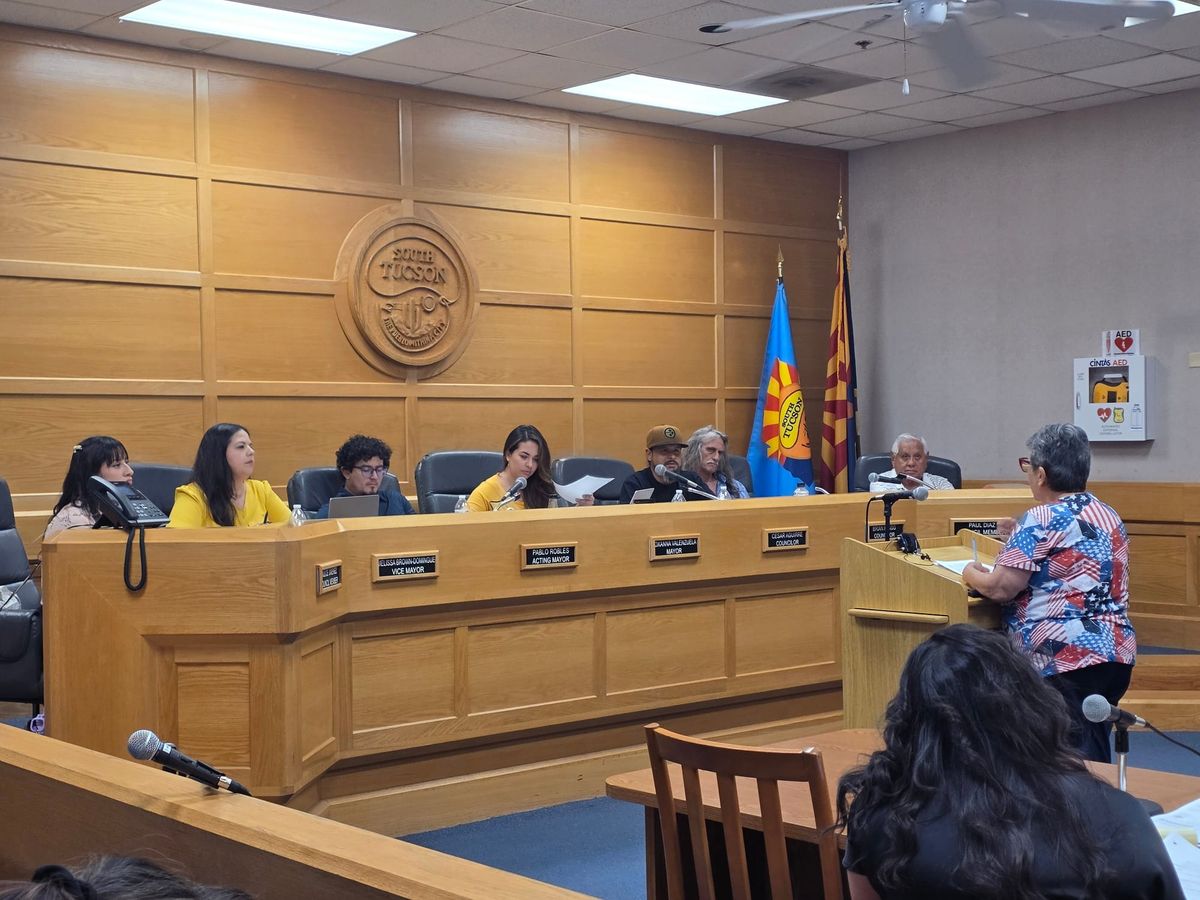
South Tucson's city council took up a packed agenda last week, voting to eliminate the city's food tax, rename Cesar Chavez Day and explore a community-wide free wifi network, all while facing a $1.6 million budget deficit.
The council voted 5-2 April 21 to eliminate the city's food and consumption tax, with Vice Mayor Melissa Brown-Dominguez and Councilman Paul Diaz dissenting.
Eliminating the 1.5% tax on food items, including produce, dairy and meat, could mean lower grocery bills for residents, but is estimated to cost the city about $120,000 in annual revenue.
Before the vote, the council heard from several residents, including Arlene Lopez, who said she opposed the elimination.
"I understand your concern in wanting to be more equitable in charging taxes, but I also understand that we are having a financial crisis," Lopez said.
South Tucson resident Zeke Cook shared similar concerns.
"We lost Food City, we lost the rental tax, and now you want to voluntarily get rid of our food tax," Cook said. "Your own consultants recommended against this, since it'll increase this year's deficit. This has the greatest effect on our most vulnerable citizens."
The city is facing a $1.6 million budget deficit and discussed recommendations during the meeting, including eliminating the $300,000 building improvements budget, a $50,000 reduction in incarceration fees and a freeze on non-mandatory training and travel for city staff.
"There are 60 other cities in the state of Arizona … that rely on generating revenue from a preferable consumption tax," Brown-Dominguez said. "If we move forward with eliminating this tax, we are shooting ourselves in the foot, because if we get another grocery store to come in … we can generate a larger amount (of revenue) and that's vital for our community."
For Councilwoman Dulce Jimenez, the vote was about easing the strain on the community's most vulnerable residents, including those who may not qualify for food assistance programs.
"It's removing a burden to this resource that's already so limited, food and so necessary to us all," Jimenez said. "It's also about removing the barrier to doing business."
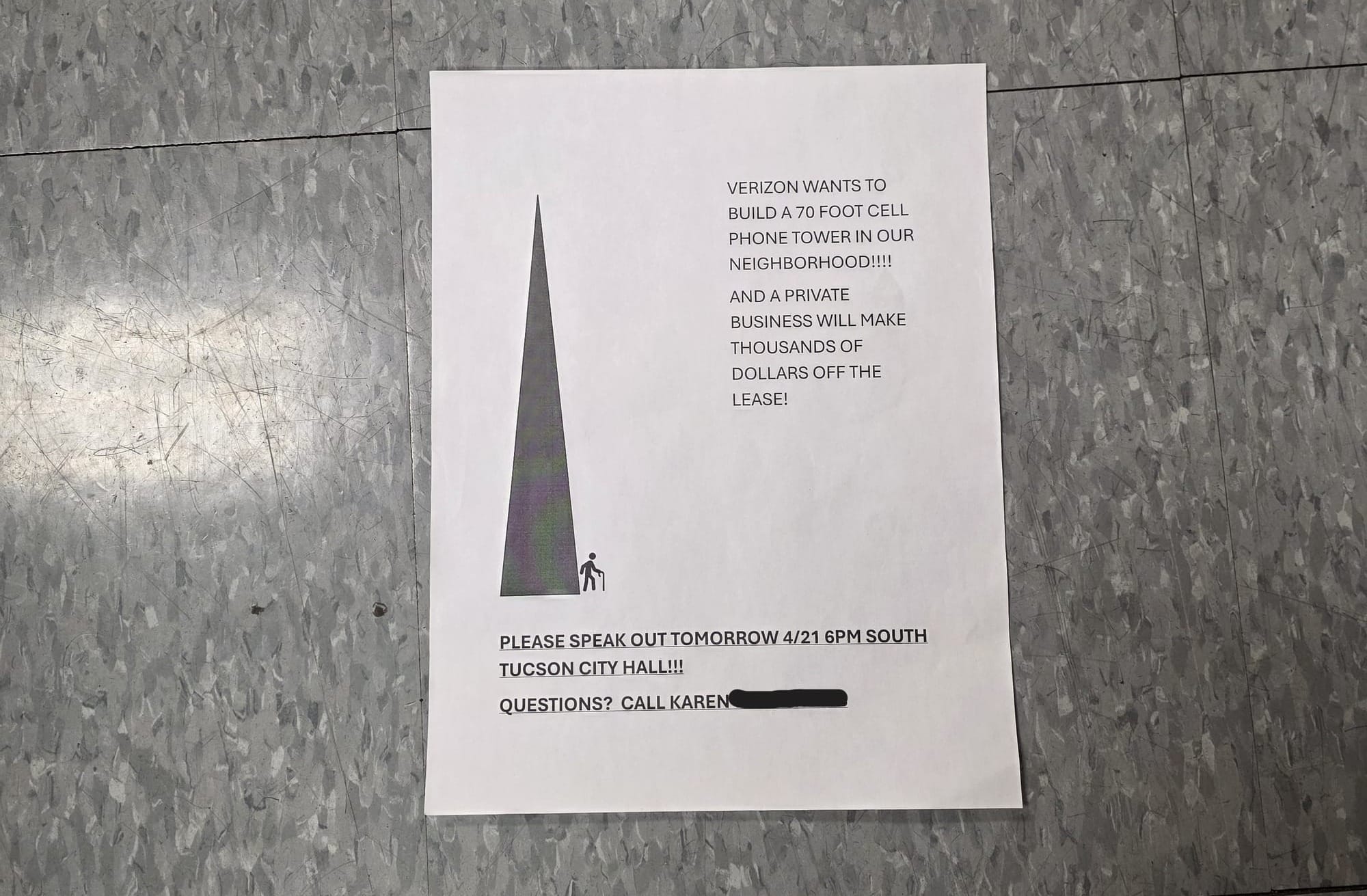
The food tax wasn't the only contentious item on the council's agenda. The council also discussed a new cellphone tower on South 10th Avenue that was unanimously approved by the Board of Adjustments on Feb. 25. The 70-foot saguaro-shaped tower, tenanted by Verizon, is in the permitting phase and will be the first tower within city limits.
Board Member Abraham Barajas raised health concerns about the radiation cell towers emit. Cell towers produce non-ionizing radiation, the same type found in microwaves, remote controls and LED lights, not the ionizing radiation in X-rays and gamma rays that can alter DNA. The FCC last updated its human exposure standards in 2019, requiring carriers to comply on a per-antenna basis, with any changes to an antenna system triggering a re-review and potential loss of licenses for noncompliance.
Steve Kennedy, a radio frequency engineer with 36 years of experience, explained the FCC's regulatory framework.
"That is what the human body can handle, so the FCC said, 'Ok, let's reduce that to make sure we are safe, so now reduce it by a factor of ten, that creates occupational level.' And they reduce it by a factor of 50, that's (the) general public level," Kennedy said.
Kennedy noted that while non-ionizing radiation does produce heat, community members would not feel it.
"To get and feel the heat from the antenna, you actually have to get on a crane, lift yourself up, put your hand on the antenna, then you feel heat," Kennedy said.
Still, the tower has drawn concern from residents since its approval. City Attorney Jon Paladini advised the board that radio wave concerns could not legally factor into their deliberations, which were limited to land use.
The council took no action on the tower, but voted unanimously to rename Cesar Chavez Day to Farm Workers Day following sexual assault allegations against Chavez that surfaced in March.
Mayor Roxanna Valenzuela sent a letter to Gov. Katie Hobbs requesting financial support to rename the Cesar Chavez bridge that connects 6th Street over Interstate 10. The metal panel featuring Chavez has already been removed from the bridge.
"It has become clear that we can no longer honor a legacy that has come to the expense of those who have been harmed," the letter read. "The bridge is currently citing significant public concern characterized by open drug use and dangerous conditions where individuals are at risk of falling onto the freeway below. This presents an immediate hazard to both of those on the bridge and to the motorist traveling beneath it. We ask that you join us in ensuring this base reflects the integrity of our history, while providing the safety and security our citizens deserve."
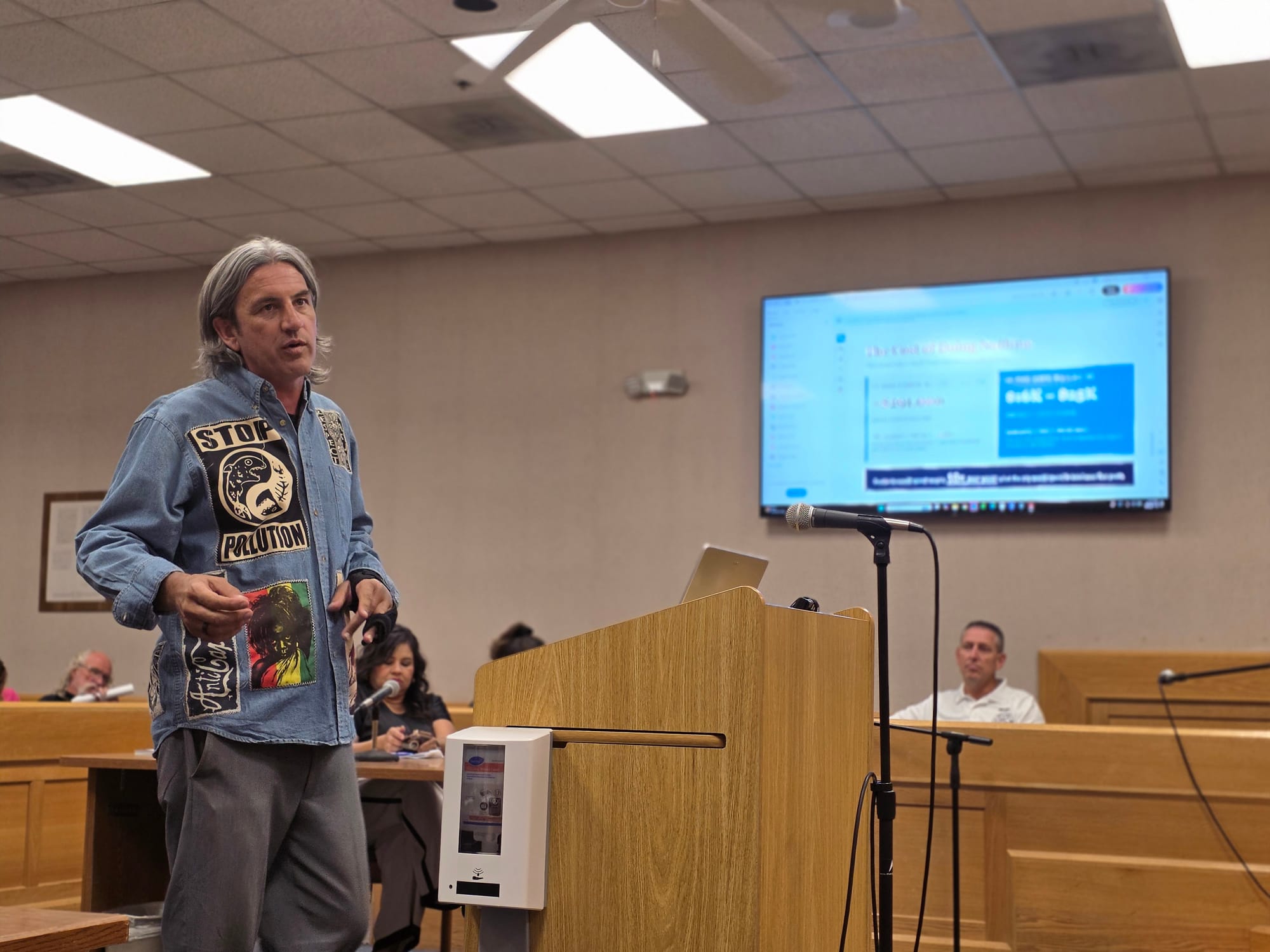
Not all of the council's business centered on controversy. South Tucson resident Brian Sanders, who has a background in tech, presented a plan for a community-wide free wifi network.
"There's just no reason why we can't start providing internet to make sure that everybody has it," Sanders said, proposing a model in which the city buys and owns the professional equipment needed for the project, with community members assisting in the planning, installation and maintenance of a network that can be strengthened by the bandwidth current residents and businesses already have.
Local businesses and residents spend $291,000 annually on internet bills alone, Sanders said.
If the city were to move forward with the idea, the one-time equipment purchase would cost between $12,000 and $15,000, with monthly service costing between $300 and $800 a month.
"Over five years, residents would end up spending about 50 times out of their own pocket what the city could spend just to build this infrastructure and to provide it with a reliable internet backbone," Sanders said.
Sanders is hoping to conduct an audit to identify mount locations and coverage priorities, work with county and state partners on funding and installation support and return to the council with a plan and timeline.
Topacio “Topaz” Servellon is a reporter with Tucson Spotlight. Contact them at topacioserve@gmail.com.
Tucson Spotlight is a community-based newsroom that provides paid opportunities for students and rising journalists in Southern Arizona. Please consider supporting our work with a tax-deductible donation.