South Tucson cell tower permit faces open meeting challenge
A group of South Tucson residents say the city broke Arizona’s open meeting law when it approved a 70-foot Verizon cell tower, and their attorneys want the permit revoked.
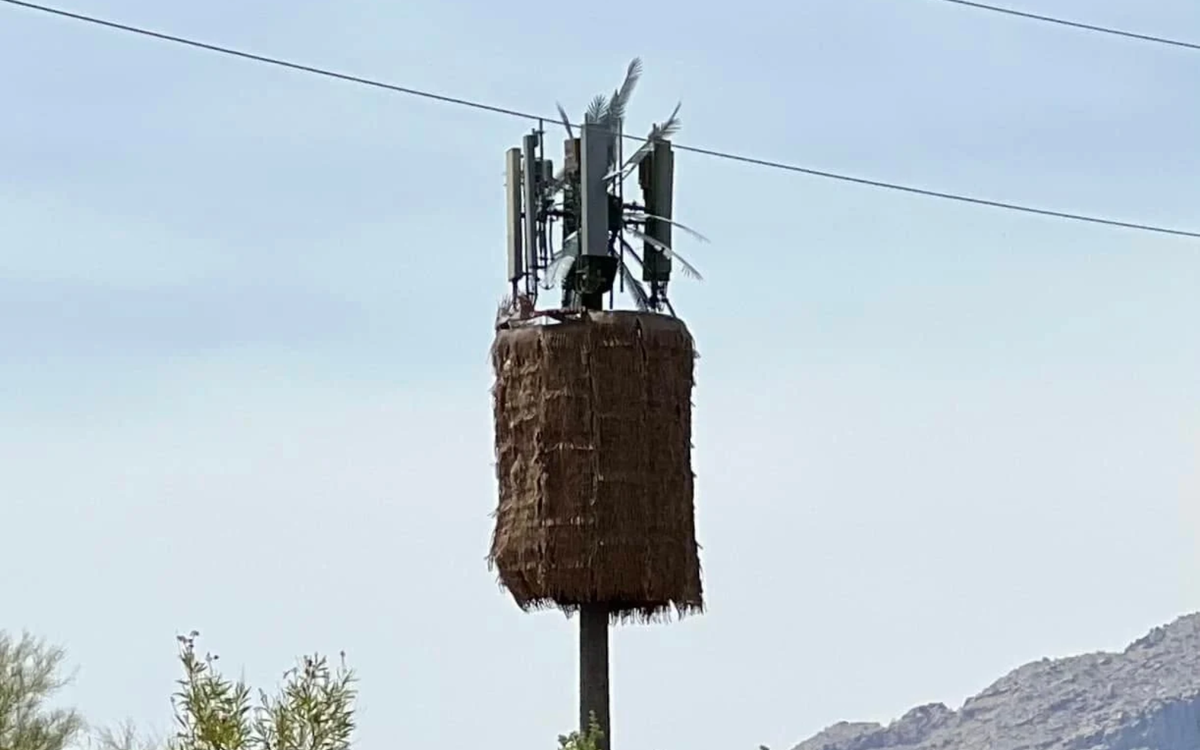
A group of South Tucson residents say the city broke Arizona’s open meeting law when it approved a 70-foot Verizon cell tower, and their attorneys are demanding the permit be revoked.
The Hofmeyr and Wang attorney group sent a demand Nov. 11 on behalf of a coalition of residents, saying the public notice for the Feb. 25 Board of Adjustment meeting that approved the tower’s location was misleading.
In December 2025, Gilbert-based Pinnacle Consulting submitted an application on behalf of Verizon Wireless for the tower, which has a 65-foot pole and metal “palm fronds” that bring the total height to 70 feet.
The city’s Board of Adjustment approved the tower’s location Feb. 25, allowing Pinnacle to apply for construction permits “subject to an administrative review for compliance with applicable city codes.”
On Sept. 17, the city approved Pinnacle’s construction permit, according to the Nov. 11 letter from attorneys to the council and city attorney.
Pinnacle noted in its application that the zoning code for the site “doesn’t allow a cell tower (for) standalone use,” and it acknowledged the tower needs “Board of Adjustment approval” before it can be built on the property.
Planning Director Josue Licea backed that up in a third-party investigation the city published in June, saying that “per 24-387.12 of the zoning code the application for this proposed use would require review and approval by the City of South Tucson Board of Adjustment.”
The letter says the permit granted to Pinnacle is invalid because the public was not informed of the Feb. 25 Board of Adjustment meeting in time or in line with Arizona’s open meeting law.
It also says the meeting’s agenda and notice “lacked sufficient information and specificity, were misleading to the public, and failed to comply with (open meeting laws).”
South Tucson City Attorney Michelle Stinson did not respond to Tucson Spotlight's request for comment.
Tucson Spotlight trains the next generation of Southern Arizona journalists and publishes their work free for everyone. No paywalls, no corporate backing — just readers who believe this community deserves better local news.
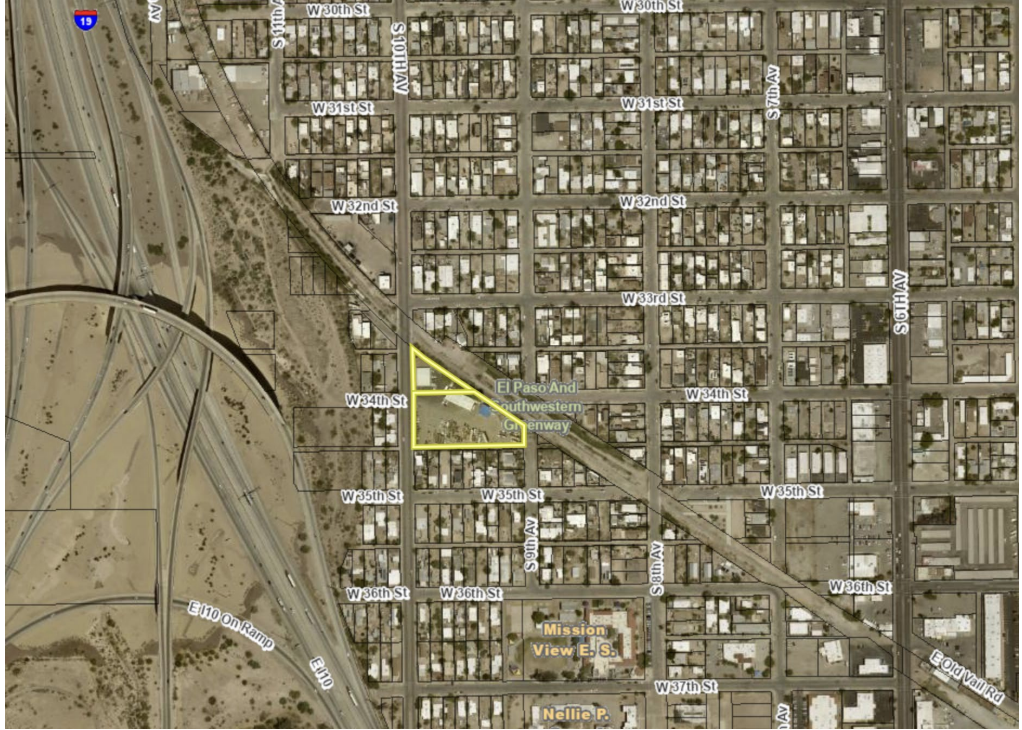
The public hearing notice for the Feb. 25 meeting said the board would “consider proposal for a variance.” It listed the applicant, the property’s zone and the request to use the property for a cell tower.
The only item on the agenda was a public hearing for “discussion and possible action regarding a variance to erect a new wireless communication facility (tower) as required by city code 24-387(12).”
The letter argues that the agenda and notice also violated open meeting law because they referred to a “variance” and not the approval of a zoning “use permit.” It says the notice did not describe the proposed conditional use, mention a special use permit or say how tall the tower would be.
“Any ‘misleading element inherent in the notice given’ for a public meeting violates (Open Meeting Laws),” the letter said.
The city commissioned the investigation after residents raised concerns about open meeting law violations. It hired Phoenix-based private investigator Ronald Hergert to determine whether city staff complied with applicable policies and laws regarding public notice.
The investigation found that Licea knew the meeting was about a conditional use, a special approval for something the zoning doesn’t automatically allow. It also found that Pinnacle filed its application with him, as city policy requires.
Zoning Administrator Greg Hitt said during the Feb. 25 meeting that the purpose of the meeting was to “approve the subject property for construction of a communications tower and did not approve the specific design specifications,” according to the investigation.
“The builder would have to apply for a variance in order to exceed that height as the decision by the Board of Adjustment approved only the conditional use and not a variance,” Hitt said.
Former City Attorney Jon Paladini said at a May 5 council meeting that the Feb. 25 meeting was not about a setback variance, an exception to rules on how close a structure can be to a property line.
“This was a use permit approval,” Paladini said. “All cell towers in that zoning require a use permit, so the factors to obtain a variance don’t apply. It is a use permit application (and uses) permit approval process.”
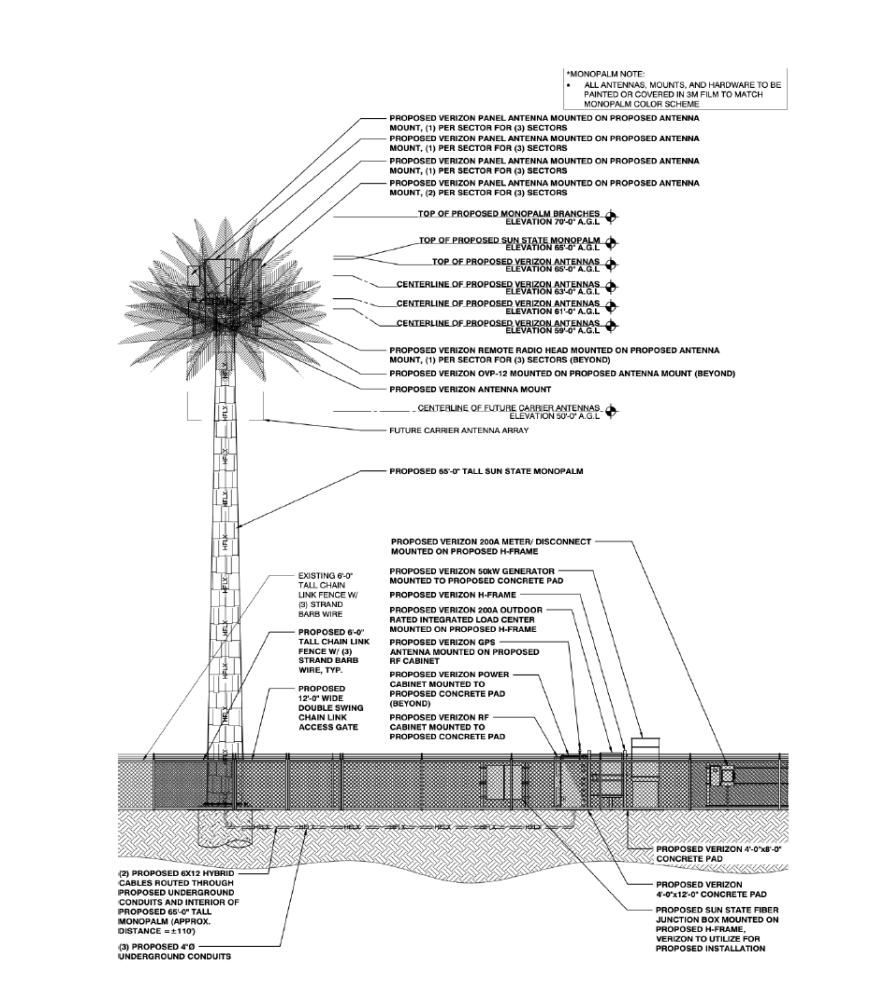
On the question of notice, Hergert spoke with Licea, Hitt and Paladini. Licea said public notice of the meeting was posted in The Daily Territorial, and parties of interest and property owners living within 200 feet of the cell tower’s property were notified by mail on Feb. 11.
Licea also said details about the meeting were published on the city’s website and a billboard outside City Hall on the same day.
Under Arizona’s open meeting law, notice must be published at least once in a newspaper of general circulation or circulated in the City of South Tucson at least 15 days before the hearing date. That means notice for the Feb. 25 meeting needed to be provided no later than Feb. 10.
But Hergert concluded that city staff “complied with both law and policy” in providing notice about the meeting.
Paladini said at the May 5 council meeting that the city can’t send public notice of a meeting to all residents, only to the parties of interest.
“There is no way, practically speaking, to send (notices) to tenants. There is no public list of renters or tenants in housing, so it just doesn’t happen that way, it can’t,” Paladini said. “I could tell you that the notices that get sent per state law and city code, went to the list of owners under the (county) assessor’s list.”
Residents have also expressed concern about the city’s zoning code. On Feb. 3, City Manager Veronica Moreno announced that the city code would be updated from a hard-copy PDF version to a digital version on the city’s website.
At a May 5 council meeting, resident Karen Carr noted a discrepancy in the city code.
“The City Code … says cell phone towers are limited to below 50 feet. This one is 70 feet tall … It’s not in compliance with City Code,” Carr said. “I came back two weeks later and that code was gone. Now the new 24-387 … says nothing about a limit of 50 feet.”
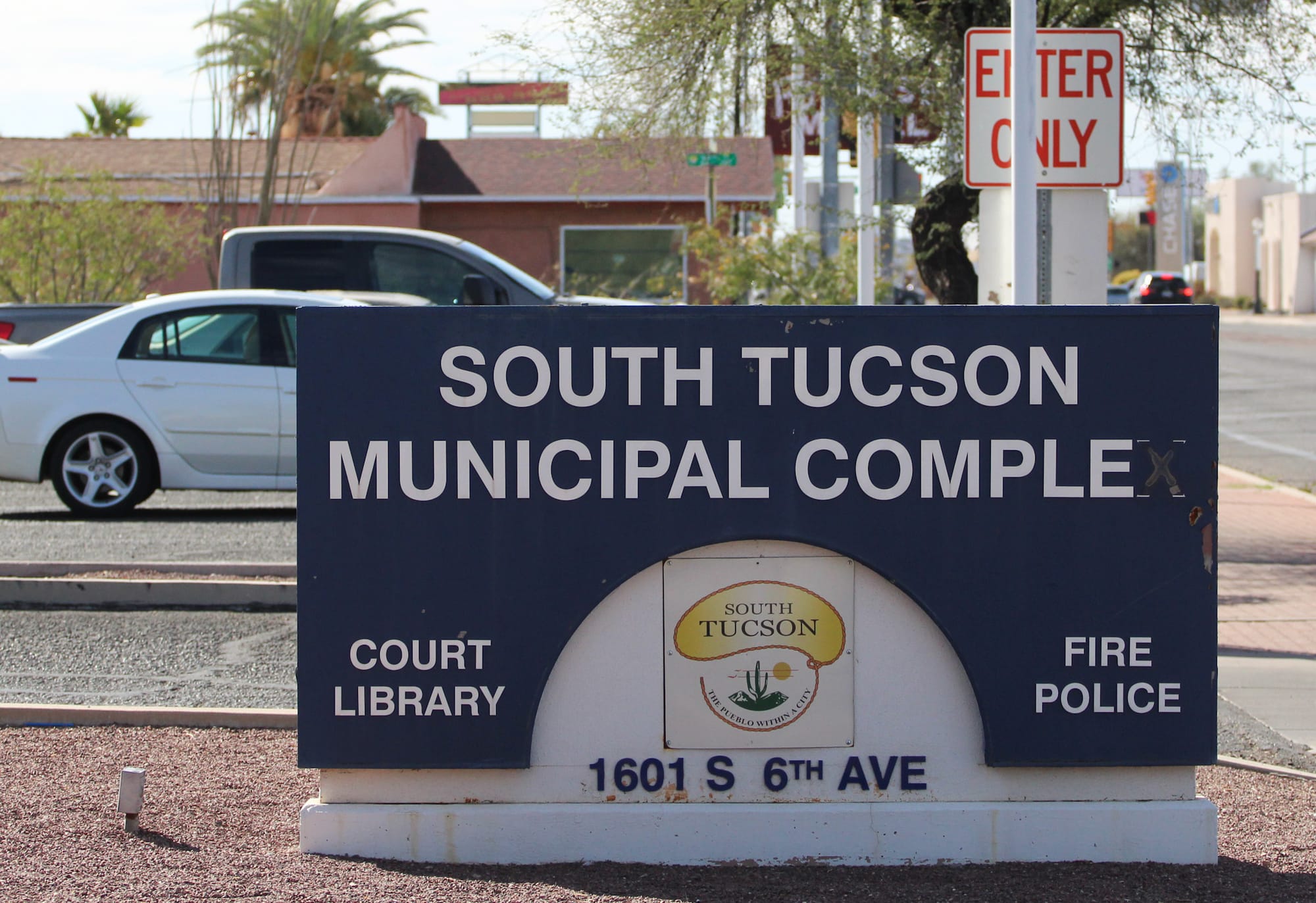
Paladini said that while transferring the code from its PDF form to its digital version, there was “human error on the code company’s part.”
“Because the (PDF) code was such a mess, the code company made a bunch of mistakes in terms of what they posted,” Paladini said. “There was no change, the original old code regarding the height of the cell tower was … published in error by the code company, and it was taken down and corrected.”
An archived 2023 version of the city’s code contains amendments to the SB-2 zoning code that then-Mayor Jennifer Eckstrom adopted July 24, 2006. The amendments applied new rules, limiting “commercial radio or wireless facilities” to a height cap of 50 feet.
But the language of the code also allows the Board of Adjustment to grant variances from those standards, such as height.
As of Nov. 23, the city’s online code portal does not include Chapter 24 of the city’s code, which covers zoning.
A PDF version of Chapter 24 still exists on the website, with Section 24-387 saying that permitted uses for SB-2 zones include radio towers. Under the SB-2 provisions, Section 24-388 states that, “Except as otherwise provided, no building or structure shall exceed 75 feet in height.”
In a staff report from the Feb. 25 Board of Adjustment meeting, Licea said “the property (listed in Pinnacle Consulting’s application) is zoned SB-2, Business District. The SB-2 zone allows for telephone and communication facilities and equipment as an allowed use. The maximum height in the SB-2 zone is 75-feet.”
It is unclear when the code changed, though there have been no significant changes to the city’s zoning code regarding cell tower height.
Licea told investigators that “an ordinance that the City Council approved in 2006 provides specific requirements for communications towers that were never subsequently updated to the City Zoning Code, with one of these being a height limitation of 50 feet.”
At its Nov. 17 meeting, the council voted to refer the letter to the city’s risk management division.
As of Nov. 24, the city had not issued a formal response, according to Bryan Sanders, a member of the group opposing the tower.
Topacio “Topaz” Servellon is a reporter with Tucson Spotlight. Contact them at topacioserve@gmail.com.
Tucson Spotlight is a community-based newsroom that provides paid opportunities for students and rising journalists in Southern Arizona. Please consider supporting our work with a tax-deductible donation.