
Marana makes camping on public property a misdemeanor
Marana made camping on public property a class 3 misdemeanor, but police say they will first try to connect people with help.

Marana police can now cite or arrest people camping on public property, but the chief says officers will first try to get them to move on or connect them with help.
At its Nov. 2 meeting, the Marana Town Council unanimously approved an ordinance that makes temporary or permanent camps and shelters on public property a class 3 misdemeanor. Penalties can include up to one month in jail, one year of probation and a $500 fine.
Under the ordinance, people camping on public property can comply voluntarily or be given notice to leave, and officers can connect them with local services and organizations.
Senior Assistant Town Attorney Luke Fischer presented the ordinance to the council.
“Marana is growing,” Fischer said. “We don’t have a consistent way to handle urban camping situations, and as we grow, this has become more of a problem. We have had complaints, but we’re not at a point where it’s an emergency. We are being proactive.”
By comparison, a Pima County ordinance allowed officials to deal with encampments in flood zones or stormwater drainage routes, giving occupants 72 hours’ notice to vacate. Marana’s new ordinance applies to any land considered public property in the town.
Fischer said other municipalities, including Sahuarita and Oro Valley, have already passed similar ordinances, and he called the measure a matter of public health and safety.
Fischer said that picnics and other temporary activities on public property will not be subject to the ordinance. It also does not dictate how private property owners manage temporary or permanent encampments.
Your gift keeps local news free and gives a young journalist their start.
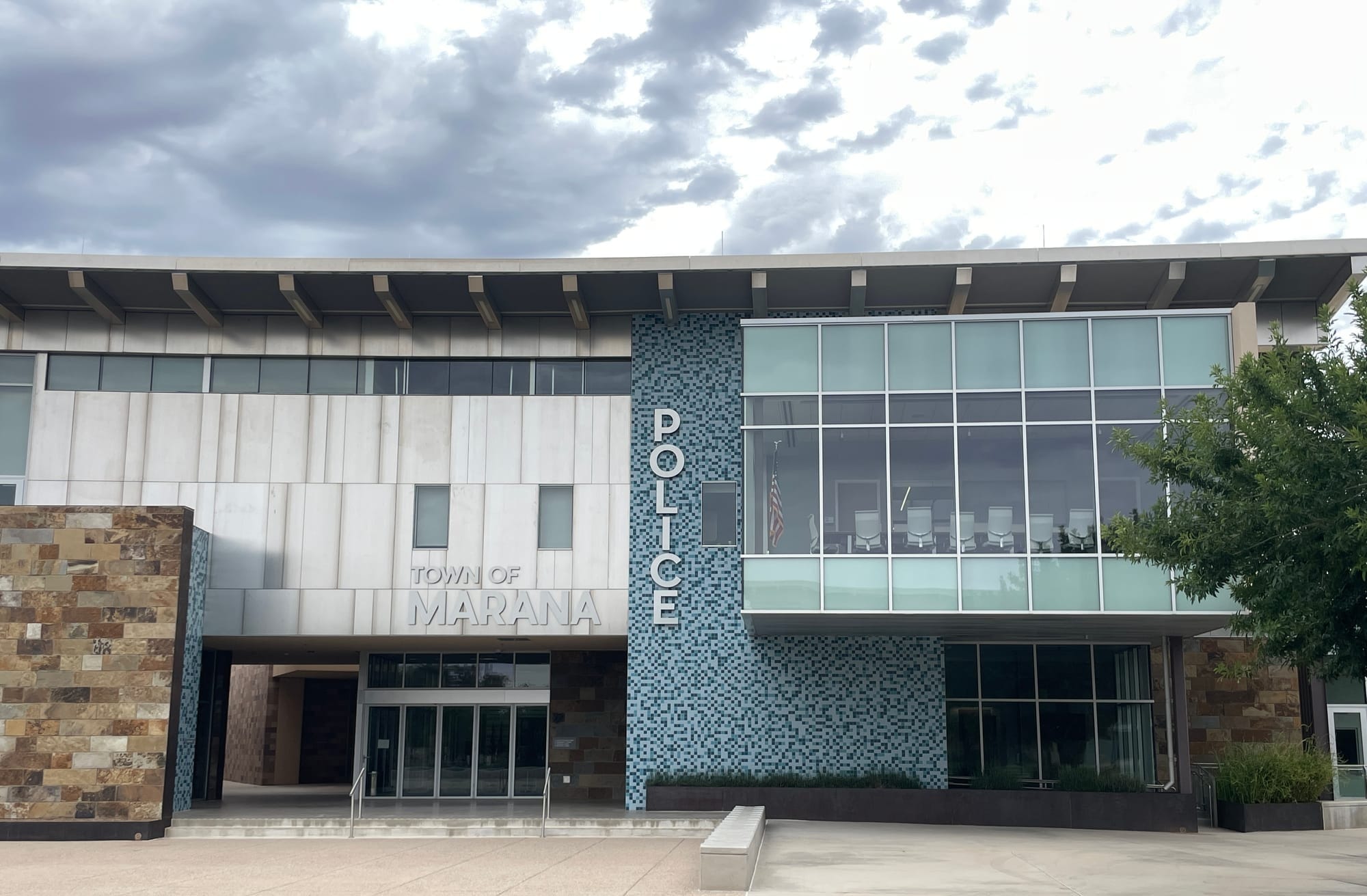
This kind of ordinance covers all camping structures, including mobile homes and recreational vehicles. The council heard examples of people living out of RVs or smaller SUVs on public property in the Dove Mountain area, Continental Ranch and outside a Cracker Barrel.
“Our overall goal, before we take action in the form of an arrest or issuing a citation, is to get compliance from people who are in violation of this town code,” said Police Chief Jeffrey Pridgett. “The first thing that our officers would do is look at the totality of the circumstances.”
Pridgett said the timeline from warning and citation to removal will be determined by the circumstances.
“Based on the information that our officers receive when they respond out there, they will work with these individuals to try to get them into compliance, to move on to a different area,” Pridgett said. “If they don’t, then this code will give us the ability to act and either issue a citation or make an arrest for this violation.”
Pridgett acknowledged there can be many reasons why someone would be living in a temporary camp.
“We have a network with the VA hospital, CODAC, Salvation Army and (Community Bridges Inc.),” he said. “These are resources that are available to help any of these individuals when we recognize that they’re in need of being in compliance of this town code.”
No council members voiced opposition to or concerns about the ordinance during the meeting, but a local mutual aid group has criticized it.
“Camping bans are not only cruel and inhumane but they have been shown over and over to be ineffective at curbing homelessness,” said Liz Casey, an organizer with Community Care Tucson. “Marana’s decision to criminalize homelessness is clearly not based in any data or research and will only further contribute to the factors that keep people trapped in homelessness. If Marana wants to see actual progress and change then the leaders need to address root causes of homelessness, without passing ordinances that will create further harm.”
Quentin Agnello is a University of Arizona alum and freelance journalist in Tucson. Contact him at qsagnello@gmail.com.
Tucson Spotlight is a community-based newsroom that provides paid opportunities for students and rising journalists in Southern Arizona. Please consider supporting our work with a tax-deductible donation.