Report: Tucson has 2nd-deadliest roads in U.S.
A new report ranks Tucson's roads as the second-deadliest among major U.S. cities, though Tucson police dispute the findings using their own data.
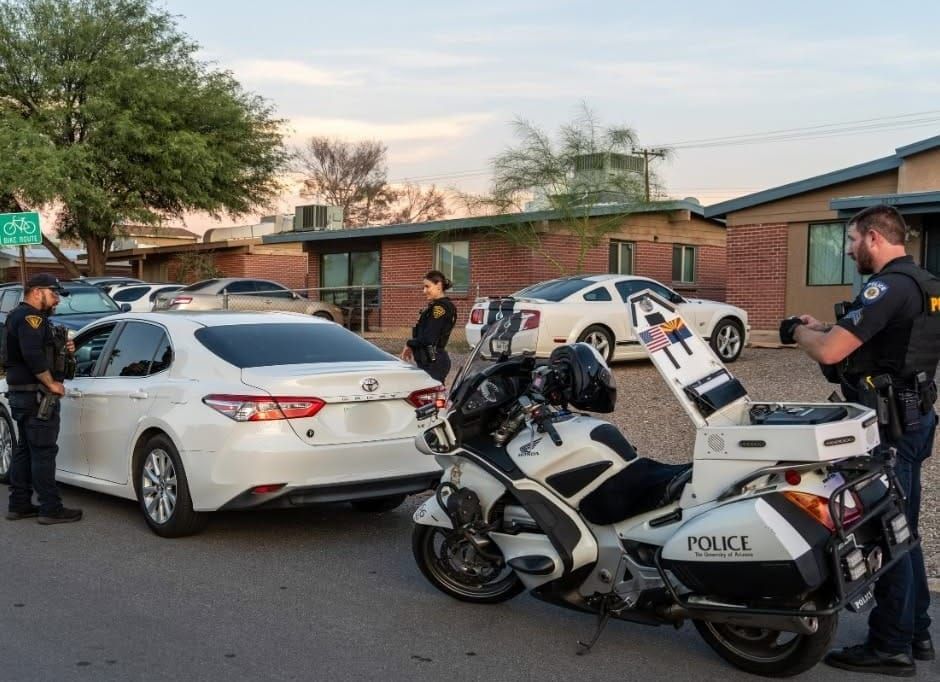
A new report ranks Tucson as having the second-deadliest roads of any U.S. city with a population of 500,000 or more, behind only Memphis, though Tucson police dispute the findings, saying their own data shows a far lower death toll.
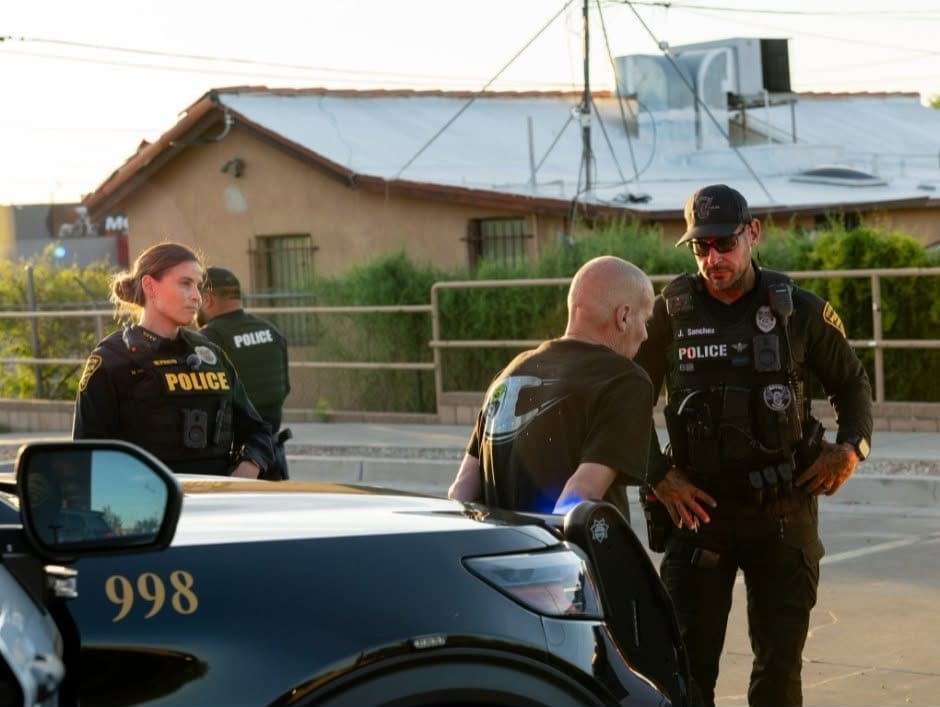
Using National Highway Traffic Safety Administration crash data from 2020-2024, AZ Law Now found that 675 people died on Tucson's roads over that period, a rate of 24.95 deaths per 100,000 residents annually. Tucson Police Department data, by contrast, shows it investigated 462 roadway fatalities in that time, an average of 92.4 deaths per year and 3.28 deaths per 100,000 people.
The gap likely stems in part from jurisdiction. TPD's count may only include crashes its own Traffic Investigations Unit worked, while the federal data used by AZ Law Now captures all deaths within city limits, including those on state highways or roads where county or state agencies responded.
Of the 675 deaths reported by AZ Law Now, 365 involved people outside a vehicle, including cyclists, motorcyclists and pedestrians. Tucson ranked fourth among all U.S. cities over 100,000 residents for cyclist deaths, fifth for motorcyclist deaths and eighth for pedestrian deaths per capita.
The report separately found Pima County has the highest pedestrian death rate of any U.S. county with a million or more residents, tied essentially with San Bernardino, California, and far outpacing Maricopa County. Motorcyclists made up roughly 4.5% of Arizona's registered vehicles but accounted for about 18% to 20% of the state's traffic deaths.
Memphis, the city ranked most dangerous, had an average of 35.55 deaths per 100,000 residents annually.
Both data sets point to a similar upward trend. AZ Law Now found that Tucson's yearly death average nearly doubled, from 71.25 in 2016-2019 to 135 in 2020-2024. TPD's own figures show a comparable rise, from 63 deaths a year in 2016-2019 to the 92.4 cited above.
Southern Arizona news written by journalists who live it. Free in your inbox.
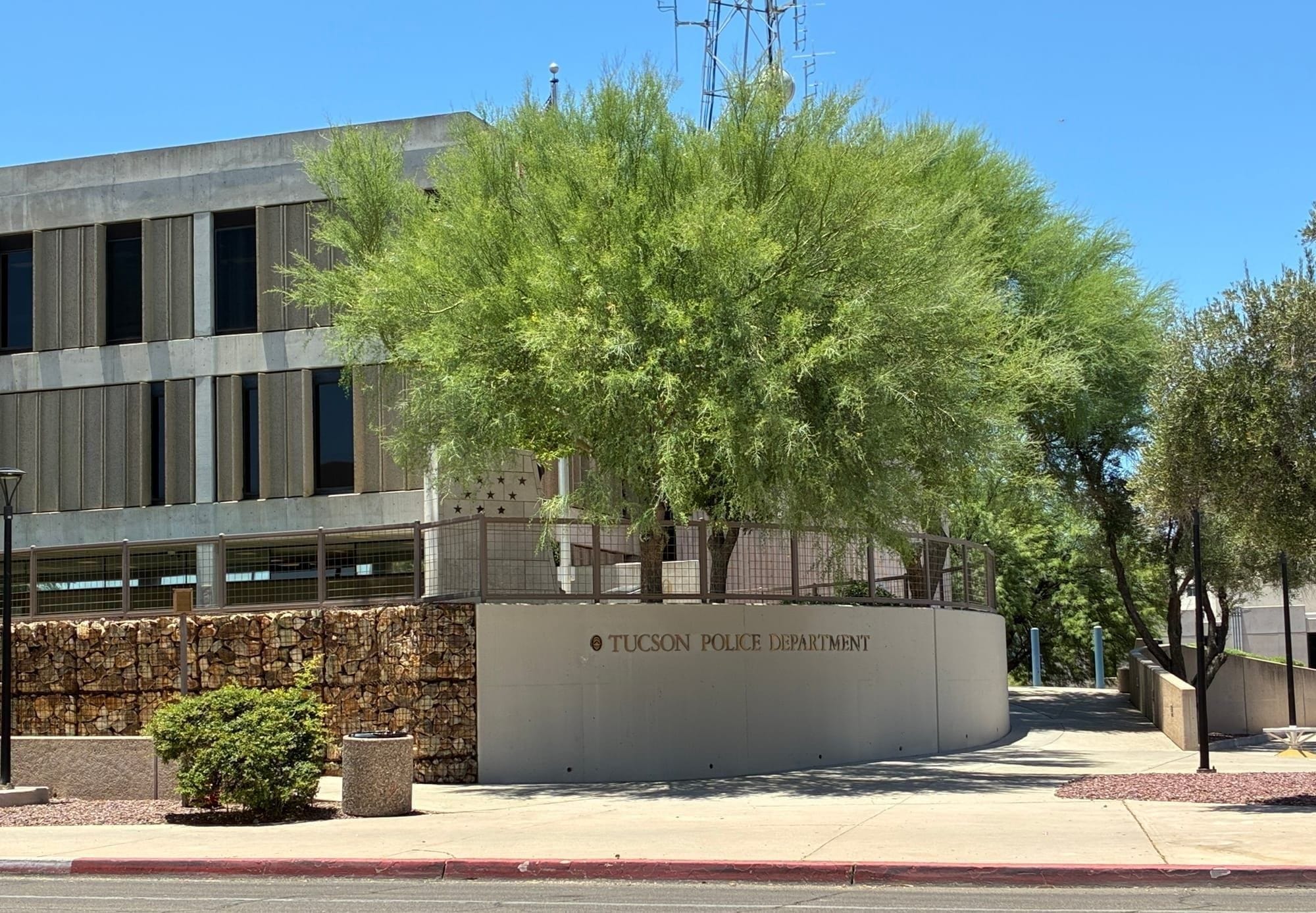
TPD acknowledges the trend is troubling.
"Our numbers are not good, and we have a problem, and we're doing what we can to try and fix that," said Lt. Jason Bredehoft.
Bredehoft believes the rise in fatalities stems from a variety of factors, including increasing population density, a lack of traffic enforcement and reckless driver behavior.
"We don't have any type of major crosstown thoroughfares that really alleviate any type of traffic pressure," he said. "We have a growing metropolitan area that kind of adds to that pressure. You have engineering infrastructure that, in some places, has done okay, and other areas we're trying to catch up through our partners at (the) Department of Transportation and Mobility."
Other advocates point to deeper, structural causes.
"This is not a unique issue to Tucson necessarily, but it is something that we continue to grapple with year over year, where we have these really atrocious ratings," said Vanessa Cascio, executive director of the Living Streets Alliance, a nonprofit that advocates for a more public-focused approach to Tucson's roads.
Living Streets Alliance's mission is rooted in streets as public spaces and the idea that streets can be places that either divide or connect people, Cascio said.
"How do we make them to be places for people to connect to one another, to discover new businesses, for kids to be able to safely walk and bike to school or parks?" she asked.
Part of the reason why Tucson has such high fatality rates is the way it was designed, Cascio said.
Arizona is part of the Sun Belt, a region in the southern U.S. that experienced rapid population growth during the country's post-World War II economic boom, leading to the development of new, car-centric communities.
"We know that our roads are dangerous, and speed is probably the number one factor in determining whether or not somebody will survive from a crash," Cascio said.
Research from the AAA Foundation shows the average risk of pedestrian death from a collision increases with driving speed, with only a 10% chance of death at speeds of 23 mph and a 50% chance at speeds of 42 mph.
"When we think about our arterials, the main streets like Speedway (and) Broadway, how fast do you go on those streets?" Cascio asked. "I assure you it's at least 40 mph, regardless of how it's posted or what the actual speed limit is."
Bredehoft also believes speed is an issue.
"Traffic collisions, by their nature, are all preventable, specifically when it comes to things like street racing or exhibition of speed," he said. "Those are people that are making a conscious decision to drive twice the legal speed limit or higher on public roadways."
The City of Tucson has been taking many steps to address these issues, including the implementation of a Traffic Problem Oriented Precision Policing program that uses computer dispatch calls to automatically assign officers from each of the city's four patrol divisions to busy intersections at peak traffic hours.
"We sat down with the command staff for those patrol divisions, and we picked eight intersections per patrol division, so 32 intersections across the city," Bredehoft said. "Those locations rotate on a quarterly basis, so each division only runs two at any given point in time."
This was just one step in a multi-part plan, which also included reorganizing the hours of motorcycle officers to allow better coverage into the afternoon and early evening, when collisions are more likely.
The city also enacted its Complete Streets Policy in 2019, in part due to a strong campaign from the Living Streets Alliance, the American Heart Association and the Robert Wood Johnson Foundation.
"Any time we repave a roadway, any time we redesign a roadway, we're designing it with safety in mind, and the safety of anybody using that street, not just people driving," Cascio said.
The biggest obstacle to improving Tucson's road safety is time, she said. One solution would be quick builds, which use materials with a short setup time to improve infrastructure faster than would be possible with traditional concrete and asphalt construction.
"6th Avenue, in front of Armory Park and the Children's Museum, was a project we did in partnership with the Department of Transportation and the City of Tucson," Cascio said. "It really just uses paint, planters (and) flexible delineators to create friction, slow down cars, improve visibility of people walking in the area (and get) cars to slow down."
The build was effective and didn't require a multi-year project or concrete, she said.
Benjamin DePue is a University of Arizona student and Tucson Spotlight intern. Contact him at bdepue@arizona.edu.
Tucson Spotlight is a community-based newsroom that provides paid opportunities for students and rising journalists in Southern Arizona. Please consider supporting our work with a tax-deductible donation.