
Pima County SNAP households cut in half by federal bill
Pima County SNAP households have been cut nearly in half since July 2025, as the One Big Beautiful Bill Act strips food and health care eligibility from veterans, children and thousands of other residents.
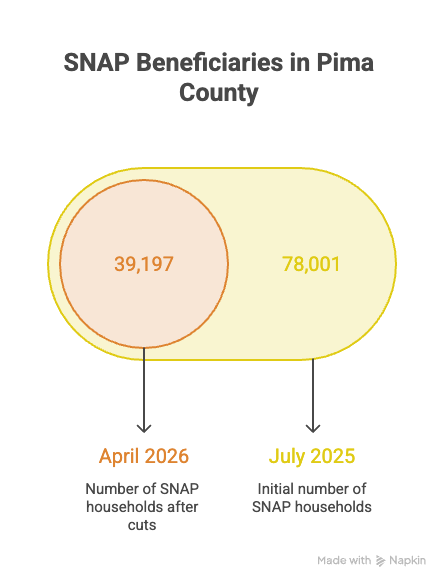
The number of Pima County households receiving SNAP benefits has been cut nearly in half in less than a year, county officials told supervisors earlier this month, as the federal One Big Beautiful Bill Act strips eligibility from veterans, the unhoused, former foster youth and thousands of others who once qualified for food and health care assistance.
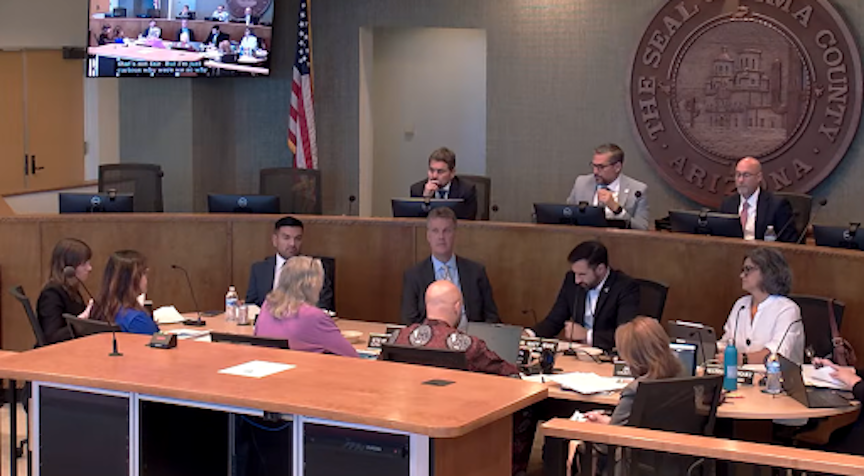
Supervisors heard details about the county's proposed action plan during their June 9 meeting, with the Pima County Health Department proposing a coordinated response to policy changes to mitigate the possible impact.
The bill makes the following changes to SNAP and AHCCCS eligibility and reporting requirements:
- Extending the age range for work reporting requirements for able-bodied adults without dependents from 18-54 to 18-64.
- Narrowing eligible immigrant groups to lawful permanent residents and limited categories, excluding refugees, asylees and parolees.
- Changing Arizona's "insufficient jobs" designation so that waivers now apply only to areas with greater than 10% unemployment. Based on fiscal year 2026 data, this makes Pima County ineligible for waivers, with only the city of Yuma and select tribal areas qualifying.
- Reducing parental exemptions from eligibility requirements for parents caring for children under 18 to only those caring for children under 14.
- Eliminating most self-attestation in the verification process, now requiring verified proof of income and work activities.
- Removing eligibility exemptions for veterans, the unhoused and former foster youth.
- Basing income calculations on gross income with fewer deductions, eliminating utility bill spending deductions.
Across Pima County, the number of SNAP beneficiaries has been cut nearly in half in less than a year. From July 2025 to April 2026, the number of SNAP households fell from 78,001 to 39,197, and the total number of county residents receiving benefits dropped from 144,720 to 67,671.
That includes a nearly 56% drop in the number of children receiving SNAP benefits in the county, from 53,616 to 23,710.
The trend mirrors the rest of the state. In that same timeframe, the number of Arizona SNAP households fell from 455,652 to 253,162, and the number of individuals receiving benefits dropped from 908,989 to 435,196.
For those who remain on SNAP in Pima County, benefits have fallen nearly 15%, with the average household's benefit dropping from $330.79 to $282.15, significantly below the state average, which dropped from $356.59 to $311.43.
Pima County Health Department Director Dr. Theresa Cullen said the numbers presented are a "moving target," with figures often mismatching between sources.
"We are anticipating being the coordinator for a response both within the county as well with our partners throughout the county which will be primarily the health care systems as well as community-based organizations that are ensuring that people have adequate enrollment in both SNAP and access," Cullen said.
District 2 Supervisor Matt Heinz estimated the SNAP reductions amount to $178 million a year in federal funding that Pima County no longer receives.
"I just want everyone to understand that there is no way the county, the city, the state, community food banks, they're not making up for this," Heinz said.
The Centers for Medicare and Medicaid Services is also taking public comments on a rule established June 1 that Cullen said would significantly limit the concept of medical frailty.
Cullen said the county currently has no clear guidance on how people will document eligibility requirements, who will document them or how documentation will be submitted and verified at the state level for Medicaid and SNAP.
The county is continuing to enroll residents in the Special Supplemental Nutrition Program for Women, Infants and Children using its own funding, with more than 2,000 people enrolled in the last year. Pima County also operates a referral program through which residents can request food assistance and receive referrals through departments like Development Services.
Arizona's Medicaid system faces similar eligibility restrictions, with changes to immigrant eligibility, which previously included humanitarian statuses, set to take effect Oct. 1.
Starting in 2027, renewals will be required every six months rather than every 12, with shorter response windows and more frequent proof of work requirements. Work exemptions have narrowed, with medical frailty remaining as an exemption but requiring stricter verification. A new federal mandate will also require work or community engagement for Medicaid expansion adults aged 19 through 64.
Statewide, an estimated 380,000 AHCCCS enrollees are subject to disenrollment. Work requirement rules will affect 190,000 adults, while more frequent redeterminations are expected to result in 50,000 additional annual disenrollments. For Pima County, that likely means 25,000 to 35,000 residents will be subject to the new requirements.
The Pima County Health Department has proposed a countywide action plan to preserve health care coverage, reduce food insecurity and prevent future gaps in both.
The action plan calls for developing multilingual navigation resources and community-facing tools, expanding enrollment assistance through Health-e-Arizona Plus and clinic-based programs, and creating referral pathways through clinical screenings, food insecurity referrals and community resource navigation.
"There have been reports that people are so disheartened that they are choosing to believe that they will not qualify for both access and or SNAP due to the changes that have happened," Cullen said.
To restore health care access, the plan calls for supporting streamlined AHCCCS redetermination processes at the state level, analyzing disenrollment trends, identifying high-risk populations, providing navigation and renewal assistance for AHCCCS enrollees and reducing Affordable Care Act marketplace coverage loss.
To reduce food insecurity, the plan calls for advocating for local and state flexibility in SNAP eligibility requirements, monitoring food insecurity trends and SNAP participation rates, and expanding outreach and enrollment assistance for emergency food programs as alternatives to SNAP.
The plan also aims to strengthen system readiness, connect clients to food assistance, health resources, employment opportunities and social support services, and build long-term infrastructure for sustained coverage, helping to reduce future costs.
District 5 Supervisor Andrés Cano pushed back on work requirements for SNAP recipients, pointing to the steep drop in benefits for children as evidence that the cuts go far beyond targeting able-bodied adults. He also criticized the timing of the Medicaid changes, which are set to take effect after November's midterm elections, and called on residents to contact U.S. Rep. Juan Ciscomani and the federal administration to push for a reversal.
District 4 Supervisor Steve Christy pointed to other food resources available to children in the community, such as Tucson Unified School District's free and reduced-price lunch program, but District 3 Supervisor Jennifer Allen noted that those programs were also subject to a $1 billion funding cut in 2025.
"What we know is that nutrition, especially early childhood nutrition, is critical. It's critical not only for physical development, but for brain development," Cullen said. "There are many historical and peer-reviewed studies that have indicated that the impact of the malnutrition or inadequate nutrition early in life stunts growth, stunts brain development, and it cannot be recovered later in life."
Cullen also noted the broader economic impact of the cuts, pointing to the ripple effects of grocers losing SNAP revenue and uninsured residents being forced to seek medical treatment they cannot pay for.
Ian Stash is University of Arizona alum and freelance journalist in Tucson. Contact him at ianjgs16@gmail.com.
Tucson Spotlight is a community-based newsroom that provides paid opportunities for students and rising journalists in Southern Arizona. Please consider supporting our work with a tax-deductible donation.