Latino families demand federal action on Tucson heat
Latino families and advocates in Tucson are demanding federal action on extreme heat, citing hotter classrooms, rising bills and health risks.
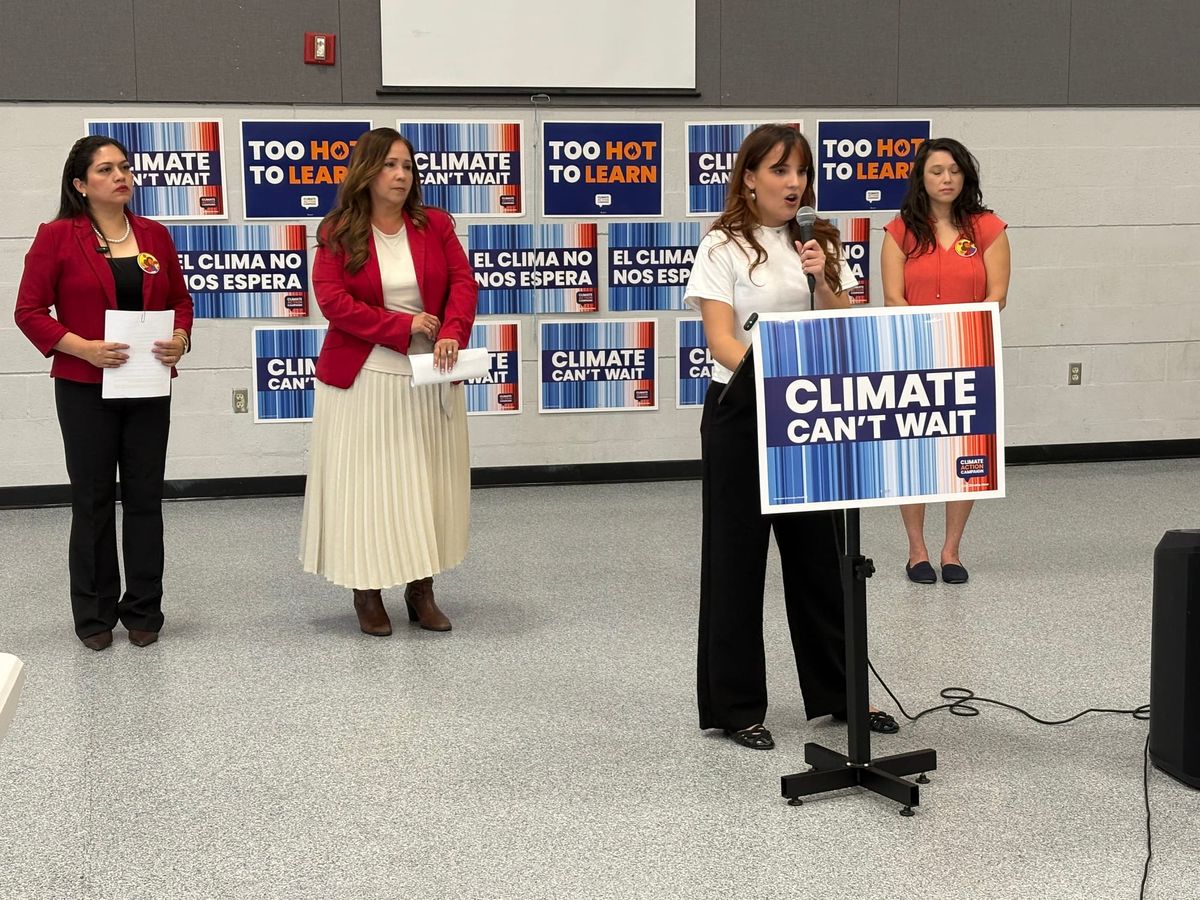
With Tucson hitting its first 100-degree day 23 days earlier than last year and school starting up again this month, Latino families and advocates gathered earlier this month to demand federal action on extreme heat, warning that hotter classrooms, rising utility bills and vanishing outdoor time are hitting their communities hardest.
Representatives from Climate Action Campaign, MamásConPoder and Arizona Youth Climate Coalition met with U.S. Rep. Adelita Grijalva on Aug. 4. Among their list of requests were binding federal commitments, expanded cooling centers and stronger protections for those at risk.
Extreme heat disproportionately affects Tucson's Latino communities, with predominantly Latino neighborhoods often dominated by asphalt, offering fewer trees for shade and homes with fewer resources to cope with the heat.
"It's not just a weather issue. Extreme heat is a public issue, a worker safety issue and an environmental justice issue," Grijalva said. "Our students are trying to learn in dangerously hot classes; in dangerously hot gyms."
Temperatures above 100 degrees force home air conditioners to work harder, driving up utility bills many families can't afford, said MamásConPoder Executive Director of Campaigns Linda Stone.
"For Latina moms and families, that means choosing between keeping the AC on or turning it off to pay rent or buy food," Stone said. "The average Latino household in Arizona spends a higher share of its income on energy, the most of all other groups in this country."
Southern Arizona news written by journalists who live it. Free in your inbox.
For some Tucson families, that trade-off isn't hypothetical.
"Last summer, our air conditioner broke during a heat wave," said resident and MamásConPoder member Jennifer Cardenas. "Waking up in the middle of the night with small children during extreme heat is not a minor inconvenience, it's a public health emergency happening behind closed doors."
It's not just health and financial concerns that parents are worried about. Extreme heat also limits potential learning opportunities and outdoor experiences.
Cardenas' twins, who are scheduled to start preschool soon, will likely miss out on outdoor learning opportunities because of increasing heat.
"Preschool kids need to move, they need to run, to play, to discover the world, that's how they learn, that's how they grow," Cardenas said. "When it's 110 degrees outside, recess doesn't happen. Outdoor time disappears and I wonder what that does, not just physically but to their development and their childhood. Every child deserves a childhood that happens outside."
Cardenas isn't alone in that worry, as heat anxiety extends across the community heading into the school year.
"For thousands of Latino families, back-to-school season has become a time of fear about whether their children will be safe at the bus stop, whether schools have adequate cooling, and whether they can afford to keep the air conditioning on," Stone said.
That fear extends into the classroom itself, where advocates say the stakes go beyond comfort.
"No student should have to worry if their classroom is safe enough to learn in," said Carmen De Backer, Tucson lead of Arizona Youth Climate Coalition. "When schools get too hot, it becomes harder to concentrate, harder to retain information, harder to succeed. Extreme heat is linked to poor academic performance, worsened respiratory conditions and increased health risks."
Advocates say the solutions already exist and simply need funding.
"We know what works: cooling centers save lives, shade and tree canopy reduce temperatures, energy assistance in weatherization help families stay safe and in their homes while lowering costs," Grijalva said. "These aren't luxury projects, these are life-saving investments."
For De Backer, the urgency comes down to infrastructure that hasn't kept pace with a changing climate.
"The reality is that many of our schools are not built for the climate we're experiencing today," she said. "We are not waiting for someone else to fix this. We are here demanding the binding federal commitments our communities deserve."
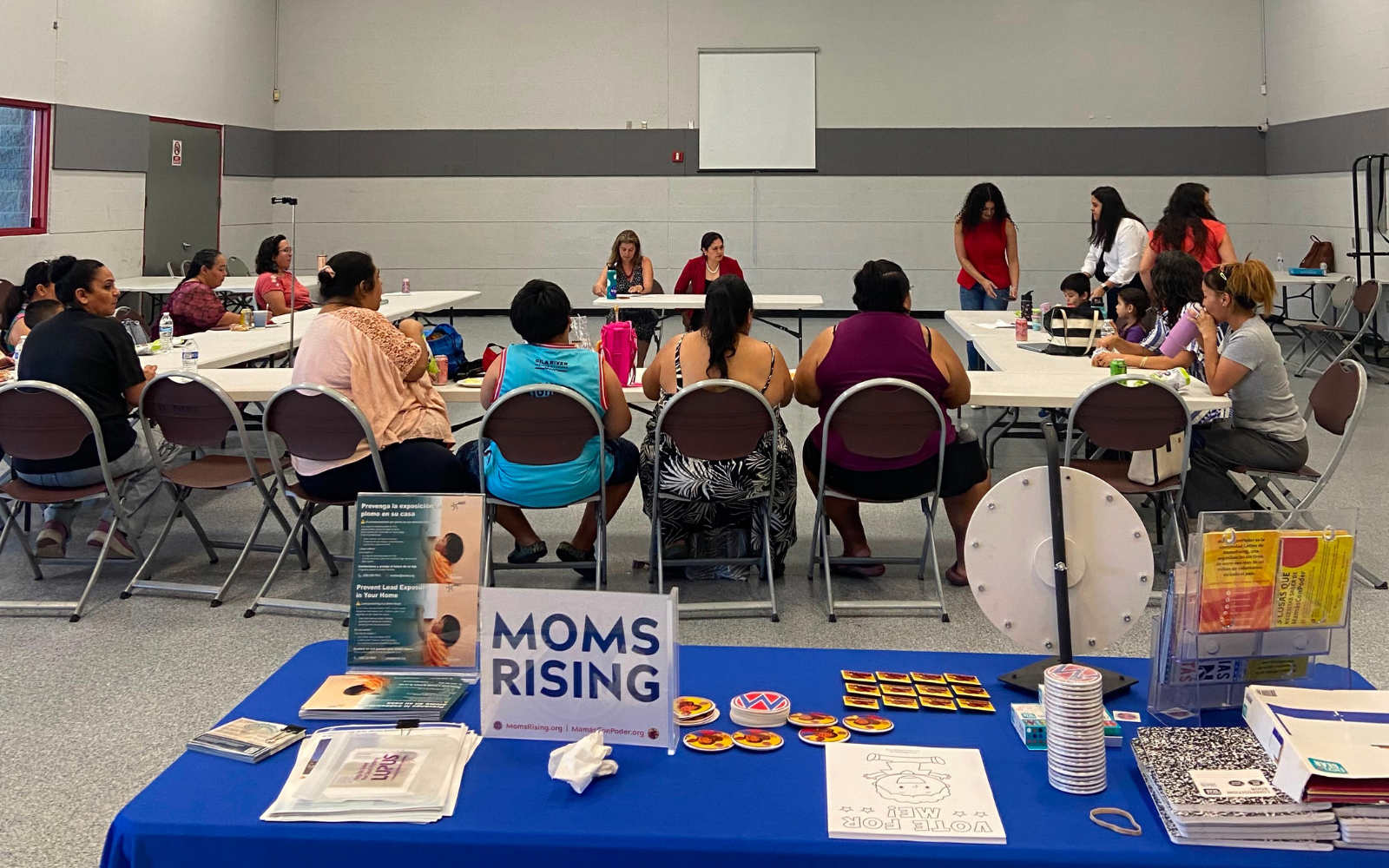
Organizers followed the news conference with a community workshop, offering Latino families practical tools and resources to cope with Tucson's heat.
Gabrielle Cotnoir is a University of Arizona journalism student and Tucson Spotlight intern. Contact her at gabriellecnews@gmail.com.
Tucson Spotlight is a community-based newsroom that provides paid opportunities for students and rising journalists in Southern Arizona. Please consider supporting our work with a tax-deductible donation.