Tucson’s first Queer Zine Fest draws zinesters statewide
Arizona Queer Archives organized Tucson’s first Queer Zine Fest at The Historic Y Oct. 9-11, with vendors, a workshop and an open mic.
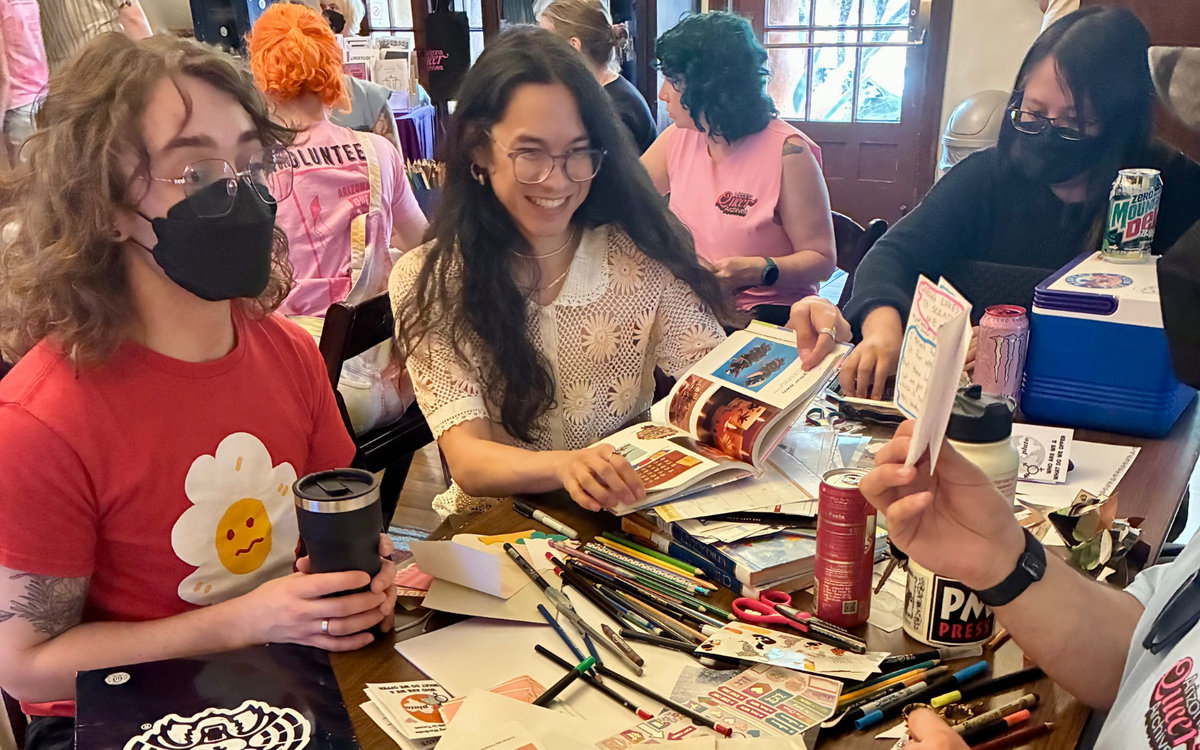
Queer zinesters from across Arizona gathered in Tucson earlier this month for the city’s first Queer Zine Fest, a festival organizers created for queer writers and artists to sell and share handmade booklets on topics from political commentary to poetry.
Arizona Queer Archives, a community-focused collection of LGBTQ+ history, began organizing the event in March. The three-day festival ran Oct. 9 through 11 at The Historic Y.
Zines are self-published booklets handmade by writers and artists. Because they are independently produced, they can carry information without censorship. Zines break the constraints of genre, with work ranging from political commentary to education to personal stories told in words and illustrations.
Arizona Queer Archives started the fest because organizers wanted a festival specific to queer zinesters, said codirector Ames Meeks, who noticed that events in Phoenix and Bisbee often come with many obligations and can overlook queer voices.
The festival kicked off Oct. 9 with a performance by Desert Voices Choir, followed by an open mic where zinesters shared their written work. The next day, queer vendors from across the state gathered to sell and share their wares.
The weekend concluded with a zine-making workshop where new and experienced zinesters came together to craft their own work. Zinesters and artists also shared their journeys in the field with attendees.
“Zines celebrate subjectivity. They celebrate each person’s individual experiences, perspective and self-expression,” Meeks said.
Help us build local news that brings people together, not apart.
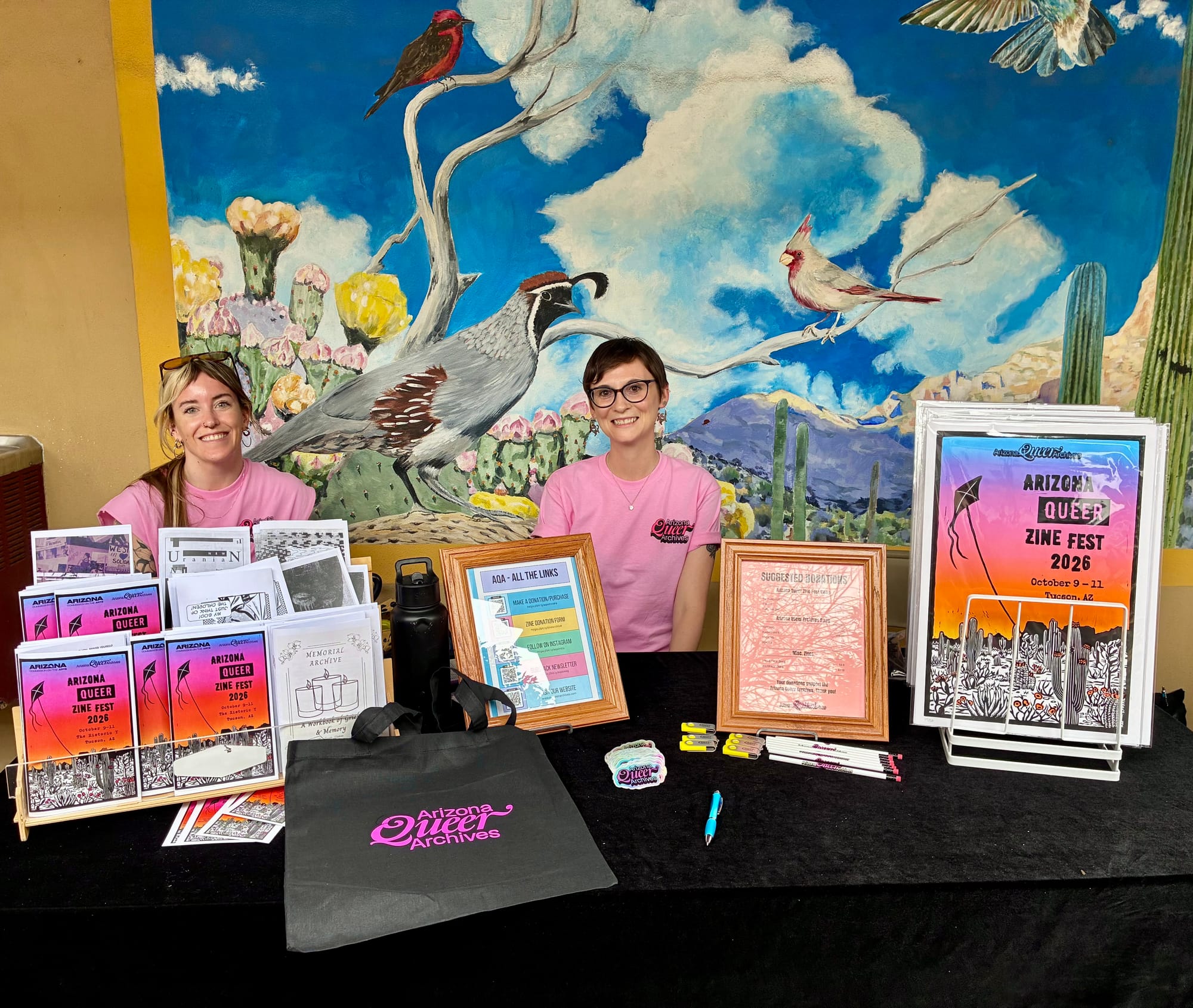
Meeks has participated in several virtual queer zine fests, but this was their first in-person event. They said zines are both easy for anyone to make and increasingly important for queer and trans people.
“You don’t need to have any special skills; they’re very accessible,” they said. “Right now, because queer and trans people are being suppressed, it’s become more important and more relevant to share our experiences. A lot of people are unaware of how starkly our community is being affected by the government and the attacks on our rights.”
Historically, zines have helped communities share information and organize through an accessible, analog form. In the late 1960s, independent presses and underground newspapers helped circulate information and celebrate queerness during the gay rights movement.
“In the last few years, there’s been a resurgence in zine culture because of censorship and further marginalization,” Meeks said.
Zines also serve readers looking for information they can’t find elsewhere.
“Zines are a great way to get information. They are a personal experience, but they’re also informative,” said Jordan Crouch, a volunteer for the event organizing committee. “My favorite zines are the ones where I’m learning about things that I never saw in mainstream media. I’m expanding my perspective and thinking about things in a different way.”
Ramón works for Spectrum+, a group that provides sexual health and mental health education. Over the past year, the organization started including zines in its curriculum, hoping to reach new students.
“We wanted to convey information in a compact setting to students in a way that’s engaging, short-form, and interesting,” they said.
The program produces a zine every week or two in conjunction with a project called The Grounding Series, which shares strategies for managing mental health.
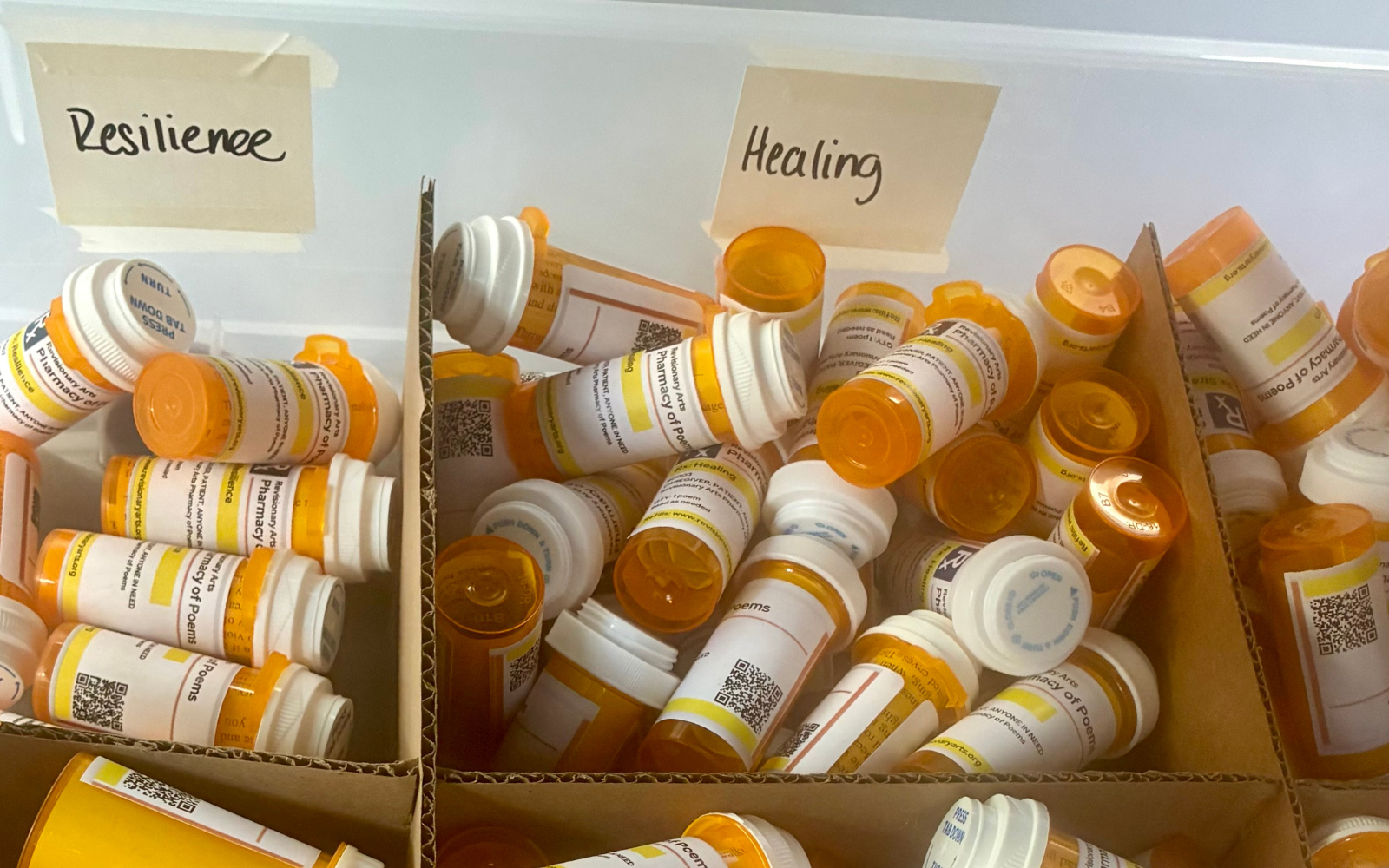
Zines are also a way to share personal passions. Zinester RJ Raebel is fascinated by the intersection of poetry and medicine. Raebel is an editor for Grey Matter, a Phoenix medical poetry journal about experiences with health care.
At his booth, Raebel had a pharmacy of poems, where visitors could buy a prescription for resilience or healing and get a poem in a prescription bottle.
Zine fest attendee Maevyn Frey found her passion for French poetry as an undergraduate at the University of Arizona. She later translated Louis Aragon’s first chapbook, “Le Feu de Joie,” from French into English while studying at the Vermont College of Fine Arts. Frey said it had never been translated into English before.
Although Frey had never made a zine, she knew she had the material for one through her translations, witchcraft and radical writing.
Recently, Frey has been interested in translating the work of Natalie Clifford Barney, an American-born lesbian poet who lived in Paris and wrote in French. Frey describes translation as “honoring the many layers of someone’s identity.”
“It’s like you’re collaborating with someone who’s no longer there,” Frey said of the translation.
Jamie Lee, a professor in the University of Arizona’s School of Information, started Arizona Queer Archives in 2008 to preserve queer stories through personal experiences. The collection includes oral histories from older queer people recounting what it was like to live in intolerant times and documents chronicling people’s gender identity transitions.
Former Tucson poet laureate TC Tolbert’s kite project, commemorating victims of anti-transgender hate crimes, is included in the archive, which also acts as a resource for the LGBTQ+ community.
People interested in the collection can book an appointment with Arizona Queer Archives to browse specific documents, though many projects are also available online.
Ava Schrag is a University of Arizona journalism student and Tucson Spotlight intern. Contact her at avaschrag@arizona.edu.
Tucson Spotlight is a community-based newsroom that provides paid opportunities for students and rising journalists in Southern Arizona. Please consider supporting our work with a tax-deductible donation.