Tucson groups turn climate anxiety into action
From youth activists fighting a data center to women who hike together, Tucson groups are tackling climate anxiety with action and community.
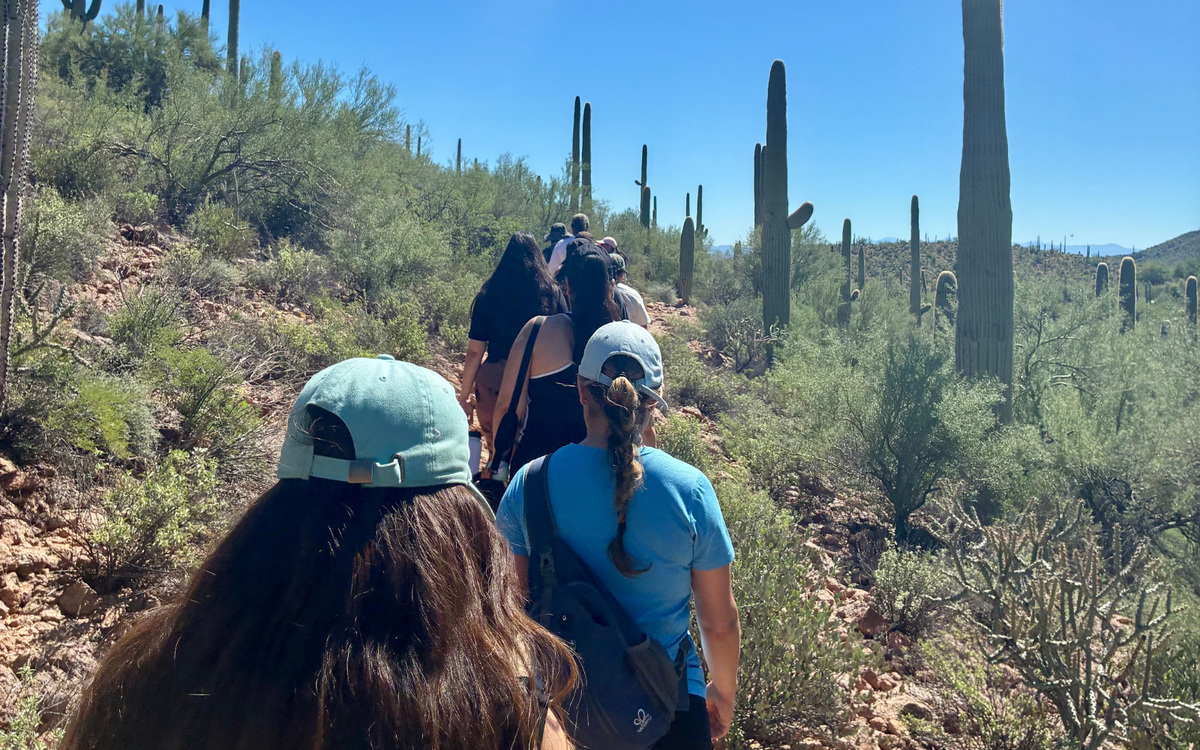
Tucson groups, from a high school climate coalition to a women’s hiking club, are fighting climate anxiety with action, community and time outdoors.
A Walton Family Foundation-Gallup report found that 38% of Americans say extreme weather has damaged their community. Among residents hit by extreme weather, worry that it will happen again is highest in the Mountain region, driven largely by drought along the Colorado River.
In August, the Interior Department ordered a 20% reduction in water deliveries to the lower basin states. Low water levels also threaten plans to expand power generation, which raises concerns for Tucson, where water is already scarce.
For Arizona Youth Climate Coalition members Gabe Sadza and Sophia Garcia, the response is making sure community voices are heard in discussions about the city’s environmental future, including proposed data centers in the region.
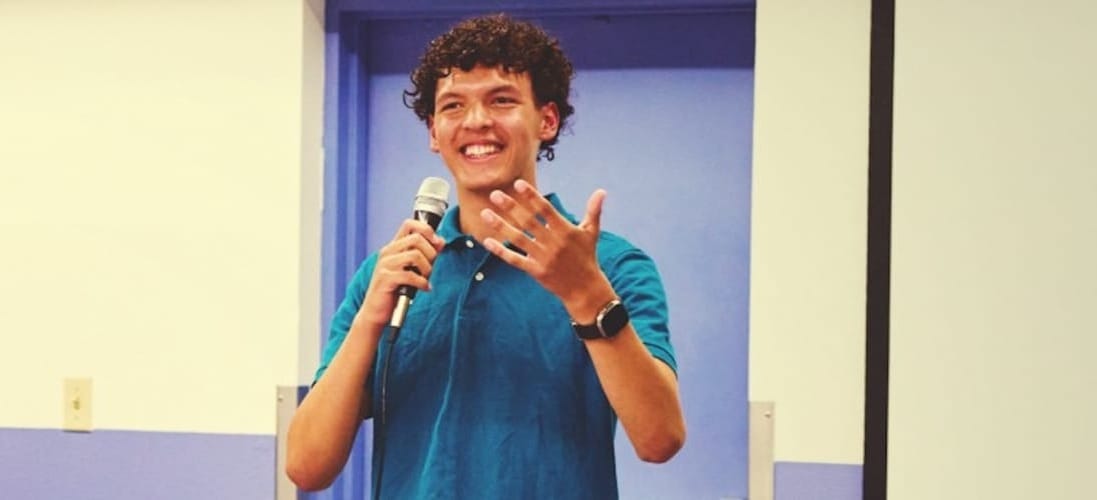
Sadza is a sophomore at University High School and the coalition’s statewide communications director.
“We need to put a focus on our local residential and business spaces before we start thinking about accommodating large-scale data centers,” Sadza said.
Sadza and Garcia, a Canyon del Oro High School senior and the coalition’s co-lead, participated in an August town hall about what the proposed Project Blue data center could mean for the community.
During the event, one attendee said she felt helpless in her efforts to drive change.
That sentiment is common. An American Psychiatric Association report found that one-third of Americans worry about climate change on a weekly basis.
Tucson Spotlight trains the next generation of Southern Arizona journalists and publishes their work free for everyone. No paywalls, no corporate backing — just readers who believe this community deserves better local news.
But many struggle to translate this concern into action.
Sadza said that simply participating in discussions about climate and the environment has the potential to create change.
“Continue showing up,” he said. “You don’t have to have a large audience or a large network in order to make your impact known.”
The coalition has put that advice to work on Project Blue, a data center proposed north of the Pima County Fairgrounds. Sadza and Garcia say they were uplifted by the Tucson City Council’s unanimous rejection of Project Blue in 2025 and continue to call for data center regulations.
“What really struck me was the amount of community involvement from the audience,” Sadza said.
But they were disappointed to see Beale Infrastructure move forward with the project under a previous land annexation agreement with Pima County, despite clear public opposition.
“It’s disheartening to see that corporations and other governing bodies don’t care about what people have to say. They’re more in it for their own interest,” Garcia said. “We don’t know the extent of the effects that these massive data centers will have. We haven’t seen anything to this scale.”
Pima County Economic Development describes data centers as “the physical backbone of the internet” and essential for the modern economy, but Garcia disagrees, saying the arguments in favor of data centers are “not worth the effects it will have on Tucson’s electric grids and water resources.”
The coalition is also concerned about how data centers and other environmental challenges will disproportionately affect Tucson’s neighborhoods. Low-income communities are especially vulnerable, with electric costs increasing with temperature and many neighborhoods lacking shade.
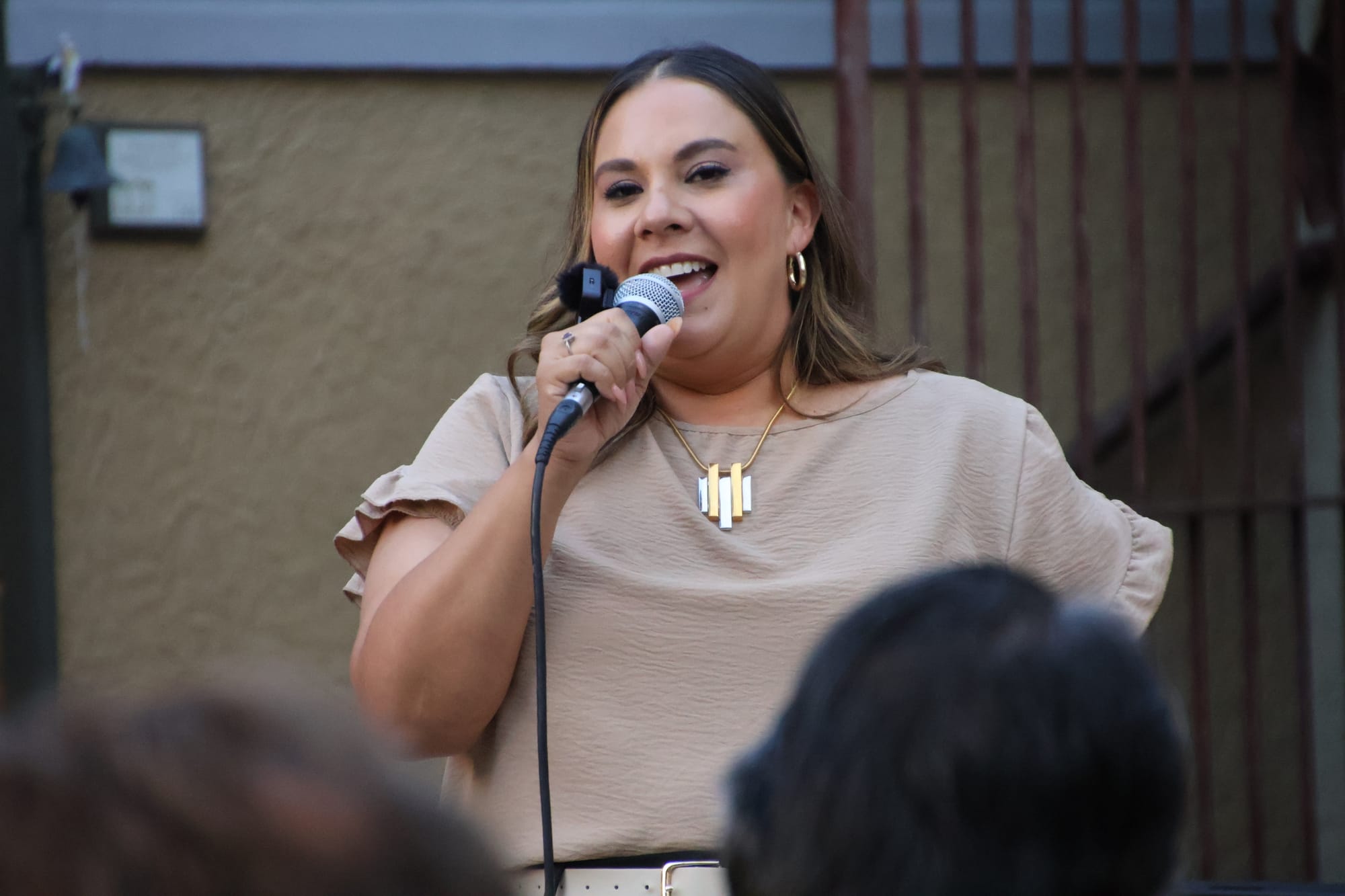
Ward 5 Councilmember Selina Barajas has worked closely with the coalition to understand these disparities, including by introducing the group to the tree equity index, a tool that shows many Tucson neighborhoods are hotter because they lack tree canopy.
Barajas also carries her commitment to environmental stewardship across generations through Reinas Who Hike, a group she founded in 2022.
“We’re all sisters, cousins, moms, and tías,” said Reinas Who Hike member Patricia Sanchez.
Protecting the environment matters to the group, and the hikes give them time to slow down and connect with nature. For Sanchez, that connection began in childhood.
When she was younger, her uncle showed her the importance of the natural world. She also received environmental education through programs like Camp Cooper, and she stresses the importance of teaching environmental stewardship to younger generations.
“My uncle kept it alive for us as kids and I carry that with me,” she said.
Cassandra Becerra, Arizona state director of Mountain Mamas, a nonprofit that organizes parents and caregivers to protect air, water, climate and public lands for future generations, is also a member of Reinas Who Hike. She said her commitment to environmental advocacy was shaped by the 12 years she spent working for the late U.S. Rep. Raúl Grijalva.
“He taught me to love public lands in a different way. To not just enjoy nature but be a spokesperson for nature,” she said.
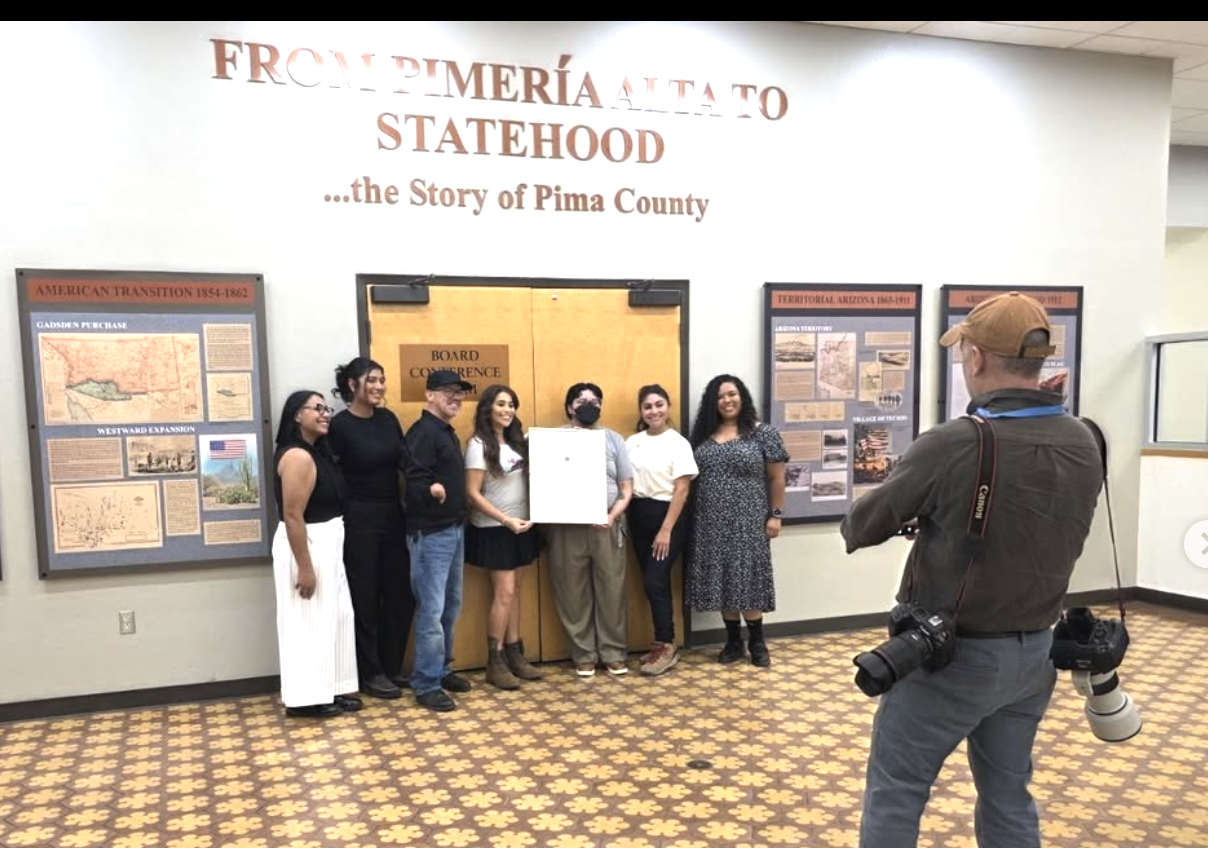
Mountain Mamas has participated in Latino Conservation Week, an initiative launched by the Hispanic Access Foundation in 2014 to encourage Latinos to be outdoors and become advocates for natural resources and public lands. Becerra aims to bring Latino voices into the climate conversation.
“We belong in these spaces; these lands belong to all of us,” she said.
Becerra applauds young people in Tucson for their commitment to climate advocacy.
“I’m very proud of our youth. They’re leading this effort to take care of our environment, to battle the fights of climate change,” she said.
For the coalition, environmental advocacy means representing voices across the city.
“We want to make sure every community has what they need and that the distribution of resources is equitable,” Sadza said.
While the future can seem bleak, members of these groups remain hopeful that civic and environmental education and communication with representatives can help prevent further destruction.
For Sadza, the hope for change is what keeps the fight moving forward.
“If the climate can get worse, it can also get better,” he said.
Ava Schrag is a University of Arizona journalism student and Tucson Spotlight intern. Contact her at avaschrag@arizona.edu.
Tucson Spotlight is a community-based newsroom that provides paid opportunities for students and rising journalists in Southern Arizona. Please consider supporting our work with a tax-deductible donation.