
Pima County aims for 50% FAFSA completion with peer coaches
High school seniors from 19 Pima County schools are training as peer coaches to help classmates complete the FAFSA and claim more college aid.

A program that trains high school seniors to help classmates fill out the federal college aid form has grown from 24 schools to 50 through a partnership with the Arizona Board of Regents, and 19 Pima County high schools are in this year’s cohort.
Arizona students leave more than $100 million in federal Pell Grants unclaimed each year, according to the Arizona Board of Regents. The Free Application for Federal Student Aid, or FAFSA, is the form that unlocks those grants, along with scholarships and loans.
Pima County students who skip the FAFSA miss out on money, so high school seniors are learning it to help their classmates fill it out.
The Pima County Peer Coach Program, run by the Southern Arizona Education Council, recruits and prepares high school students to guide their classmates through completing the FAFSA. The program began more than a decade ago as an AmeriCorps initiative and partnered with the Arizona Board of Regents last year to expand its reach.
As a result of the partnership, the regents’ peer coach program, which started in Maricopa County, now reaches schools across Southern Arizona and Phoenix, and participating schools rank higher for FAFSA completion rates.
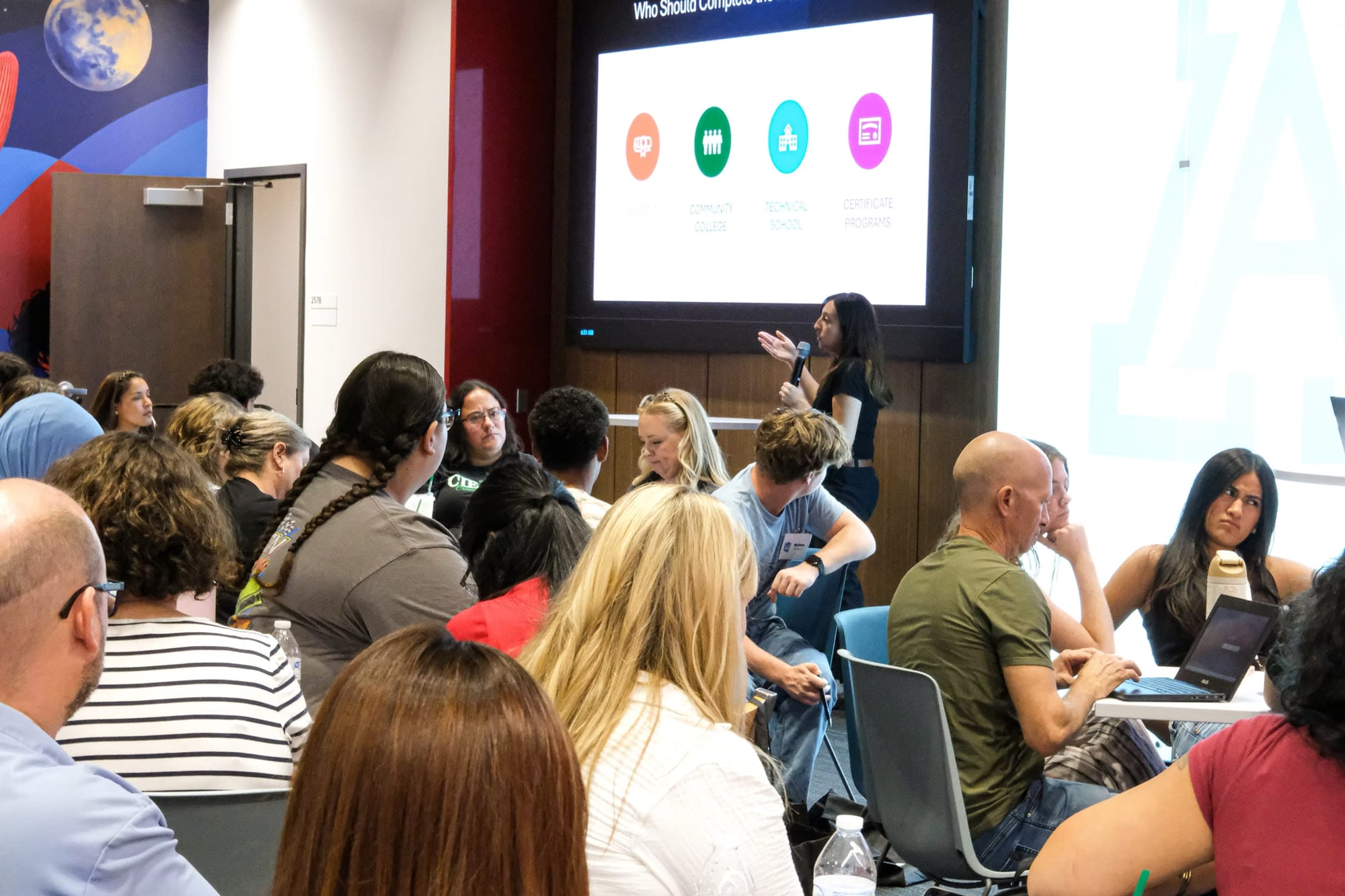
This school year, 54 peer coaches and their advisors, representing high schools including Tucson, Pueblo and Catalina, attended the program’s kickoff at the University of Arizona. Throughout the year, coaches help organize FAFSA workshops and awareness campaigns, connect students with college planning resources and give classmates one-on-one help.
In Pima County, 43.62% of the Class of 2026 completed the FAFSA, compared with 47.11% statewide, according to the Arizona FAFSA Dashboard. Arizona is raising its goal to 50% for the Class of 2027, and the council set the same goal for Pima County.
A common question about the FAFSA is whether someone should still fill it out if they think their family’s income is too high.
Your gift keeps local news free and gives a young journalist their start.
Rocque Perez, the council’s president and CEO, said that no matter a family’s income, filling out the FAFSA is worthwhile because it can lead to grants and scholarships, as well as loans better suited to students just starting college.
“Approximately $42.5 million federal aid is available to students every year,” Perez said.
Students who don’t fill out the FAFSA are missing out on college aid, a problem peer coaches aim to address.
Peer coaches are recruited during their senior year to help classmates fill out the FAFSA and answer their questions. Perez and peer coaches Alexa Villa and Jayceona Rodriguez said the approach works better than adult-led help.
“High school students are best fit to support their peers because they are all experiencing transitioning into after-school together,” Perez said.
Villa agreed, saying having someone their own age to help can make students more comfortable asking questions and filling out the form than if their only options were teachers or counselors.
“FAFSA deals with a lot of sensitive information and I want them to know there are people there to help them,” Villa said. “We peer coaches are a great support system and we just want everyone to succeed.”
Fellow peer coach Rodriguez said she decided to become a peer coach because she didn’t know much about the FAFSA and wanted to learn.
“I felt like a lot of students didn’t know a lot about FAFSA, including myself, so I wanted to learn more about it to help my peers and myself,” Rodriguez said.
Rodriguez said she learned about the FAFSA while helping her classmates, and she called being a peer coach a great chance to put herself out there and build her leadership skills.
“I’ve talked to lots of people now that I had never really gotten the chance to before becoming a peer coach,” Rodriguez said.
Zaida Josephene-White is a Sahuaro High School student and Tucson Spotlight intern.
Tucson Spotlight is a community-based newsroom that provides paid opportunities for students and rising journalists in Southern Arizona. Please consider supporting our work with a tax-deductible donation.