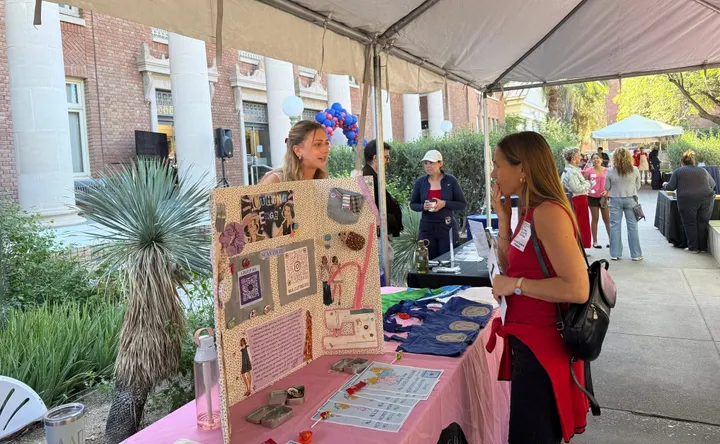
UA office aims to get Arizonans with disabilities hired
The University of Arizona’s new Office of Employment First aims to close the job gap for Arizonans with disabilities under the slogan “Real work, real pay, real respect.”
The University of Arizona has launched a new office to help more Arizonans with disabilities find work under a simple slogan: “Real work, real pay, real respect.”
Only 38.1% of working-age people with disabilities in the U.S. were employed in 2025, compared with 74.8% of those without disabilities, according to the U.S. Bureau of Labor Statistics. The UA’s new Office of Employment First, an initiative hosted by the Sonoran Center for Excellence in Disabilities, aims to address that.
The Sonoran Center, a unit of the College of Medicine – Tucson, works toward a future where everyone can fully participate in their local community through competitive integrated employment.
The Sonoran Center is one of 68 federally designated centers across the country. It collaborates with state and local government agencies and community providers to support people with disabilities and their families across Arizona.
The UA’s Office of Employment First is part of a nationwide movement. It will collaborate with preexisting programs, including the Arizona Department of Economic Security’s Vocational Rehabilitation Program, and other statewide and UA partners.
“There is an assumption that people with disabilities are not capable of working, and that’s not true,” said Mỹ Lê Sandaine, systems change liaison for the Sonoran Center. “Employment first is a part of the Civil Rights Movement. It is a human right.”
Every byline starts with a chance
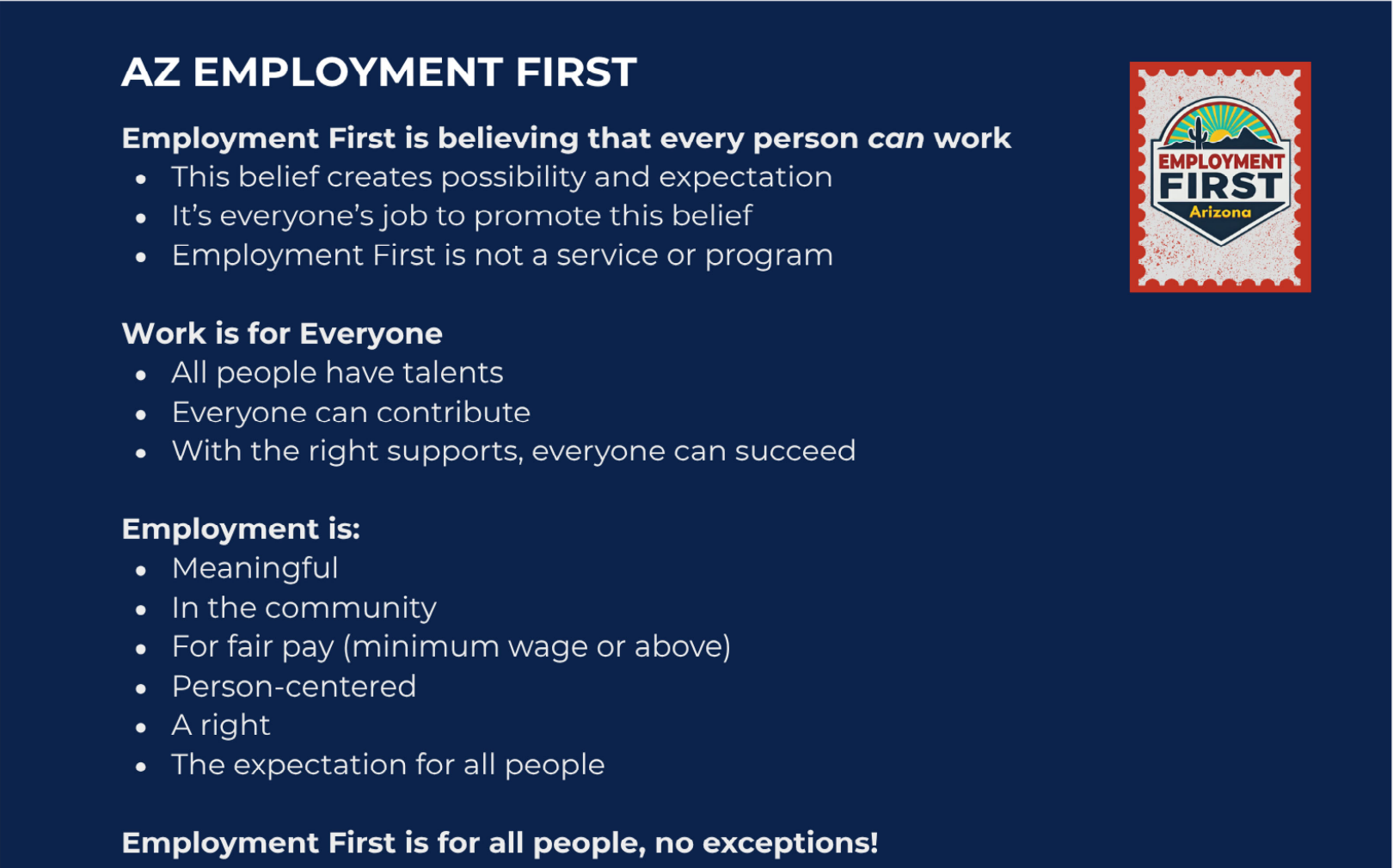
The office will provide training on developmental disabilities for students and service professionals, technical assistance for community members and research to support those methods.
“The goal is not simply to teach people about disability,” said Aja Haymore, communications and marketing program manager for the Sonoran Center. “It is to build a more consistent understanding of what quality employment support looks like and give professionals practical tools they can use in their work.”
Training might include topics like competitive integrated employment, benefits, employer engagement, person-centered practices and other areas that strengthen employment services and opportunities.
The office is necessary to close the gap between people with disabilities who are employed and those who are not, Haymore said.
“That gap is one reason Employment First efforts remain important,” Haymore said.
But real systemic change doesn’t happen overnight.
“System change is a long-term journey fueled by perseverance, a shared purpose and a commitment to collaboration,” said Kristen Mackey, administrator of the Arizona Rehabilitation Services Administration. “The launch of the Arizona Office of Employment First is a testament to the dedication of everyone who kept pushing forward to make this vision a reality.”
The office’s current initiatives include We All Work Arizona, a project supported by the Vitalyst Foundation that advocates for competitive integrated employment to become the expected outcome statewide for people eligible for the Arizona Division of Developmental Disabilities or receiving center-based or group-supported employment services.
“We want to see support for people with disabilities baked into the systems of care that we engage with,” said Sonoran Center Executive Director Jacy Farkas. “We will work with various state agencies, community organizations and tribal nations to accomplish that goal.”
The Office of Special Education Rehabilitation Services is also working with the Office of Employment First to develop and support self-employment opportunities offered through state-provided vocational rehabilitation and to improve implementation and training programs alongside the Arizona Department of Economic Security.
The office also plans to track whether its work is making a difference.
“(The office) looks beyond simply counting activities such as trainings or meetings. We want to understand whether practices are changing, where people continue to encounter barriers, whether employment opportunities and outcomes are improving, and whether experiences differ across communities and regions of Arizona,” Haymore said.
The new office is a big step for the Sonoran Center.
“This office feels like a major milestone, and the next step is implementing employment first into our policies and resources,” Farkas said. “When I think about all of the partnerships it took to reach this point, it’s clear that our community wanted to make this center a reality.”
Farkas said the new office is the perfect way to celebrate the Sonoran Center’s 20th anniversary and prepare for the next 20 years of service to Arizona.
Quentin Agnello is a University of Arizona alum and freelance journalist in Tucson. Contact him at qsagnello@gmail.com.
Tucson Spotlight is a community-based newsroom that provides paid opportunities for students and rising journalists in Southern Arizona. Please consider supporting our work with a tax-deductible donation.