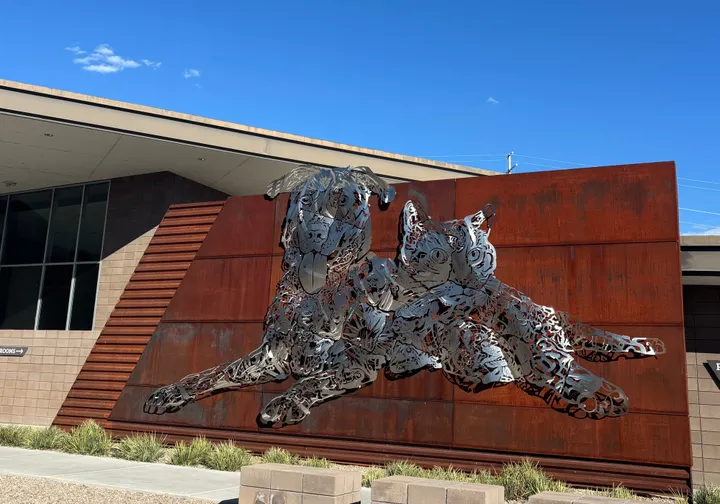
Tucson service dogs strut in UA student-made denim jackets
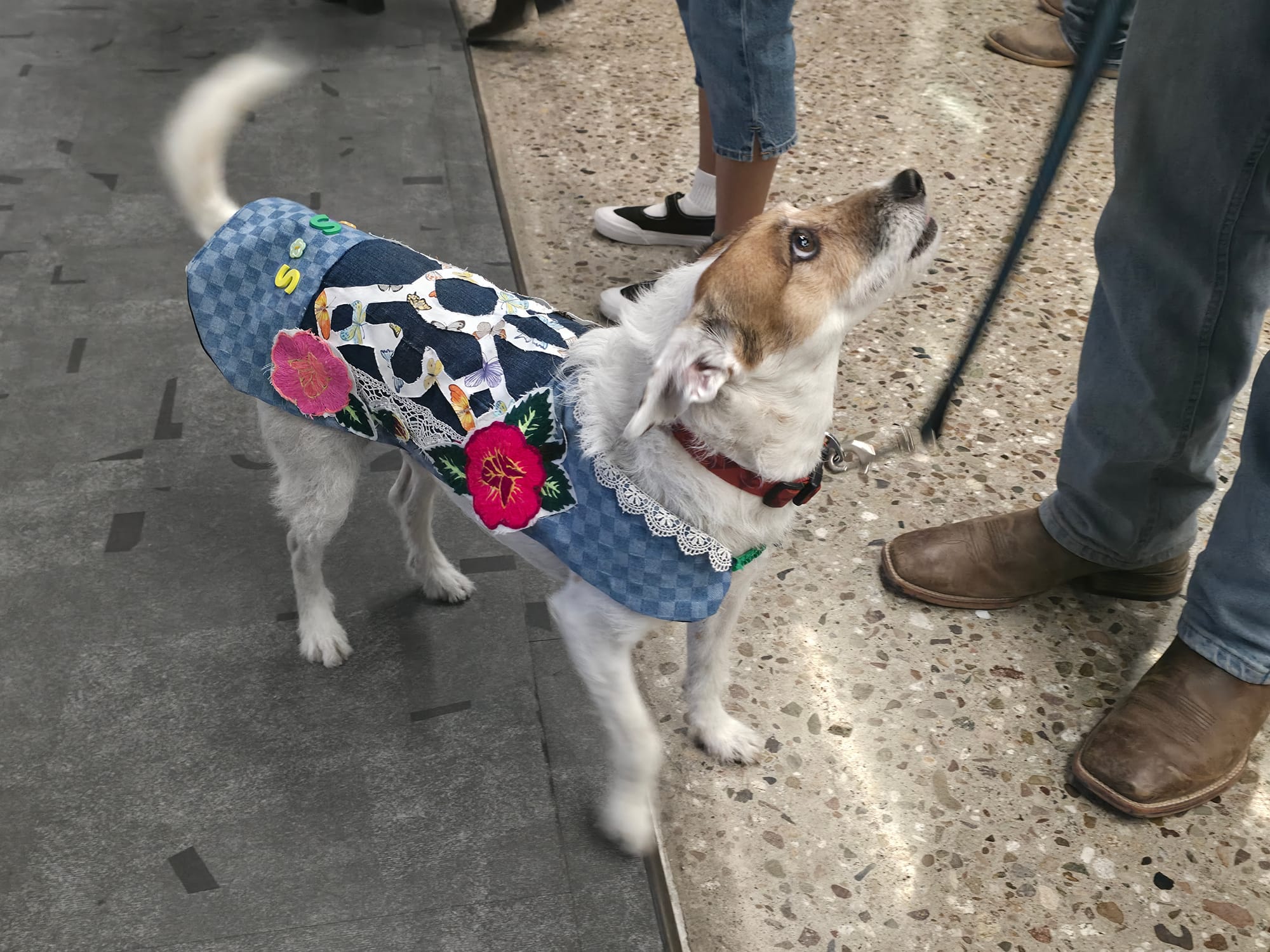
Service and disabled animals modeled custom denim jackets made by University of Arizona fashion students at the Dogs N Denim show in Tucson.
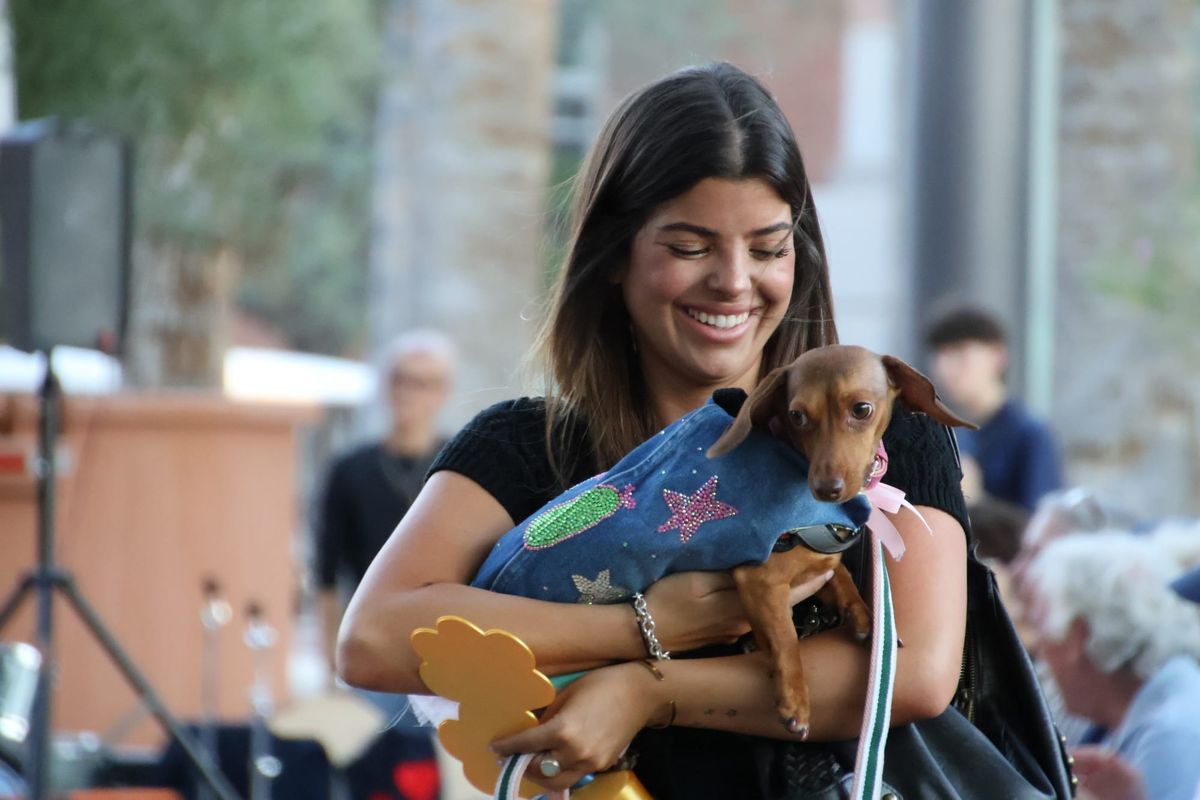
Service and disabled animals strutted down a runway at McClelland Park in custom denim jackets made by University of Arizona fashion students, and each one got to keep theirs.
Since its inception in 2017, the annual Dogs N Denim fashion show has aimed to highlight the importance of these animals’ roles in people’s lives while also displaying students’ work to the public.
The event was emceed by Reid Park Zoological Society Development Officer Jed Dodds, who spotlighted each animal as it took its turn on the catwalk, inviting owners to share personal stories about how the animals had impacted their lives.
Dodds also shared lessons about animals’ relationships with their owners or trainers.
“Sometimes we are the support for our animals,” Dodds said. “Sometimes those rescue animals we don’t know what they’re coming into our homes with.”
Soldier’s Best Friend, a nonprofit that trains rescue dogs as service dogs for veterans, including those living with PTSD or a traumatic brain injury, was one of the vendors at the show.
Help us build local news that brings people together, not apart.
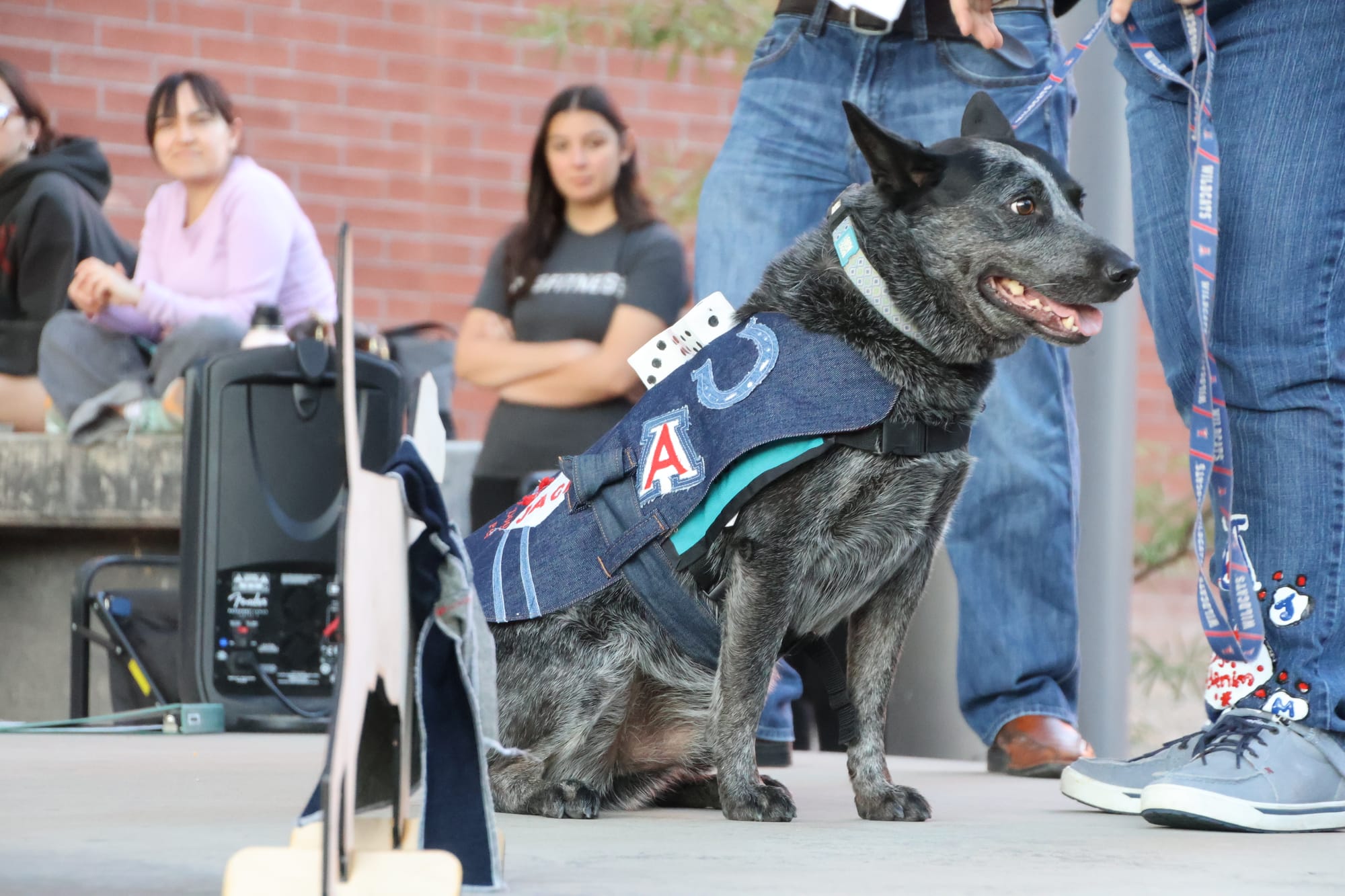
Its Tucson program director, Muhammad Zantout, walked the runway with his rescue dog, Trigger. The two graduated from the program together, and Trigger has had an immense impact on Zantout since they met.
“She was three years old when we got together,” Zantout said. “She came from a very bad past, she was probably emotionally abused, she didn’t know her name, she wasn’t housebroken, she had no skills. I had never trained a dog before, she’s never been trained and we came together at a bad time at both of our lives.”
The two did well in every part of the training except the sit command. Zantout grew frustrated because he wasn’t sure they could graduate without it.
“I drove her out to the desert with her just to do some more training and I told her to sit and stay, and I walked about ten feet away,” Zantout said. “I turn around and she’s smiling at me with her tail wagging. From that day on, the sky’s the limit. We could do anything together.”
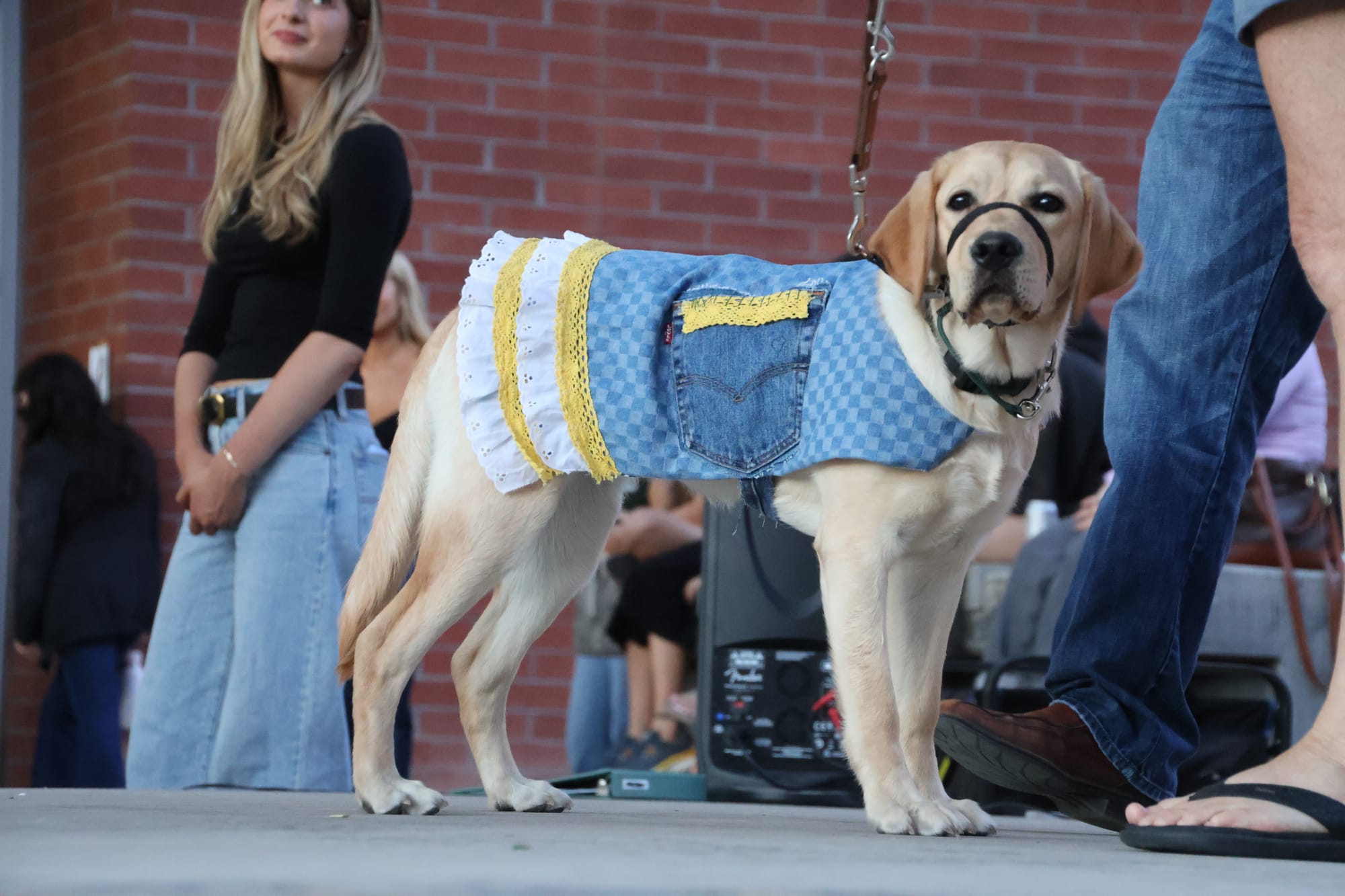
While the university doesn’t pay for the show, many of the animals were sponsored by local organizations.
Elizabeth Heuisler, assistant professor of practice in the Fashion Industry’s Science and Technology program, looks forward to bringing more sponsorships and developments to the event in the coming years.
“I’d like to get to the point where every dog is sponsored,” Heuisler said.
In addition to handmade denim bags, the show included a VIP raffle for gift bags assembled by students.
“The students went out and got all of these donations, put them together in little bags for a thank you for all of our VIPs,” Dodds said.
After the raffle winners were announced and the last few models walked the runway, all of the animals took one more turn in their personalized denim. The student designers then walked down the runway and received a standing ovation.
Heuisler said the show draws on what students learn across their classes.
“I don’t teach the students everything in here,” Heuisler said. “When they come into my class, they understand marketing, they understand graphic design, they understand something about sewing. And then we put it all together.”
Student Blake Liddell played a big part in the creation of jackets for this year’s show. A lab monitor for the UA’s sewing lab and a longtime student of Heuisler, Liddell took on many different roles within the committee.
“I managed . . . the organizing of all the dogs and the handlers and getting them scheduled for their fittings and reaching out to them, whether by email or text or however they want to be contacted,” Liddell said.
Liddell noted that the show was a team effort and every student deserves recognition, saying that whenever there was a gap in support in one area, the entire team made sure to cover it.
“I want to give credit to the whole class because everyone, everyone that’s in the class definitely deserves a pat on the back,” Liddell said.
Liddell also pointed to why it’s important for the community to support Dogs N Denim.
“Seeing all of the dogs that are either paralyzed or have some sort of disability that they have worked around in their life with a cart or a prosthetic or something like that, it gives you so much more appreciation for any circumstance you’re in,” Liddell said. “They have the best attitudes and I really think all of us could take a page out of the dogs’ book.”
Another of Heuisler’s students, Brooke Fleishman, handled marketing for the show.
“I think these dogs just need more of a spotlight in how hard they work because they’re helping us humans and they keep us alive when there’s medical emergency, they help them,” Fleishman said. “It’s just such an amazing opportunity just to showcase.”
Fleishman said the team raised $1,000 at this year’s event, compared with the $400 it brought in last year.
The future for Dogs N Denim remains bright, with Heuisler saying the class of 2026 reinvigorated the program’s structure.
“Next year’s class, we already have the program,” Heuisler said. “They’ve written out how to make everything, they already have a list, so you know, it’s all there now for the next group, and they’ll take it to another level.”
The class has expanded from seven to 15 weeks and will continue to evolve as the program grows.
Katlyn Vargas is a University of Arizona student and Tucson Spotlight intern. Contact her at katlynvargas@arizona.edu.
Tucson Spotlight is a community-based newsroom that provides paid opportunities for students and rising journalists in Southern Arizona. Please consider supporting our work with a tax-deductible donation.