Oro Valley rethinks annexation strategy for growth
Oro Valley officials are weighing a new two-tier annexation strategy that would prioritize commercial growth, as council members debate water availability and community input.
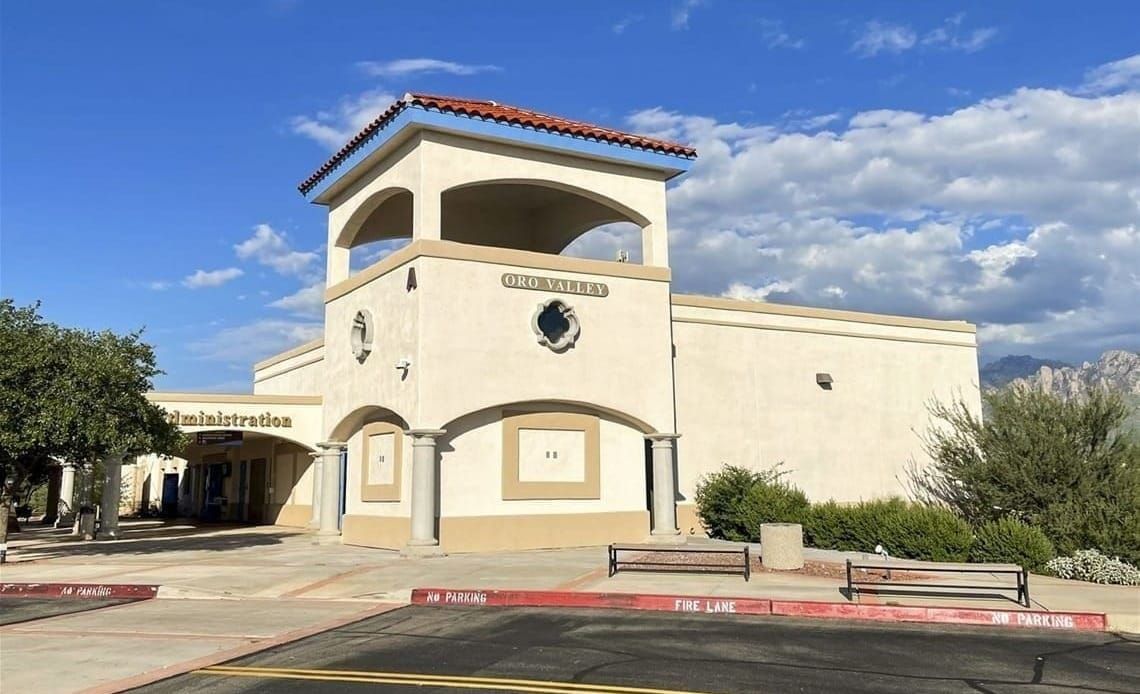
Oro Valley officials are weighing a new approach to annexation that would prioritize commercial growth over residential land, as council members debate how to balance revenue potential against water availability and community input.
The council identified key takeaways during its March strategic planning retreat, including the need to better distinguish between areas with long-term value and areas where the town should actively invest staff time and resources.
Assistant Town Manager Karl Shaddock presented a two-tier plan during the council's Sept. 16 meeting, with tier one covering active opportunities with commercial interest and tier two covering long-term goals that don't require immediate resources.
Oro Valley's current annexation strategy was adopted in 2020 and provides a broad framework for potential opportunities.
But with the town's limited resources, Shaddock told the mayor and council the main question that needs to be answered is: Where should the town proactively spend its limited annexation resources?
Since the March retreat, town staff and council have been working through several potential annexation areas, including commercial properties near Ina and Oracle roads and Arizona State Trust Land near Tangerine and Thornydale roads.
Shaddock said reorganizing principles around annexation and the two-tier system would allow the town to better spend its limited resources without overburdening itself with construction projects.
He said the previously discussed commercial properties should be the immediate focus, while other potential annexations, like La Encantada and the Ina-Oracle intersection, should remain under consideration at tier two.
DonateWe're a nationally recognized newsroom, but we're still a nonprofit that runs on community support. Help us keep telling Tucson's stories.
Outgoing Mayor Joe Winfield, whose term ends in November after he chose not to seek reelection, pointed to the 2020 annexation plan's four tiers, asking Shaddock the reasoning for condensing it to two.
“The 2020 strategy, the current strategy, includes large swathes of residential area,” Shaddock said, explaining the current tiers are meant to find the quickest, most feasible path to developing commercial areas without spending significant resources on residential zones that offer little to no commercial value for Oro Valley.
Vice Mayor Melanie Barrett, who will succeed Winfield as mayor in November, suggested adding a third tier to the framework, arguing for more focus on other tier two items, a suggestion other council members agreed with.
Barrett argued that the Trust Land near Tangerine and Thornydale roads makes less sense to develop immediately, mostly because it's within Marana's boundaries, meaning most people would shop at Marana stores rather than Oro Valley's. She said developing land closer to Oro Valley, or at least not adjacent to Marana, would be more fiscally responsible.
“I understand there's some water concerns with the Arroyo Grande area,” Barrett said. “But if the community has the water to do a large portion of undeveloped land, I really think that developed land to the north makes more sense. It might be a bigger lift, but I think the payoff to the community would be better.”
Barrett also noted that community acceptance used to be part of the annexation strategy, saying she'd like to see some type of community feedback included in the strategy going forward.
Council Member Josh Nicolson agreed with the tier one focus items but suggested water should be a more pressing concern when it comes to annexation.
“If we do annexation, it's one thing. Hopefully it brings in revenue, but if we go down, 10, 20, 50, 100 years down the road, how much is it going to cost future citizens?” Nicolson asked.
Nicolson raised his concerns after Barrett's suggestion to annex the Arroyo Grande area, which has limited water availability for development.
A vote on the new plan will likely occur once staff have incorporated the council's suggestions.
Quentin Agnello is a University of Arizona alum and freelance journalist in Tucson. Contact him at qsagnello@gmail.com.
Tucson Spotlight is a community-based newsroom that provides paid opportunities for students and rising journalists in Southern Arizona. Please consider supporting our work with a tax-deductible donation.