Nogales port expansion would erase historic Elm Street
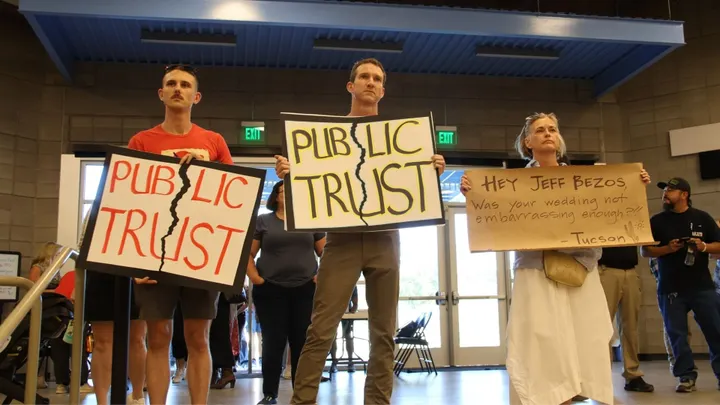
A federal proposal to expand the DeConcini border crossing would demolish a historic Nogales neighborhood along Elm Street, sparking pushback from residents and city leaders even as officials cite safety concerns at the aging port.
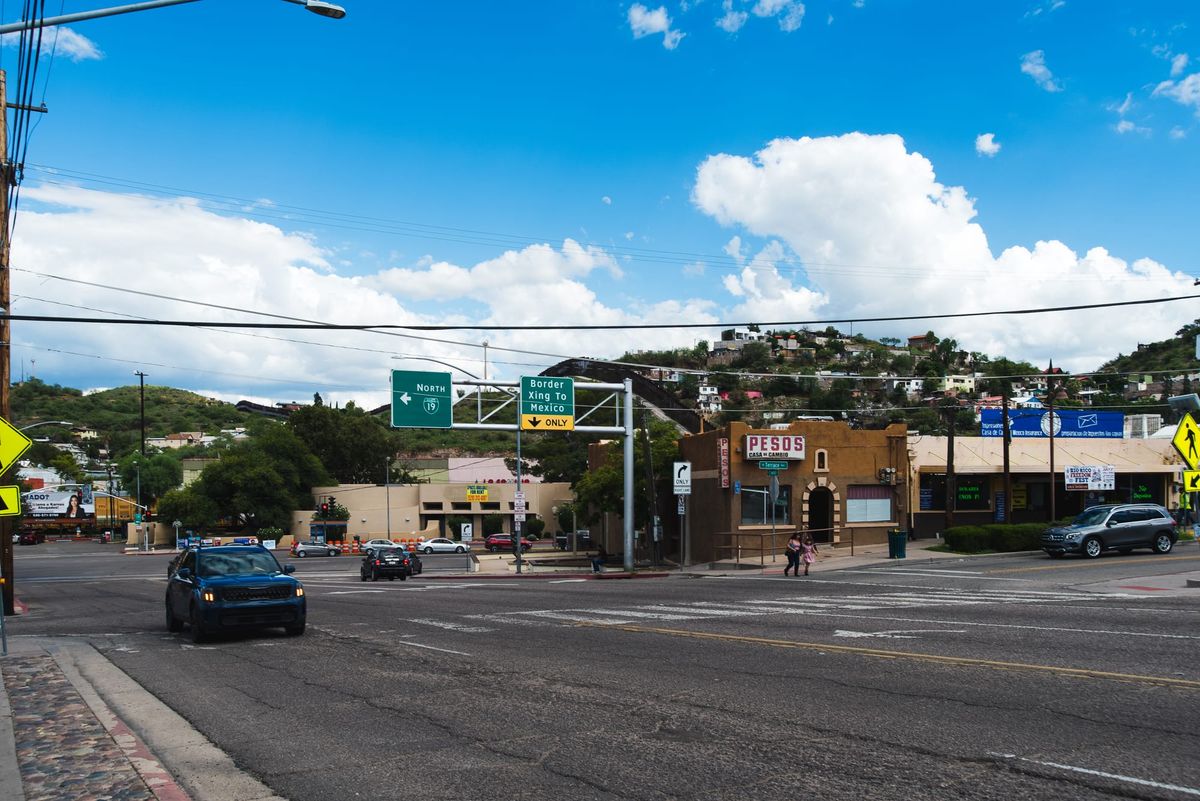
A federal proposal to expand the Nogales border crossing by five acres has residents and city leaders bracing to lose a historic downtown neighborhood along Elm Street, even as officials say the aging port can no longer keep pace with its 2.5 million annual pedestrian crossings and 7 million vehicles.
The Dennis DeConcini Land Port of Entry was originally built in 1931, before being demolished and replaced with its current facility in 1994. Additional improvements were made to the Morley Gates pedestrian facility in 2012, with the port owned and managed by the U.S. General Services Administration.
The GSA published a notice earlier this month announcing its intent to prepare an environmental impact statement on the modernization and expansion of the port, citing safety and processing concerns from the mix of private vehicles, buses and pedestrians combined with inadequate pathways and separation. The agency also pointed to persistent flooding and drainage issues and consistent traffic congestion, saying the port "is no longer functioning adequately" given its size, traffic volume, and outdated facilities and technology.
"The port is undersized for current traffic," according to a notice posted to the GSA's website. "Delays in processing pedestrian and vehicular traffic have resulted in negative impacts to the local economy which is dependent on sales tax revenues from shoppers entering from Mexico. A new, modern, and expanded facility will strengthen CBP's security capabilities, improve the traveling public's experience, and help ease long border crossing wait times."
The proposed expansion of the port would add five acres, or roughly four football fields of space, to the port on the U.S. side, impacting current small businesses, restaurants, parking lots, the closest gas station to the port, a clinic and several historical Nogales homes.
The scoping letter, sent July 9, lays out two possible expansion designs under review: one with 17 inbound vehicle/bus lanes and room to add five more later, the other building 22 inbound lanes from the start. Both versions would add eight outbound lanes to Mexico and roughly 16 pedestrian lanes, while keeping the historic Morley Gate in place — renovated, with four processing lanes — and rebuilding the pedestrian bridge.
The letter also confirms a "no action" alternative is being studied for comparison, as required under federal environmental law, and that a map included with the notice shows the project's expanded footprint reaching north to Elm Street and east past Morley Avenue.
This funding didn't come out of nowhere. It traces back to a 2021 infrastructure package that had already begun reshaping Arizona's ports of entry.
Your membership pays emerging journalists to cover Southern Arizona the way it deserves.
In November 2021, the Biden administration authorized $1.2 trillion for transportation and infrastructure improvements across the country through the Bipartisan Infrastructure Law.
The following February, the administration announced that part of the funding would be used to improve land port modernization and construction for Arizona's San Luis I, Douglas and Raul Hector ports of entry. The bill also provided $500,000 for a modernization and expansion feasibility study of the DeConcini port.
Later that year, the General Services Administration met with elected officials, representatives and community leaders about the study and recommendations on how to move forward with the project.
In 2023, the GSA awarded a feasibility study contract to the Tucson-based architectural firm Line and Space, which has worked on projects including the expansion of the Richard Elias-Mission Library and Pima Animal Care Center, and several buildings across the University of Arizona campus.
With the design work underway, the project's local ripple effects were becoming harder to ignore. Business owners and local workers have been receiving information about the project both through local news reports and word-of-mouth.
Hector, who has run a small thrift store and snack bar by the pedestrian bridge for more than 20 years, has heard rumors that eviction notices will be sent to affected businesses starting next year, giving employees a year to find new jobs. He said this has not been confirmed.
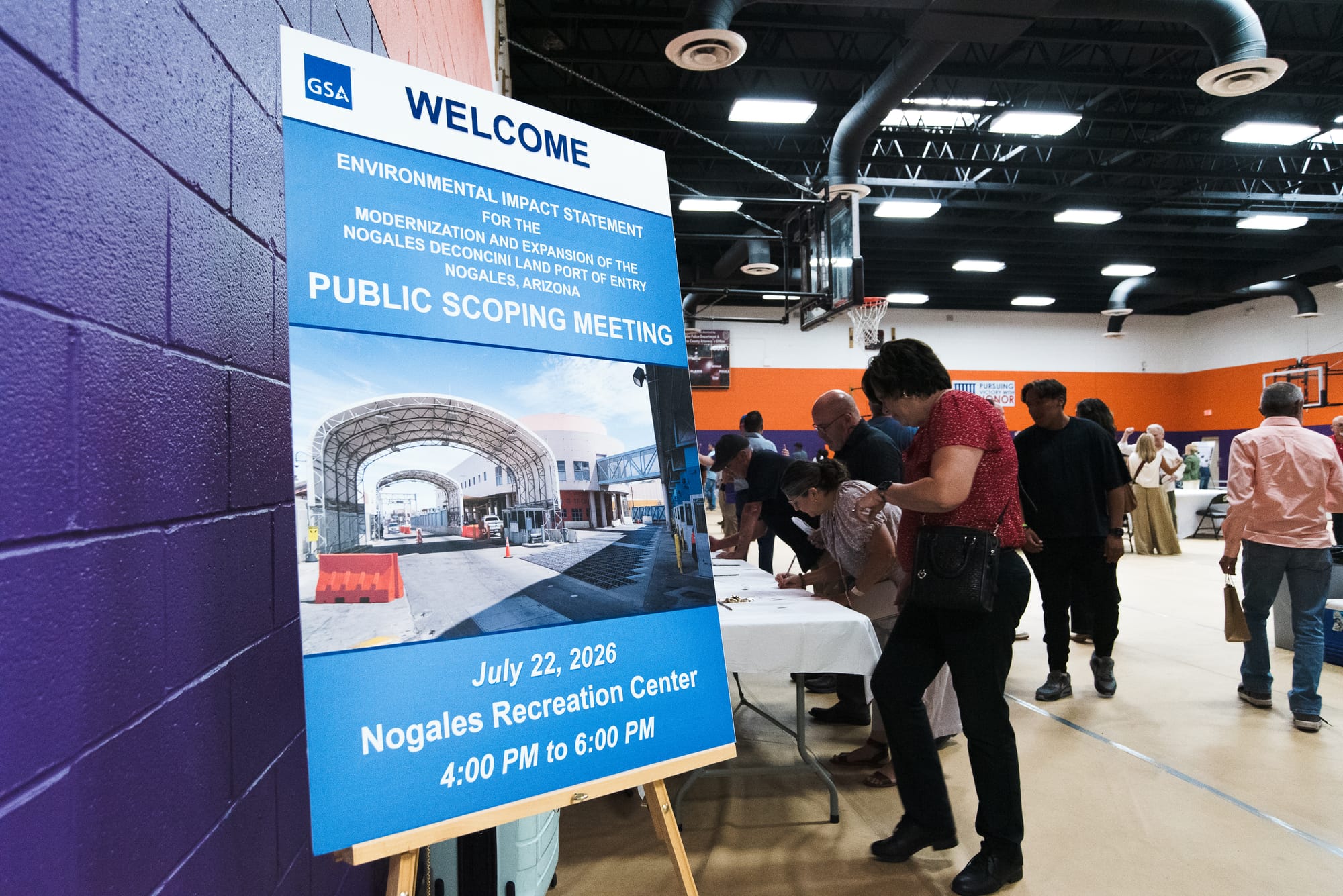
"I don't know how they're going to do it," Hector said during a July 22 community meeting, suggesting the government hire more staff to allow for increased traffic flow over expanding the building.
Hector isn't alone in wanting a fix that doesn't mean tearing everything down.
"They need to remodel the opposite side too," said an employee of a local liquor store.
He said the current port has 11 lanes of traffic to and from Mexico, but only two are usually open, creating a bottleneck.
"During shift change, sometimes the traffic is reduced to one lane," his coworker said, noting that they've had to add two to three hours to their commute to accommodate the delays.
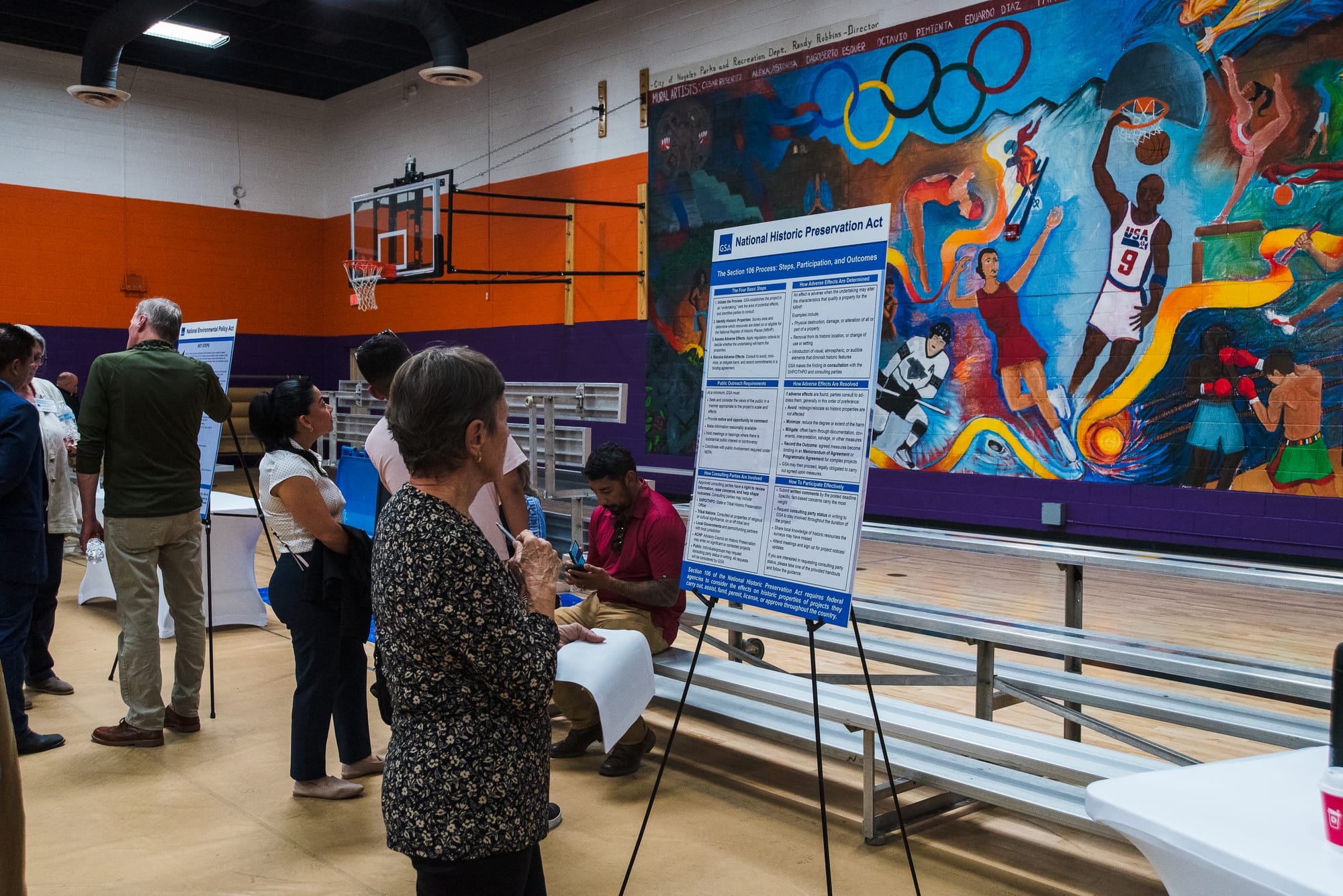
Frustration with the port isn't limited to the traffic itself — it extends to feeling shut out of the process entirely.
"They haven't told us anything," said one local business owner, referring to the building's landlords, but repeated previous sentiment about the limited number of lanes open.
Vice Mayor Hector Bojorquez said this proposed expansion is different from others over the years.
"The main concern (for) the people in Nogales is (that) we're going to be losing a lot of land, especially the city," Bojorquez said. "That expansion, you know we talked about this for a couple of years back, it (didn't include) all the way down to Elm Street. They've expanded to the east side of the railroad tracks, and they're taking over part of Morley Avenue, which wasn't included in the first footprint."
Bojorquez said Nogales' population has been slowly declining, from around 22,000 five years ago to about 19,000 now, saying port traffic challenges are deterring shoppers from visiting businesses.
Councilman Saulo Bonilla said constituents have asked that more of the existing traffic lanes be opened, but he's also concerned about the historical neighborhood that would be affected by the expansion.
"The biggest concern is that they want to go all the way down to Elm Street," Bonilla said. "My grandparents actually had a house there for over 50 years. I went to Elm School, and I used to walk down Elm Street when I was five or six years old. So a lot of people, they're concerned that the history of the city of Nogales is slowly going to be erased."
Prolific Nogales families, including the Norzaragai, Tapas and Chavez families, were raised on Elm Street, according to Bonilla. The area previously housed the oldest schools and businesses in Nogales, and some homes still feature original stone tufa architecture dating back a century. The neighborhood is currently used for parking by community members and workers who cross the border. Elm Street would become the port's boundary under the proposed expansion.
"Do I think this is going to have an economic impact? Not for the city of Nogales," Bonilla said.
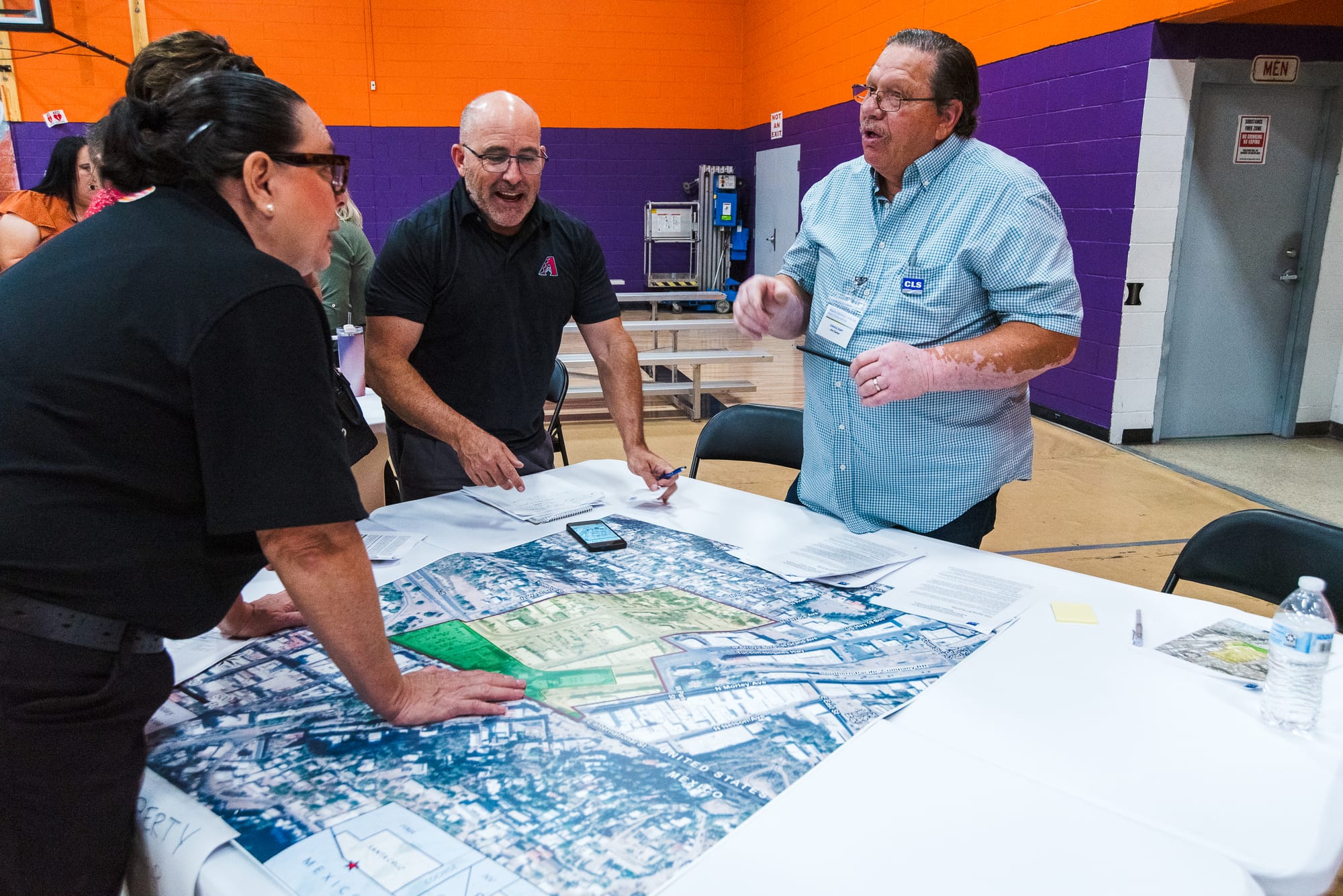
Bonilla said cars coming from Sonora, Mexico, that stop and get gas in the city of Nogales are subjected to a gas tax that provides the city $1.3 million to $2 million a year to fund municipal street repair and public lighting.
That skepticism about the city's losses doesn't stop with him. Other longtime residents see even bigger costs at stake.
“I honestly think this is completely unnecessary, and I would say this is dangerous,” said Carlos Francisco Parra, Assistant Professor in the University of Arizona History Department and a born-and-raised Nogales resident.
Parra spoke about two historical districts in Nogales that date back to the 1890s and appear on the National Register of Historic Places, including the 1935 U.S. Customs House and the 1933 Morley Gate Port of Entry. He said the building that housed Nogales' first newspaper could also be affected if the project moves forward.
"I think it would be nice to have a modernized port of entry that has more space for pedestrians, I'd agree with all that," Parra said. "Something should be done (about the) underground Nogales wash, and there's ways which this could be done by not demolishing all of downtown Nogales, not even necessarily demolishing the existing port of entry."
Besides the impact on downtown businesses, Parra also said traffic would shift away from downtown Nogales, further deterring economic growth.
Given that even those who once thought there was time to weigh in are running out of patience, Parra's outlook has hardened into resignation.
Councilwoman Ana Parada, who previously worked for Customs and Border Protection, supports the expansion.
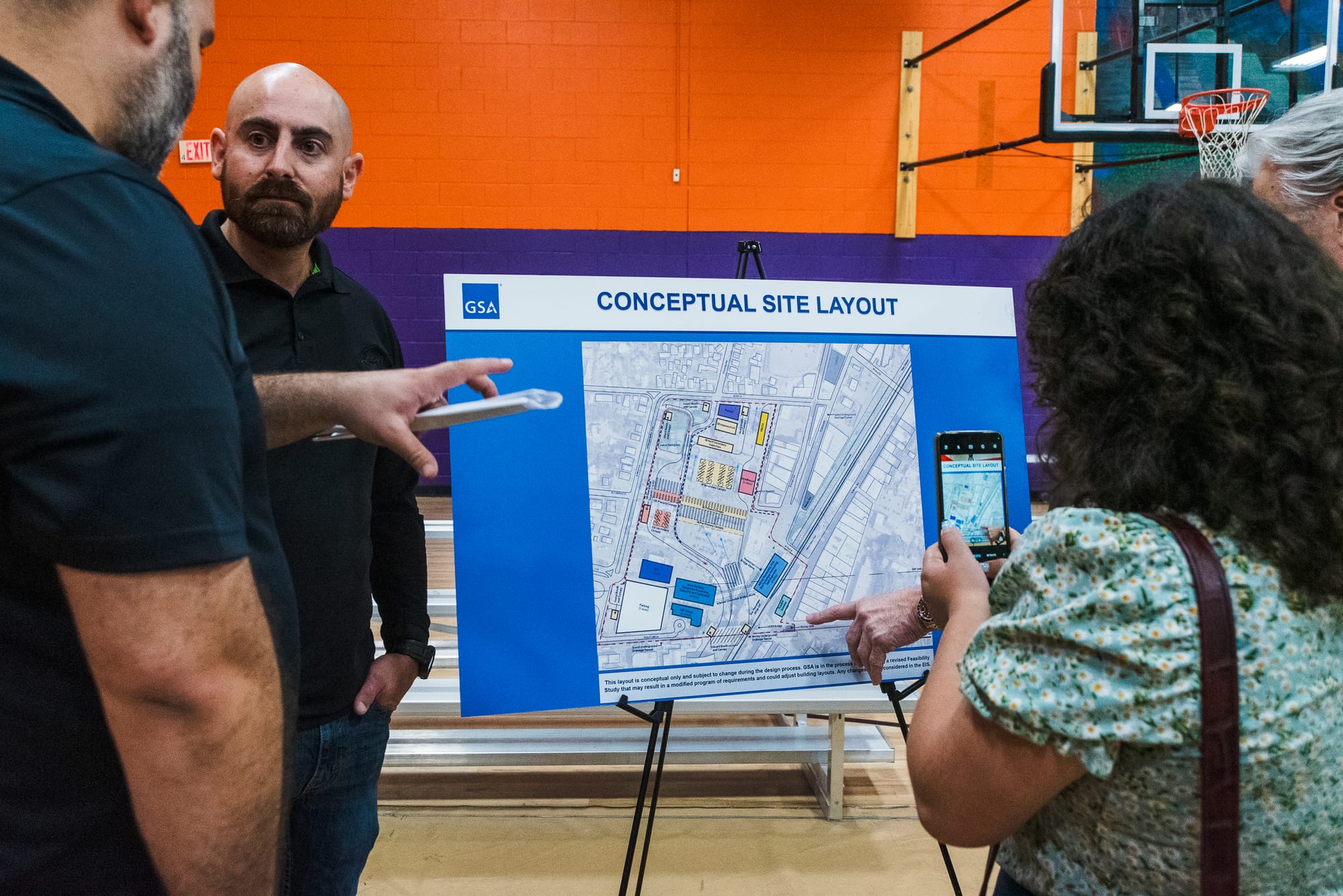
Parada is a member of the Greater Nogales Port Authority, a nonprofit consisting of representatives from public and private sectors wanting to support the region's economy through trade and tourism through reinforcing ports of entry.
The group has worked with representatives, including Rep. Juan Ciscomani, to push for the DeConcini port expansion. With the support of Arizona Reps. Greg Stanton and Abraham Hamadeh, Ciscomani wrote a letter to the GSA and the Department of Homeland Security requesting that the DeConcini port's renovations be prioritized in the GSA's and Customs and Border Protection's Five-Year Capital Investment Plan.
The Greater Nogales Port Authority, however, has no actual authority over ports.
"We need for Nogales to grow," Parada said. "To get more of the shoppers from Mexico and more people coming in, we need bigger ports."
She said staffing issues at ports are nothing new, even during her time working for CBP.
"If we get all the lanes working (and) the port going, we'll be in good shape. We've got a lot of investors, a lot of businessmen coming to Nogales, so it's going to help us with our growth," she said.
After the community submits comments by the August 8 deadline, the GSA will draft an Environmental Impact Statement and hold another comment period and community meeting on the statement in spring 2027.
The final Environmental Impact Statement will be written, followed by a final comment period and community meeting in winter 2027. Decisions on the expansion will be finalized in 2028.
Topacio “Topaz” Servellon is a reporter with Tucson Spotlight. Contact them at topacioserve@gmail.com.
Tucson Spotlight is a community-based newsroom that provides paid opportunities for students and rising journalists in Southern Arizona. Please consider supporting our work with a tax-deductible donation.