Goats expand role at Tucson’s Sweetwater Wetlands
Rocking AR Goats has grown its herd by 30% while helping Tucson Water manage vegetation at Sweetwater Wetlands, improving soil health and supporting groundwater recharge.
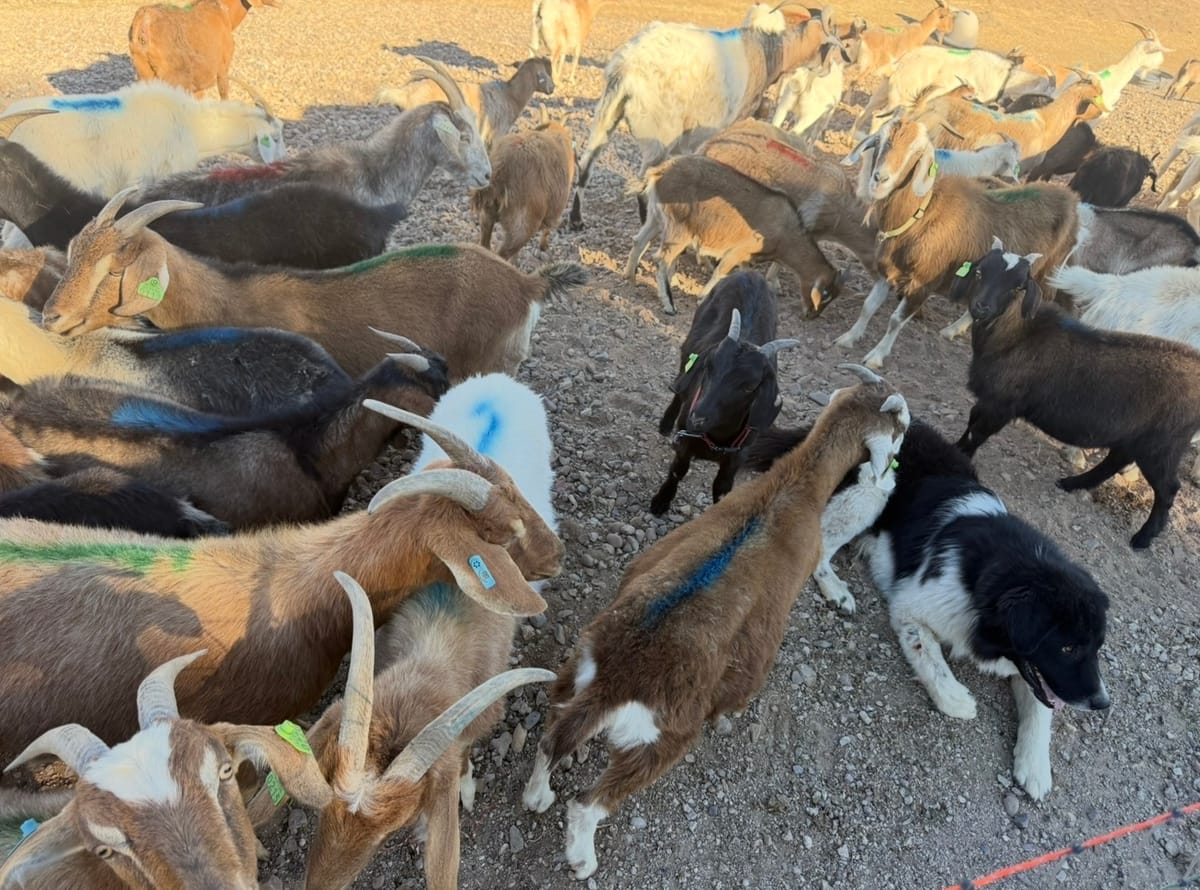
A year after Tucson Water enlisted a small herd of goats to clear vegetation at the Sweetwater Wetlands, the city’s four-legged workforce has multiplied, and so has its impact.
Rocking AR Goats has welcomed about 70 kids since last season, expanding both its herd and its role in protecting Tucson’s groundwater recharge basins. What started as an unconventional landscaping experiment is now growing into a model for sustainable land management and agricultural education.
The partnership began in late 2024 as a pilot project between Tucson Water and Rocking AR Goats, using targeted grazing as an alternative to mechanical vegetation removal at the Sweetwater Wetlands.
“We've worked really hard on building our genetics and building up a herd that we can be proud of,” said owner Reese Bickerdyke. “We're at the point where we can start seeing that and seeing the success and reaping the rewards from that.”
Rocking AR Goats has grown its herd by 30% in the past year, and with the new arrivals, Bickerdyke needed to enlist help, as he and his wife were unable to bottle-feed so many babies at home.
“We've got two employees now,” Bickerdyke said. “That's been instrumental for us to have really good coverage on the animals, to make sure their needs are getting met.”
 Caitlin Schmidt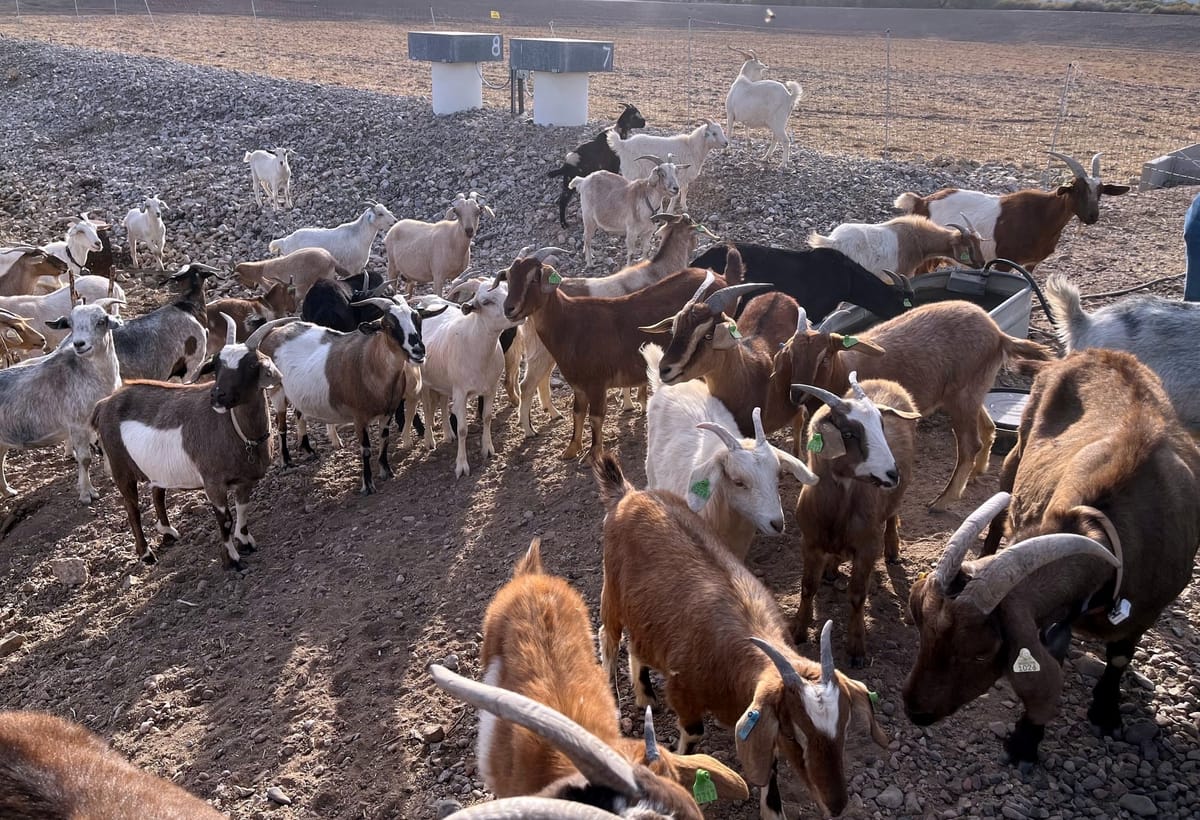
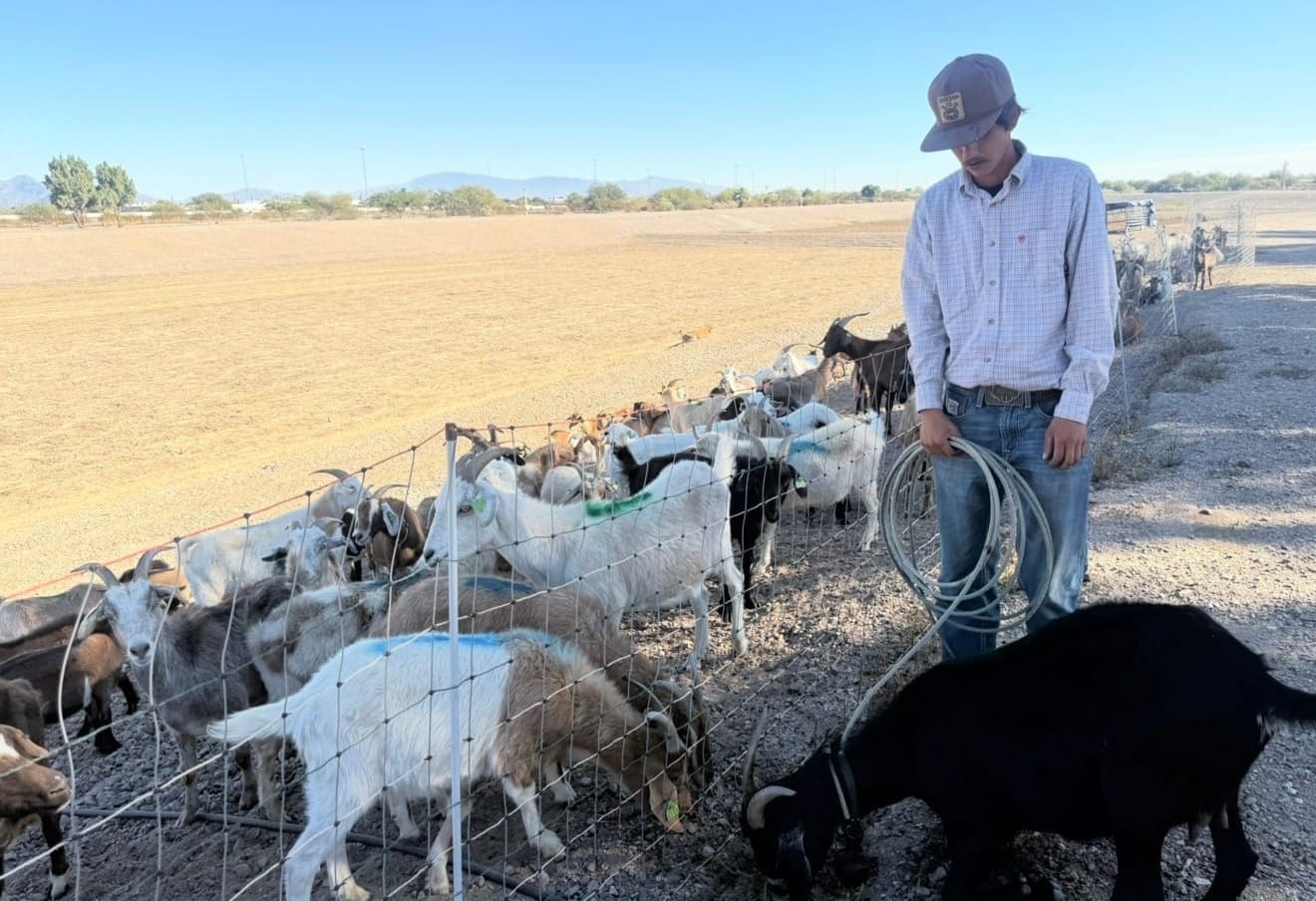
He also launched an educational partnership with the Arizona Agribusiness and Equine Charter Center, a charter high school in Union Hills. Through the program, students help raise baby goats and gain hands-on experience with livestock and alternative agricultural careers.
The school “is more in the city and so some of those students might be predominantly exposed to equines and not have the opportunity to experience goats, experience livestock … or understand alternative forms of agribusiness,” Bickerdyke said.
The partnership also reflects Rocking AR Goats’ broader mission to reconnect people with agricultural practices that have existed for millennia but have faded from modern land management.
Rocking AR’s goats play a key role in controlling fast-growing vegetation in Sweetwater’s recharge basins, where Tucson Water stores treated wastewater underground for later use. Keeping these basins clear is essential, as excessive vegetation can interfere with how efficiently water percolates into the aquifer.
In modern times, the job often requires heavy machinery, chemical treatments and large crews. The goats offer a less disruptive alternative that is quieter, more cost-effective — and undeniably cuter.
Bickerdyke said the goats bring more smiles to visitors’ faces than a tractor ever could, adding that they are fun for the community and just as efficient in some cases. The goats have become a favorite attraction at the wetlands, where families stop to watch them graze and snap photos of the furry landscapers.
Sweetwater Wetlands is one of Tucson’s most visited recharge sites, with the project drawing widespread community support along with positive feedback from Tucson Water staff. The program currently operates on a year-to-year contract, but momentum is building.
That growing support has been reinforced by what Bickerdyke is seeing on the ground. When Bickerdyke returned to basins after the goats had grazed them, he noticed an unexpected result: Grasses rebounded more quickly and vigorously, while invasive plants such as amaranth declined.
“Amaranth will colonize these basins really hard and choke out the understory or the grasses that might be coming underneath,” Bickerdyke said. “We saw the grasses come back really strong and really aggressive, which is awesome, because those grasses have roots that help draw the water down into the soil and create a healthy soil biome.”
Early observations like those have prompted a closer look at what’s happening beneath the surface.
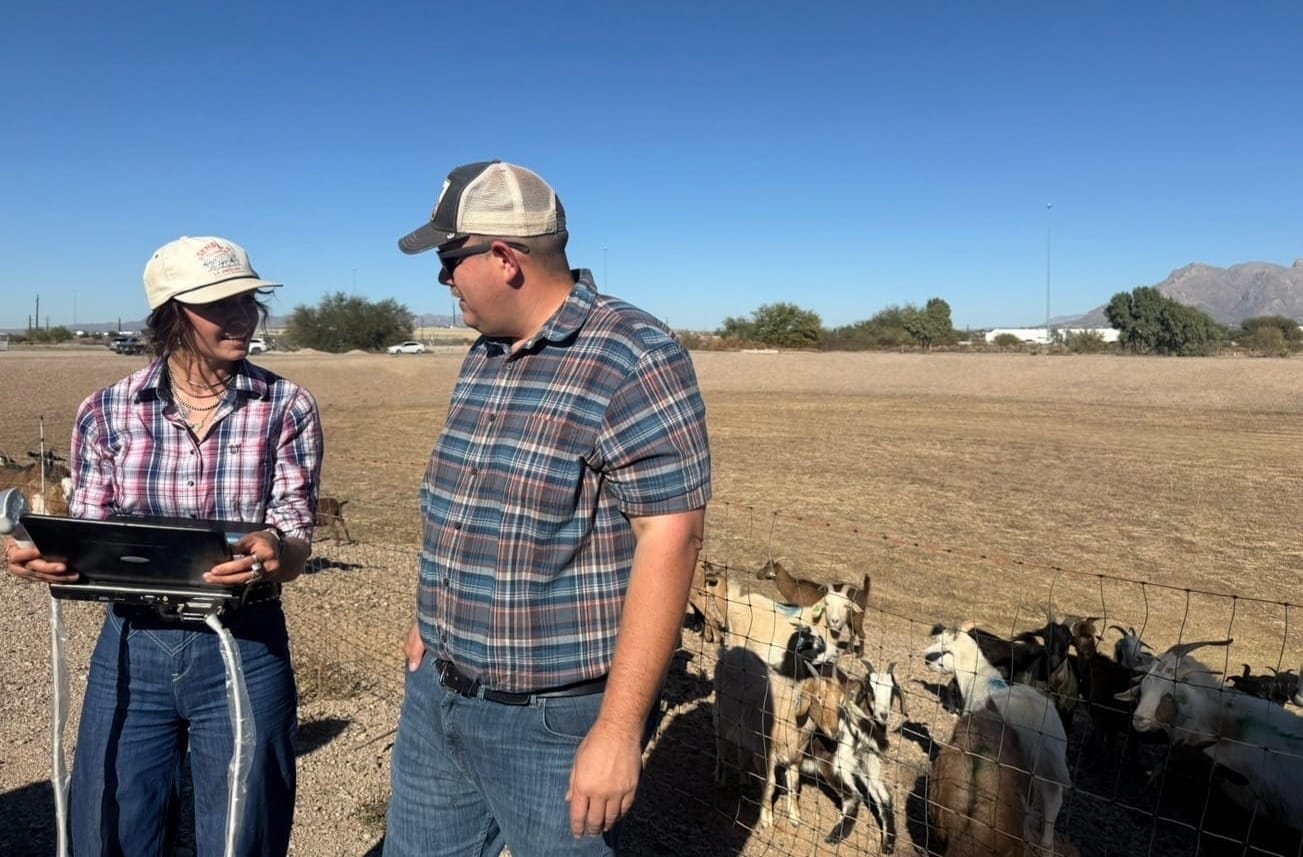
To measure the impact the goats are having on the basin, Rocking AR and Tucson Water are working with West Engineering to track changes in soil structure. Environmental scientist Mariko Yoshinaga conducts on-site monitoring, testing soil compaction and examining microscopic life in the soil, including bacteria, fungi, protozoa and nematodes.
“There's been a lot of fluctuation over the basins over time. We want to see a balance of fungi and bacteria, bare soils, degraded soils tend to be very bacterial dominant,” Yoshinaga said.
Yoshinaga has seen an increase in these populations and hopes to better understand how they will support nutrient cycling for soil health in the future. She has also observed more diverse plant life and increased insect activity, most notably multiple species of dragonflies in basins grazed by goats — a change not seen in other basins.
“I came back again after they (goats) had grazed it, and I saw I don't know how many different species of dragonflies,” Yoshinaga said. “I was seeing a wide variety of plant life, which is awesome and we just aren't seeing that in other basins.”
Yoshinaga’s findings show growing evidence of improved water infiltration and overall soil health, especially compared with traditional methods such as ripping or blading the soil with tractors, which can worsen compaction year after year.
For Bickerdyke, those early results reinforce the broader case for a different approach to land management. He wants people to understand the benefits of a structured management program and the positive impact it can have on the land.
“What's most exciting is that we're sort of reminding people of something that their ancestors knew,” Bickerdyke said.
That philosophy extends beyond the wetlands. Bickerdyke hopes to increase interest from cattle ranchers across the state looking to diversify operations and use goats to control woody areas on grazing lands, saying the project taps into practices humans have relied on for centuries, even as society has moved away from traditional methods.
“That doesn't necessarily mean that it's not a valuable and applicable resource or knowledge set. I think just as a larger society, we've moved away from agriculture in general,” he said. “So there's less people doing it, less people are exposed to it, less people are familiar with it. And so what's really great about what we're doing is we're giving people the opportunity to revisit something that's been done for millennia.”
Angelina Maynes is a University of Arizona alum and Tucson Spotlight's social media manager. Contact her at angelinamariemaynes@gmail.com.
Tucson Spotlight is a community-based newsroom that provides paid opportunities for students and rising journalists in Southern Arizona. Please consider supporting our work with a tax-deductible donation.