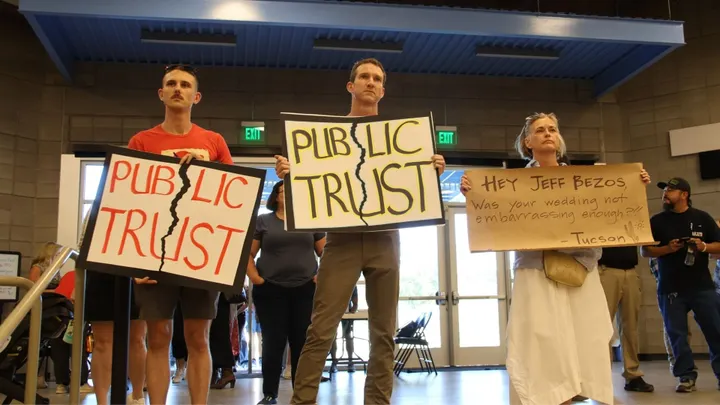
Giffords joins Tucson officials to push gun safety laws
Former Rep. Gabrielle Giffords joined Tucson and Pima County officials for a panel on gun violence prevention days after a downtown shooting injured nine people.
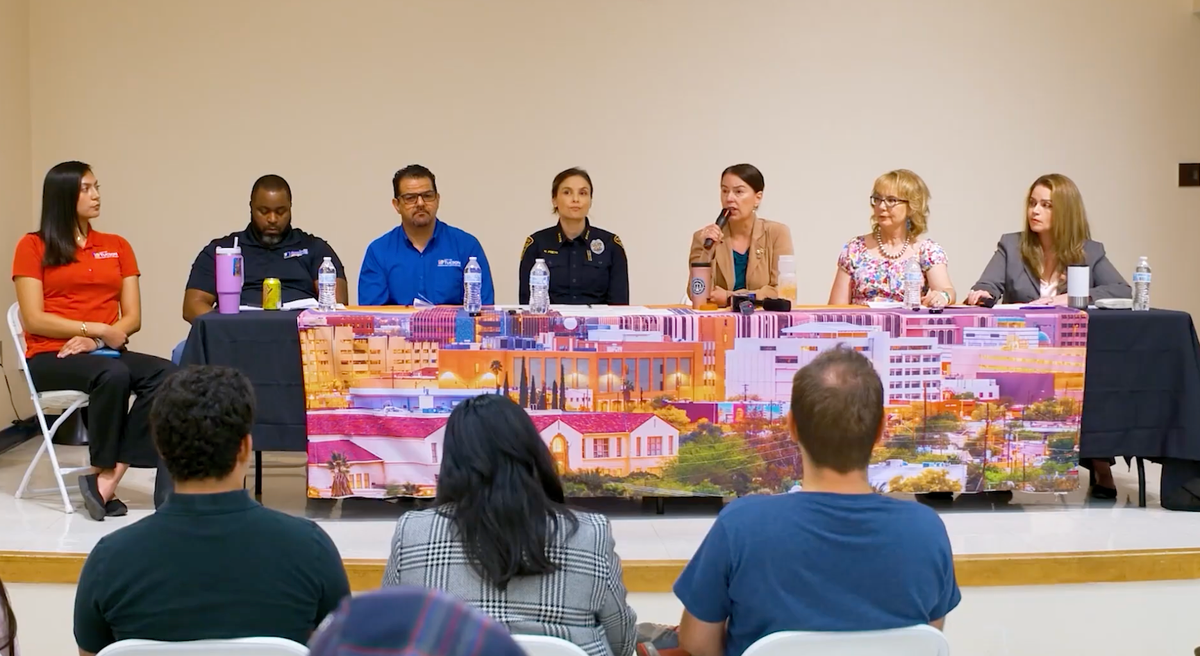
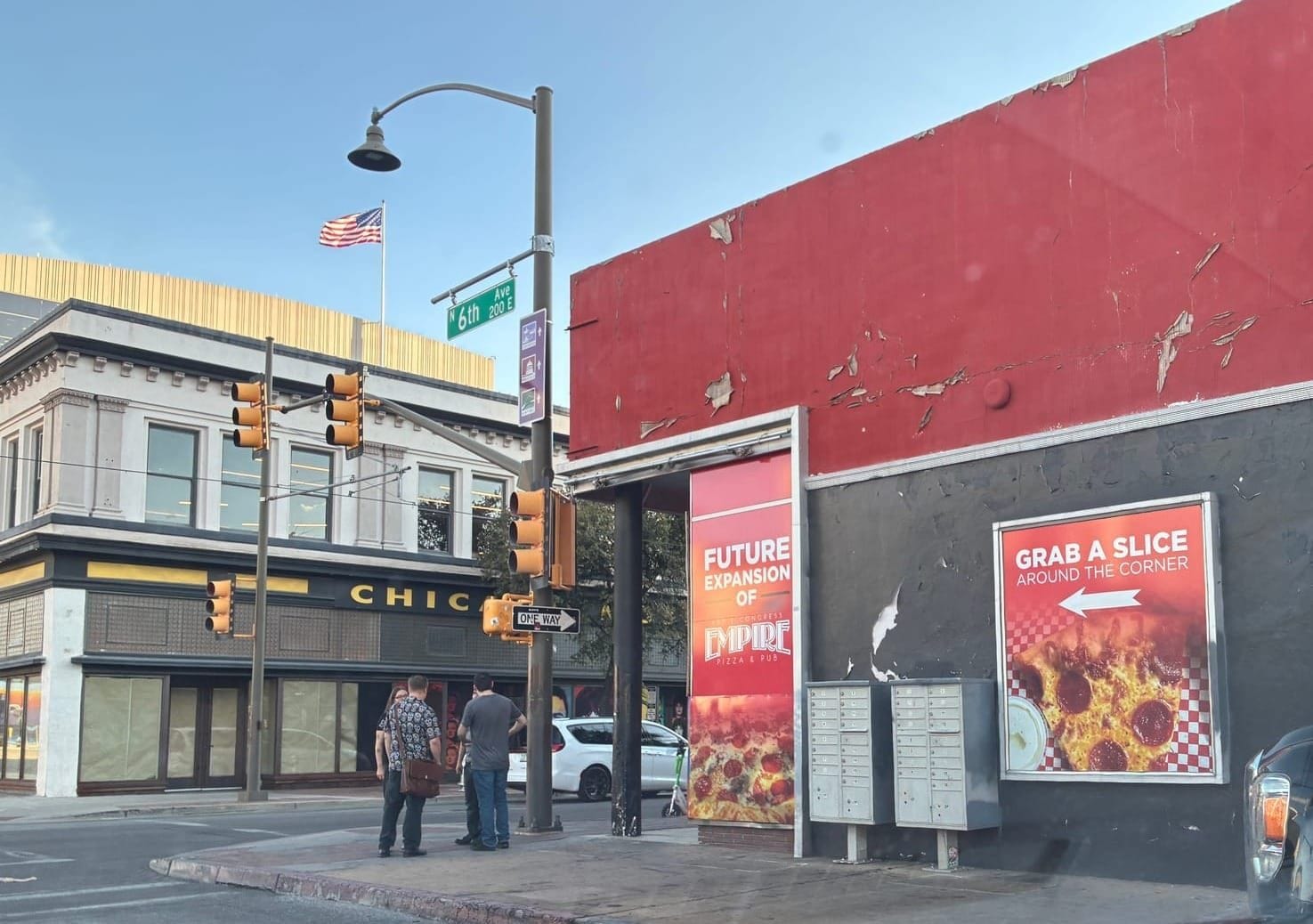
Four days after a downtown shooting left nine people injured and reignited debate over the city's approach to gun violence, former U.S. Rep. Gabrielle Giffords joined Tucson and Pima County officials to press for stronger gun safety laws.
Tucson police officers arrived within minutes of the July 19 shooting, administering aid to both the victims and suspect David Leroy French before he was taken into custody.
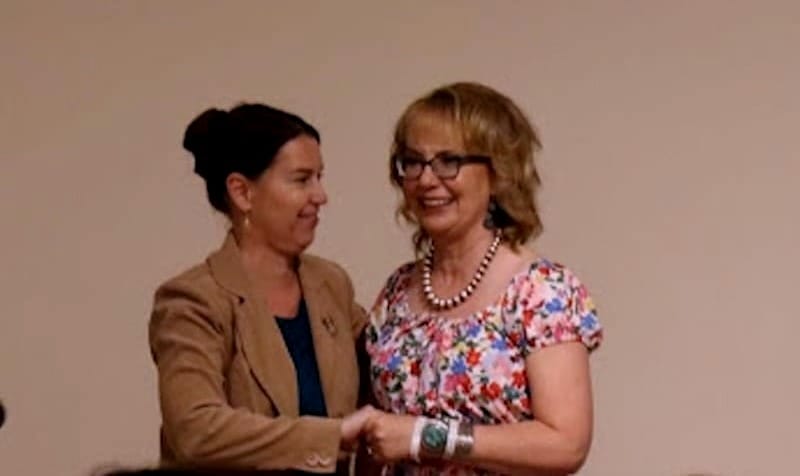
The July 23 panel was hosted by the gun violence advocacy and research organization Giffords, named for one of its co-founders who survived a 2011 mass shooting in Tucson that left her with a serious brain injury and killed six people.
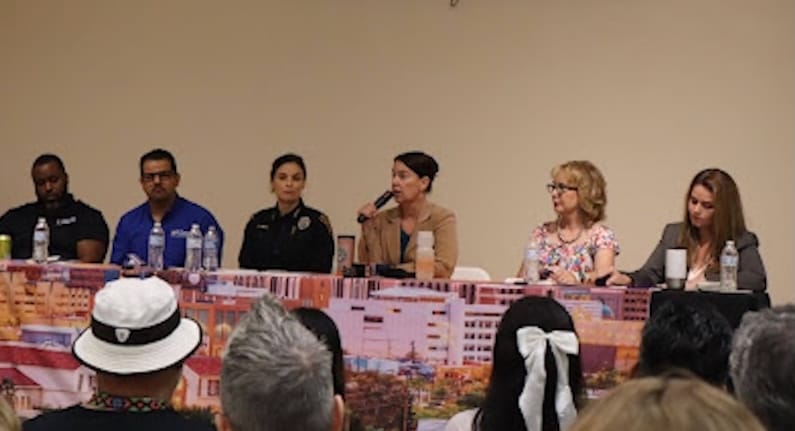
The panel, held at the El Rio Neighborhood Center, included Mayor Regina Romero, Pima County Attorney Laura Conover, Tucson Police Chief Monica Prieto, Office of Violence Prevention and Intervention Manager Oscar Medina and other public safety partners.
Giffords said her nonprofit gives Arizona a failing grade every year for its gun safety laws, saying background check and safe storage laws are the most important steps Arizona can take to reduce gun violence statewide.
Romero expressed gratitude for the quick actions by law enforcement and medical professionals during and after the shooting, stressing the importance of caring for the victims.
"While we cannot prevent events like this from ever happening again, we can commit to doing everything we can to stop gun violence," Romero said.
She pointed to an overall reduction in gun violence while she's been in office, citing several efforts, including the Violence Interruption and Visualization Action program, which she said led to a decrease of up to 85% in gun violence, and the Safe City Initiative.
Your membership pays emerging journalists to cover Southern Arizona the way it deserves.
Other efforts include the addition of 50 new police officers to the city's force this fiscal year, with Romero noting that one of her first actions as mayor was to become a founding member of Mayors Against Illegal Guns.
She said that the 2011 shooting of Giffords and others, and the 2020 murders of George Floyd and Tucsonan Carlos Ingram-Lopez, built and solidified her position on the importance of gun violence prevention.
"As your mayor, my number one priority is to keep our communities safe, period," Romero said. "As we saw on Sunday, there's still more work to be done. Everyone in this city deserves to feel safe, whether it's in the park, in their town, in the movies or their place of worship."
She pointed to what she called proven solutions to gun violence, while criticizing the state's weak gun laws and praising Giffords for expanding its coalition in and outside of Arizona to include "responsible gun owners" who support firearm safety laws.
The gathering came as the county attorney's office faced scrutiny after it emerged that the 21-year-old suspect was on probation for a federal weapons charge at the time of the attack.
In response, Conover called the reaction "a series of hate and clickbait," saying the shooting was a "statistical anomaly" in light of all markers of crime trending down significantly.
She pointed to a 50% decrease in homicides since the COVID-era spike, saying that the current rates are outperforming pre-COVID levels.
"But one life is too many," Conover conceded.
She told attendees that by the time a case reaches her desk, the damage has already been done, expressing support for red flag firearm laws and reforms within her office, including a strong preference for keeping juvenile offenders in juvenile detention to ensure their access to resources such as counseling for trauma. She said that while frightened juveniles who go before a judge often receive minimum sentences, they also often emerge more likely to reoffend.
Conover talked about her efforts to double the number of prosecutors, hire two new domestic violence prosecutors and the potential impacts of the county's new trauma recovery center that is set to open in August.
TPD's Prieto spoke about the quick responses by her officers to administer aid to the victims as well as the shooter before talking about the need to invest in youth programs and teach young people to resolve conflicts without violence.
"The question is how can we address those who have no respect for the law and no respect for human life?" Prieto asked. "When violent individuals choose to break the law, they must be held accountable, or they remain a danger to the safety of the public. We must do better to address the living crime in our city. Police, we can't solve this alone, we can't solve this overnight."
According to Prieto, 14.8% of homicides in Arizona in 2025 were committed by a juvenile with a gun, as well as 12.5% of non-fatal shootings, which she said is down significantly this year.
Prieto said that 67% of perpetrators of violence were exposed to domestic violence at some time in their lives, adding that Tucson police have been awarded an $830,000 grant to combat domestic violence.
She said police are inherently reactive in terms of their violence-combating strategies, but said that TPD is doing everything it can to be proactive in its approaches when possible.
Several residents submitted questions to the panel. Daniel Garcia said he owns a gun and is also a member of Giffords, asking panelists how more people can get involved in local conversations about gun violence prevention.
"We believe and support the second amendment, but we also have to do it by finding a way to prevent gun violence," Garcia said.
Conover agreed with Garcia's sentiment, saying that more people are wanted and needed in the discussion in order to create a collaborative message that will bring results. She said she imagines a future in which Arizona will have a red flag law on the books that will allow courts to be petitioned to remove firearms from people who are deemed public threats, while maintaining due process through more encompassing conversational efforts such as this.
Attendee Pam Simon worked for Giffords when she was a member of Congress and survived the 2011 shooting. She asked how it was possible for the shooter to acquire a firearm and ammunition under the circumstances.
Panelists declined to answer the question, citing the ongoing investigation, but they did say that juveniles are generally able to get guns that are purchased by other people or steal them from homes.
Resident Lennette Gomez asked about harsher penalties for violent offenders, especially when the case involves premeditation, with Conover saying that it happens every day, with many cases resulting in life sentences. She said that attention falls upon the cases that fall apart or cases that don't have "as much accountability" as they would like with them.
Conover pointed to a recent life sentence in a murder conviction that her office secured in a first-degree murder case, during which she said that no deal was offered to the suspect because his case did not meet the criteria. She added that many cases don't go to trial because it is simply not possible to take the 18,000 nonfatal shooting cases from the past two years to trial, and that she, like TPD, still wanted to be more proactive in their actions.
"I am obviously not a traditional prosecutor, some would say painfully obviously," Conover said. "We're going to do everything we possibly can on the prevention end, and we're going to continue to focus on these children that are the most high risk."
Resident Mark Pinette said he frequently works with VIVA program target sites on the arts side of things and asked how the physical and mental health benefits and social cohesion that arts programs offer could be incorporated into a public safety strategy, noting that many local artists are unsure how to reach the people who need that kind of support.
The Office of Violence Prevention and Intervention's Medina agreed, saying that extracurriculars like sports or art are very important. He pointed to existing avenues including community theater and gardening for youth, as well as a musical program supported by TPD.
Giffords closed the panel by reflecting on her struggles following her own shooting and how her journey through recovery gave her a drive to dedicate herself to the cause of future gun violence prevention.
"I responded with a mission: I put one foot in front of the other. I found one word and then another. Recovery is a fight, but the sight made me stronger," Giffords said. "We are at a crossroads. We can let shootings continue or we can act. We can protect our families, our futures. We can vote. We can be on the right side of history."
Ian Stash is University of Arizona alum and freelance journalist in Tucson. Contact him at ianjgs16@gmail.com.
Tucson Spotlight is a community-based newsroom that provides paid opportunities for students and rising journalists in Southern Arizona. Please consider supporting our work with a tax-deductible donation.