Border Patrol, ICE detainees report abuse in Tucson
A decade after a lawsuit forced federal changes to detention conditions in Tucson, migrants and new inspection reports show the same abuses persisting.
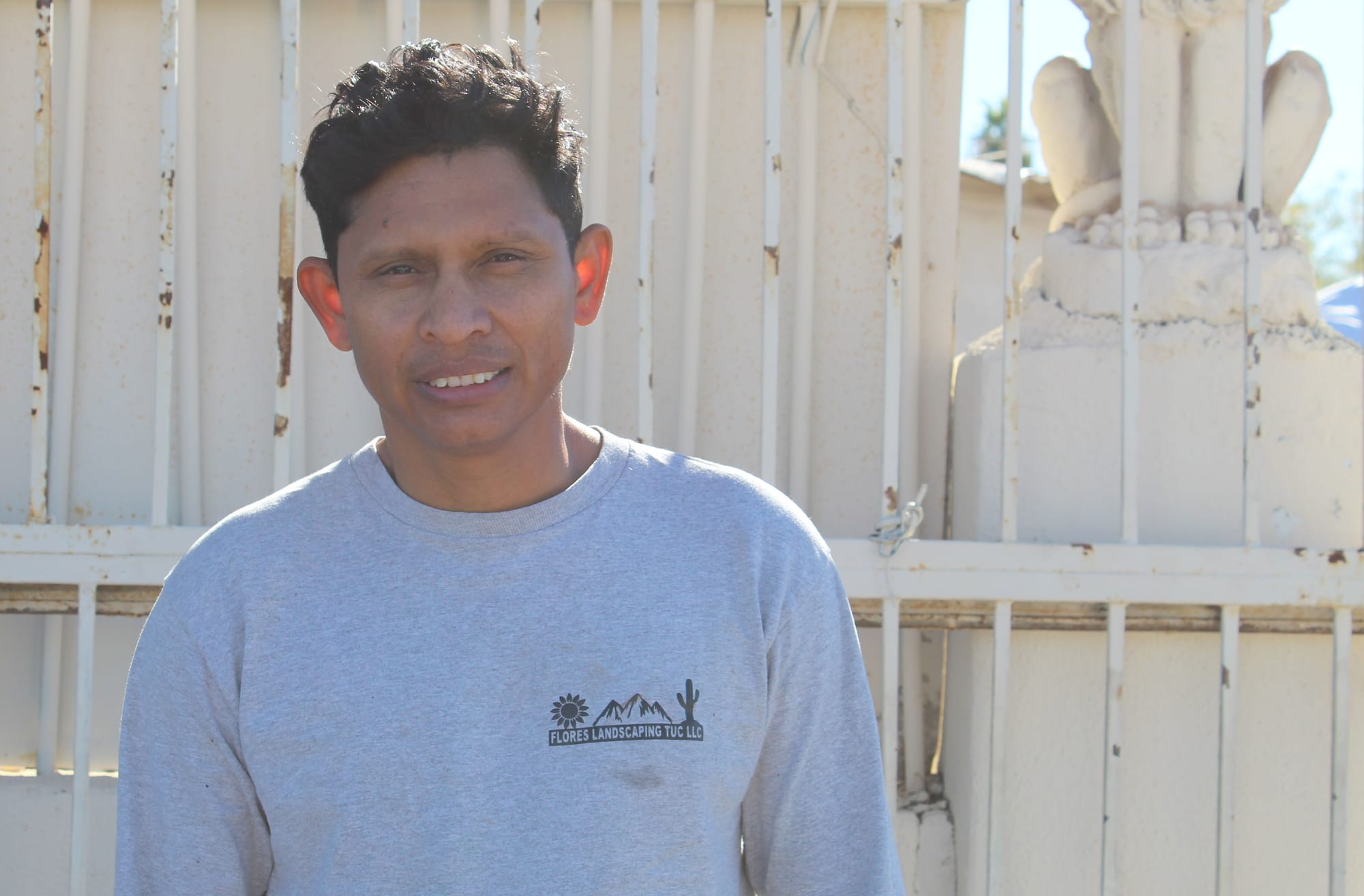
A decade after Norlan Flores sued Border Patrol over inhumane conditions in its Tucson Station and won a federal court order meant to force lasting change, migrants moving through the same detention network today describe the same freezing cells, sleep deprivation and denied medical care, according to interviews and newly released federal inspection reports.
Two new reports from the Department of Homeland Security's Office of Inspector General suggest those conditions have persisted. One found Customs and Border Protection continues to ignore the court-ordered changes, while the other found similar conditions across a broader network of ICE and privately operated detention centers in the area.
Flores was part of a 2015 class action lawsuit, Doe v. Mayorkas, filed by the American Civil Liberties Union of Arizona over conditions that included people sleeping on the bathroom floor amid their own waste, surviving on little food and wondering if their water was safe to drink.
The order, issued by U.S. District Judge David C. Bury in April 2020 at the federal district court in Tucson, is a permanent injunction, meaning the court wasn't asked to award money but to force CBP and Border Patrol to permanently change their practices.
Under the injunction, CBP cannot overcrowd cells or pack them so tightly that detainees sleep in or near bathroom areas. Detainees must be given adequate sleeping conditions, including a raised cot or bunk with a mattress, rather than a floor mat, and a washable cloth blanket, rather than a Mylar or foil sheet. They are also legally guaranteed access to functioning showers, food sufficient to maintain health, potable water and a medical assessment by a qualified professional, such as a physician, nurse or EMT.
The order applies to anyone held longer than 48 hours and requires CBP to release or transfer detainees if a facility fails to meet those standards.
Because it's a federal court order, CBP's failure to comply may constitute a violation of federal law.
A CBP spokesperson said the agency is aware of the federal court order but did not comment beyond that.
CoreCivic, the company that runs the Eloy facility under contract with ICE, declined to comment.
Flores said he hoped the order tied to his case would lead to meaningful reform. Instead, he believes instances of noncompliant immigration enforcement have become more frequent.
"I think this is never-ending. Nothing has changed; things have gotten worse," he said.
The International Rescue Committee, ACLU of Arizona and Florence Immigrants and Refugee Rights Project argue that while enforcement tactics have evolved, the underlying system has not. Since President Donald Trump's inauguration, immigration policy has increasingly relied on U.S. Immigration and Customs Enforcement as the public-facing arm of enforcement. Detainees today often move between ICE and U.S. Customs and Border Protection custody, as both agencies operate under the Department of Homeland Security with overlapping responsibilities and shared facilities.
Flores believes the result is a reframing of the system, but not true reform, with the same detention practices persisting under a different, more visible front line.
"(My lawsuit) was supposed to do something," Flores said.
Questions of Compliance
Attorneys say verifying compliance is difficult without reliable access to records, facility logs or timely information about detainee transfers. Ami Hutchinson, a senior attorney for Green Evans-Schroeder, an immigration and criminal defense firm based in Phoenix, said this kind of ambiguity slows the process of legal reform.
"To be frank, working with CBP is so difficult that even attorneys struggle with the agency's opacity," she said.
The Tucson Sector, the region explicitly addressed in the order, covers roughly 262 miles of the Arizona-Mexico border. In May 2024, the DHS Office of Inspector General conducted on-site, unannounced inspections at five CBP facilities in the Tucson Sector, including one Office of Field Operations port of entry and four Border Patrol facilities.
The four Border Patrol facilities include the Tucson Coordination Center, Tucson "Soft-sided" Facility, Nogales Processing Facility and Ajo Station.
The results, finalized in January 2025, point to numerous violations of the federal court order, potentially exposing CBP to further violations of federal law.
In many instances, medical care provided to detainees was inadequate. CBP detention facilities, including the Tucson Border Patrol Station, contract with outside providers to care for those in custody, but the DHS Office of Inspector General report found the agency's medical care for detainees is dangerously unreliable.
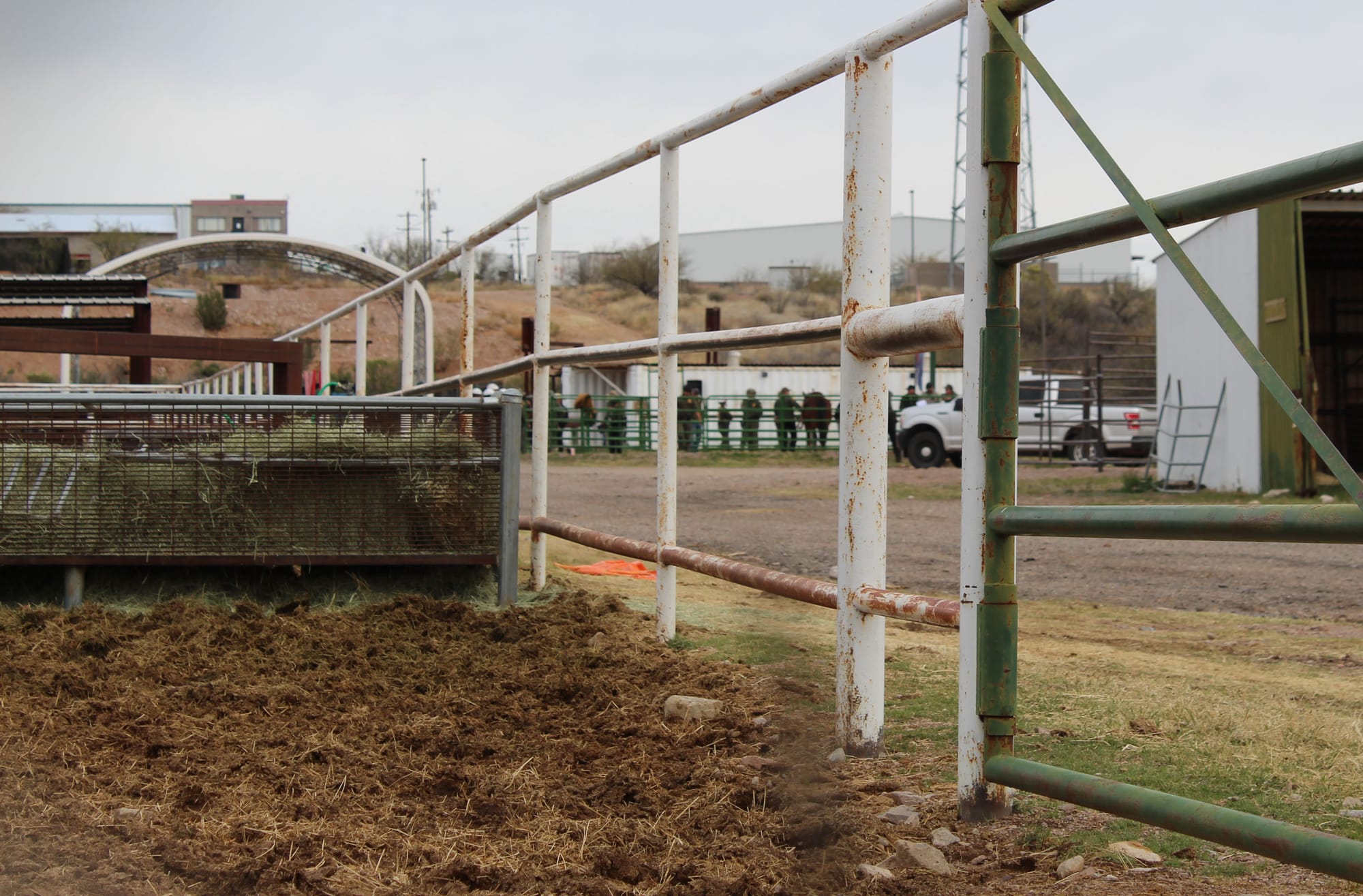
The report cited two letters from CBP's own medical office warning that there weren't enough contracted staff to care for detainees.
"Inability to ensure the contract medical service provider meets the staffing requirements… could reduce the quality of medical support provided to detainees while in CBP custody," according to the inspector general's report.
Inspectors also identified failures in how vulnerable detainees were handled, including 12 instances in which Border Patrol agents failed to record welfare checks for migrants with medical conditions, among them an unaccompanied minor who was 24 weeks pregnant, the report showed.
"It's very simple," Flores said. "To me, it's inhumane. There are no rights."
In addition to potential violations of the federal court order, OIG documents also point to breaches of CBP's own national standards on Transport, Escort, Detention and Search. In many instances, detainees were held longer than the 72 hours generally allowed under those standards.
In the same report, the DHS Office of Inspector General also found data integrity issues in custody logs collected from Border Patrol's electronic records system, ENFORCE3, more commonly known as e3.
The office found gaps in entries, spanning from six to 13 hours, in 15 of the logs, and said Border Patrol officers may have forged entries. In 11 custody logs, the OIG recorded duplicate entries, "at the same time or within minutes for welfare checks."
In the finalized report, the OIG concluded that Border Patrol violated certain standards due to limitations caused by overlaps with other agencies, specifically naming ICE.
"While Border Patrol held some detainees in custody longer than the 72-hour standard, interdependencies among Border Patrol and ICE ERO limited its ability to unilaterally address prolonged detention in its short-term holding facilities," the report said.
Some argue that these failures, regardless of the responsible agency, are evidence of a system operating outside the boundaries of federal law. Hutchinson said her largest concern with immigration enforcement now is that the government is acting with impunity.
"The government isn't following court orders; they're violating more now than ever," Hutchinson said. "The DOJ has been weaponized."

The Tucson Sector Today
More than a decade after Flores' time in custody, he said the reports feel hauntingly familiar.
"I feel that nothing's changed," he said. "It's really hard right now. It's scary, not only for me, but for a lot of people in Tucson."
People released from detention facilities this year describe conditions remarkably like those Flores sued over, claiming they endured the same freezing temperatures, overcrowded cells and inhumane standards.
"That was a tool of torture used there. The temperature of the rooms," said Yassine Halhoul, a University of Arizona student released from ICE detention on Nov. 13, 2025.
Many of these migrants, like Halhoul, have been detained in facilities run by ICE, not CBP, and they're being held in the very same geographical region as the order addresses.
The Tucson Sector covers a large majority of the state and includes Border Patrol holding facilities in Tucson, Nogales, Casa Grande, Douglas, Willcox, Ajo and Three Points, as well as various points of entry.
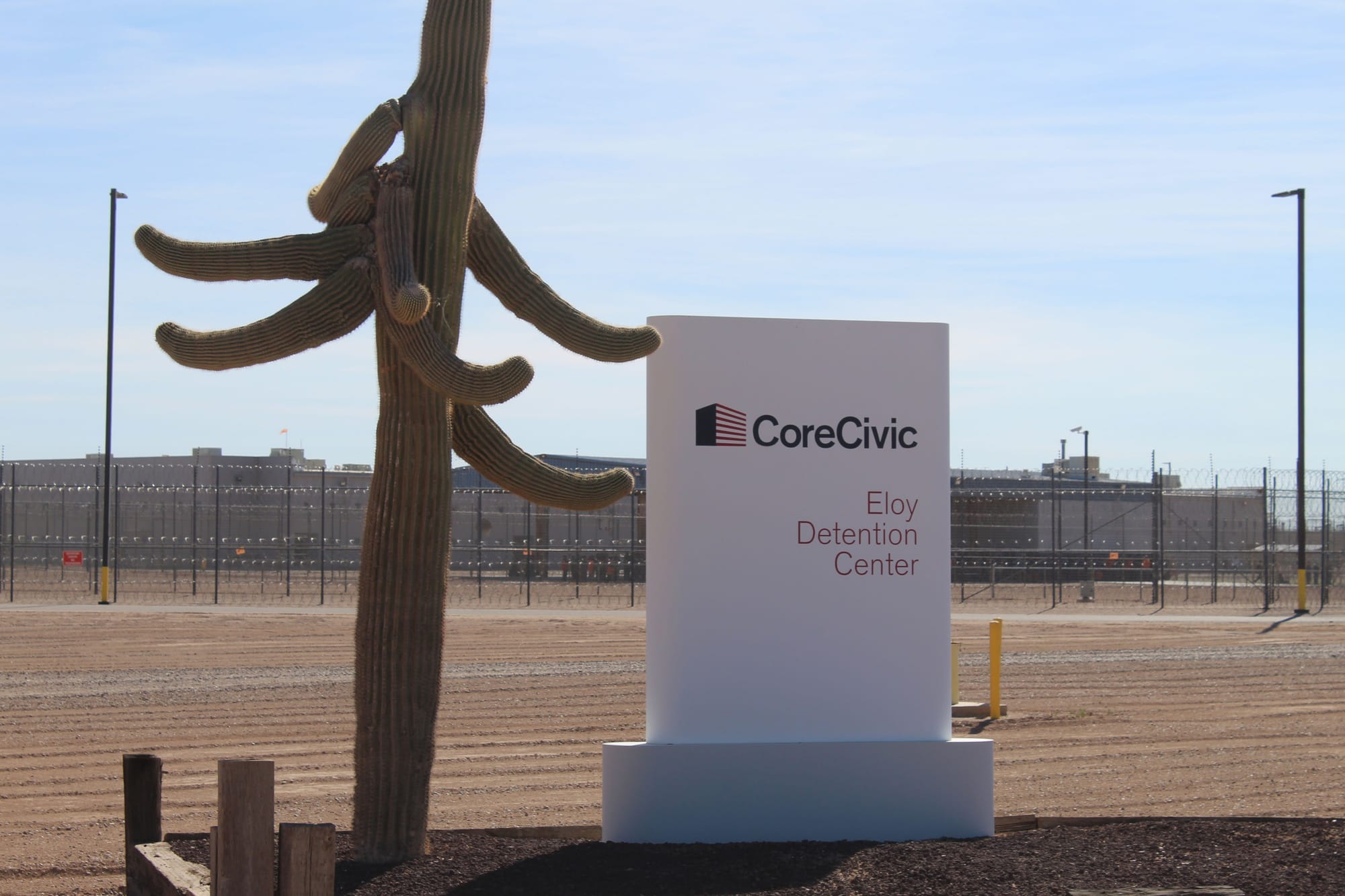
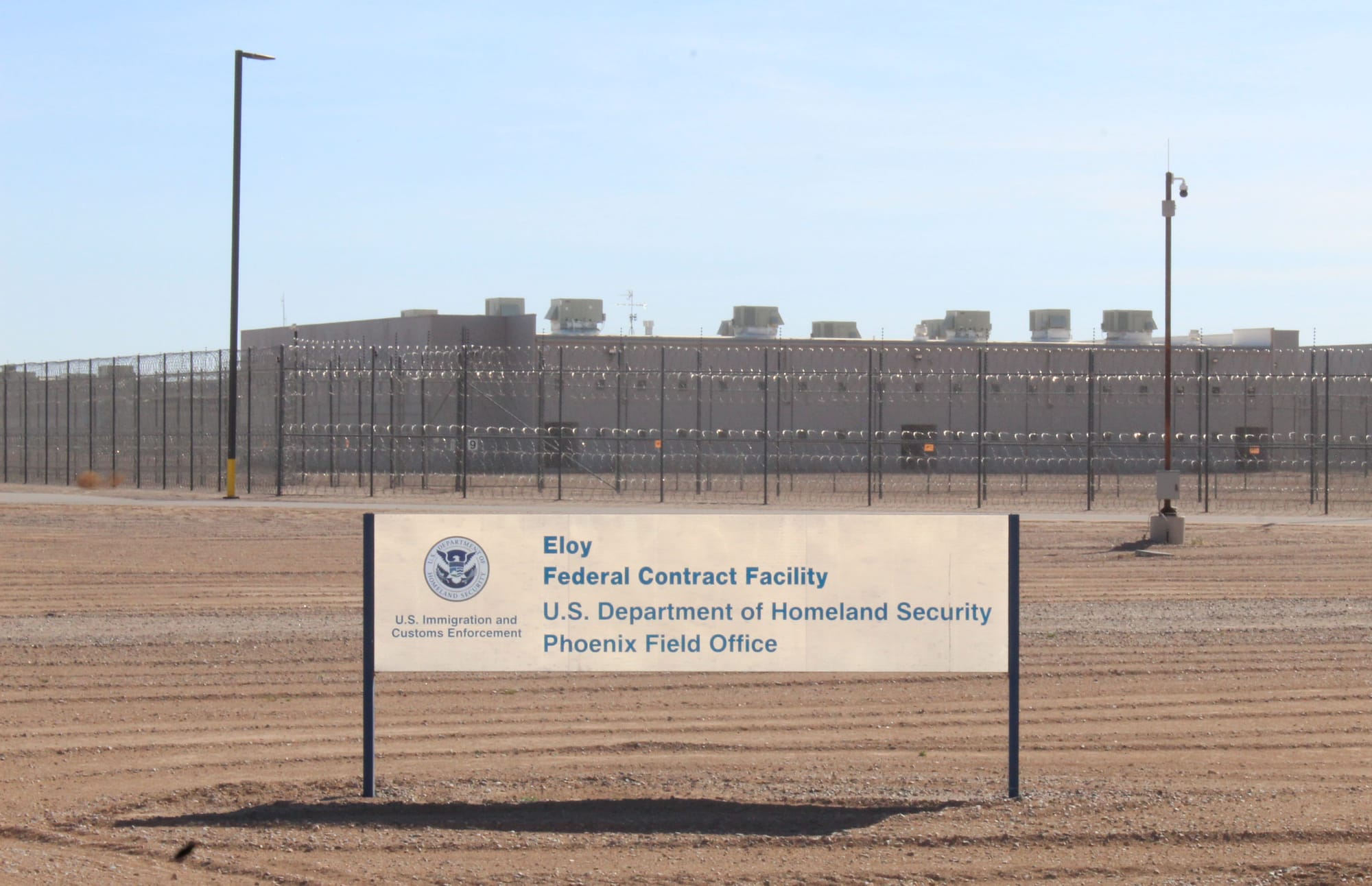
People processed at these sites are often transferred into ICE custody, which in Arizona includes the Eloy Detention Center and Florence Correctional Complex.
Both facilities are operated by CoreCivic, a company hired under contract by ICE.
On Oct. 21, Halhoul was arrested and taken from his home by HSI officers and detained in an ICE field office. He was transferred to Florence Correctional Complex, and eventually, Eloy Detention Center, where he spent much of his time in custody.
Halhoul, a 21-year-old international student from Morocco, recently graduated from the University of Arizona with a degree in aerospace engineering. During his arrest, he said he was aggressively handcuffed by HSI agents, despite complying with orders and possessing a valid F-1 visa.
During the arrest, agents told Halhoul they'd like to ask him some questions and presented him with an administrative warrant, not a judicial one.
"They can just print those at their office," he said.
An administrative warrant is issued by an immigration agency and does not require judicial review or authorize agents to enter a home without consent, unlike a judicial warrant, which is signed by a judge based on probable cause.
Halhoul said agents gave him verbal permission to re-enter his home and change his clothes before leaving. When he went inside, agents followed him in, without permission and without a judicial warrant allowing them to enter the premises.
The situation shifted at this point, escalating into chaos.
"That's when they turned aggressive," he said. "It was like a 180 (degree) switch."
He said the agents began yelling and immediately grabbed him under his arms and dragged him from the residence. He recalls one agent being especially aggressive.
At one point, Halhoul said he called out to him to ask, "What do you mean I'm resisting? I'm literally walking with you."
A Familiar Situation
Halhoul said he was driven to the ICE field office in Tucson, where he was booked and detained in one of the facility's cells.
He said he did not receive a medical evaluation at the field office.
Halhoul believes it was around 5 p.m. that evening when he and two other men were shackled and driven to Florence Correctional Complex. When they arrived, he saw dozens of detainees waiting to be processed. In the lobby, he remembers plastic beds strewn across the ground, thin bedding and no pillows.
During processing, Halhoul said he was pressured to sign documents waiving certain rights and accepting his detainment. He spent three days in custody at Florence before being transferred to Eloy.
Eventually, Halhoul said he boarded a large, all-white bus that resembled an old Greyhound. He said that around 6 a.m. on what he believes was Oct. 24, a group of men, including himself, were driven to Eloy.
Upon arrival, Halhoul said the men were immediately asked about voluntary deportation as part of intake, the facility's process for organizing newly transferred detainees. He said a lot of people raised their hands.
"People who stayed either had lives here, or nowhere else to go," he said.
Afterward, they waited in line for a medical exam, with Halhoul saying the entire intake process took about 12 hours.
"The system is designed to make you not want to be there," he said.
Halhoul said the air conditioning in Eloy ran constantly, keeping cells at very cold temperatures despite the desert heat outside. He also described cramped quarters measuring roughly four by two meters, where overcrowding forced one of the men in his cell to sleep on a plastic "boat bed" on the floor for Halhoul's first two nights at Eloy.
"When we would walk outside, it didn't even feel cold in the air," Halhoul said. "But inside, you could feel it. It was freezing."
Although Halhoul was detained at an ICE facility, the conditions he described stand in direct contrast to the court's order, which legally requires adequate sleeping arrangements and safe temperatures for detainees held longer than 48 hours.
Halhoul said detainees who attempted to block air vents to stay warm were punished by Eloy staff.
And just as Flores described years ago, Halhoul reported that lights inside the facility were never fully turned off, making it difficult to sleep.
Food conditions inside the facility took a physical toll on detainees, including Halhoul, who said meals were served as early as 4 a.m. and often lacked protein and were never substantial enough for him to feel full.
Over the course of his 23-day detention, Halhoul said he lost 10 pounds.
"I didn't miss a single meal," he said.
Halhoul said he was denied medical treatment for an open wound while in custody, despite repeated requests. He also observed other detainees struggling to access care.
"You need to be almost dying," he said.
Flores and other migrants made similar statements about the medical care made available to them by CBP during their detainment. As a result, six years ago, the court ordered that detainees held longer than 48 hours in the Tucson Sector must receive a medical assessment by a qualified professional — standards that attorneys argue are still not being met in the intended region, regardless of the responsible agency.
Halhoul said the facility housed migrants from around the world, including Haiti, Somalia and Palestine, creating a diverse yet disorienting environment shaped by language barriers, transfers and uncertainty.
He also described strict measures of control used by CoreCivic staff inside the facility, including daily "count" periods, during which detainees were confined to their cells for up to 12 hours. He said some individuals were placed in solitary confinement for extended periods.
A Pattern of Noncompliance
In December 2024, less than a year before Halhoul's arrival, the OIG for DHS conducted an unannounced inspection of Eloy Detention Center.
A second report from the OIG, finalized last September, outlined 10 instances of noncompliance with detention standards, seven of which are still open.
The OIG found that the Eloy facility and staff "did not fully comply with standards for use of force, staff-detainee communications, access to legal materials, segregation, grievances, personal hygiene, and recreation."
OIG documents also identified systemic failures within the facility that could directly impact the health and safety of migrants in custody. Inspectors found that ICE's contracted staff, people working for CoreCivic, failed to preserve surveillance footage in four of the five use-of-force incidents reviewed.
In other cases, staff failed to respond to detainee requests or grievances in a language they could understand.
"Not answering detainee requests in a language detainees can understand could result in detainee health and safety issues going unresolved," the report noted.
The report also pointed to staffing shortages as a reason behind poor compliance. Officials at Eloy acknowledged that "staffing insufficiencies" contributed to delays in responses to grievances, which OIG inspectors said may potentially "prolong and exacerbate detainee health and safety issues."
For Flores, now a green card holder, accounts like Halhoul's are deeply familiar. He believes the continuation of these conditions reflects something deeper than policy failure.
"A lot of people are scared," he said. "The Constitution is broken. The law is broken. Everything is broken right now."
Flores said the experience of being in detention strips people of their basic humanity, a reality he believes hasn't changed, regardless of the agency in charge.
Flores said being an immigrant in America is like being "an ant in the hands of a giant," passed from one hand to the other, but never set free.
Isabella Knaggs is a University of Arizona alum and freelance journalist.
Tucson Spotlight is a community-based newsroom that provides paid opportunities for students and rising journalists in Southern Arizona. Please consider supporting our work with a tax-deductible donation.