Marana breaks ground on water plant expansion project
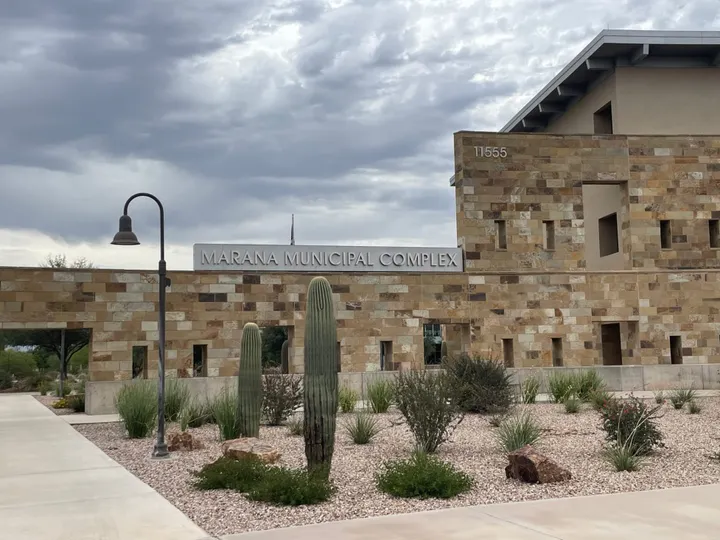
Marana broke ground on an expansion that will double the capacity of its wastewater treatment plant, as the town works to keep up with rapid growth.
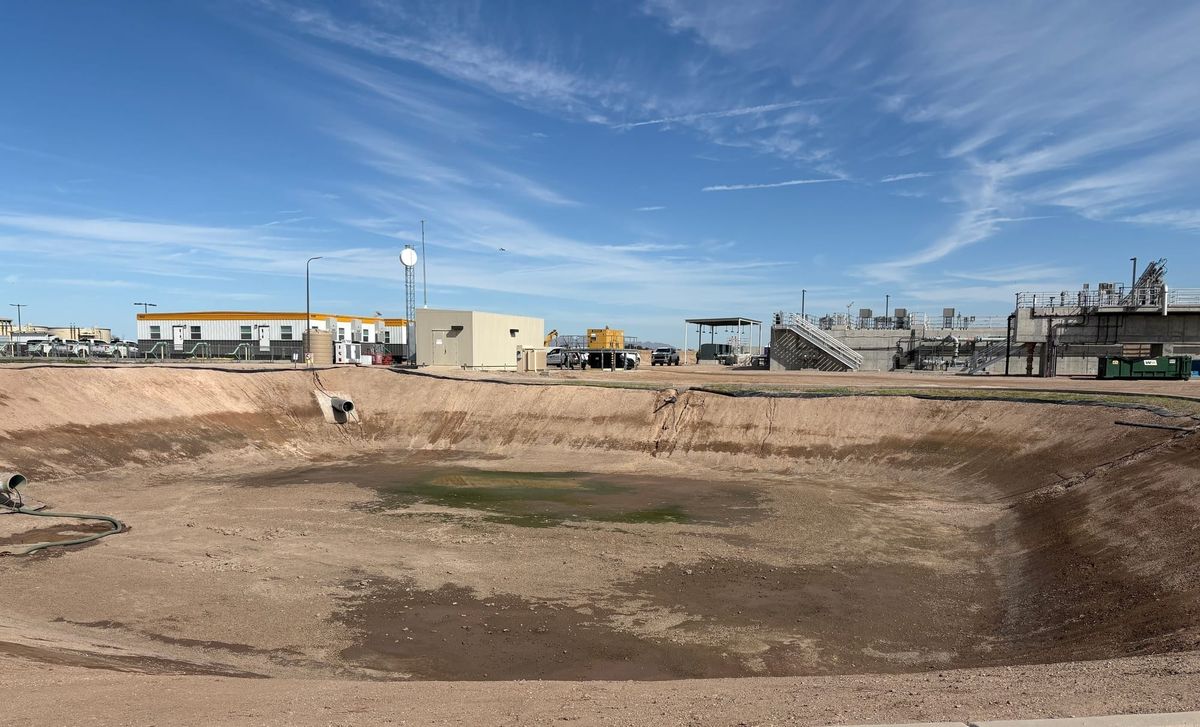
Marana broke ground Sept. 22 on an expansion that will double the capacity of its wastewater treatment plant to 3 million gallons a day, as one of Southern Arizona's fastest-growing towns works to keep up with demand.
Because of that growth, the town has authorized its Water Department to move forward with an already approved three-part expansion plan.
The "master plan," a water treatment strategy set in place over a decade ago, is now moving into its second phase with this expansion.
“Water is one of our most precious resources, as most of us know today,” Water Department Director Heidi Lasham said during the groundbreaking ceremony. “This expansion strengthens our ability to manage it sustainably, responsibly and with long-term vision.”
Lasham said around a dozen employees will operate the facility after construction is complete.
“All the water that we collect from our collection systems gets treated and recharged into our basin, and then our wells in the area will pump that water back out and treat it before it goes to any households,” Lasham told attendees.
The Marana Water Reclamation Facility currently provides primary, secondary and tertiary treatment, turning sewer influent into clean, potable water for multiple uses, a common practice in Arizona given the state's limited access to continuous water sources.
“This hard work ensures that every gallon treated here benefits our residents and safeguards our community's future,” Lasham said.
Tucson Spotlight is free for every reader because donors make it possible. Join them.
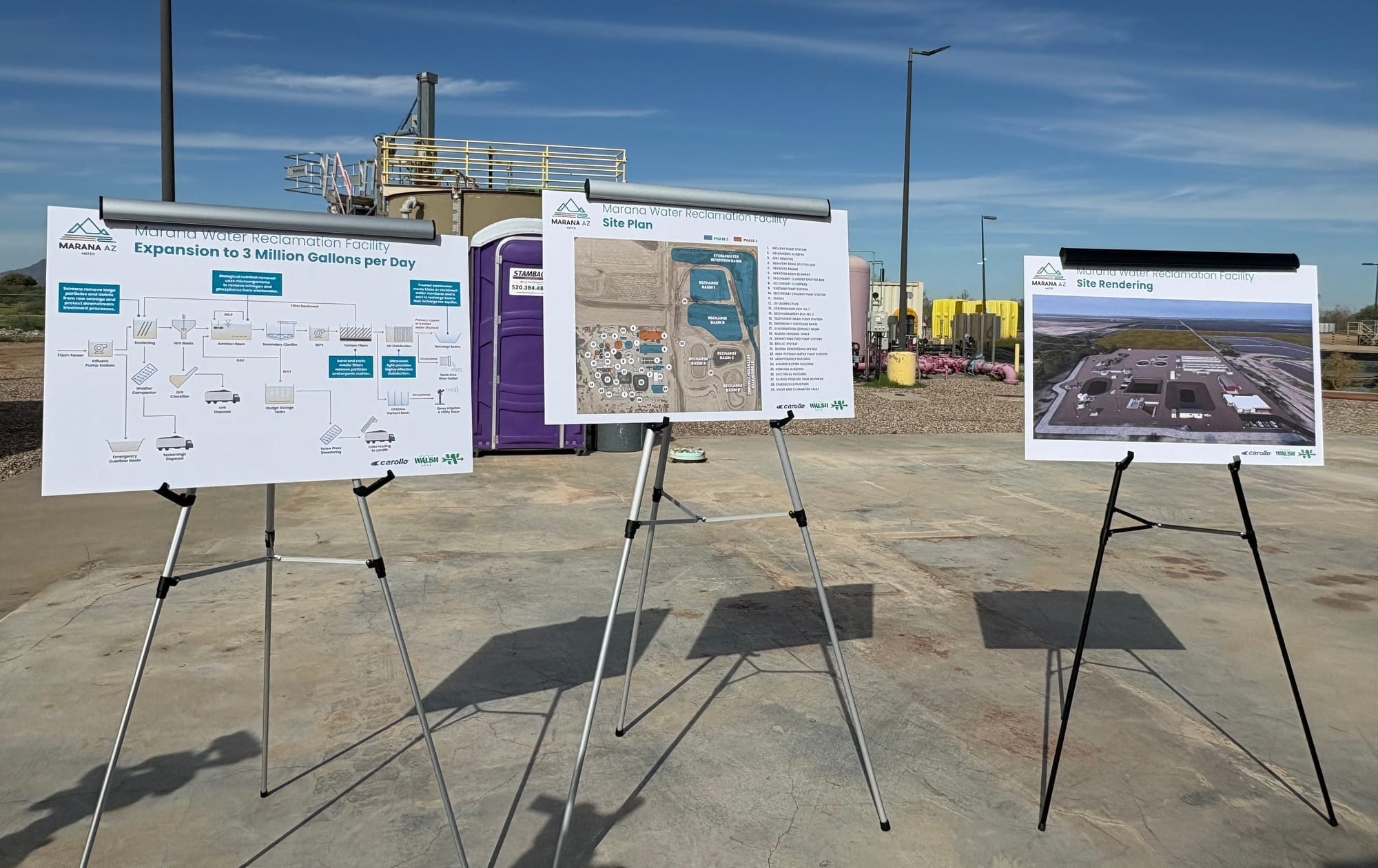
The facility has a rated capacity of 1.5 million gallons per day of average annual daily flow. But modern sterilization and filtration techniques can only go so far as demand increases.
Phase two is meant to address that by adding more storage tanks, a deeper pump station and more filtration systems, including additional clarifiers and blowers. The expected result is a rated capacity of 3 million gallons per day of average flow.
“Acquiring this wastewater treatment plant was absolutely one of the most important things we needed to do,” said Mayor Jon Post, explaining that before owning the facility, Marana lacked the water credits and reliable utility connections needed to encourage further growth.
It took overcoming many obstacles, pleading and fighting to get the town where it is today: a reliable water provider.
“The challenges we've overcome to get to this point have just been unbelievable,” Post said, adding that the cost of the expansion will not affect residents' utility bills. “These are not going to be passed on to our customer. These are going to be passed on to our developers and commercial builders through our impact fees. You will not see this in your monthly billing.”
The expansion comes as most municipalities in the state cut back on water supplies, but Post said the project isn't in response to cuts to regional watershed allowances.
Post said Marana, and Southern Arizona in general, is better acclimated to drought periods than other Arizona communities, thanks to the many water conservation initiatives employed over the past decades.
Town officials estimate the expansion will be completed by 2028.
Quentin Agnello is a University of Arizona alum and freelance journalist in Tucson. Contact him at qsagnello@gmail.com.
Tucson Spotlight is a community-based newsroom that provides paid opportunities for students and rising journalists in Southern Arizona. Please consider supporting our work with a tax-deductible donation.