Where Arizona House candidates in District 17 stand
Three of four candidates running for two Arizona House seats in Legislative District 17 share where they stand on groundwater, housing and school funding.
A retired Air Force colonel, a fifth-grade teacher, a former preschool director and a church ministry volunteer are running for two Arizona House seats in Legislative District 17.
Republicans Rachel Keshel and John Winchester and Democrats Holly Lyon and Kevin Volk are vying to represent 249,296 residents in a district that covers large portions of Pima and Pinal counties, stretching from Marana and Oro Valley to the outskirts of Tucson and the Vail area.
Representatives serve two-year terms and are limited to four terms, or eight years. Incumbents Keshel and Volk are hoping to continue their work in the district.
Keshel was first elected in 2022. A former teacher, she also worked in business management as a UPS executive and a preschool director.
Volk was first elected in 2024. Before taking office, he worked in public education as a fifth-grade teacher and also as a real estate agent for his family’s firm and a small business owner.
Lyon is a retired Air Force colonel who served 26 years and worked at NATO headquarters and the Pentagon. She was a middle school teacher before joining the service.
Winchester, a lifelong Tucsonan, has spent years volunteering with his church while working in higher education and community development.
Tucson Spotlight asked all the candidates about their positions on groundwater regulation, affordable housing and public school funding.
Your membership pays emerging journalists to cover Southern Arizona the way it deserves.
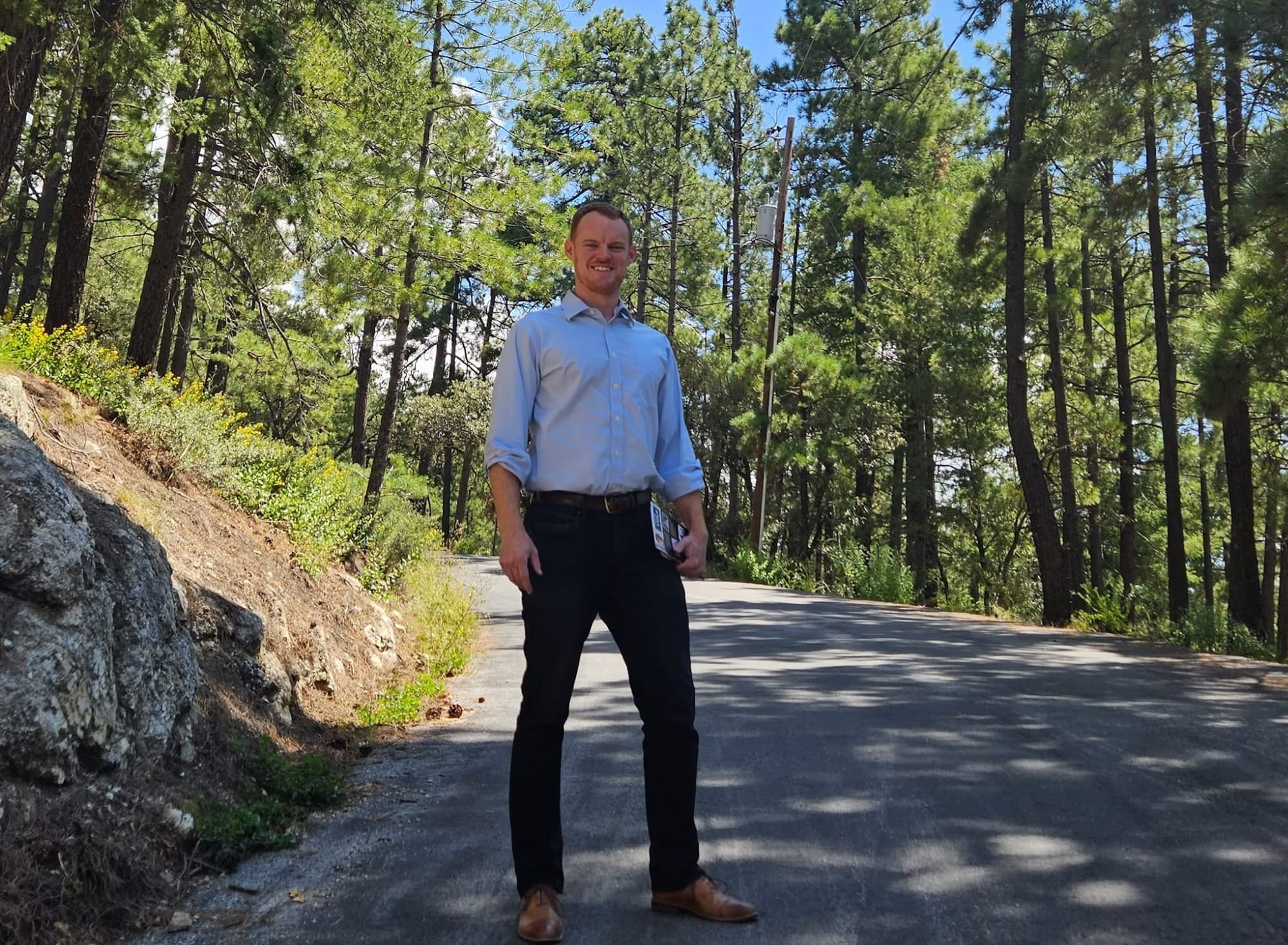
Keshel was the only candidate who did not respond. Her campaign website describes her as an authentic conservative fighter who plans to prioritize border security, provide election integrity through transparency and oversight and strengthen the economy.
Water is a top concern as Arizona heats up. The state had its second-hottest August on record, according to the Arizona Department of Water Resources, and groundwater pumping is largely unmeasured and unregulated in rural areas outside the state’s Active Management Areas.
“We know water is a precious resource, and I think it’s ridiculous that foreign and out-of-state entities are pumping unlimited groundwater and threatening our water security,” Volk said, adding that the sooner the state takes action to protect its water, the better off residents will be. “Let’s hear that bill, discuss it, work together on it, and protect Arizona water so that it’s available for Arizonans first.”
Lyon voiced similar sentiments, pressing the need for prompt collaboration between water and economic policies.
“Water policy and economic policy cannot be separated,” Lyon said. “Sustainable growth requires sustainable water management, and Arizona must lead on this issue rather than letting this looming crisis lead us. If Arizona does not take proactive steps now to manage water more responsibly, we risk federal intervention and broad restrictions that could severely impact our economy and our people.”
Winchester took a different approach, saying he prefers policies that wouldn’t limit agricultural or economic development.
“Applying strict Active Management Area rules statewide, including limits on agricultural expansion, assured supply mandates, and heavy conservation requirements, would ignore real regional differences in hydrology, local economies (especially agriculture), and property rights,” Winchester said. “Existing tools already allow targeted intervention where the science justifies it. I would support using those tools basin by basin, driven by data and local input, rather than a blanket expansion of state control.”
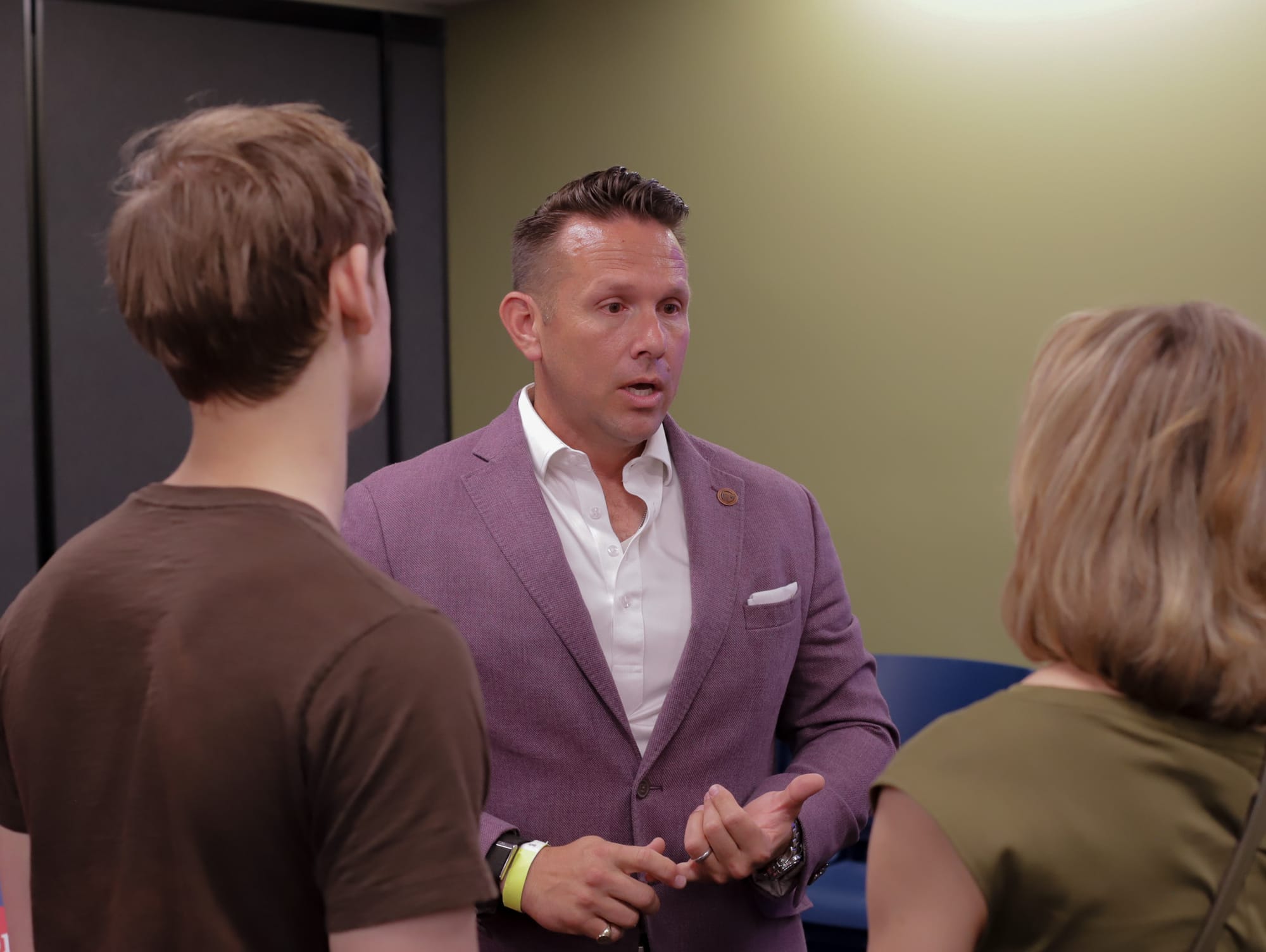
Candidates also weighed in on housing, where costs are rising much faster than paychecks.
The gap between income growth and housing prices in Tucson is widening, according to Making Action Possible, a University of Arizona statistics dashboard known as MAP. A recent MAP report shows Tucson’s median household income has risen 31.7%, while housing prices have risen 69.2%.
With the cost of living rising, affordable housing is becoming a bigger issue for Arizonans. Poverty in the Tucson area has fallen five percentage points since 2014, according to a 2024 MAP study, but 14.3% of Tucson residents still live in poverty.
For many voters, making housing more affordable is a top concern.
“Housing affordability has become one of the defining economic challenges facing Arizona families,” Lyon said. “In Tucson and across LD17, too many working families, young professionals, and seniors are being priced out of stable housing, either for sale or rent.”
Volk said he has witnessed firsthand how the lack of affordable housing affects constituents, in some cases forcing as many as four generations of a family to live in a single household.
“Arizonans, and their kids and grandkids, need more options for housing,” Volk said. “We need to increase the supply of homes in a way that is appropriate to our local communities.”
Winchester wants the government to allow more flexible zoning, speed up permitting and limit local obstacles to building, which he says would ease the cost of housing.
“The Legislature should press local governments to allow a greater diversity of housing types and to ease the regulatory burden on home building,” Winchester said. “Government policy helped drive up housing costs and (the) government can help bring them down by undoing those policies. My priority is clearing the way for builders to deliver the homes LD17 families need, at prices they can afford.”
Education is another prominent issue for voters, with Arizona ranking among the lowest states in per-pupil spending.
Lyon stressed the importance of quality public education to the future of Arizona’s economy and workforce.
“While funding alone will not solve every challenge in education, we cannot expect schools to succeed without making serious investments in students, teachers, and classrooms,” Lyon said.
Volk’s concerns with education come back to problems with the current Legislature, which he says has gotten more partisan and less productive.
“We need to prioritize renewing this education funding source as a top priority for next year to raise teacher pay and fully fund facilities,” Volk said. “That is how our schools will be equipped to best serve Arizona students and their families.”
Winchester believes the metrics of education spending are blunt and fail to account for student needs, regional costs and the split between classroom and administrative spending.
“Arizona must fund education adequately, but the challenge is effectiveness, not raw dollars,” Winchester said. “My top priority is targeted reform that maximizes return. That means strengthening school choice with accountability, refining the funding formula for efficiency and student need, and focusing on teacher effectiveness, early literacy, and less bureaucracy. Arizona needs its kids to succeed, and I intend to work toward that end.”
Nya Belcastro is a University of Arizona student and Tucson Spotlight intern. Contact her at nya2005@arizona.edu.
Tucson Spotlight is a community-based newsroom that provides paid opportunities for students and rising journalists in Southern Arizona. Please consider supporting our work with a tax-deductible donation.