10 Pima County judges up for retention this November
Ten Pima County Superior Court judges face retention votes Nov. 3, and a state commission found all of them meet performance standards, though two drew lower survey scores.
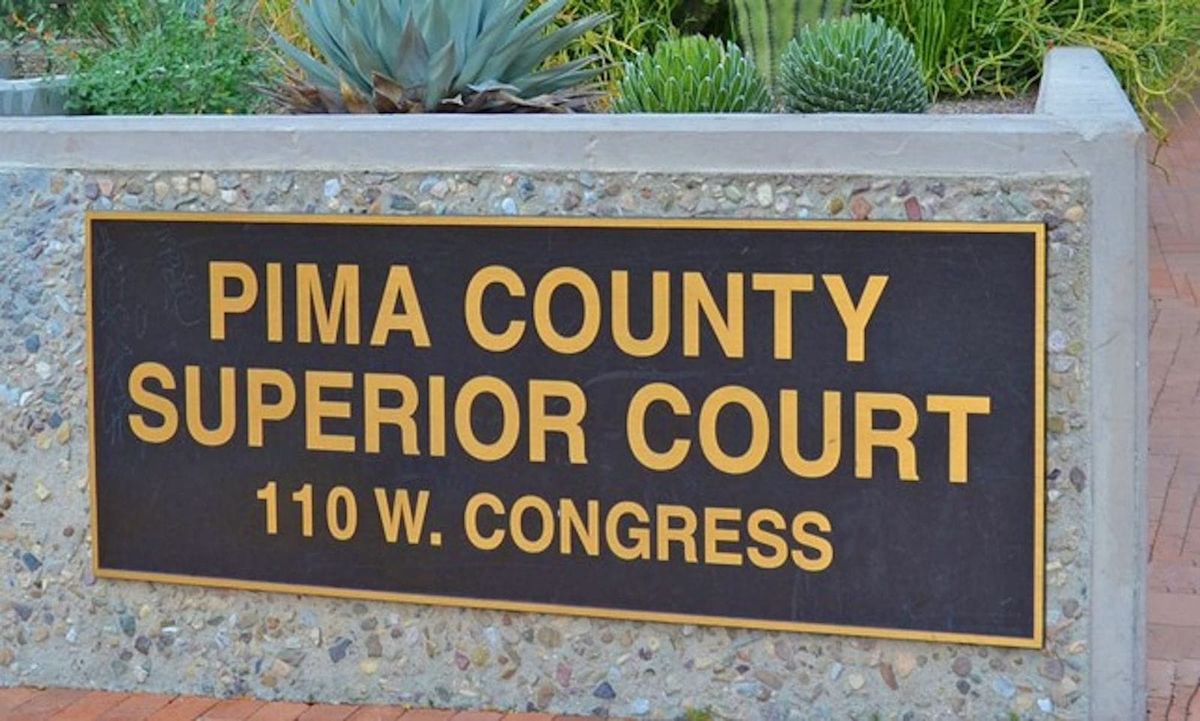
Ten Pima County Superior Court judges are asking voters to keep them on the bench this November, and a state review commission found that all 10 meet its performance standards.
The Arizona Commission on Judicial Performance Review surveyed attorneys, litigants, witnesses, jurors and other judges about each judge between February and September 2025. Respondents rated the judges on legal ability, integrity, communication skills, judicial temperament and administrative performance. The scores in this story reflect the share of respondents who rated a judge acceptable or better in each category.
Most of the judges scored 92% or higher across the board. Two drew noticeably lower marks. Judge Catherine Woods scored between 82% and 89% in every category, while Presiding Judge Danelle Liwski scored 88% on legal ability but 91% or higher everywhere else.
Response rates were low for several judges, which means a handful of surveys can move a score. For Liwski, just 21 of 176 surveys were returned.
Pima County voters don’t pick Superior Court judges in head-to-head races. Instead, a nominating commission screens applicants and sends a list of finalists to the governor, who makes the appointment.
Judges then appear on the ballot as a yes-or-no question, and a judge who gets more yes votes than no votes serves another four-year term. Newly appointed judges face voters after their first two years on the bench.
Tucson Spotlight won a national award for local journalism collaboration. Get the stories that earned it delivered straight to your inbox.
Sandra Bensley
Bensley spent years as a partner at a Tucson firm focusing on trusts, estates and elder law, and she previously worked as a Pima County public defender and a Glendale city prosecutor. Gov. Katie Hobbs appointed her to the bench in September 2024, months after she started as a court commissioner, and she now presides over the civil probate bench. This is her first retention election. She earned her law degree from Arizona State University and is a past president of the Pima County Bar Association. Respondents gave her strong marks, with scores between 94% and 96% in every category. Ninety-eight of 607 surveys were returned.
Jeffrey Bergin
Bergin’s 2011 appointment by Gov. Jan Brewer came after a private practice built on complex civil litigation, including bad faith insurance, wrongful death, product liability and construction defect cases. He later led the entire Pima County Superior Court as presiding judge before moving to the civil bench. He holds business and law degrees from the University of Arizona. Bergin scored 98% on legal ability and 99% in every other category, some of the highest marks in this group. His review also drew the most responses of any judge on the ballot, with 184 of 1,181 surveys returned.
Janet Bostwick
Bostwick’s path to the bench ran through employment law. She was a partner at Molloy, Jones & Donahue, ran her own practice focused on employment discrimination and consulted for the University of Arizona on equity compliance. A University of Arizona graduate, she was appointed by Gov. Doug Ducey in 2016 and has spent her time on the bench in juvenile court. Bostwick scored 95% on legal ability and 97% to 99% in the remaining categories. Seventy-six of 463 surveys were returned.
Randi Burnett
This is Burnett’s first retention election. Hobbs appointed her in 2023 after two years as a court commissioner. She spent much of her legal career in family law, worked five years as a staff attorney at Southern Arizona Legal Aid and was a founding board member of Step Up to Justice, a Tucson nonprofit that provides free legal help to low-income residents. She earned her law degree from the University of Arizona. She was reviewed while presiding over the family bench and has since moved to the civil bench. Burnett scored 98% on legal ability and between 92% and 97% in the other categories. Fifty-three of 343 surveys were returned.
Alan Goodwin
Goodwin earned the highest scores of any judge in this group, with 99% or 100% in every category. Jurors, litigants and fellow judges all rated him at or near the top, and 131 of 560 surveys were returned. Ducey appointed him in 2020, and he started on the family law bench before moving to criminal court. Goodwin previously led the Special Victims Bureau at the Pima County Attorney’s Office and spent six years on active duty as an Air Force judge advocate, later rising to colonel in the Air Force Reserve. He holds undergraduate and law degrees from the University of Alabama.
Cynthia Kuhn
Kuhn came to the bench in 2016, when Ducey appointed her after she worked in private practice handling commercial disputes, personal injury, probate and environmental cases. She also served as a judge pro tem. She has served on the family and civil benches and earned her law degree from the University of Arizona. Kuhn scored 96% on legal ability and 97% on administrative performance, with lower marks of 92% on integrity and temperament. Litigants and witnesses rated her lower than attorneys or other judges did. Her review drew 156 responses out of 1,094 surveys.
Danelle Liwski
Liwski became presiding judge of Pima County Superior Court in July 2024, putting her in charge of the court’s operations. Brewer appointed her to the bench in 2011 after she worked as an assistant U.S. attorney, a Pima County prosecutor and a juvenile court hearing officer. She has served on the family, criminal and probate benches and helped create a drug diversion court for cases before indictment. She holds a law degree from the University of Arizona. Liwski scored 98% on administrative performance and between 91% and 95% on communication skills, temperament and integrity. Her lowest score, 88%, came in legal ability, and only 21 of 176 surveys were returned.
Kathleen Quigley
Quigley spent more than 15 years as a prosecutor with the Pima County Attorney’s Office before turning to juvenile court. Brewer appointed her in 2012, capping nearly a decade as a hearing officer and commissioner. She has stayed on the juvenile bench, served as its presiding judge and led the National Council of Juvenile and Family Court Judges as president. She earned her law degree from the University of Arizona. Quigley scored between 97% and 99% in every category, and litigants and witnesses gave her near-perfect ratings. The review drew 73 responses from 415 surveys.
Laurie San Angelo
Ducey appointed San Angelo in 2020 to fill the seat Scott Rash left when he joined the federal bench. She serves on the juvenile court. Before her appointment, she spent nearly three decades at the Arizona Attorney General’s Office, where she oversaw attorneys representing the state’s child welfare agency in southern Arizona, and she became a Pima County court commissioner in 2013. She holds a law degree from the University of Arizona and is a past president of the Pima County Bar Association. Her scores ranged from 92% on integrity to 96% on communication skills and administrative performance, with attorneys rating her lower than litigants or other judges did. Sixty-one of 483 surveys came back.
Catherine Woods
Woods received the lowest scores of any judge in this group, ranging from 82% on legal ability to 89% on administrative performance. Other judicial officers rated her highly, but attorneys gave her lower marks. Brewer appointed her in 2011 after a career in professional malpractice and commercial litigation at the Tucson firm Rusing & Lopez. She holds a law degree from the University of Arizona. Woods presided over the family bench when she was reviewed, but she now hears criminal cases. One hundred sixteen of 629 surveys were returned.
Full performance reports for each judge are available at jpr.azcourts.gov.
Caitlin Schmidt is editor and publisher of Tucson Spotlight. Contact her at caitlin@tucsonspotlight.org.
Tucson Spotlight is a community-based newsroom that provides paid opportunities for students and rising journalists in Southern Arizona. Please consider supporting our work with a tax-deductible donation.