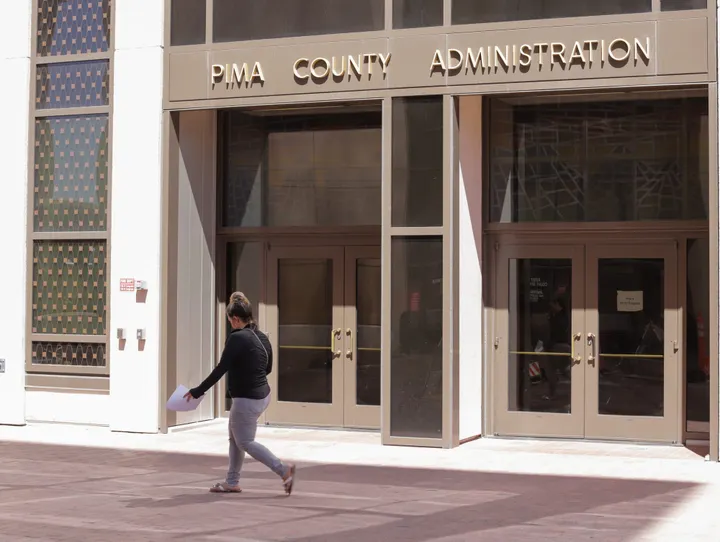
Tucson voters weigh 25-year TEP franchise in Prop. 421
Tucson voters will decide whether to renew Tucson Electric Power’s 25-year franchise and accept about $64 million for shade, trees and low-income energy help.
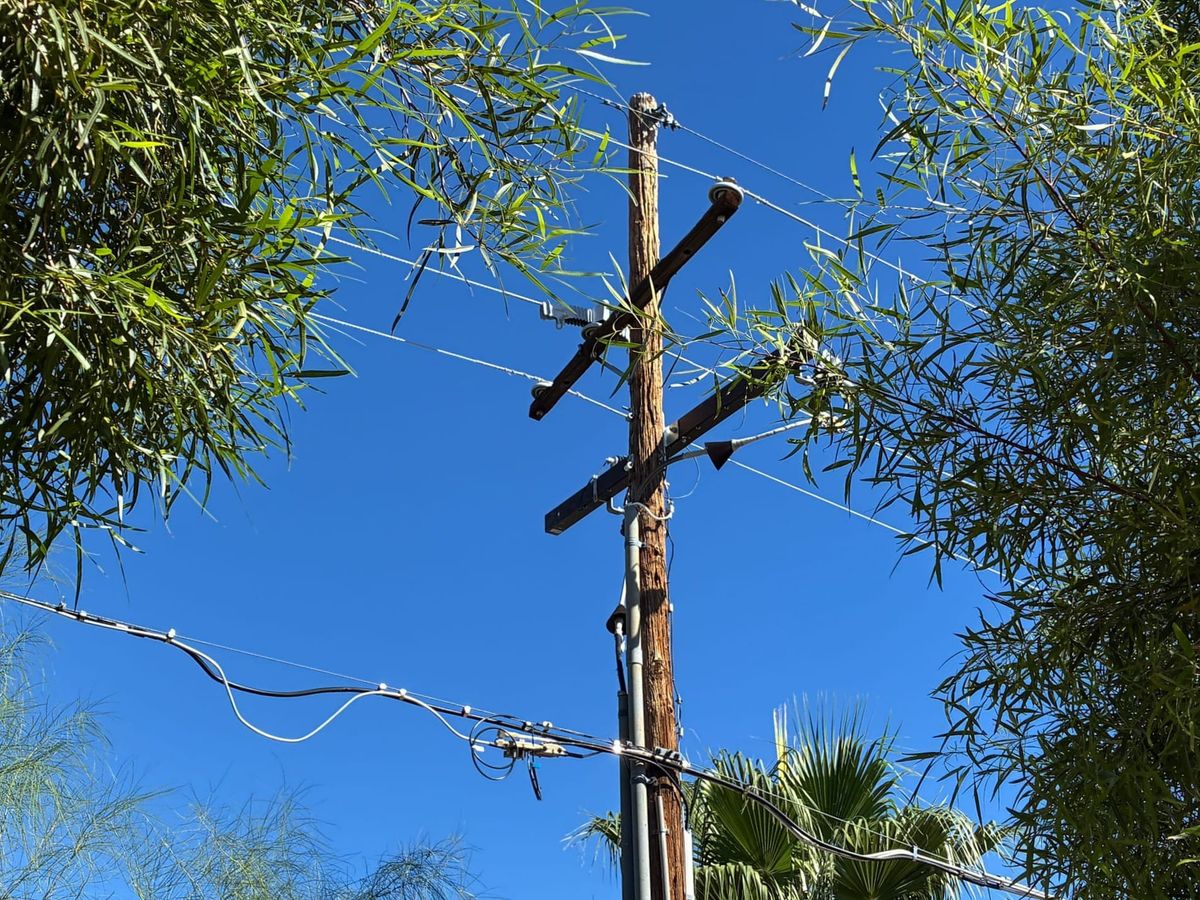
Tucson voters will decide this fall whether to renew Tucson Electric Power’s franchise agreement for another 25 years and accept at least $2 million a year from the utility for shade, trees and energy help for low-income households.
Proposition 421 bundles the two deals into one vote. Supporters say it keeps power reliable without raising rates, while opponents say it locks the city into a corporate utility for a generation.
The Tucson City Council voted unanimously on April 7 to send Proposition 421 to voters after revising several earlier drafts. The current franchise agreement expires in April 2027. The renewal would keep the existing 2.25% franchise fee customers pay on their bills, which funds undergrounding power lines, low-income assistance and renewable energy incentives. It also gives Tucson Electric Power, known as TEP, vehicles access to Tucson’s rights-of-way so crews can work on the grid and respond to outages on city streets.
The energy collaboration agreement is new and would be the first of its kind in Arizona. TEP’s payments, starting at $2 million a year and rising 2% annually, would pay for tree planting, shade, heat-resilient infrastructure and energy-efficiency programs for low-income households. The city expects to receive about $64 million over the 25-year agreement.
TEP says that Proposition 421 will not increase energy rates for customers and would allow it to continue making upgrades to its infrastructure. Ending the agreement, TEP says, would require the city to approve each project individually, slowing down its ability to respond.
“TEP is backing Proposition 421 because it supports reliable electric service and does not increase customer bills,” TEP spokesman Joe Barrios told Tucson Spotlight. “The franchise agreement helps TEP safely and efficiently use city streets, alleys and rights-of-way to maintain our equipment, resolve outages, and serve customers within city limits. Its common-sense terms help TEP and the City coordinate this work efficiently.”
The information guide mailed to voters included 70 arguments in favor of Proposition 421 and two against. Of the 70 arguments in support, 59 were funded by TEP’s political action committee, TEP for Tucson. These arguments were submitted by TEP employees, various Tucson-area residents, business leaders and some elected officials.
We're a nationally recognized newsroom, but we're still a nonprofit that runs on community support. Help us keep telling Tucson's stories.
The city charges a $240 filing fee for each argument included in the voter guide, meaning TEP for Tucson paid $14,160 to submit its 59 arguments. Pima County charges $25 per argument for its own ballot measures.
Interest groups such as the Coalition for Sonoran Desert Protection paid for some of the remaining 11 “for” arguments, and elected officials paid for their own.
Tucson Mayor Regina Romero expressed her support for Proposition 421, calling it a unique opportunity for the city to invest in neighborhoods while also preparing for future heat increases.
“In Tucson, reliable energy is more than a convenience, it is essential to protecting public health, supporting local businesses, and helping the community remain resilient during an emergency,” Romero said in her letter. “Proposition 421 shows what Tucson can achieve when residents, government, businesses, and community partners work together on practical solutions. It’s an investment in our people.”
Pima County Supervisor Jen Allen also submitted a letter in support of Proposition 421, pointing to benefits for low-income families and carbon footprint reduction.
“If Proposition 421 passes, the Energy Collaboration Agreement will go into effect as well,” Allen said in her letter. “What this means for voters is that money to fund Tucson’s climate priorities will come directly from TEP’s corporate resources, not ratepayers.”
Proposition 421 has also drawn opposition from various community groups. Public Power for Tucson has organized against it under the argument that it would block off their preferred option of a public power utility, which they say would be more reliable and less expensive. They also called this a “referendum on how TEP conducts business here.”
“The annual $2M for Tucson is insignificant for Fortis, especially with the $2.2M increase Tucsonans will pay for TEP’s requested rate hike,” two Public Power for Tucson organizers wrote in their opposition letter. “If we stick with TEP for 25 more years, Tucson will become unlivable. We won’t be able to afford electricity to avoid the summer heat. There will be no water because data centers and TEP’s fracked gas plants will suck our desert dry. Temperatures will continue to rise, and there will be more wildfires and more intense, yet drier monsoon storms.”
The Party for Socialism and Liberation also submitted an argument against Proposition 421, accusing TEP and its Canadian-based parent company Fortis Inc. of “monopoly” and saying that the $2 million payment would simply purchase them more influence over the city government.
“A ‘YES’ vote surrenders leverage for a generation, handing TEP the power to shape infrastructure, serve environmentally destructive data centers, influence regulators and local politicians, and pass costs onto ratepaying residents. A ‘YES’ vote holds Tucsonans captive to a monopoly obligated to its shareholders, not the public,” party members said in their letter.
Ian Stash is University of Arizona alum and freelance journalist in Tucson. Contact him at ianjgs16@gmail.com.
Tucson Spotlight is a community-based newsroom that provides paid opportunities for students and rising journalists in Southern Arizona. Please consider supporting our work with a tax-deductible donation.