UA’s “Stop Kiss” asks Tucson to take hate crimes seriously
UA actors in “Stop Kiss,” running through Dec. 6 at the Tornabene Theatre, say the 1998 play about an anti-gay hate crime still resonates in Tucson.

A play written in 1998 about an anti-gay hate crime is coming to the University of Arizona stage, and the actors say its message still holds true in Tucson.
The UA School of Theatre, Film and Television production began previews Sunday, Nov. 15, and runs through Dec. 6 at the Tornabene Theatre.
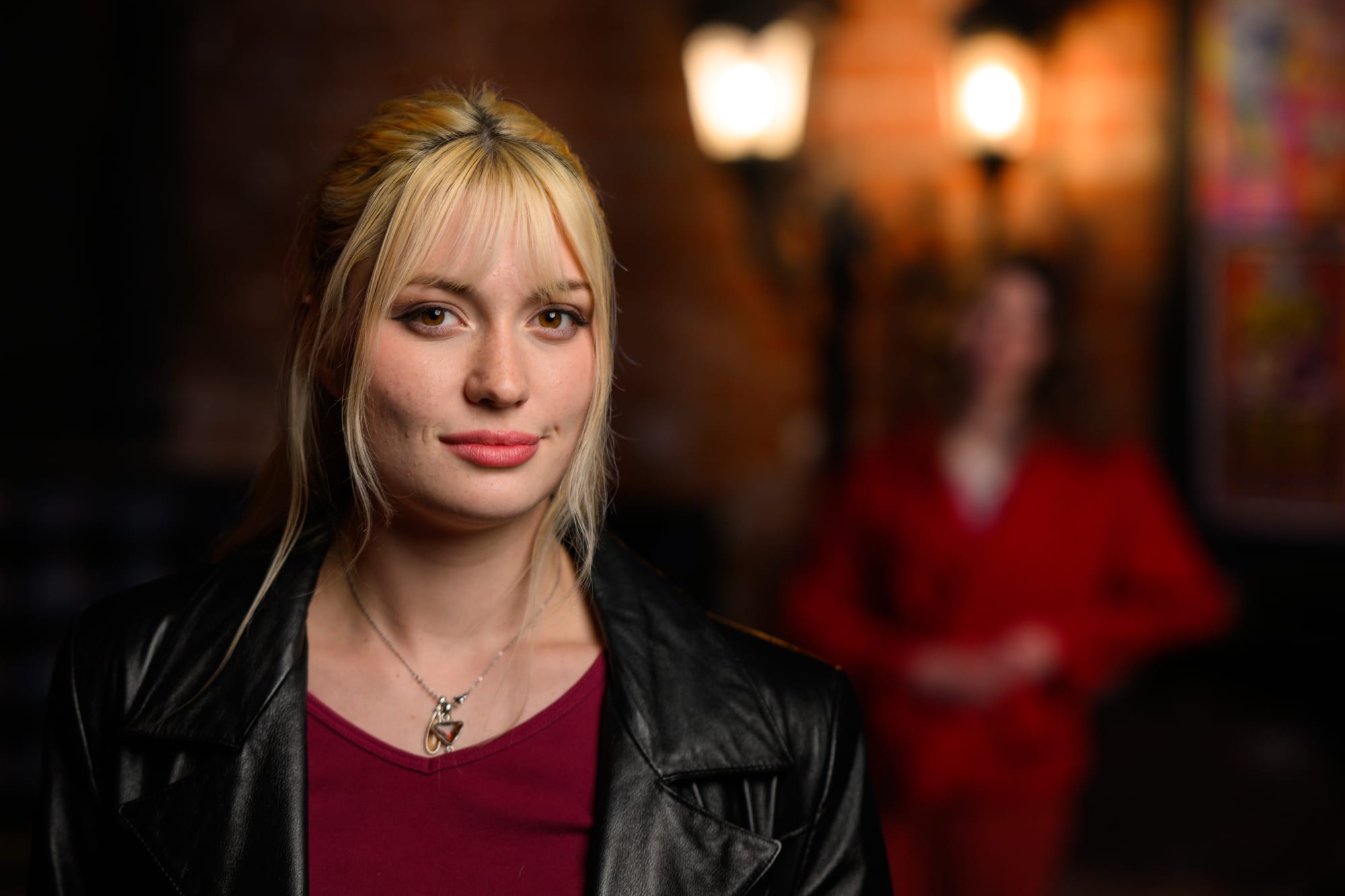
“Stop Kiss,” written by Diana Son and directed by Erin Roberts, features lead actors Sophie Bartholomew-Gonzalez and Hector Durazo.
Set in New York City, “Stop Kiss” follows Callie, a traffic reporter living a cautious, predictable routine, and Sara, a newcomer whose arrival disrupts Callie’s status quo. As their friendship develops into a romantic relationship, the two are attacked in the West Village, leaving Sara in a coma and forcing Callie and those around her to confront the trauma, fear and vulnerability that follow.
Bartholomew-Gonzalez plays Callie in her first major scripted acting role since high school. She has spent much of her college career focused on dramaturgy and behind-the-scenes work. Connecting with Callie required setting aside her own ambitious temperament to tap into the character’s hesitation and anxiety, she said.
“Her fear and her anxieties and her hesitation, I think, is something that we can all relate to, even when we don’t want to admit it,” Bartholomew-Gonzalez said. “That cautious energy, I think, lives in all of us. So tuning into her anxieties was a decent starting point.”
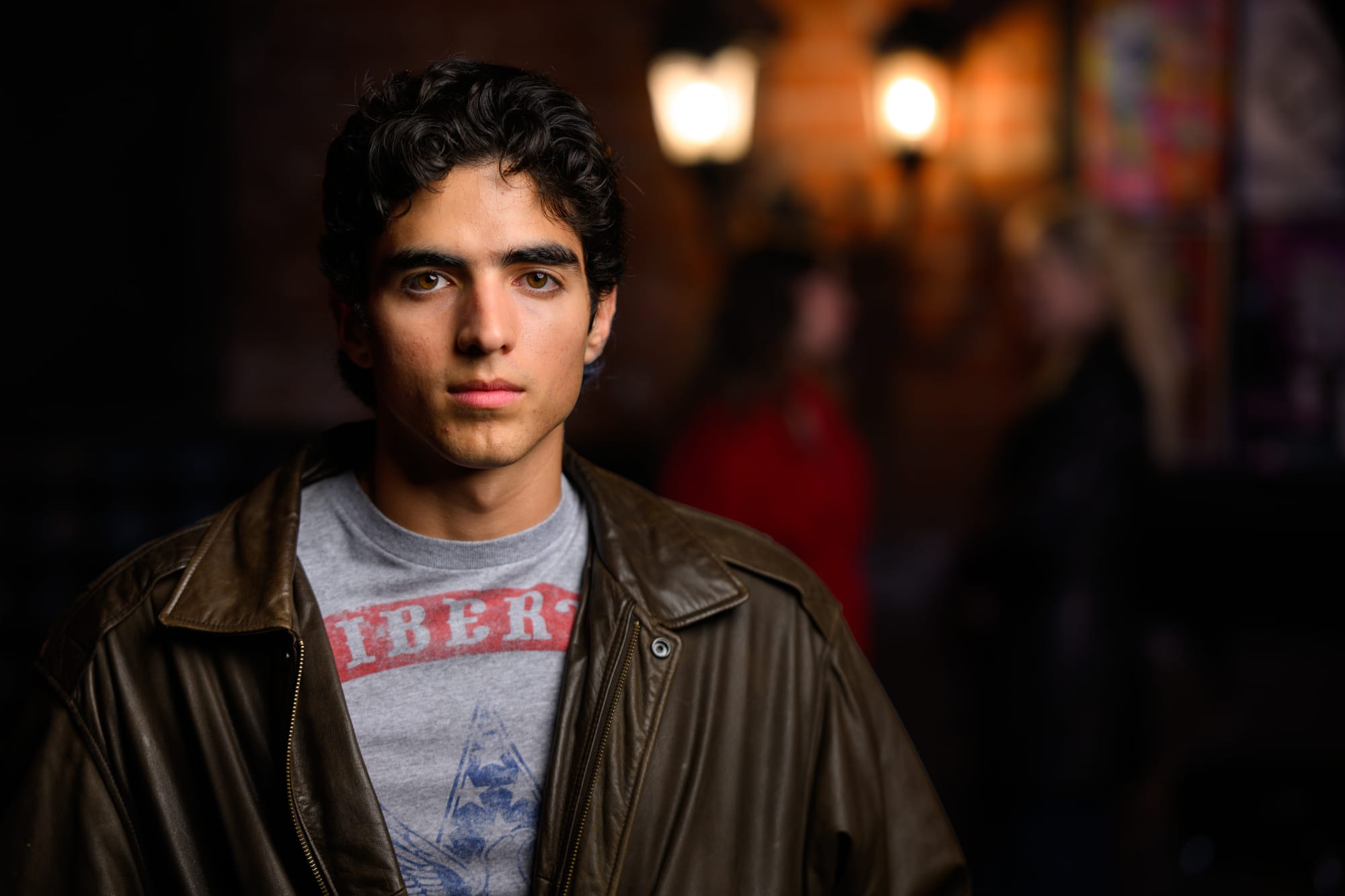
Durazo, performing in his first UA theater production, plays George, Callie’s longtime friend from college, who serves as a grounded presence in her life before and after the attack.
To manage the play’s abrupt shifts between everyday humor and acute crisis, Durazo said he separates his personal emotions from the role during rehearsals.
“I swap spaces with my character, so it’s not about myself anymore, it’s about George,” Durazo said. “When the big thing happens and there’s this scene with Callie, I get a sense that George is worried, he is mad at her, he is sad. He’s just all over the place, but it’s not me. It’s George.”
Durazo said that working with the cast has strengthened his approach to collaboration, adding that director Roberts let the actors explore their roles independently before offering targeted direction on their characters’ emotional motivations in specific scenes.
While “Stop Kiss” was written in the late 1990s, both lead actors say its central themes remain urgent in 2026.
Bartholomew-Gonzalez pointed to the fatal shooting at the Tucson gay bar Venture-N earlier this year as evidence that violence targeting the LGBTQ+ community is an ongoing issue rather than a historical artifact.
“It’s just kind of important to remember that this isn’t an old story and it’s not an outdated message,” Bartholomew-Gonzalez said. “There’s still lessons to be learned from this play today because these things are still happening, as much as we wish it weren’t true.”
Durazo echoed that concern, saying that frequent exposure to violent incidents on social media and in daily news cycles can dull public urgency. He said he hopes the play prompts audiences to resist becoming desensitized to hate crimes and instead take meaningful action.
“We can be scrolling through social media and say, ‘Oh my God, did you see that this happened or that happened?’ But it almost feels desensitized, like it’s a normal thing, and it shouldn’t be,” Durazo said. “It shouldn’t be something that’s considered normal. It should be taken seriously, and I hope people want to take action and do something about it.”
Beyond its commentary on violence, Bartholomew-Gonzalez said she hopes the production reminds viewers of the value of connection and the courage it takes to live and love openly, especially in the play’s closing moments.
“I want audiences to leave feeling hopeful and feeling connected,” she said. “A lot of the play is about love, meeting the right person and cherishing the love that you have while you have it. I want people to feel inspired to follow their hearts.”
Remaining shows are at 7:30 p.m. Thursday, Nov. 19, through Saturday, Nov. 21, and Dec. 4 and 5, with 1:30 p.m. matinees Nov. 22, Dec. 5 and Dec. 6. Tickets are available at tickets.arizona.edu, and students can buy $5 tickets in person with a valid student ID.
Isabel Vidrio is a University of Arizona alum and freelance journalist in Tucson. Contact her at ividrio40@gmail.com.
Tucson Spotlight is a community-based newsroom that provides paid opportunities for students and rising journalists in Southern Arizona. Please consider supporting our work with a tax-deductible donation.