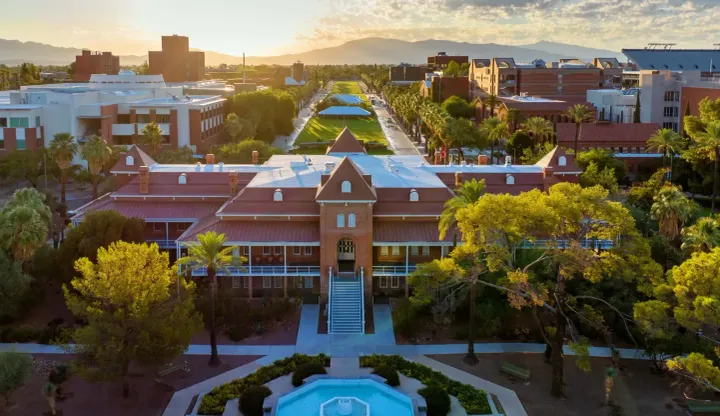
UA's Richard Carmona warns of global health crisis
Former U.S. Surgeon General Richard Carmona, a University of Arizona laureate professor, told UA students that cuts to global health institutions are weakening national security and accelerating the spread of disease.
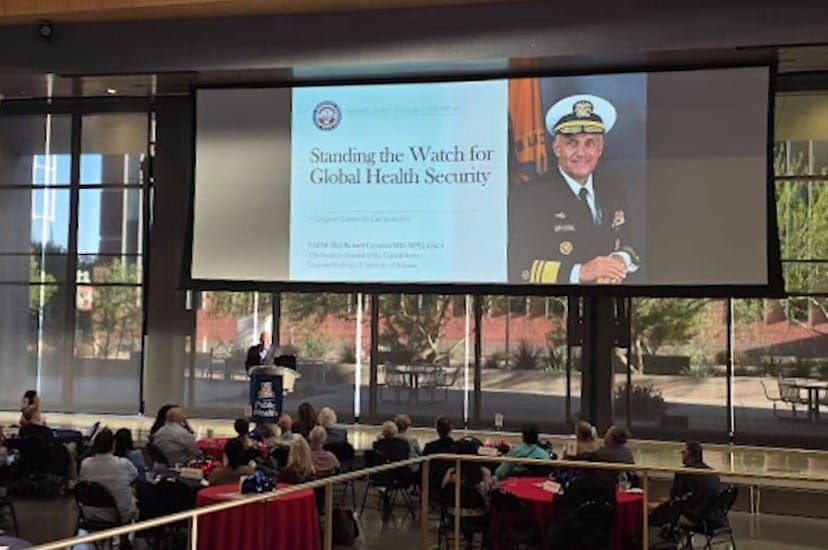
Richard Carmona, the former U.S. surgeon general, told University of Arizona public health students that global health is the foundation of national security, and that the institutions built to protect it are under threat.
Carmona was the speaker at the Mel and Enid Zuckerman College of Public Health's annual distinguished lecture for health policy on May 6. He discussed a wide variety of current topics, including foreign aid, immigration and political division in the United States.
Carmona served as U.S. surgeon general from 2002 to 2006, a deputy with the Pima County Sheriff's Department and a laureate professor at the UA, where he received his master's degree in public health in 1998.
Carmona had already worked as both a physician and a nurse when he pursued his master's degree, but said he did so because he kept seeing patients with preventable conditions.
His lecture was a call to action to protect the systems that make global health possible. Surgeons general typically release reports after extensive research, but also have the authority to issue a formal call to action when an issue is urgent enough that it cannot wait.
"We are living in one of the most consequential inflection points in modern history," Carmona said. "The forces of division are accelerating faster than the systems designed to hold us together. Global health is the foundation of global security and global stability, and without it, peace, prosperity and security cannot endure."
Carmona pointed to mass migration, conflict, famine and the rapid spread of misinformation as mounting strains on global systems, arguing that public health threats originate not in hospitals, but in instability.
Carmona pointed to health as the common denominator of all of these issues.
"Health is both the first casualty and the pathway to recovery," Carmona said. "As surgeon general, my responsibility was not only to address the illness, but to anticipate threats to health safety and security of the nation."
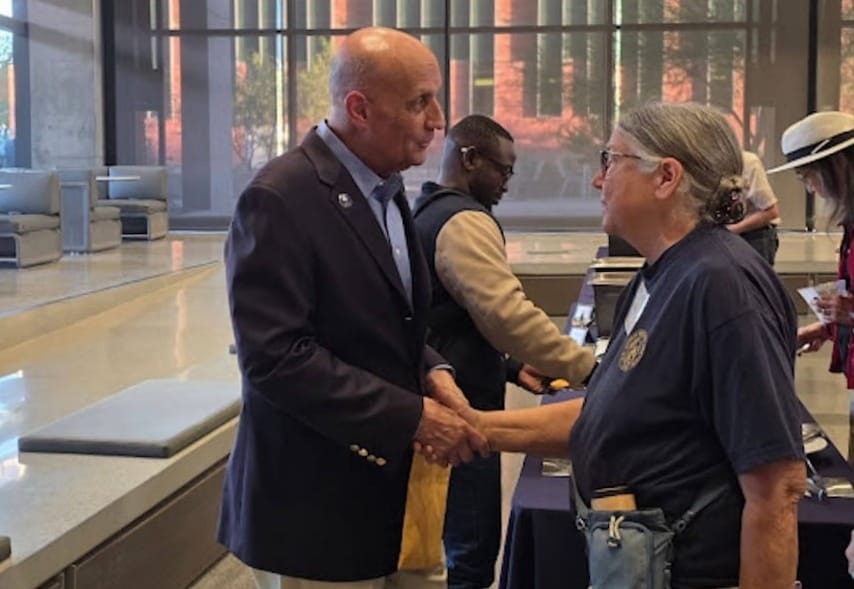
Carmona said there are more than 100 million forcibly displaced people in the world, more than ever before, which he noted comes with an economic cost. Migration, he said, strains systems, which destabilizes economies and threatens global markets.
"But beyond dollars, the greatest loss is human potential," Carmona said. "Unrealized. Interrupted. Forgotten."
Carmona pointed to the post-World War II Marshall Plan, when the United States funded aid and reconstruction in nations throughout Europe, not only the western nations allied with them, but also their former Axis enemies. This caused pushback from people who felt that American money should not be spent on those they fought against.
Carmona said that Secretary of State George Marshall understood that failing to help America's enemies rebuild would make them enemies for life, but building prosperity and democracy there would make them allies for life.
One of the landmark public health initiatives during Carmona's time as surgeon general was the 2003 President's Emergency Plan for AIDS Relief, which dramatically reduced the spread of AIDS globally.
Carmona talked about the major players in global health, including the World Health Organization, the World Bank and USAID, telling attendees that "many of those organizations are being reconstructed as we speak."
Carmona said international cooperation through these organizations trains medical professionals in disease prevention worldwide and acts as an intelligence service, allowing the United States to track infectious diseases before they spread. He stressed the importance of these groups, including the Centers for Disease Control and Prevention.
"Many of those institutions and the principles behind them are under strain, and the consequences of this are predictable: more fragile states, more displaced populations, more preventable deaths, accelerated spread of communicable disease and a higher likelihood of conflict," Carmona said. "When nations turn inward and abandon global health leadership, instability does not stay contained. It spreads."
Carmona recalled visiting a poor rural town in North Africa during his tenure that lacked electricity, stores and vehicles, where residents cared for one another and shared what they had. There, he came across children huddled around a tree watching "Sesame Street" in Arabic on a solar-powered TV.
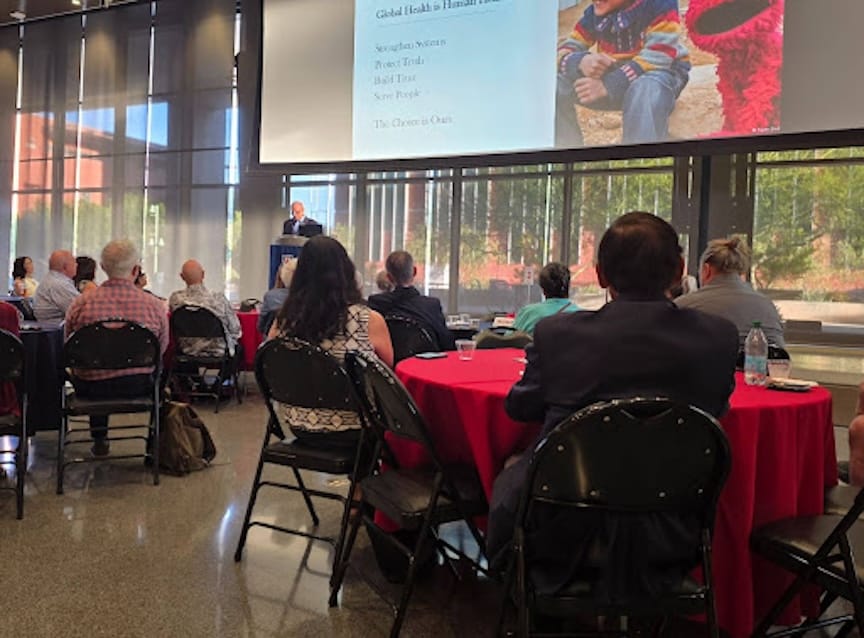
The community needed information, Carmona said, and was getting it through messages of friendship, respect and community from a children's TV show. He called the Muppet characters genuine public health ambassadors and "Sesame Street" the American export that does the most good, noting it is translated into dozens of languages and reaches tens of millions of children globally.
"If we fail to act, we will see more displacement, more disease, more fragile states, and they will be defined by instability rather than cooperation," Carmona said. "We have done this before, successfully. We have chosen unity over division, science over fear and leadership over retreat. The question before us now is not whether we can lead, it is whether we will lead. Because in the end, global health is human health, and our shared humanity is the foundation on which everything else depends."
Carmona encouraged young people pursuing a career in health to focus on an issue in which they believed they could make a change, pointing to the U.S.-Mexico border as a great place to gain experience in Southern Arizona that is not just theoretical.
Carmona addressed partisanship directly, noting he was the first surgeon general confirmed unanimously by the Senate, which he attributed to his qualifications and to "pissing off both sides pretty equally." He said telling inconvenient truths to politicians on both sides of the aisle is the hardest part of working in public health, particularly given the spread of misinformation about vaccines.
He tied this to his arrival in Washington, when he was appointed surgeon general by President George W. Bush, a Republican, but was embraced and aided through the Senate confirmation process by Sen. Ted Kennedy, a Democrat.
Carmona spoke to the role immigrants play in public health, drawing on his experience leading the UA's COVID-19 response. He identified migrant farm and ranch workers, many in the country illegally, as a key vulnerability: as essential food workers, they posed a transmission risk if infected, and he argued they should have had earlier vaccine access. He said that position drew strong pushback from those who felt their immigration status made them undeserving of priority.
He called the "lack of humanity" in immigration policy a generational failure, describing family separation as "criminal." He expressed regret that a bipartisan immigration reform plan from his time as surgeon general, which included a pathway to citizenship, failed by one Senate vote. With the national birthrate declining and the average age rising, he said, the country will not be able to sustain itself without immigration.
Carmona called for a bipartisan immigration system that welcomes contributors and screens out those who pose a risk, saying the country has failed to build one.
"I think that we need real leaders to step up rather than using it as ammunition to blame the other side," Carmona said. "In the interim, I think we need to speak up that, even if people are here illegally, that has to be adjudicated for sure. But we should treat people humane. They should be fed, they should get medical care, and if they need to go back, they go back."
Ian Stash is University of Arizona alum and freelance journalist in Tucson. Contact him at ianjgs16@gmail.com.
Tucson Spotlight is a community-based newsroom that provides paid opportunities for students and rising journalists in Southern Arizona. Please consider supporting our work with a tax-deductible donation.