UA program blends arts and health to fight inequality
A University of Arizona program is pairing nursing students with artists and engineers to build a more holistic understanding of health equity, with exhibits reaching communities on both sides of the U.S.-Mexico border.
A University of Arizona program is pairing nursing students with photographers, mechanical engineers and artists to reframe how the next generation of health professionals thinks about who is responsible for public health.
The Health and Arts Community Collaboratory merges health sciences with the arts to build a broader understanding of what makes people well, drawing on what Associate Clinical Professor Lisa Kiser calls "an infusion of different expertise" rooted in the idea that health extends far beyond the health sciences alone.
The program began as a single course, Health Equity: Connections, Community and Healing in Urgent Times.
The course encourages students to think critically about health inequalities and is co-listed across the College of Nursing and health sciences to draw students from different majors.
NURS/HSD 250 was not a traditional class. It did not include long lectures and quizzes. Instead, students learned from guest speakers and experiential learning days.
"We've been out to the San Xavier Co-Op Farm, we've been out to Desert Survivors, we've been out to Mission Garden… We even had a climate activist in Costa Rica who talked directly with our students on a live session via Zoom," said Kiser, a professor in the School of Health Professions at the Zuckerman College of Public Health who teaches the class. "It's that the world then becomes your classroom, the community is your classroom."
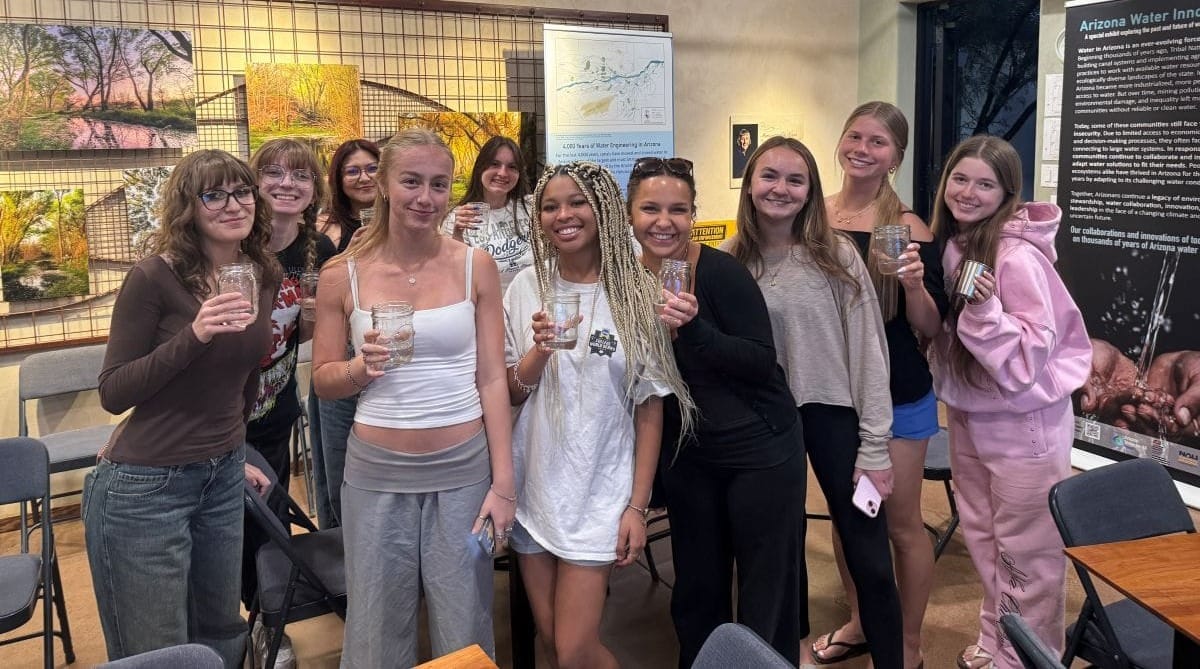
Arpit Kaur Sohi, a rising junior in pharmaceutical science at the UA, took the class last spring as a way to explore different health careers. She recalls when a nurse from Oro Valley Hospital talked to the class about the importance of listening and taking the necessary time when comforting patients.
"I think that's a really valuable lesson that I'm going to take away in my future health profession, whatever I choose to do," Kaur Sohi said.
Research has shown that arts-based learning is beneficial for nursing students to acquire social skills like empathy and compassion toward others, with a World Health Organization report finding that photography and digital storytelling can enhance a person's understanding of complex health issues.
The Health and Arts Community Collaboratory views health inequality as not exclusive to health sciences, but as a complex social issue that needs to be addressed by every discipline and field.
"Health equity is everybody's problem. It's not only a healthcare problem," said Tarnia Newton, an associate clinical professor at the UA College of Nursing who helped create the Collaboratory. "It's every scientist, it's the IT person, it's the mechanical engineer, civil engineer, chemist, pharmacist, it's everybody's problem."
The Collaboratory was funded by UA Research, Innovation and Impact, Research Development Production and the Hispanic Serving Institution to create interactive pop-up exhibits exploring the relationship between health and arts in healing communities across the U.S.-Mexico border.
Using Photovoice, a form of documentary photography, students in NURS/HSD 250 created visual narratives reflecting on their understanding of health. Graduate students in art education then reviewed the photos and curated exhibitions around themes designed to spark conversation about health inequalities in the community.
One exhibit was displayed at the UA's Center for Creative Photography, where community members were invited to reflect on their own experiences with health and what it means to be well, including writing down recipes that made them feel cared for.
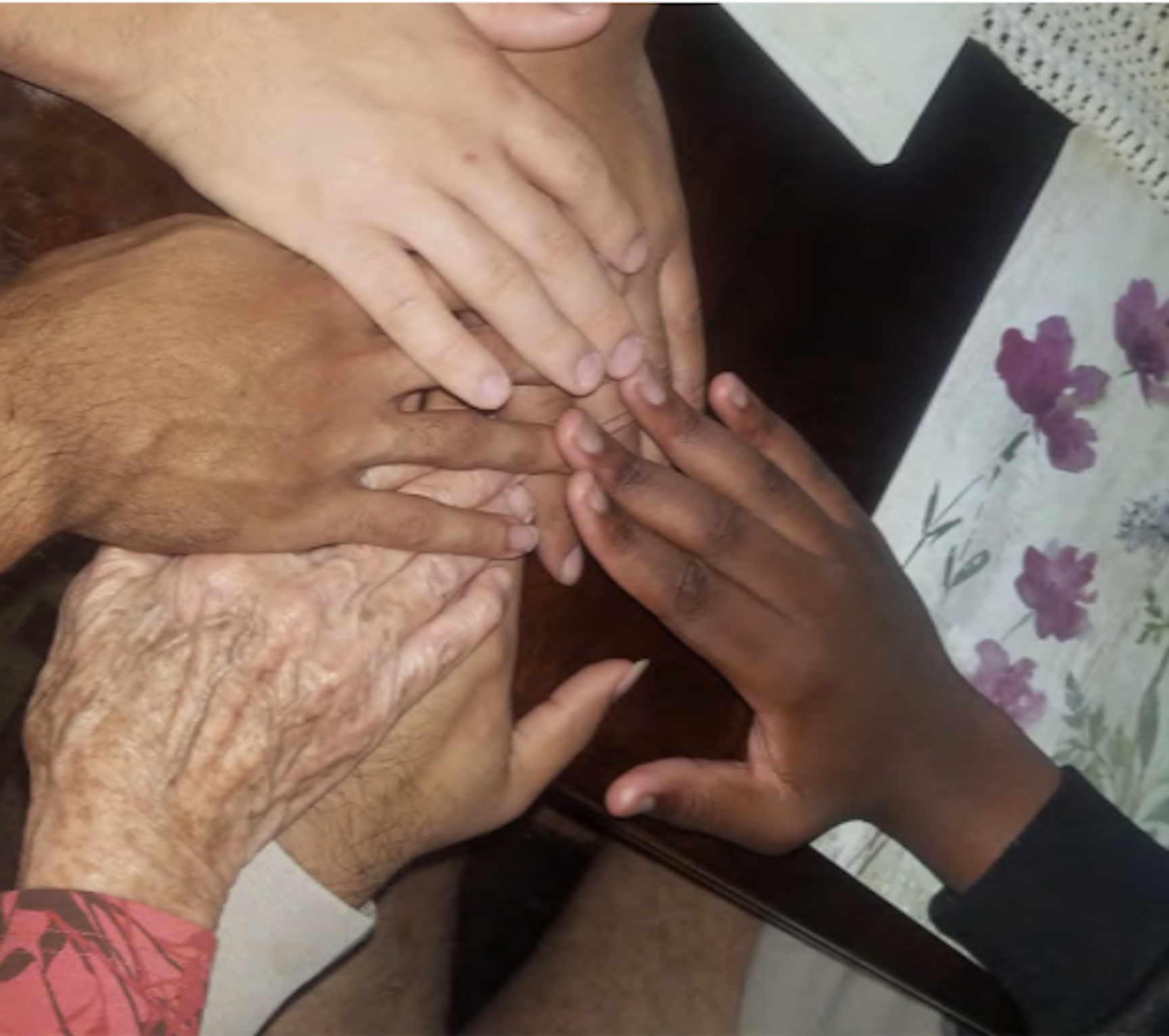
Seeing his art exhibited at the Center for Creative Photography was surreal for UA alumnus Patrick Pinder-Newton, who said he felt a combination of pride and excitement when he saw the community engaging with his work.
"To see our work out there. It's a tad bit vulnerable, but then also to see that it's positively taken by the community, it was also nice," said Pinder-Newton, who participated in HACC while studying mechanical engineering in his senior year.
With no prior art experience, Pinder-Newton found meaning in photographing ordinary things that carried deeper significance.
A photo of stacked hands, spanning generations from wrinkled to youthful, became Pinder-Newton's reflection on reproductive health.
"We usually think that reproductive health is only a women's issue, but I wanted to show that everyone's involved," Pinder-Newton said. "If you only think it as to be an issue centered around women, it's going to just widen the gap to be a women's centric issue rather than a human centric issue."
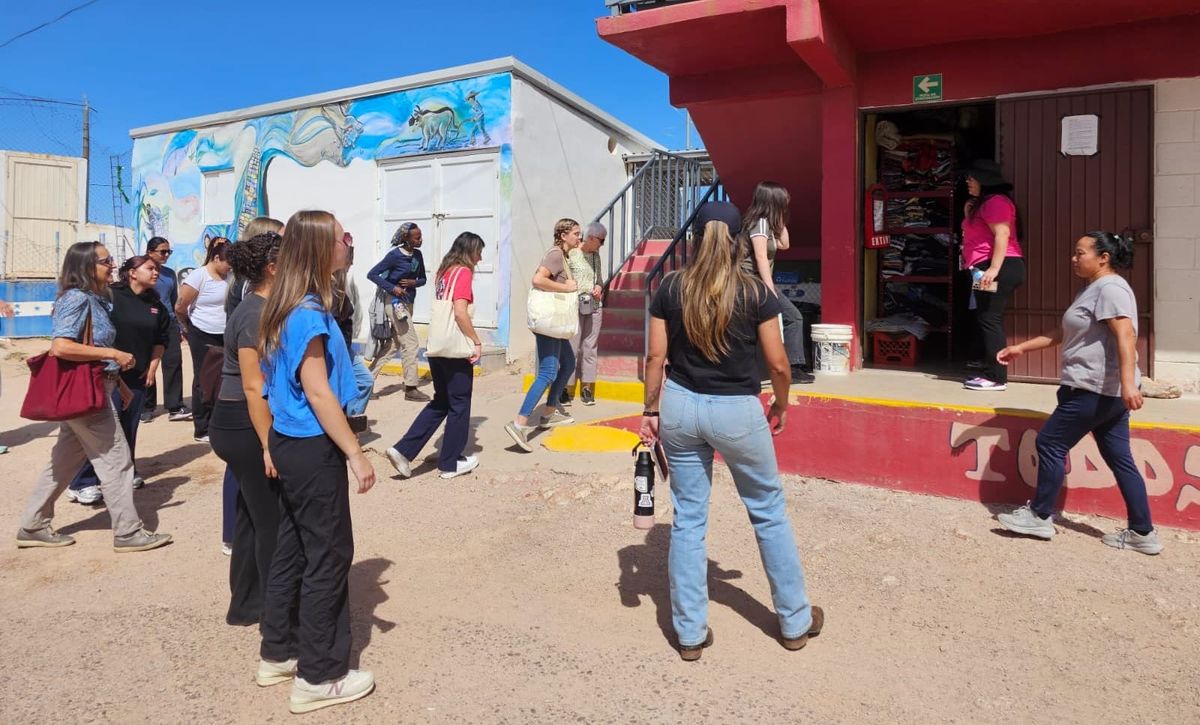
The Collaboratory also expanded across the border, with two exhibits displayed in Hermosillo and Guaymas, Mexico, through a partnership with the University of Sonora and the Inter-American Institute of Higher Education. The bilingual exhibits paired the work of NURS/HSD 250 students with that of Mexican nursing students reflecting on health resilience and migration.
The decision to create exhibits was intentional, rooted in the Collaboratory's belief that healing happens in community.
"It's one thing to read a journal article or see something on Instagram, which are very isolating individual activities. But an exhibit is a community event. You show up in person," Kiser said.
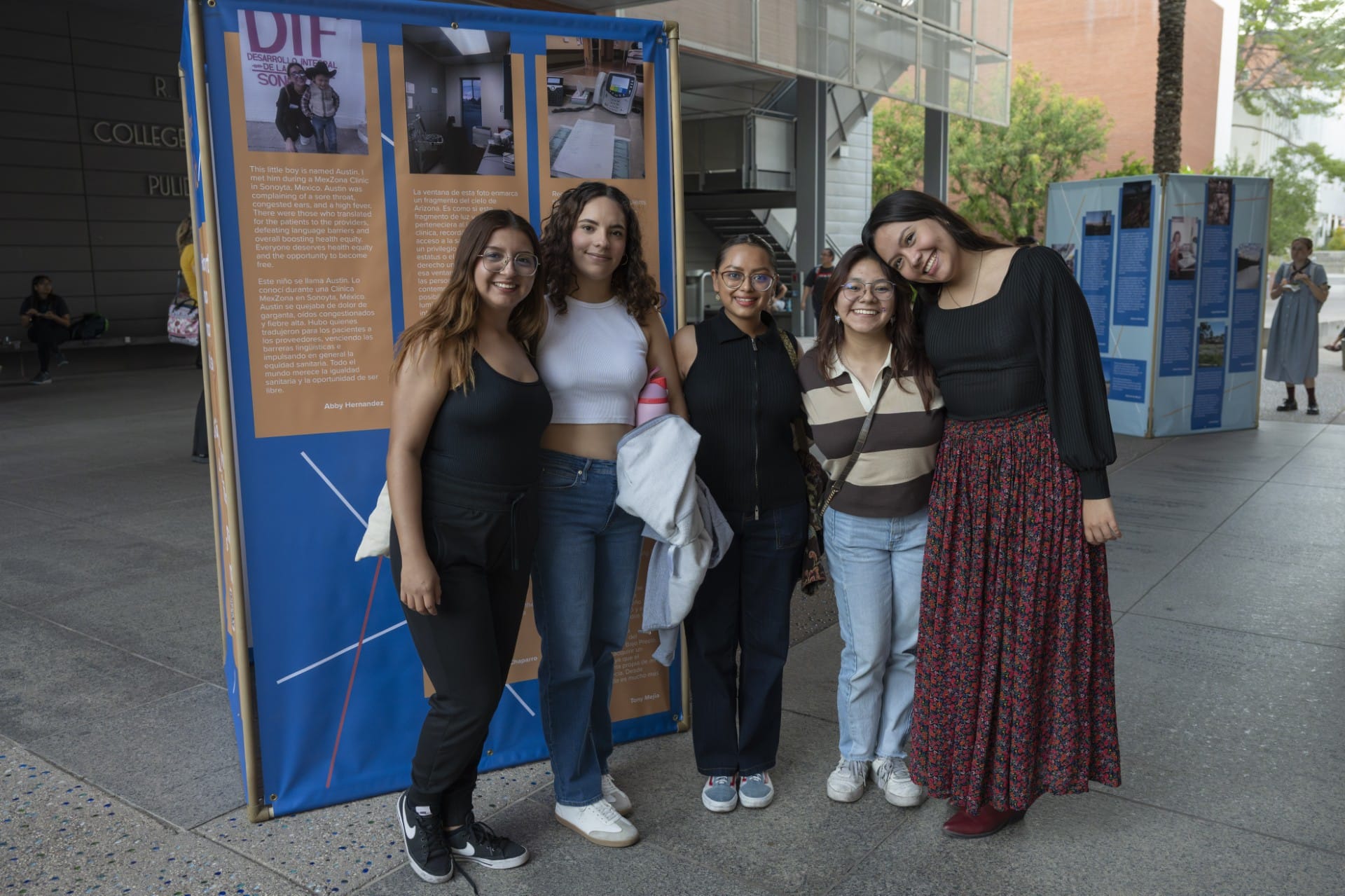
The HACC hopes to collaborate with more community partners and present at conferences, teaching attendees how an interdisciplinary and binational model can shape a more holistic understanding of health and wellness.
"There is no healthcare, if there's no equity," said Kiser, adding that 80% of a person's health comes from the social determinants of health.
Social determinants of health are conditions in a community environment that influence quality of life outcomes and risks, like having access to grocery stores, clean water and reliable transportation, according to the Office of Disease Prevention and Health Promotion.
"We have to prepare people to go out and be healthcare providers and educators and promotoras. So that they understand that part of our work is building community and making change," Kiser said. "That you can't just go into the clinic and take care of the person in front of you. You have to say, why does every single person I take care of can't afford their medication?"
Dominique Zuniga took NURS/HSD 250 in 2023 to bolster her nursing school application. Three years later, she's working at Tucson Medical Center as an operating room nurse.
Zuniga said she wouldn't describe herself as a creative person, but the class showed her how health and arts can blend together.
One of Zuniga's Photovoice images was a crowded bus stop, a reflection on how many people depend on public transportation to reach doctors' appointments and a meditation on the social determinants of health.
"Art isn't just painting, it isn't just sculptures. It's also noticing small daily things that relate to health in people's lives," Zuniga said.
Diana Ramos is a University of Arizona alum and Tucson Spotlight reporter. Contact her at diana@tucsonspotlight.org.
Tucson Spotlight is a community-based newsroom that provides paid opportunities for students and rising journalists in Southern Arizona. Please consider supporting our work with a tax-deductible donation.