
UA researcher builds ethics framework for tribal data
UA's Stephanie Russo Carroll co-created the CARE principles, an ethics framework giving Indigenous nations authority over how their data, knowledge and culture are collected and used.
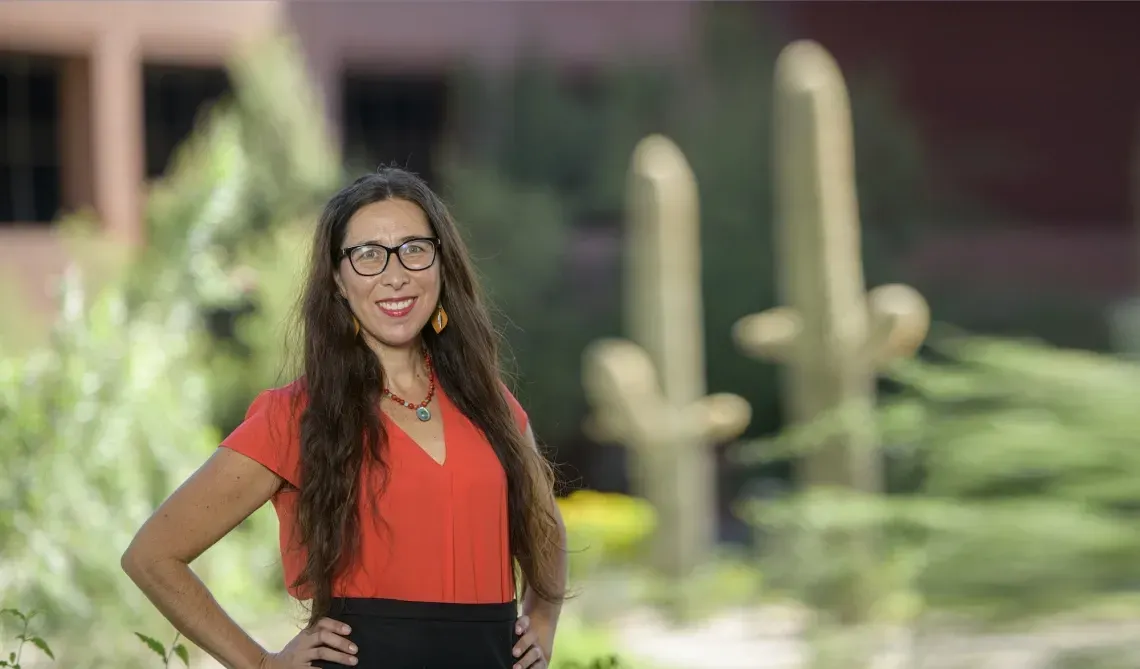
Stephanie Russo Carroll has spent two decades watching outsiders take from Indigenous communities without asking, from sweat lodge ceremonies sold at wellness retreats to a tribe's genetic data mined for research it never approved. Now she's built a framework meant to stop it.
For Carroll, the fight isn't abstract. It's personal, professional and, at times, has landed directly in her own inbox.
Carroll, who is Ahtna and a citizen of the Native Village of Kluti-Kaah in Alaska, and is also of Sicilian descent, is director of the University of Arizona's Collaboratory for Indigenous Data Governance and an associate professor of community, environment and policy.
She's also a founding member of the U.S. Indigenous Data Sovereignty Network and the Global Indigenous Data Alliance, and global chair of the Equity for Indigenous Research and Innovation Coordinating Hub.
She worked within Indigenous governance for more than 20 years before earning her doctorate in public health.
During that time, Carroll noticed tribal departments often weren't sharing data with each other, which she said made it harder to communicate their needs in ways that met government standards for statistical recording and funding.
She also found that many tribal governments hadn't been taught the federal laws around sharing protected health information, which only added to the inconsistency. Teaching tribal governments how to manage and share their own data effectively became the starting point for Carroll's work with Indigenous nation data.
But accessing and sharing tribal statistics isn't Carroll's only focus. She's also concerned with the ethics of how that data is collected and used, arguing that Indigenous knowledge, language and culture should only be gathered with consent, cultural understanding and mutual benefit, and that non-Indigenous researchers must ensure the data they collect is accurate.
"It is an ethical issue because Indigenous peoples, tribal nations, indigenous communities have rights and responsibilities about the care of their knowledge, languages, and information data," Carroll told Tucson Spotlight. "The systems that are built in this country and many other colonial structures are not set up to respect or even adhere to those (rights and responsibilities.)"
Your membership pays emerging journalists to cover Southern Arizona the way it deserves.
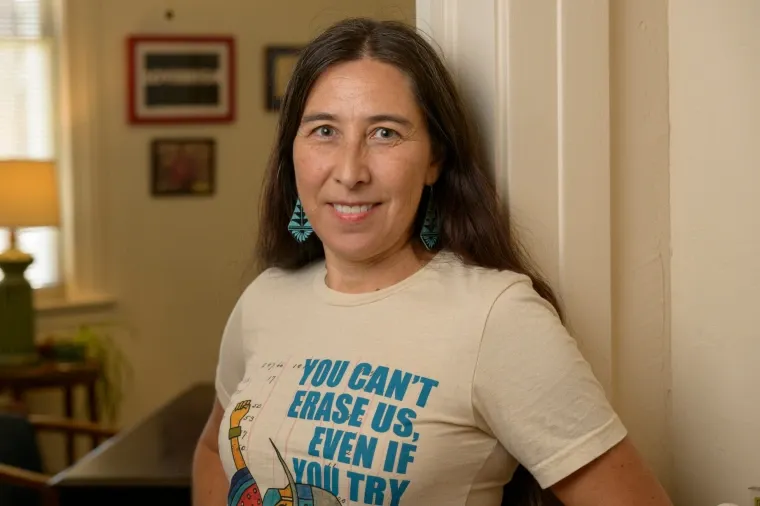
Carroll doesn't have to look far for an example.
Sweat lodges illustrate why this matters. For millennia, they've served as a sacred, private and medicinal practice. Today, it's common to see "sweat lodges" advertised at wellness retreats, recovery centers and other non-tribal businesses, a practice Carroll said runs counter to traditional Indigenous values and underscores the need for cultural knowledge in how these practices are used.
Many of those who studied and now offer the practice never sought permission from, or gave attribution to, the Indigenous nations they took it from, cutting those communities out of decisions about how their knowledge is used and any benefits that come from it. Some outside actors have profited from the practice while the communities it originated from saw no attribution or benefit. Similar patterns have played out in pharmaceuticals, environmental stewardship and governance.
To address these issues, Carroll helped develop a new framework for managing Indigenous data called CARE, short for Collective Benefit, Authority to Control, Responsibility and Ethics, in 2020. The principles are designed to build on existing scientific data standards to address the unique needs of Indigenous communities.
"Collective benefit" reflects the idea that Indigenous nations can use their data not only to generate much-needed income, but also to improve the health and well-being of all human and non-human relatives.
The Global Indigenous Data Alliance describes collective benefit as including "the right to create value from Indigenous data in ways that are grounded in Indigenous worldviews and realise opportunities within the knowledge economy."
"Authority to control" is meant to protect Indigenous nations from exploitation and prevent erroneous interpretations of cultural knowledge from spreading.
The principle also gives Indigenous nations and people the ability to set guardrails on how their data is used, something Carroll points to in the case of Arizona State University's use of Havasupai genetic information.
In 2010, ASU settled a lawsuit after using genetic information from the Havasupai people without their consent. Researchers had used the samples to test theories, including racist ones, that went far beyond what the Havasupai had agreed to when they gave their consent. Cases like this, Carroll said, show why the ability to control Indigenous data is necessary to keep bad actors from misusing it.
The "responsibility" principle of CARE affirms the right of Indigenous people, communities and nations to be the responsible party in how their data is collected, used and transferred.
That principle carries particular weight for Carroll following her own experience during the COVID-19 pandemic, when she said tribes were required to report data more frequently and differently than local and state agencies, and a resulting information breach ended up in her inbox.
"I haven't seen whether it was shared on purpose or by mistake, but it was sent out in an Excel spreadsheet over email," Carroll said.
The Hill reported the incident was caused by an employee error. Data on land holdings, expenditures, population and contact information for tribal representatives was leaked to others, including other tribes, according to the outlet's reporting.
The responsibility principle holds that whoever the data belongs to should be the one responsible for its stewardship and dissemination.
For Carroll, it comes back to a simple idea: the people the data is about should have the final say over what happens to it.
Carroll hopes these new ethical standards will serve as a framework for future policies and a point of legitimacy for Indigenous nations facing sovereignty challenges.
Katherine Martinez is a a Kickapoo-Potawatomi Native majoring in journalism at the University of Arizona and Tucson Spotlight intern. Contact her at martinezk29@arizona.edu.
Tucson Spotlight is a community-based newsroom that provides paid opportunities for students and rising journalists in Southern Arizona. Please consider supporting our work with a tax-deductible donation.