Campus groups ask University of Arizona to limit ICE
A coalition of University of Arizona groups in Tucson is calling for a sanctuary campus and wants administrators to respond by Oct. 23.
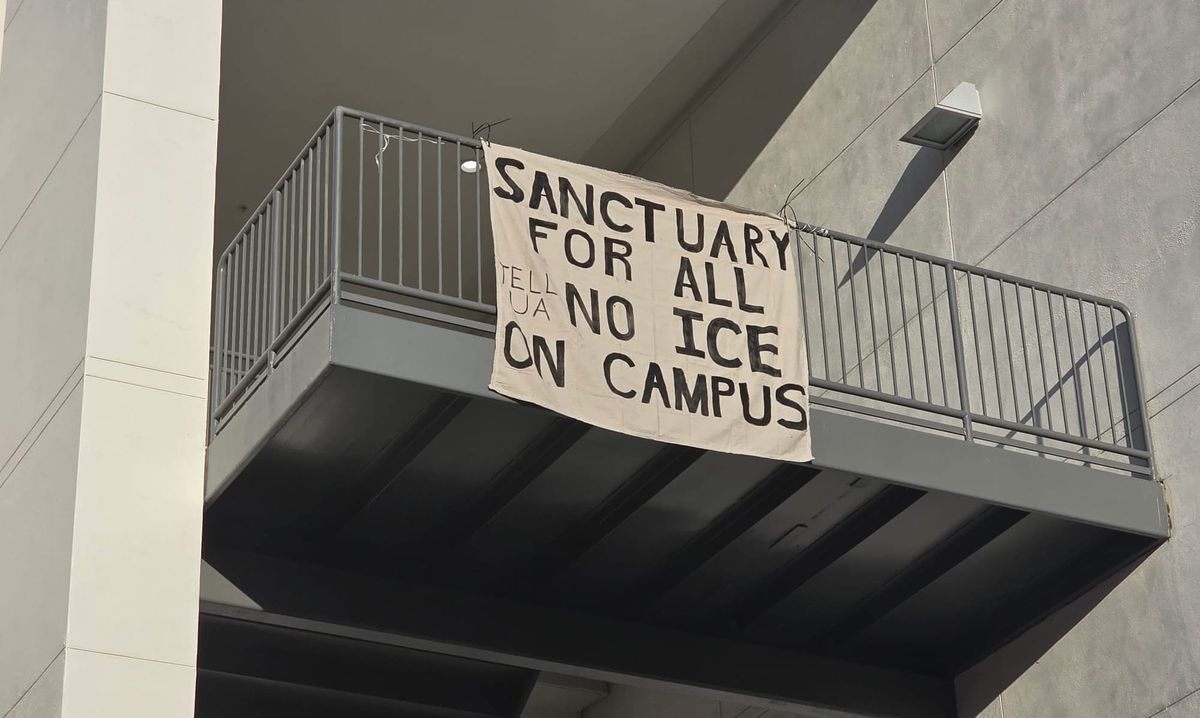
A coalition of University of Arizona student, worker and community groups called Monday for the university to declare itself a “sanctuary campus” and limit cooperation with federal immigration enforcement, giving administrators until Oct. 23 to respond.
The coalition sent its demands to the Office of President Suresh Garimella and the Office of the General Counsel, asking them to publicly commit to making the University of Arizona a sanctuary campus that protects all students and workers, including undocumented and documented members of the UA community, from violence sanctioned by the government, according to its press release.
The coalition’s demands center on a written university commitment barring U.S. Immigration and Customs Enforcement and U.S. Customs and Border Protection from campus, including Banner University Medical Center Tucson and UA student housing. They also want the university to refuse to share student information protected by the federal privacy laws FERPA and HIPAA with the Department of Homeland Security.
They call for protections for undocumented and documented students and workers against ICE arrests, including free legal representation, classroom toolkits and regular departmental trainings on what to do during raids.
Finally, they want security cameras, facial recognition technology and surveillance tools such as Flock license plate readers removed from campus; DHS barred from university job fairs; and the National Center for Border Security and Immigration in the Eller College of Management abolished, along with an end to funding and development of the AVATAR deception-detection system used at the border.
The demand comes after ICE detained some of the university’s international students, and the university has issued no public statement about the detentions.
The UA did not immediately respond to Tucson Spotlight's request for comment.
“We want a campus where the people who make the campus run get to make decisions,” said Kristen Guptill-Godfrey, a Ph.D. candidate and founding member of the campus group UA Resist. “Students who pay tuition, who are asking for a really good education … staff of the cultural resource centers, or whether it’s adjunct faculty … or even a tenured faculty member. They help the university run, therefore you should have a say in how it’s run.”
Stay informed without the overload.
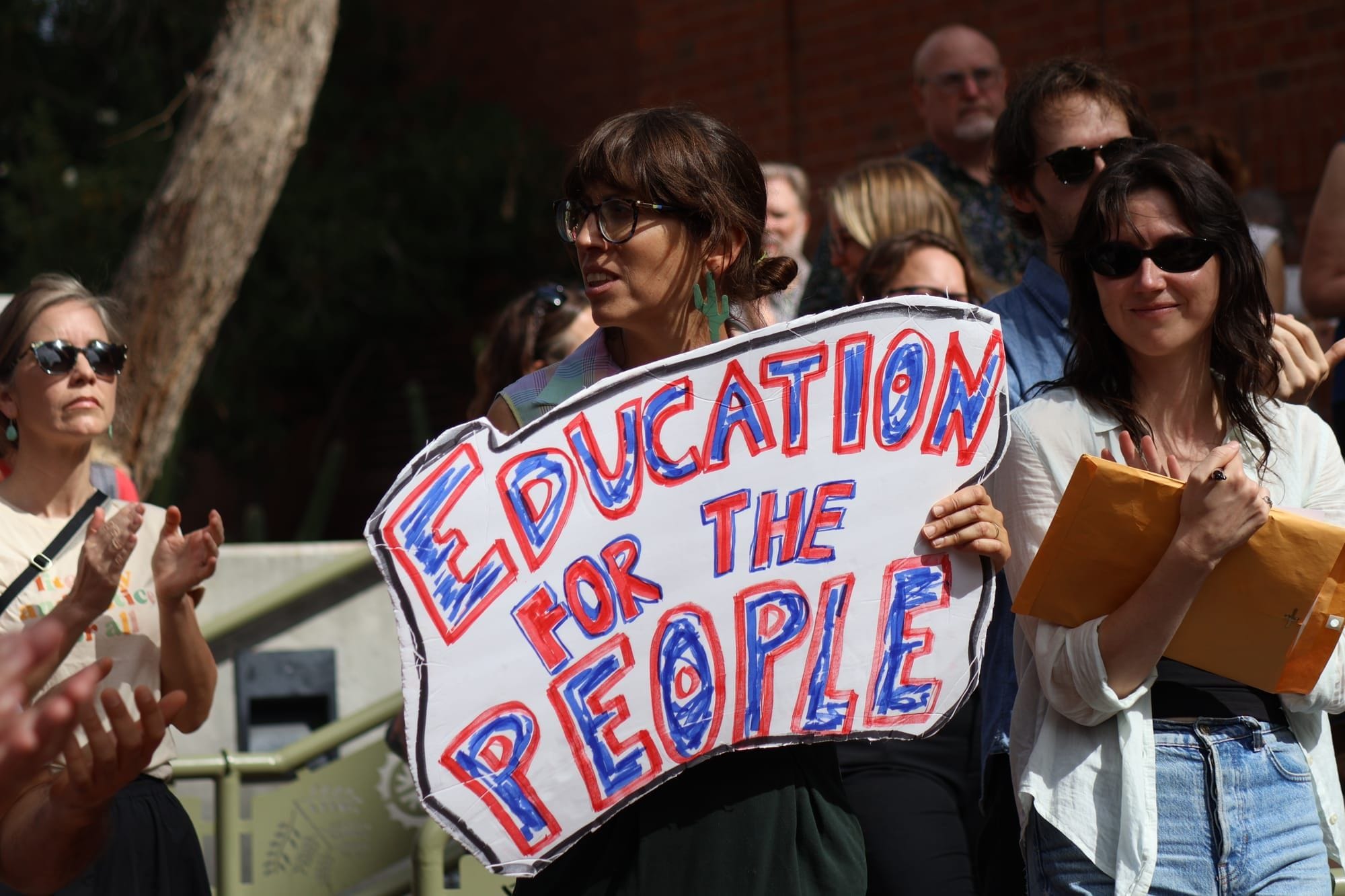
UA Resist includes students, staff, faculty and community members advocating for a campus that is accessible, anticolonial and democratic.
“(UA Resist is) a space for people to come and learn how to organize and how to support each other on campus … a space of students, faculty, staff, and community members,” Guptill-Godfrey said. “We identify as an anti-repression organization, fighting back against repression and fighting back against attacks on oppressed students and workers on campus.”
UA Resist was founded in January 2025 in response to executive orders terminating mandates, policies and programs focusing on diversity, inclusion, equity and accessibility.
About a month later, Garimella outlined how the university would respond.
“As a public institution, we will also continue to adhere to all applicable laws at the local, state and federal levels. This includes creating an inventory of our Diversity, Equity, Inclusion, and Accessibility (DEIA)-related programs, jobs and activities, and assessing the impact on the university community,” Garimella wrote in a Feb. 18, 2025, statement called “Sustaining our Excellence, Navigating Change.”
In response, student groups held rallies demanding the university keep its DEI efforts, and they delivered a petition with 3,500 signatures to administrators.
On May 27, 2025, the university announced the consolidation of its seven cultural resource centers.
“This new framework is rooted in a collaborative approach that reflects the university’s values and demonstrates our unwavering commitment to fostering belonging, inclusion and success for every Wildcat,” Provost Patricia Prelock said at the time.
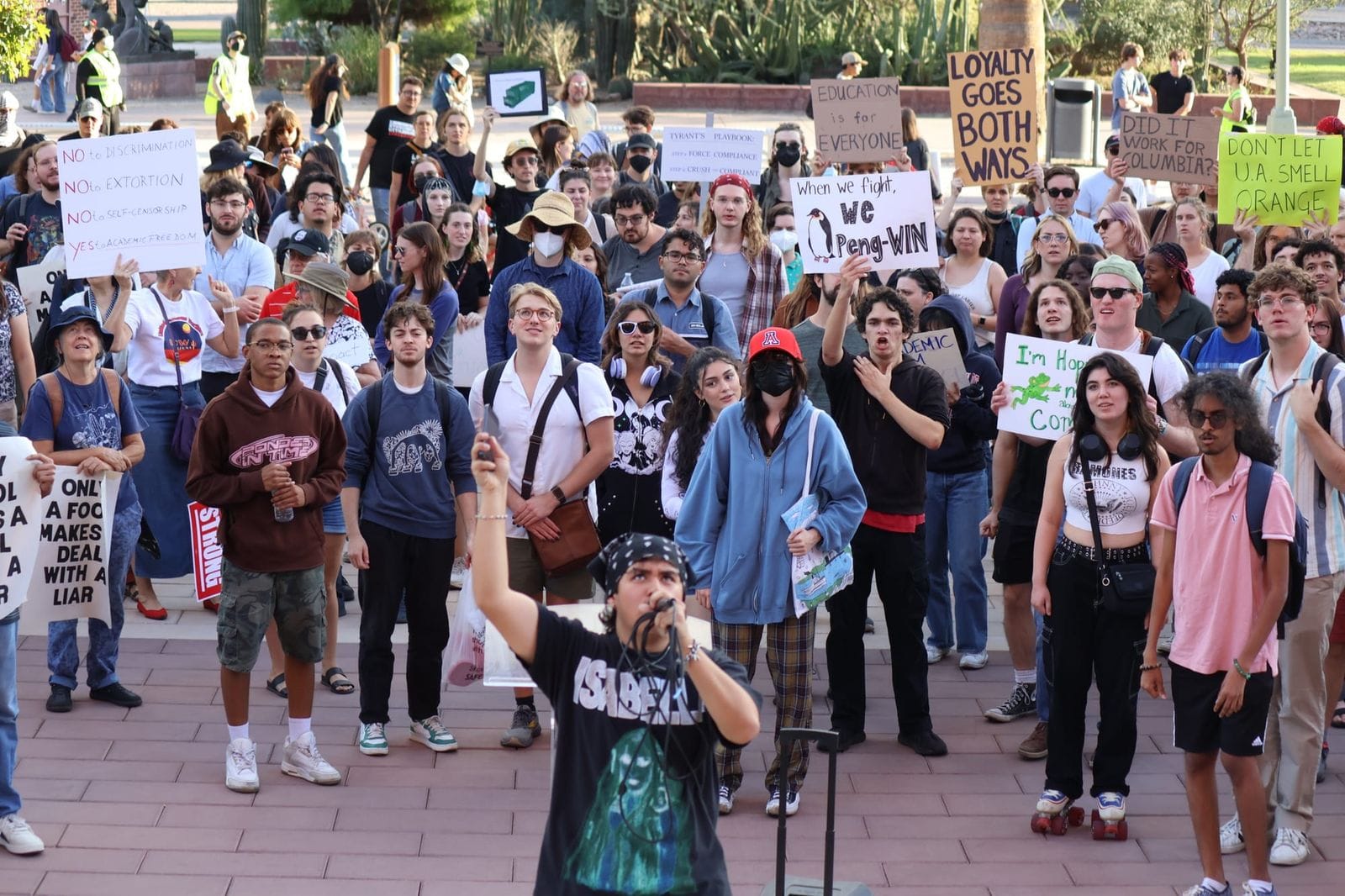
The next day, student groups rallied in response.
The centers’ independent websites were shut down in late July, and the centers were officially consolidated by the start of the fall 2025 semester. Their new names no longer include terms such as “LGBTQ+,” “African American” and “Asian Pacific American.”
Later that semester, UA Resist and several other student groups protested the 2025 Higher Education Compact, which was sent to the university and tied federal funding to new compliance rules, including a tuition freeze, a ban on considering race and sex, and new limits on international students.
The university declined to sign the compact and instead sent the U.S. Department of Education its own statement of principles in October 2025, but the campus community still doesn’t know what happened before, during and after the university considered the compact, Guptill-Godfrey said.
“That whole process was kind of made very secretive by (the) administration, and they really didn’t communicate about what they were doing. The campus community is not told whatsoever about it,” Guptill-Godfrey said. “If you’re not going to come to us, if you’re not going to talk to us, we’re going to go to you.”
An August 2026 Harvard CAPS Harris Poll found that among 2,100 registered voters, 47% had an unfavorable view of ICE.
Guptill-Godfrey said that kind of public opinion is part of why the coalition is pushing for a sanctuary campus now, arguing that negative attitudes toward ICE and CBP should carry over into the university’s partnerships and actions.
“There have been successful campaigns in which (universities) have said we will not cooperate with ICE and Border Patrol, and we will do everything in our power to keep our students safe,” Guptill-Godfrey said. “And our university has never said that.”
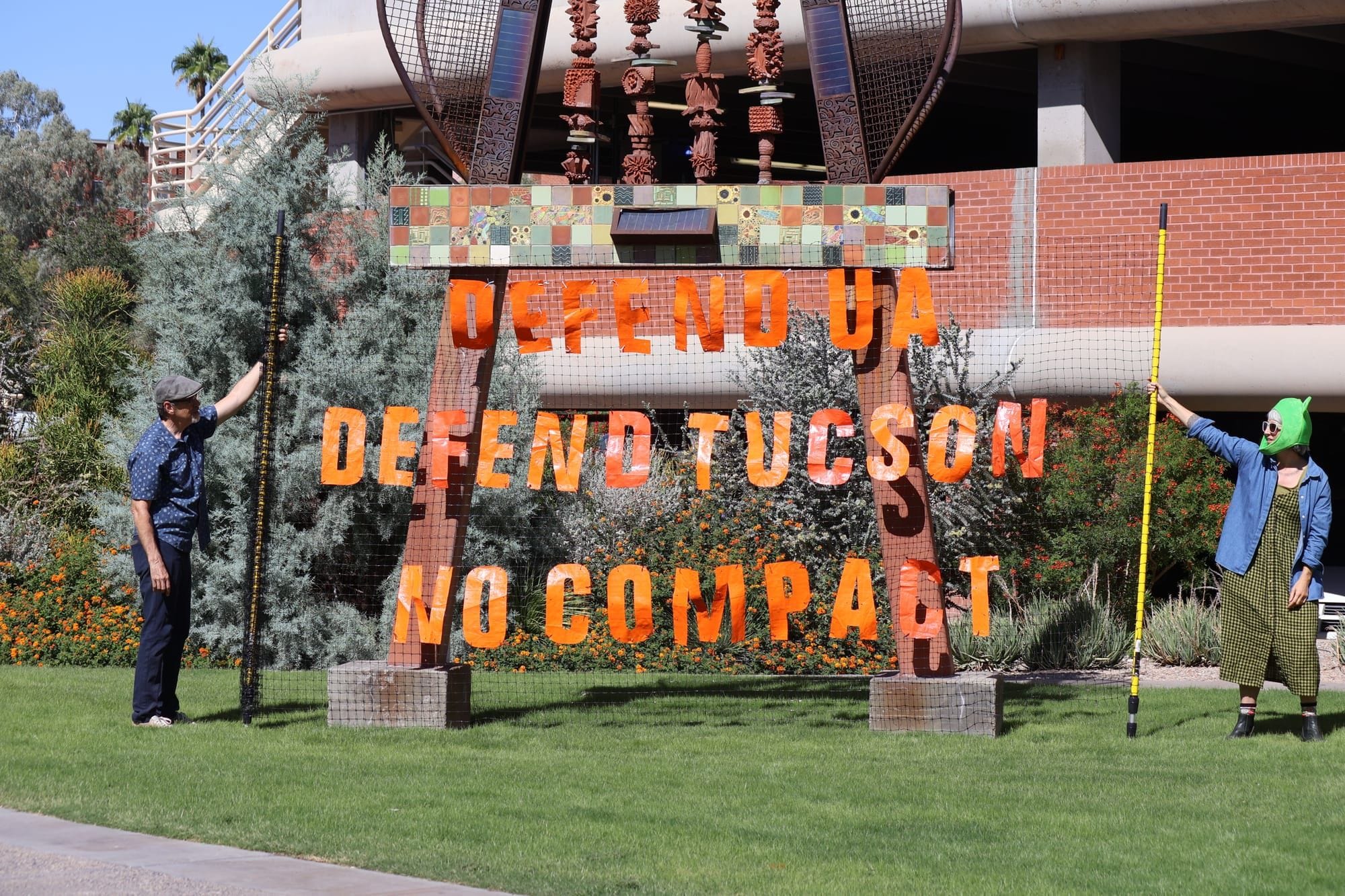
Other groups taking part in the campaign include DeFlock Tucson; Feminists Organized to Resist, Create, and Empower; the UA chapters of the National Lawyers Guild, Planned Parenthood Generation Action and Students for Socialism; and the University of Arizona chapter of the United Campus Workers of Arizona.
“We’re a wall-to-wall union that represents faculty … represents staff, and it also represents all students, as we believe intellectual labor and contribution does make you a worker in our union,” said Juliet Saxton, secretary for the UA chapter of United Campus Workers.
Saxton said the union’s push for workplace protection extends to students, too.
“Robust protection in your workplace … applies to students feeling safe to go to class without their physical safety or data being given away or in any way.”
Saxton said the university takes pride in its global exchange programs, both sending students abroad and welcoming international students, and that encouraging those exchanges without offering the highest level of protection is irresponsible.
Earlier ICE activity in Feldman’s Neighborhood, just north of campus, led students, staff and faculty to avoid campus altogether and left those who were there on edge.
“People didn’t want to come to campus, and people didn’t feel safe when they were already on campus,” Saxton said. “Those kinds of things affect people’s schooling, and it affects how they do their work.”
Resources for at-risk individuals have not been provided by the university but created by student organizations, including the UA’s chapter of the National Lawyers Guild, which has provided know-your-rights training to the UA community and signage for student spaces barring entry without a warrant.
“We believe that the university should, not just in word or in policy, but directly engage with the fact that this is our current climate, and these are the things that people are currently worried about,” Saxton said. “The alternative power that we have been building as organizations is also an example of how this campus can run.”
Topacio “Topaz” Servellon is a reporter with Tucson Spotlight. Contact them at topacioserve@gmail.com.
Tucson Spotlight is a community-based newsroom that provides paid opportunities for students and rising journalists in Southern Arizona. Please consider supporting our work with a tax-deductible donation.