Pima Community College seeks $250M bond in Prop. 430
Pima County voters will decide Nov. 3 on Proposition 430, a $250 million Pima Community College bond for maintenance, first responder training and campus upgrades.

Pima County voters will decide Nov. 3 whether to approve a $250 million bond for Pima Community College, the first the college has asked voters for in 30 years.
Proposition 430 would authorize the college to issue $250 million in general obligation bonds, which are repaid through property taxes.
The biggest chunks of the money would go to maintenance and upgrades. The college estimates $58.9 million for deferred maintenance, energy efficiency and IT, and $57 million to modernize academic spaces, including moving the Center of Excellence from East Campus and renovating space at Desert Vista Campus.
About $39.8 million would build a new Center of Excellence in Public Safety and First Responders, and $27.3 million would turn student support offices into one-stop centers for enrollment, advising, financial aid and testing.
Another $29 million would move the college’s police headquarters to the Downtown Campus, and $38 million would refinance existing revenue bonds.
The college says the refinancing would lower future interest costs and free up nearly $4 million a year for programs. The bond is intended to expand training in information technology, first responder fields and the college’s new bachelor’s degree program in teacher education.
For a home assessed at $250,000, the bond would cost about $31 a year, or roughly $2.59 a month, based on 20-year bonds.
Your membership pays emerging journalists to cover Southern Arizona the way it deserves.
Supporters say the money is needed.
“This proposition would allow PCC to not only cover operational expenses but continue to be a statewide leader in higher education,” U.S. Rep. Adelita Grijalva said in a letter supporting the bond. “Now more than ever, it is essential that we support our community colleges, especially here in Tucson and Pima County.”
The college says state capital funding ended in 2009 and state operating funding dropped to zero in 2015, a cumulative loss of $221 million.
“It has been 30 years since Pima College has asked voters to approve a bond,” former Tucson Mayor Jonathan Rothschild said in a news release. “The state does not provide any funding to Pima College. This is an opportunity for the citizens of Pima County to provide needed resources to its students directly for workforce training in areas Pima County needs workers most.”
Rothschild said Prop. 430 “will ensure a future with good wages for our young people and a strong Southern Arizona economy.”
Another supporter focused on one program in particular.
Lt. Richard Yrigoyen, a safety officer with the PCC Police Department, pointed to the EMT First Responders Program, which would receive a funding boost through the bond.
“There’s such a shortage in Pima County right now with First Responders,” Yrigoyen told Tucson Spotlight. “It’s not just police. It’s paramedics as well. This will help enhance and promote not just creating new jobs, but also retaining, training, just making that field overall better.”
Yrigoyen said he earned two degrees thanks to PCC, one of which helped launch his law enforcement career.
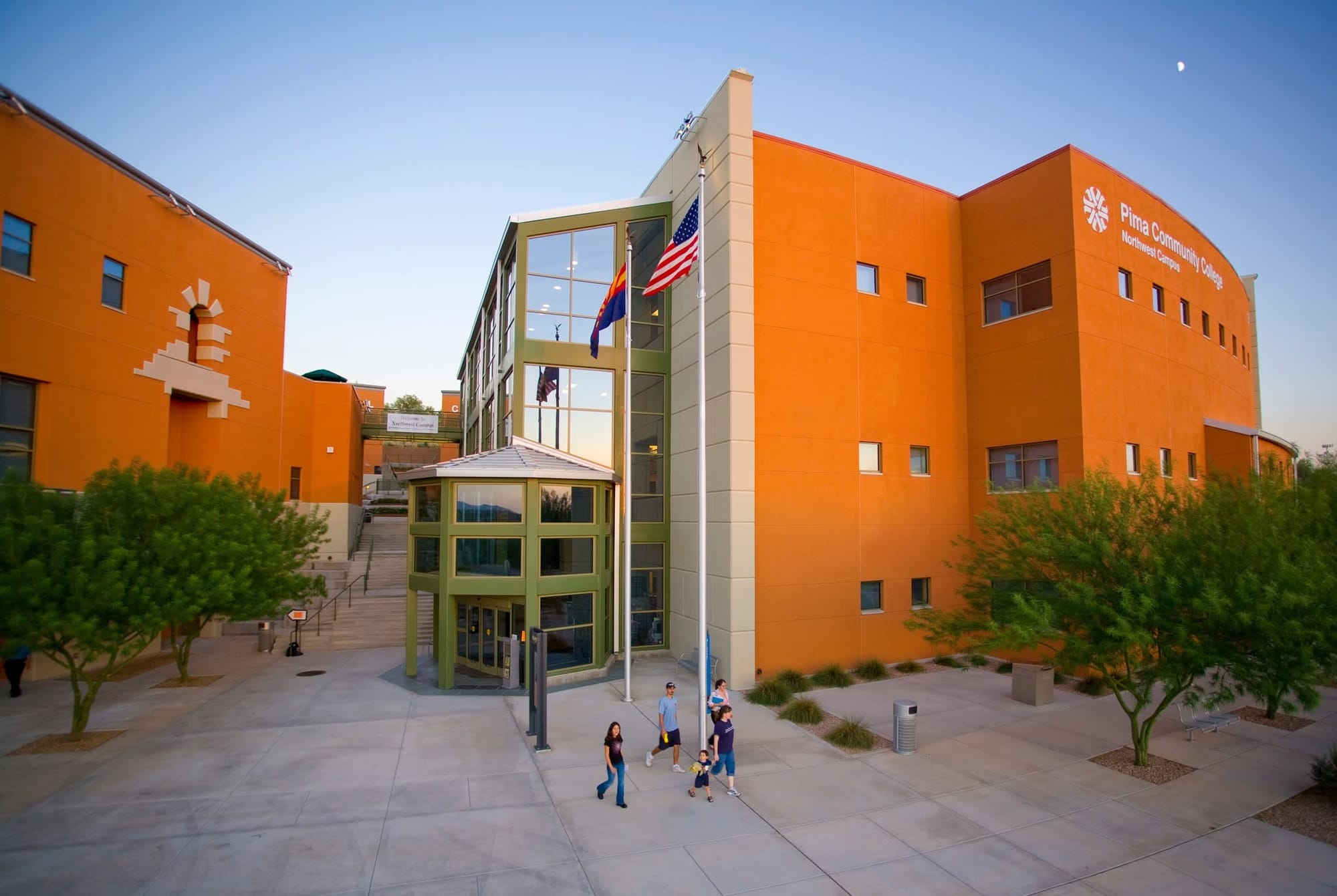
But at least one PCC alum, Carlos Mejorado Carrillo, opposes Prop. 430, arguing that voters approved a previous proposition, Prop. 481, to expand PCC’s spending authority about six years ago.
“PCC has completed facilities and services,” Carrillo wrote in a letter opposing the bond. “It has not published a clear promise-to-outcome accounting showing how prior investments improved completion, employment, wages, access and equity.”
Carrillo said PCC promised all of those outcomes at the time of the vote.
“The proposed bond also appears misaligned with how students increasingly attend PCC,” Carrillo said.
He explained that online instruction is becoming increasingly popular among PCC students, but only $3.9 million, or 1.6% of the total bond, would be allocated to college IT systems and infrastructure renewal.
Carrillo said that before PCC asks for more money, it should prove whether these projects and future designs match the anticipated enrollment and needs of the college.
He said his argument is not opposition to PCC or its mission, but rather a demand for equity, transparency and independent review before another long-term obligation.
If the bond fails, PCC says it could not address more than $56 million in deferred maintenance and may need significant tuition increases or have to reassess whether existing campuses remain viable.
Yrigoyen said he could not rule out the college passing costs on to students.
“Historically, the college has done everything in their power to avoid putting the burden on the student, but for me to say that, ‘It’s not likely going to happen’ is not a fair statement,” Yrigoyen said.
Quentin Agnello is a University of Arizona alum and freelance journalist in Tucson. Contact him at qsagnello@gmail.com.
Tucson Spotlight is a community-based newsroom that provides paid opportunities for students and rising journalists in Southern Arizona. Please consider supporting our work with a tax-deductible donation.