UA students push for climate action plan answers
A University of Arizona student senate resolution demanding transparency on the school's stalled climate action plan has itself stalled, leaving graduating students frustrated after four years of advocacy.

University of Arizona students are still waiting for answers on the school's stalled climate action plan, even after the student senate unanimously passed a resolution in April demanding transparency on the delays.
Senate Resolution S26009, co-authored by Ojas Sanghi and College of Medicine Sen. Alexander Jauregui Galarza, calls for accountability and transparency on the University of Arizona's proposed Climate Action Plan.
Because it was not signed by former ASUA President Adriana Grijalva before the end of the school year, it is stalled until at least the fall.
The UA is the only college in the state without a climate action plan, according to Sanghi, who graduated earlier this month.
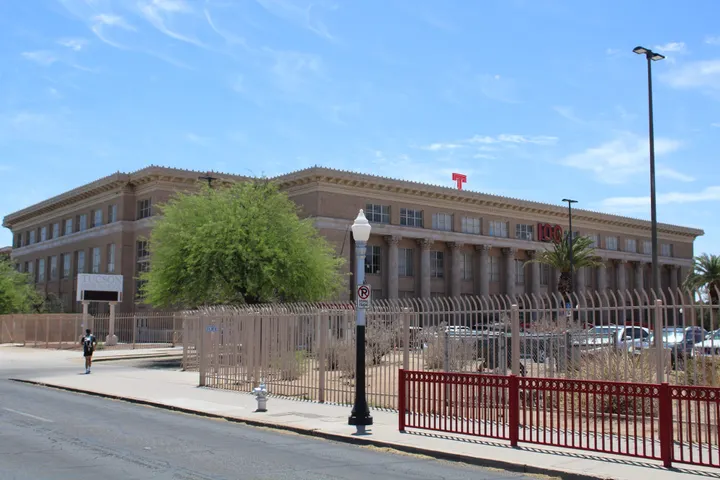
Sanghi was a member of the Youth Climate Coalition, a youth-led organization fighting for climate justice in the state. The group created a comprehensive climate action plan implemented by the Tucson Unified School District and began working on a similar climate action plan for the UA during Sanghi's freshman year.
Since then, he continued to press ahead with climate activism and stayed in contact with professors and the Office of Sustainability. The University of Arizona began collecting data for a climate action plan in 2022, building on a 2018 strategic plan to achieve carbon neutrality by 2040. The plan was put on pause in early 2024.
"It's still really disappointing that I started working on this climate stuff as a freshman and I'm graduating now and like four years have gone by and nothing has happened," Sanghi said. "What we consistently heard is that the administration isn't doing anything."
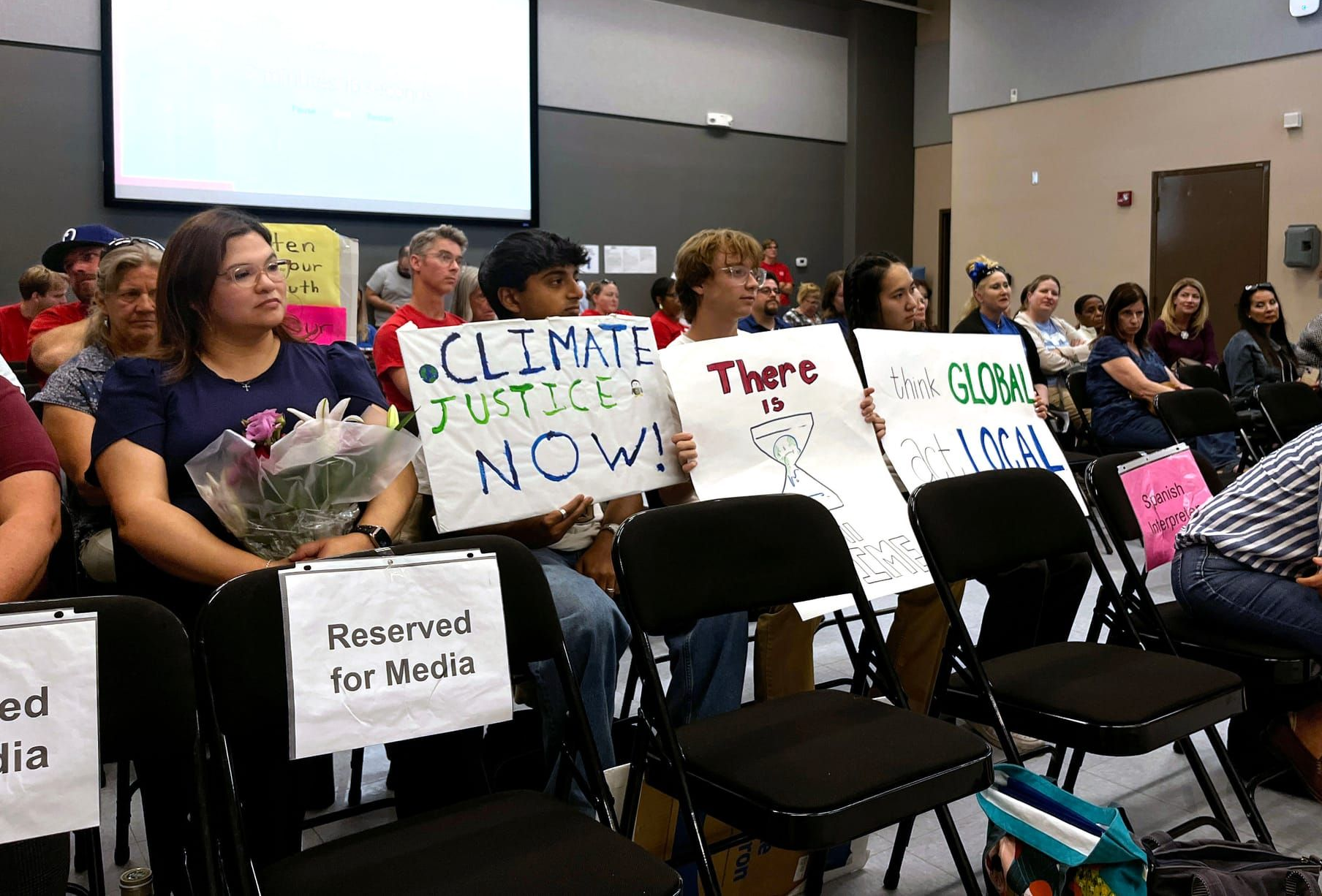
UA spokesperson Mitch Zak said the university initiated a strategic review of the Sustainability and Climate Action Plan in early 2024 to ensure its approach was "fully aligned with evolving priorities and available resources."
"We are actively learning from plans of other universities and from the City of Tucson's Tucson Resilient Together Climate Action and Adaptation Plan. The U of A launched its own Sustainability and Climate Action Plan process in 2023, and we are committed to getting it right," Zak said in an email. "That review is ongoing as the Action Plan process remains active, including continued engagement with university leaders to ensure the plan is thoughtful, actionable, and aligned with the university's Strategic Imperatives."
Sanghi said the resolution was a last resort to pressure the administration into action.
The April resolution requests that the Office of Sustainability and other related departments release each stage of the university's climate action plan and provide an explanation for why the plan has been delayed, along with regular updates on its status and implementation.
The resolution asked for the documents to be released within 21 calendar days.
"Student voices are an important part of this process, and we are committed to transparency as the Sustainability and Climate Action Plan moves forward," Zak said. "ASUA Senate will receive a full update on the Action Plan's progress and next steps in the process this fall."
Students, however, say the university's response has been slow in coming. Galarza got involved with the climate resolution after suggesting Sanghi submit a public records request for the information.
"As senators our whole job is to listen to students, so it was mainly the students who were the backbone of all of this," Galarza said.
Sanghi worked with College of Architecture, Planning and Landscape Architecture Sen. Tommy Gutierrez and Executive Vice President Benjamin Huffman on the resolution. He said he was glad to have made some progress on climate action.
"It's really like trying to snatch a victory from the jaws of defeat in terms of where we have to be and where we are not," Sanghi said.
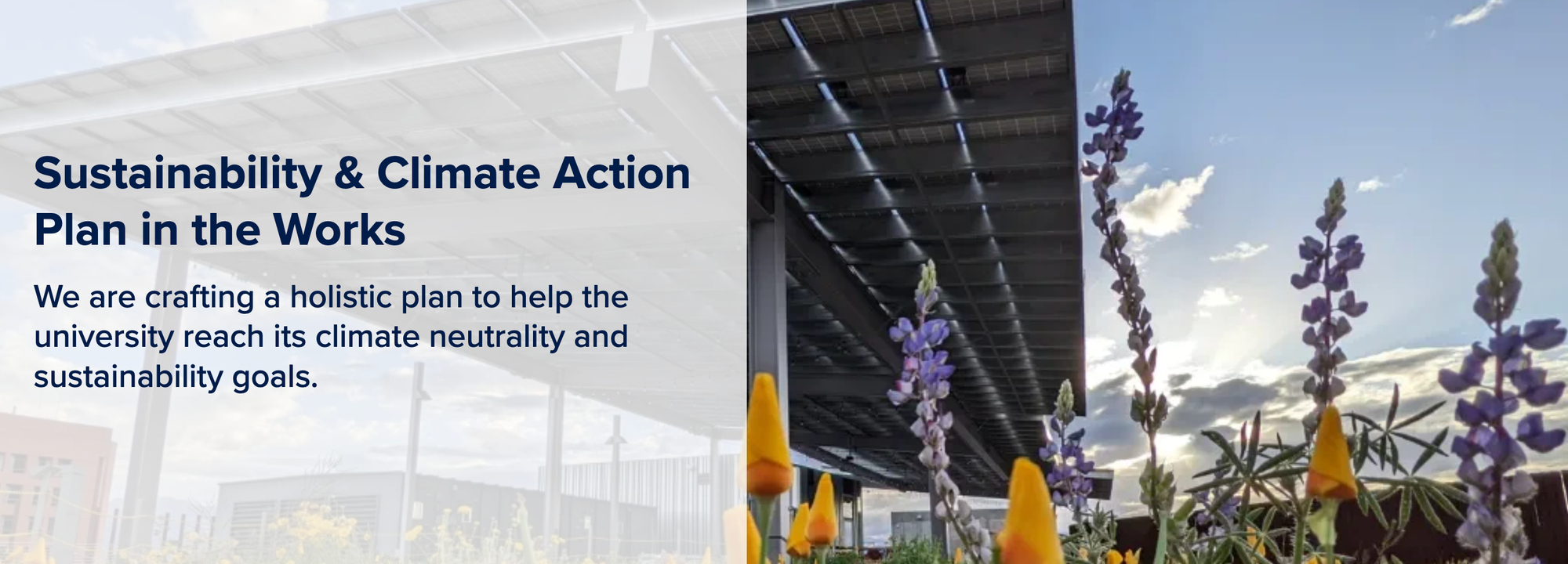
The Office of Sustainability's website says it has been working with senior leadership to realign aspects of the plan with current institutional priorities, finances and governance structures.
Arizona State University's climate plan aims to increase the university's ability to survive climate change disruption and to anticipate, adapt and thrive. The plan is split into a Climate Resilience Emergency Management Plan and the Climate Resilience Enterprise Planning Framework.
Northern Arizona University has also committed to carbon neutrality, with a plan that prioritizes resource conservation, clean energy purchasing, decarbonized heating and cooling, vehicle electrification and greenhouse gas tracking.
Throughout the resolution process, Galarza said bureaucratic pushback during revisions slowed the measure's progress, though he said they remained committed to working with the administration.
"You don't want to be too forefront, but at the same time it's been like four years," he said. "People who went into the UofA, knowing about the (plan), still haven't gotten anything from it now that they're graduating, so now people are concerned."
Climate plans on college campuses are not new. More than 1,000 college institutions have pledged to cut emissions in half by 2030 and go net-zero by 2050 globally, with 400 institutions in the United States having signed a formal climate commitment, according to Second Nature, a nonprofit focused on accelerating climate action in higher education.
The University of Chicago, Penn State University, Howard University, Yale University and other institutions have created climate action plans with help from Second Nature.
The United Nations Development Program has noted that universities are uniquely positioned to advance climate action through research, teaching and their broad reach in society.
The Association for the Advancement of Sustainability in Higher Education is another organization that supports colleges in creating climate action plans, offering frameworks and resources for institutions working to become more sustainable.
Sanghi acknowledged that shifting priorities and other factors may have contributed to the delays, but said that was not an acceptable excuse. He said he was frustrated and angry with how the university administration operates.
"Throughout my time working with them, the conclusion I've come to see is that (administration's) last priority … is students," he said.
Galarza said the administration's pushback discourages students from speaking up, though he said it has not stopped him.
"I'm not discouraged by that, but I just think it's weird that it happens," Galarza said. "ASUA or Senate leadership I feel like should be more inviting."
Sanghi said the resolution could return to the Senate floor in the fall for another vote, adding that the timing might be better for ASUA members and senior leadership.
"I can envision a future when the UA actually cares about climate action and more broadly invests in the students," he said. "But one of the most important things is that we advocate not just because we're annoyed and because the system has to change, but because there's hope for a better system."
Arilynn Hyatt is University of Arizona alum and Tucson Spotlight intern. Contact her at arilynndhyatt@arizona.edu.
Tucson Spotlight is a community-based newsroom that provides paid opportunities for students and rising journalists in Southern Arizona. Please consider supporting our work with a tax-deductible donation.