
UA free clinic fills gaps in women's health care
The University of Arizona's student-run CUP women's clinic offers free preventive care, no insurance required, filling critical gaps for Southern Arizona women who lack access to health care.
When a pregnant woman with no insurance and no prenatal care walked into the University of Arizona's CUP women's clinic, it wasn't a backup option, it was her only chance to know her baby was okay.
The woman received an ultrasound and was able to hear her baby's heartbeat, thanks to the volunteer-run facility, one of the UA's Commitment to Underserved People clinics.
The CUP women's clinic offers free preventive and primary care, referrals and diagnostic tests to Southern Arizona women who have no other source of health care, no insurance required.
It also gives students early exposure to community-based medicine alongside mentorship and observation from physicians and experienced medical students.
"We're learning in the classroom that prenatal care should be frequent, it should be accessible, that's really important for the baby and for mom," said UA medical student Sarah Teeman. "And knowing that this poor patient, like we were her only option, really impacted me."
In the United States, women have the highest rates of delayed or missed health care due to cost, according to a study comparing access to health care and insurance across 13 other high-income countries.
About 9% of women under the age of 65 in the United States do not have health insurance coverage, according to the 2025 Early Release of Estimates From the National Health Interview Survey.
Experts say people with health insurance are more likely to seek preventive care, manage chronic conditions and receive treatment, contributing to better health outcomes. Within the gaps of the U.S. health care system, free clinics have become a critical stopgap.
Share Tucson Spotlight with a friend. Every signup earns you a raffle entry to win a gift card to a local Tucson favorite. Four winners drawn August 1.
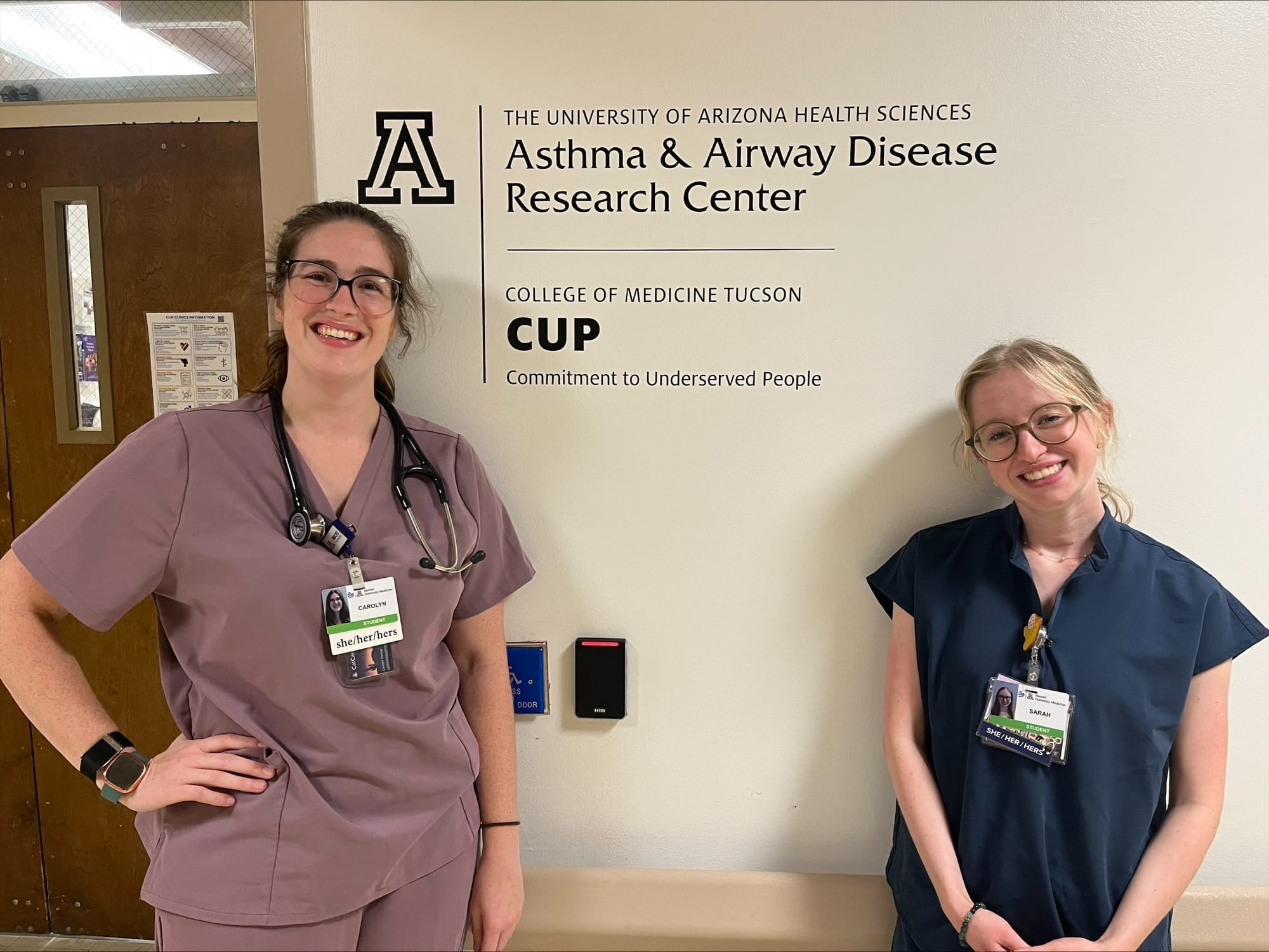
The CUP program was created in 1979 out of students' desire to serve the community during their time in medical school. Even then, students saw the lack of access to health care facing the local population.
"CUP is not just an extracurricular for a lot of us," said CUP student leader Isabella Steidley. "I think for a lot of us, it's an opportunity to give back to the place that we are so privileged to study in and none of us would be able to learn medicine if it wasn't for the generosity of our community members letting us, you know, be students."
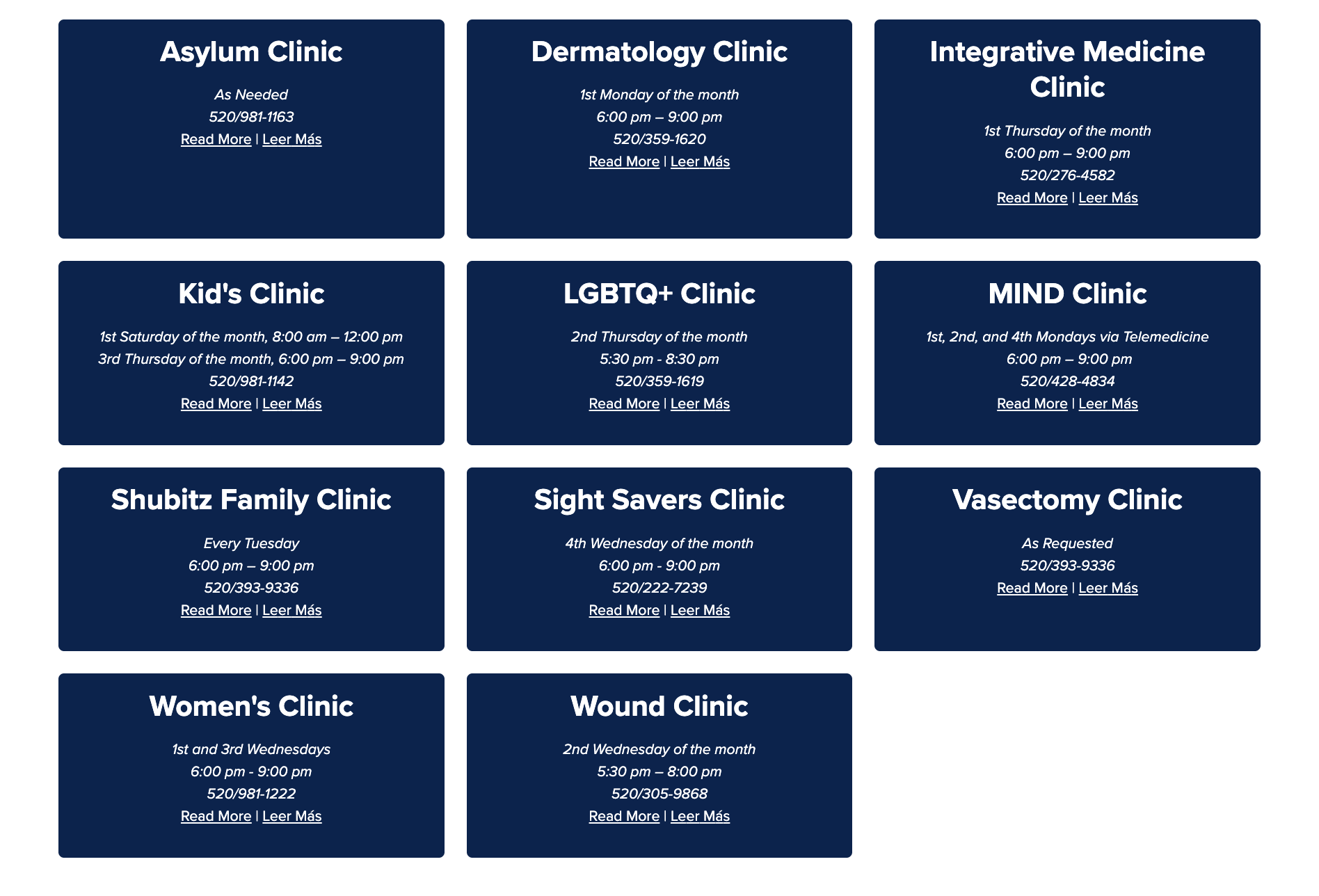
The women's clinic is one of 12 in the CUP system, including a kids' clinic, the Shubitz Family Clinic, an LGBTQ+ clinic, a mental health clinic, a wound care clinic, a vasectomy clinic, an asylum clinic and a dermatology clinic.
The women's clinic runs in partnership with Emerge! Center Against Domestic Violence to assist women and children who are shelter residents and have experienced domestic violence. The clinic is open three Wednesdays a month from 6 to 9 p.m., and patients must call to schedule an appointment, as walk-ins are not allowed.
How the clinic works
An appointment at the CUP women's clinic takes about an hour. Patients meet with a first- or second-year medical student and a third- or fourth-year medical student to discuss health concerns, including but not limited to contraceptives, irregular periods and sexually transmitted infections.
Medical students identify a diagnosis and present it to the volunteer physician, who evaluates and solidifies the diagnosis and treatment plan.
After the physician approves the plan, students provide it to the patient, with interpreters available for patients with limited English proficiency.
At the end of the conversation, patients might get their blood drawn, receive immunizations or a Pap smear, or schedule a follow-up visit.
Once a month, the clinic holds a specialized procedure day, when an obstetrician-gynecologist provides care such as colposcopies and transvaginal ultrasounds.
The women's clinic sees about 12 patients in a typical clinic day and has a monthlong waiting list. Its evening schedule allows for more student availability and helps patients who aren't able to take time off work, making it more accessible to the public, Teeman said.
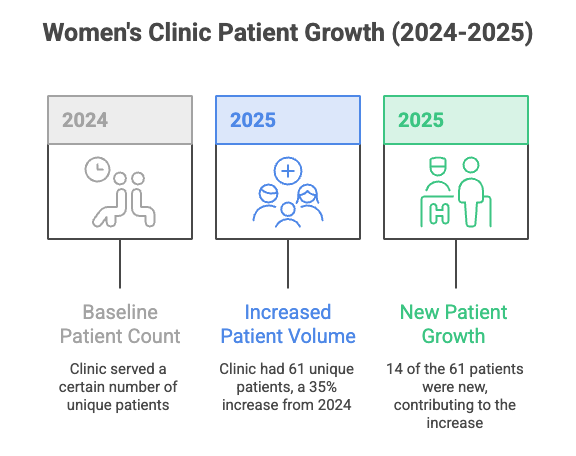
In 2025, the women's clinic had 61 unique patients, 14 of them new, a 35% increase from 2024. Many of the visits are follow-ups with patients who come back several times.
The CUP clinic system served 384 unique patients in 2025 for a total of 1,031 patient visits, averaging 2.7 visits per patient.
CUP also has a care connections team made of volunteer medical students that operates like social workers, directing patients to community resources like food banks or referring them to other accessible clinics, like Clinica Amistad and El Rio Health, which operate on a sliding fee scale.
Hands-on community engagement
All CUP clinics are run entirely by volunteer medical students and volunteer physicians. About 90% of students participate in CUP within their first two years of medical school, drawn in part by the program's reputation for hands-on community engagement.
"Finding out that University of Arizona had the CUP program that was completely student-run was really exciting for me," said Steidley, explaining that CUP is a central part of students' medical education experience.
By participating in CUP, students can earn a CUP Community Service Track distinction for their volunteer time. But even after completing all the track distinction requirements, some decide to continue volunteering.
"I continue to do these clinics because I really enjoy them. I really enjoy being able to meet with our patients and being able to help," said second-year medical student Carolyn Dunlap, who has already completed CUP track distinction hours. "I think this isn't just a good opportunity for me to be a better physician tomorrow, but I really like being able to help these patients at the moment."
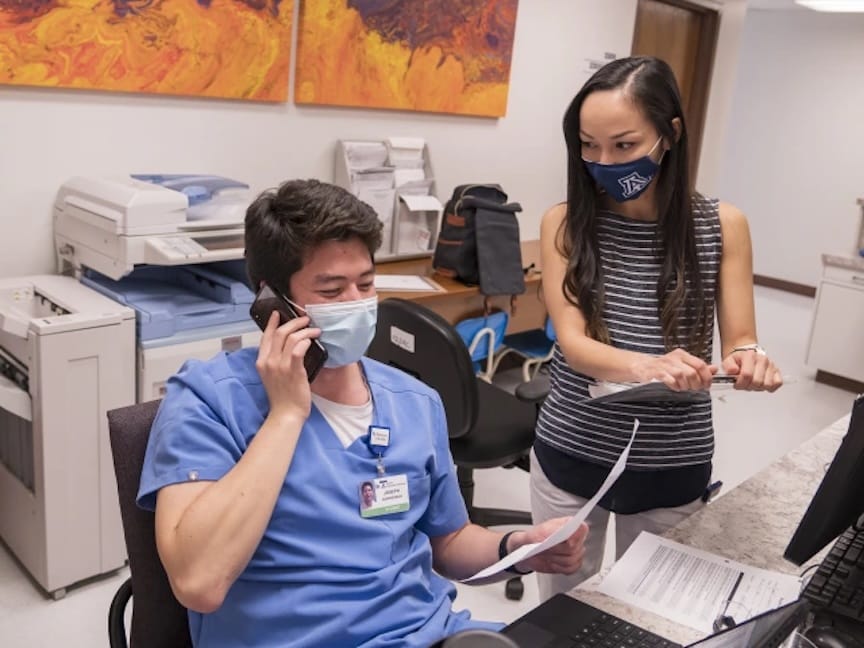
During a time when she was between jobs and without insurance, Dunlap said a program like CUP would have been a game changer and spared her a lot of stress.
"I was astounded, like absolutely blown away with how many services these clinics offer," Dunlap said. "I see how powerful these clinics are while I'm in it and volunteering, and I really just think it's so amazing that we can provide the service."
In the same way, the clinics offer a source of optimism about the U.S. health care system.
"Being involved in Women's Clinic and CUP in general, I actually feel like I'm making a difference, and I'm not just upset at the system, but, in some small way, I'm making a difference in my community, and helping make sure people can access a healthcare setting," said Teeman, who is also pursuing a master's degree in public health.
Limited resources, hard choices
As a free clinic, CUP can't do it all.
CUP relies on funding from the College of Medicine – Tucson for administrative expenses, along with in-kind and monetary donations students raise throughout the year through fundraising events like bake sales and charity 5Ks. Because CUP is a registered club with ASUA, volunteer students pay a $20 club fee that goes toward medical supplies, tests and labs for patients.
Steidley said money could solve a lot of the clinic's limitations, from arranging patient transportation to ordering a chest X-ray whenever a cough seems concerning or running a full battery of labs for someone who hasn't seen a doctor in 20 years, but the clinic simply doesn't have the resources to do it all.
Acknowledging these shortcomings is part of the students' learning journey, as they balance decision-making based on what's absolutely necessary to ensure the patient is cared for, to the best of their knowledge and resources.
CUP receives a $15,000 in-kind donation each year from Sonoran Quest Laboratories for labs. The clinic caps lab requests at $100 per patient visit, though exceptions are made for patients who require urgent testing.
Even with those limits, the need patients bring through the door often outpaces what the clinic can provide.
"Reading some of the reasons that people are needing to be seen, I'm just shocked, because it's something that maybe should be urgent care," Teeman said.
With the CUP women's clinic open just three days a month for three to four hours at a time, it can't offer the same continuity of care as a primary care provider with an office open daily for longer hours.
"We want more patients, but also we can't support the continuity of care that all of our patients might need," Steidley said.
Despite limited resources, CUP leaders believe the clinics serve both the community and medical students well, gradually improving access to health equity.
"More people should know about the resources available to them, and CUP is just another community resource that we want the community to feel like is accessible to them," Steidley said.
CUP teaches students that being a doctor goes beyond building a knowledge bank of diseases and treatments, and that learning what questions to ask is just as important as studying. Those questions may not be directly related to a patient's health problem but instead to their overall life, such as access to reliable transportation.
"Volunteering at these CUP clinics, it's seeing the process, but also seeing what are the different challenges that are very related to medicine, but not things that we explicitly learn about in a textbook. All of those things, I think, will definitely make me a better doctor," Dunlap said.
Diana Ramos is a University of Arizona alum and Tucson Spotlight reporter. Contact her at diana@tucsonspotlight.org.
Tucson Spotlight is a community-based newsroom that provides paid opportunities for students and rising journalists in Southern Arizona. Please consider supporting our work with a tax-deductible donation.