Tucson's Louis Market reopens as cultural arts center
A historic south side corner market has reopened as the Louis Market Center for Cultural Organizing, the result of two decades of community work by Regeneración and the Southwest Folklife Alliance.
A former corner market on Tucson's south side that once let families buy groceries on credit has reopened as a community cultural center, the product of two decades of organizing and two years of neighborhood conversations about what the space should become.
The project is a collaboration between Southwest Folklife Alliance and Regeneración, an intergenerational grassroots organization that has spent 20 years working with community members in Tucson's southern barrios.
"Back in 2010, a lot of the needs back then was access to affordable, healthy, organic food," said Nelda Liliana Ruiz Calles, co-director of Regeneración. "We focused on installing backyard gardens. We've installed over 200 gardens here in the south side … really just creating a space for convivió, to convene, a safe place for people to come learn together … but really utilizing culture as a way to bring people together and foster leadership."
By 2015, Calles said, the organization's advocacy work began to gain institutional support, with a focus on not just expanding access to resources but getting them embedded in the classroom.
Regeneración's Doce Barrio Food Waste Project taught 20 students from Pueblo High School how to use contemporary ethnography to practice research that centers individuals or communities and their well-being.
"(That's what) we can do when we come together, and we're curious together, and we ask questions, we can come up with the solutions of many barriers that we face … getting speed bumps, beautifying the neighborhood, ensuring that there's social cohesion, that we can change," Calles said.
Around the same time, Tucson received its UNESCO City of Gastronomy designation, prompting organizations including the Community Food Bank of Southern Arizona, the Community Foundation for Southern Arizona and the Southwest Folklife Alliance to document the southside and connecting Calles with the Alliance for the first time.
"I say it was love at first sight, because the way that they spoke about their values and their ethics and what they care about was so aligned with who we are, as humans, as cultural workers," Calles said.
From 2016 to 2018, students conducted more than 220 interviews to build a cultural asset map capturing what community members wanted improved or expanded in their neighborhoods.
The research produced three recommendations: strategies to prevent gentrification, a neighborhood council model rooted in longstanding communal practices rather than homeowner association structures, and the creation of a community fund.
In response to those concerns, Regeneración is developing the Doce Community Land Trust. Community land trusts are resident-governed nonprofits that build long-term community wealth through projects like shared-equity homeownership, affordable and cooperative housing, local commercial spaces, agricultural projects and land conservation across urban and rural settings.
"In 2023, Southwest Folklife Alliance applied for federal funding with the intention of purchasing a building to put under the land trust that the community is starting," Calles said.
Calles and her team spent two years canvassing the neighborhood with their vision for a cultural center, choosing Louis Market because of its proximity to schools, churches and other gathering spaces. They purchased it in 2023, with community input shaping plans for its use.
"It was really important for us to let our neighbors know first. We wanted people to know what our vision was for this space, but also let our neighbors know that there's still room to dream together about what this space can be," Calles said. "We're stewards of these lands. How can we be stewards of each other as humans, too?"
Louis Market, at 4009 S. 12th Ave., was historically owned by members of Tucson's Chinese community and is remembered as a neighborhood staple where families could buy fresh produce on credit so no one went hungry.
Funding for the project came through grants from the National Endowment for the Arts, the College of Fine Arts at the University of Texas and the National Performance Network.
The Louis Market Center for Cultural Organizing opened April 19 with interactive art installations, lion dances and processions led by members of Tucson's Chinese, Indigenous and Hispanic communities.
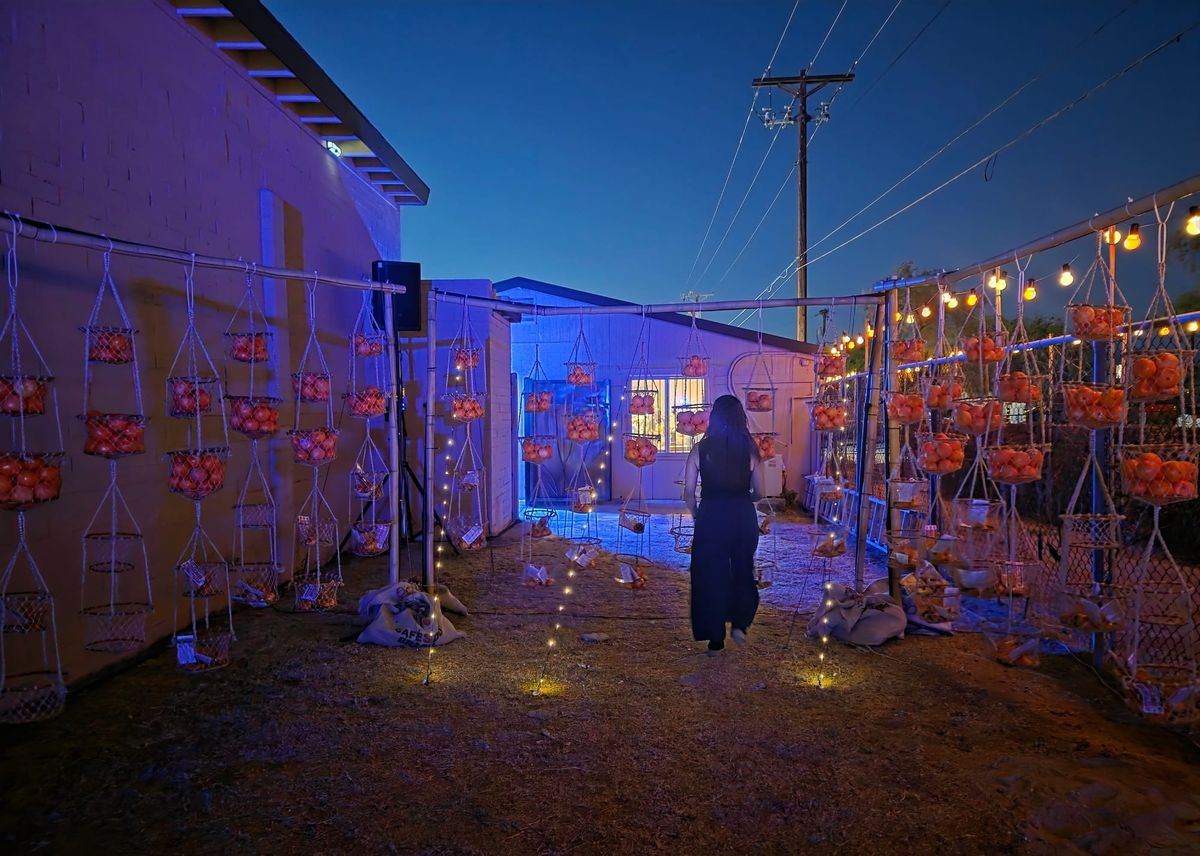
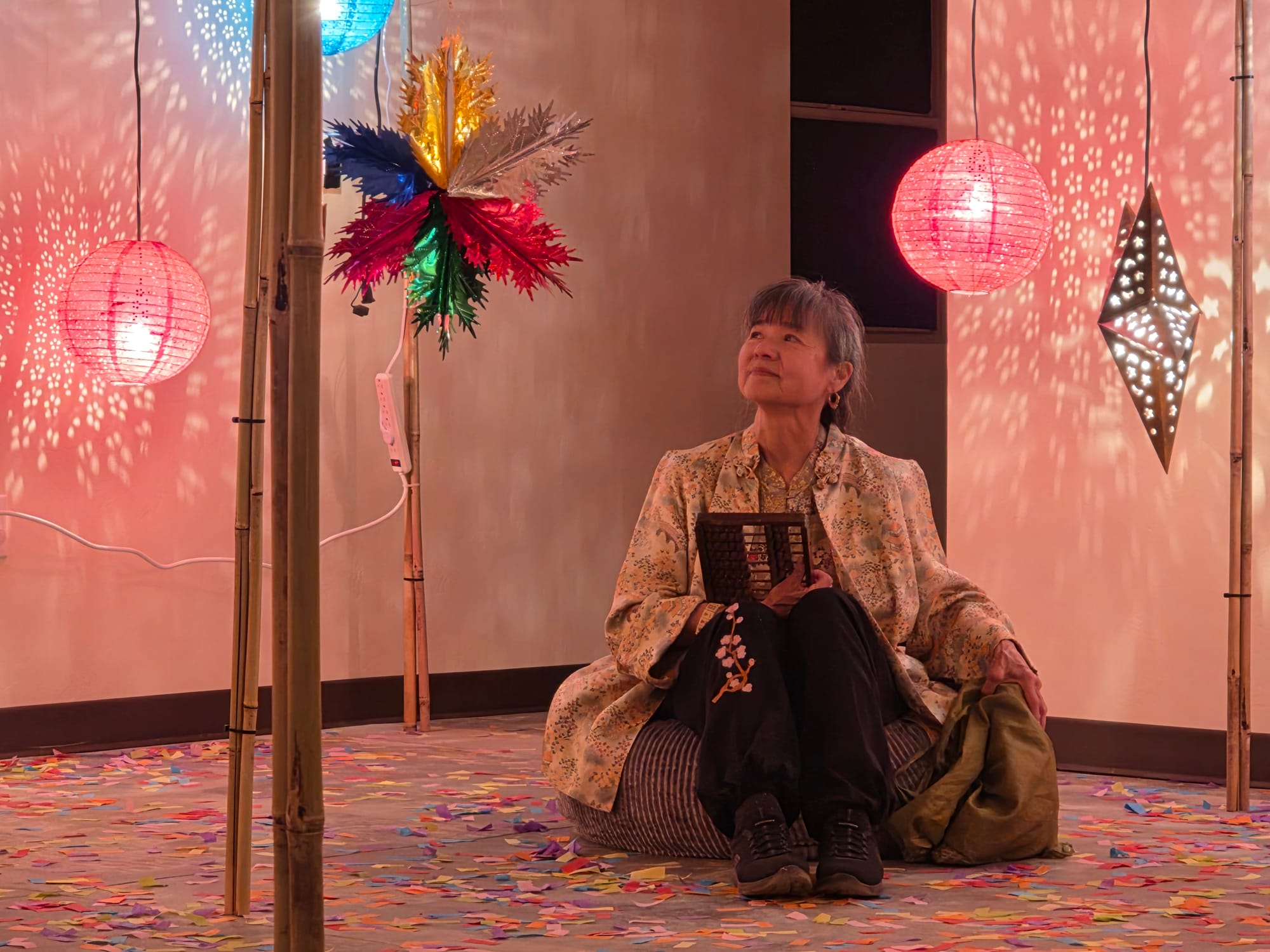
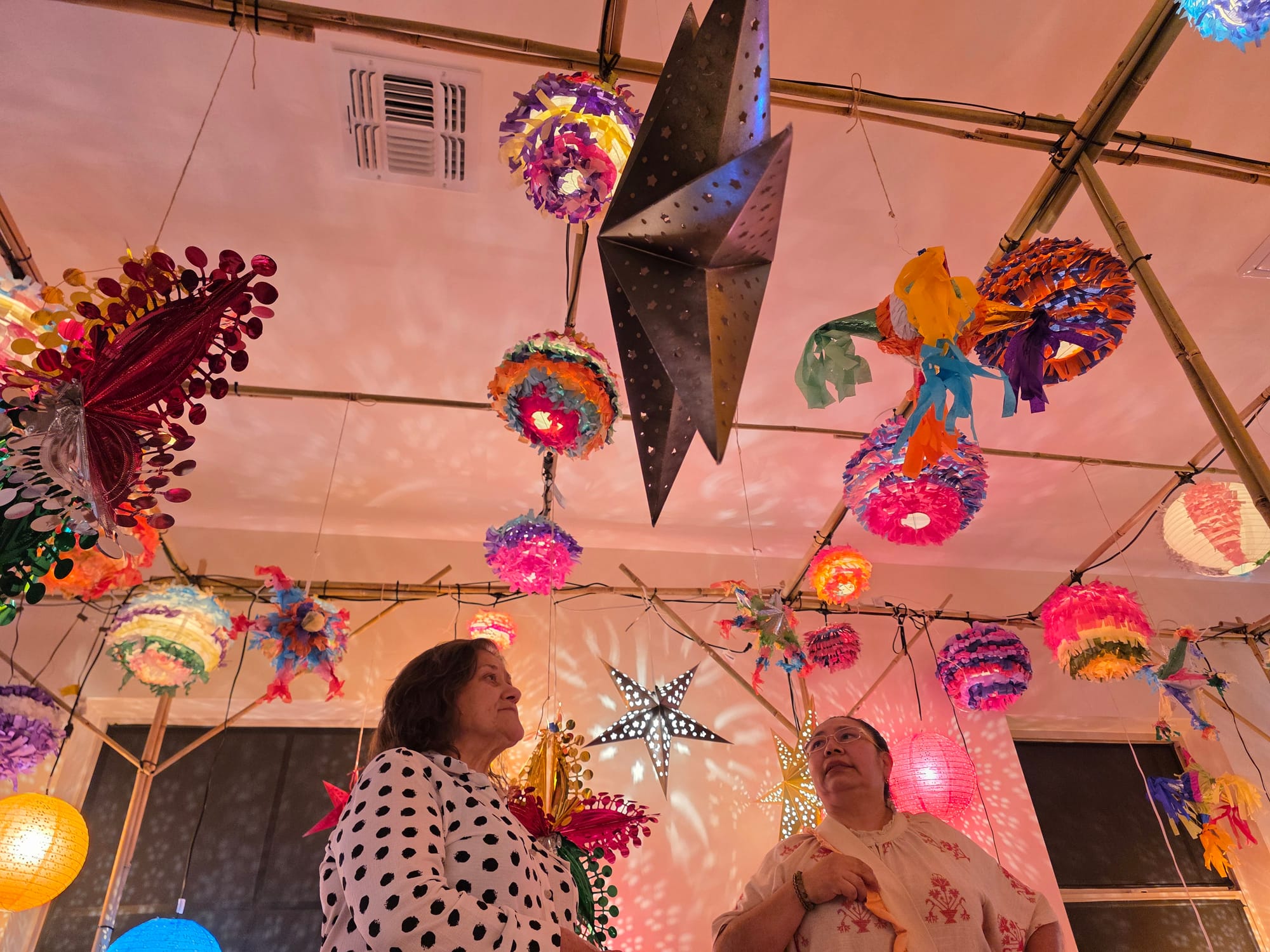
The center consists of two buildings connected by a walkway. It includes an art installation titled Rasgos Asiáticos, or "Asian Traces," created by A Todo Dar Productions co-founder Virginia Grise in collaboration with artists including Tanya Orellana.
The installation documents the overlooked histories of Chinese communities in Mexico and along the U.S.-Mexico border, using site-specific installations to bring those stories to the surface.
"I've been working with a version of this project with Virginia Grise for 10 years," Orellana said. "Virginia really does a lot of work in her mixed heritage, being Chinese Mexican … We kind of called it Chinese expression through Mexican aesthetics.
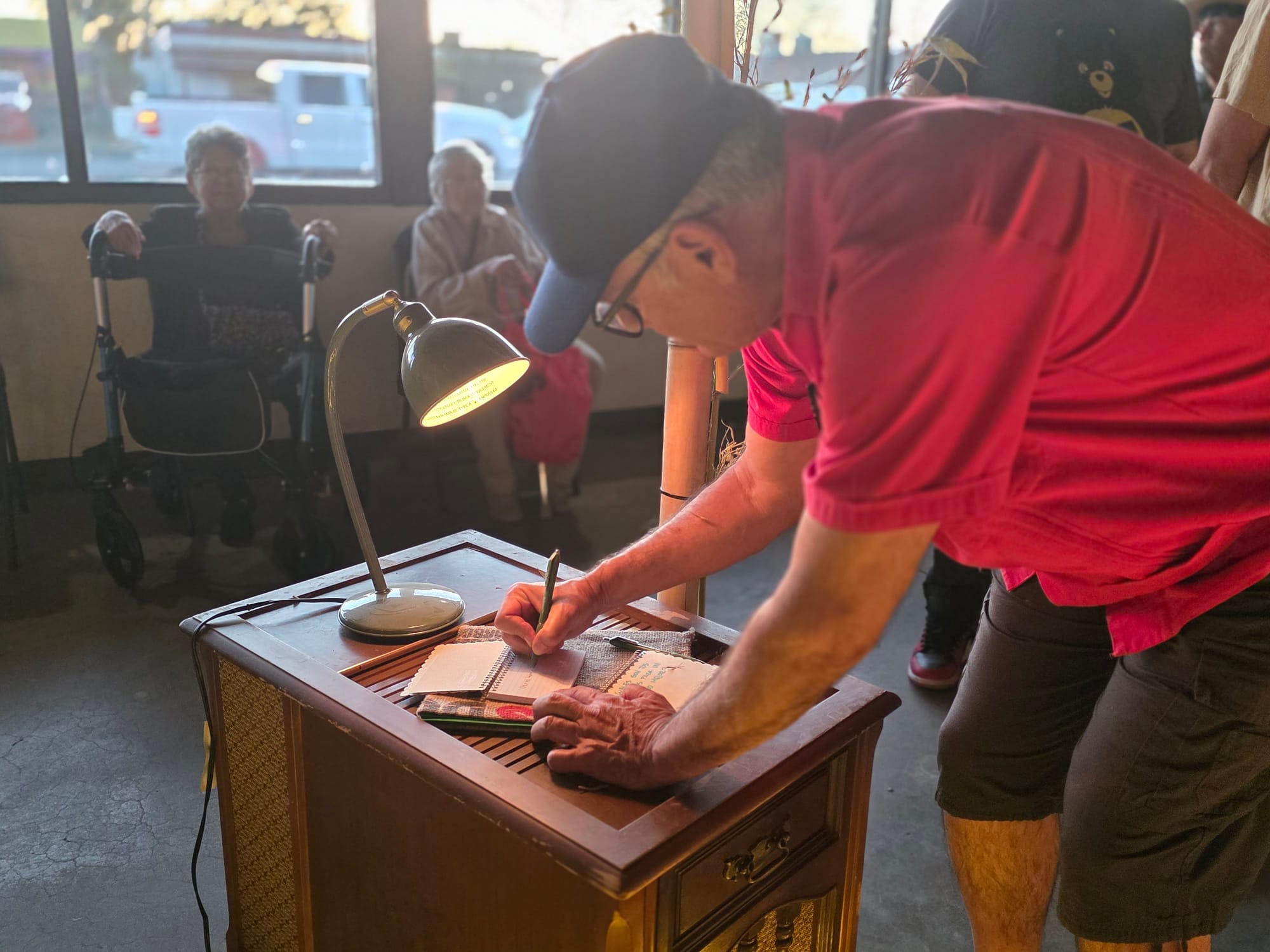
The walkway between the two buildings featured three wooden boxes exploring themes of borders, migration and belonging, including an audio piece on the U.S. Chinese Exclusion Act and its role in pushing Chinese immigrants into Mexico.
The smaller building invited guests to sit and reflect on what brings them joy, with an embroidered mat at the center bearing community members' wishes for La Doce: "a safe hub," "unity" and "love."
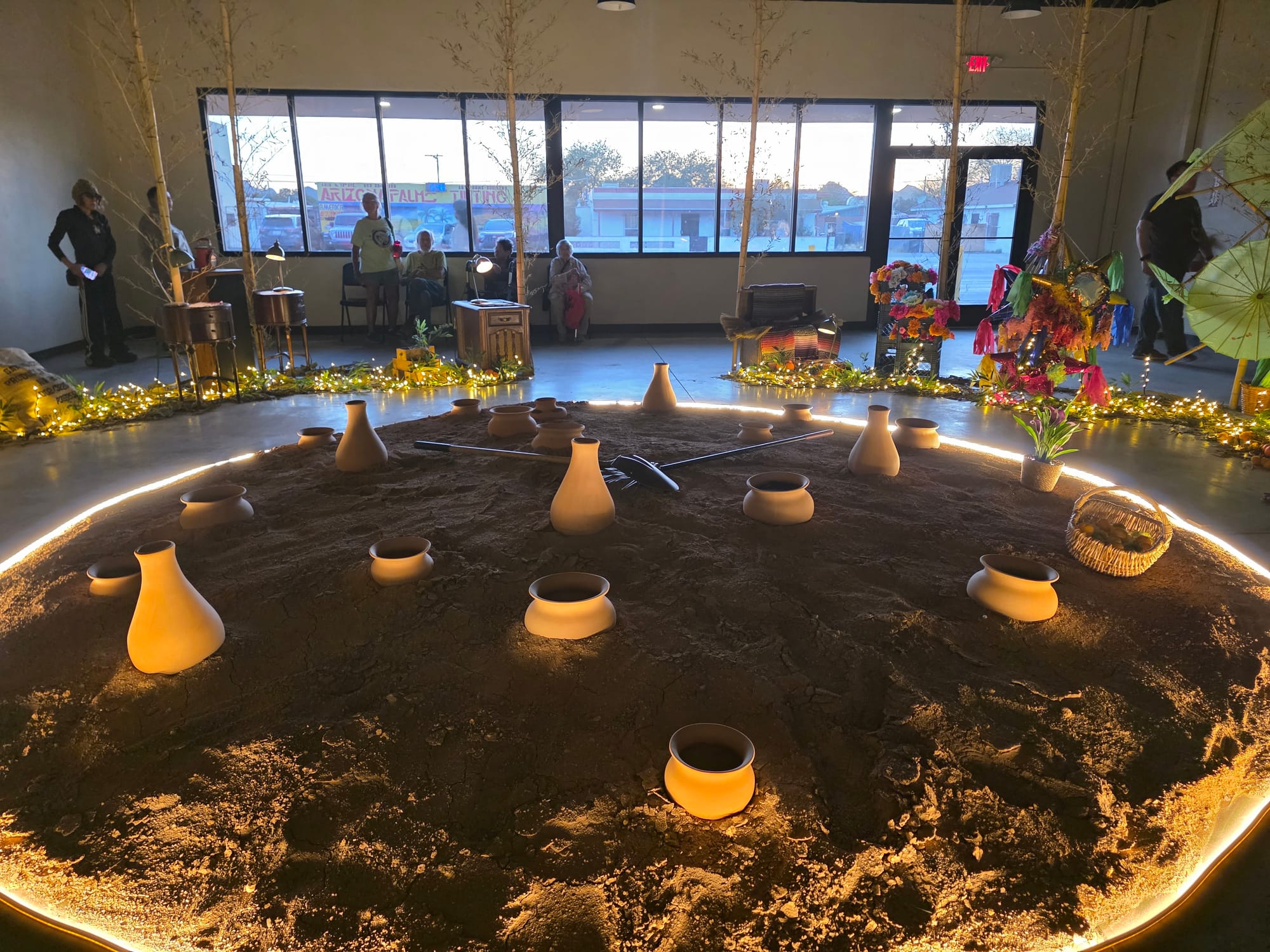
In the larger building, guests walked counterclockwise through an installation anchored by two circles. The outer circle served as an altar to the past, while the inner circle — clay pots in sand with tools at the center — pointed toward the future.
"The interior would be a place to ask the community to give altar offerings to the future of the space," Orellana said.
Community leaders reflected on their personal connection to Louis Market and what it has become since its days as a neighborhood market.
"I grew up right across the street from Wakefield, over here on Ohio (Street). I would walk by this market at least two times a day, four times if I was working at the Original Hamburger Stand around the corner," said U.S. Rep. Adelita Grijalva. "I remember that Louis was the spot that, if I had $1, maybe 50 cents, that I could go in here and get a drink that would last me through whichever way in my journey I was going."
She said she was sad when the market closed, but is glad to see it becoming a space where community members can bring their ideas and find support.
"We would visit Louis Market to buy whatever we needed to buy, including saladitos and lemons. It's beautiful to see that it's coming back to life, because this is where so many of us started. It'll always be a part of me, it'll always be a part of us," said state Rep. Betty Villegas. "It gives me hope, it gives me encouragement, and it gives me what I've always known; that the south side is full of culture, caring and compassionate people."
Regeneración facilitator Claudio Rodriguez guided attendees through the center's installations.
"A lot of times for the past 20 years, we've been doing this work out of our backyards, or our own homes, but we realized that … our dreams were too big for the spaces we're operating," Rodriguez said. "(To) have a space that the community can convene and call their own, (to) feel safe, that's amazing."
Calles echoed that sentiment, pointing to the center's broader significance for how the southside is seen and understood.
"It was really important for us to take charge of the narrative that was coming out of the south side," Calles said. "Instead of focusing on the south side as one that lacks a lot, or a community that is drowning in poverty, that is highly deficient, we really wanted to show folks that the south side is full of people who have incredible knowledge, incredible skills and incredible talent."
The art installations will be open to the public until May 29.
Topacio “Topaz” Servellon is a reporter with Tucson Spotlight. Contact them at topacioserve@gmail.com.
Tucson Spotlight is a community-based newsroom that provides paid opportunities for students and rising journalists in Southern Arizona. Please consider supporting our work with a tax-deductible donation.