Tucson reports drop in shootings under Safe City plan
Tucson officials report declines in shootings and violent crime under the Safe City Initiative, highlighting enforcement efforts, youth programs and expanded violence prevention strategies.
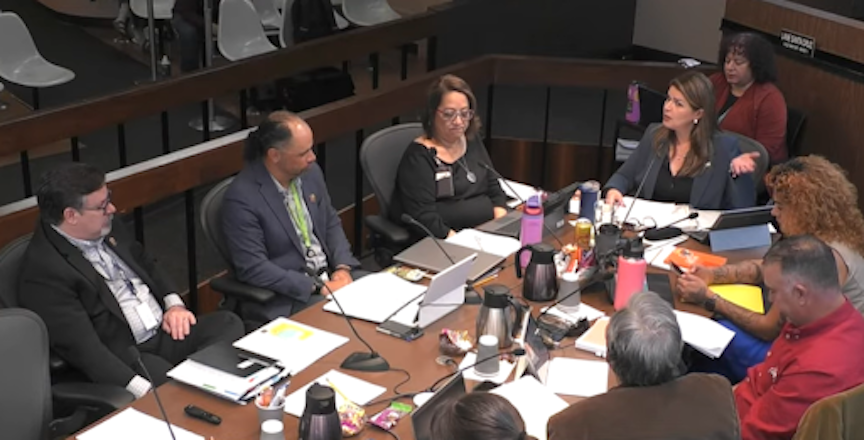
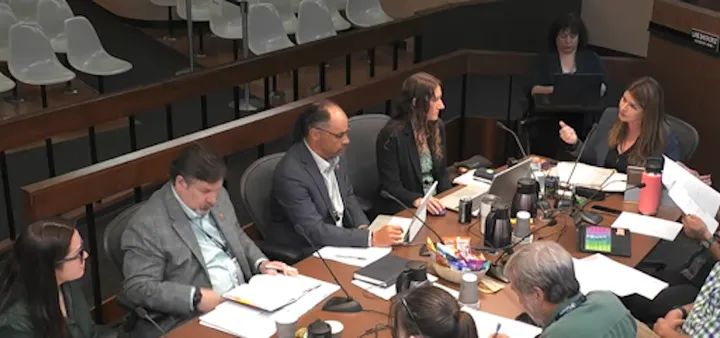
Citing early declines in shootings and violent crime, the Tucson City Council reviewed progress last week on its Safe City Initiative, a citywide plan launched in October to curb gun violence and improve public safety.
The Feb. 3 update, held during Gun Violence Survivors Week, highlighted expanded enforcement efforts, community-based intervention programs and new youth outreach strategies. Mayor Regina Romero said the city is committed to a sustained, data-driven approach to prevention and accountability.
While the Tucson City Charter does not list unsheltered homelessness and affordable housing among the city’s required public safety services of police and fire, Romero said she believes addressing those issues is necessary. The council will discuss the initiative on the first Tuesday of each month moving forward.
“I think it's important for us to make sure that we're discussing the progress that the city of Tucson and each of our departments are achieving through the safe city initiative,” said Mayor Regina Romero. “I believe that every resident in Tucson deserves to be safe in our public spaces. We have a duty and obligation to do that work.”
Romero said Arizona has some of the weakest gun laws in the country and sees approximately 1,300 gun violence deaths each year, ranking 18th nationwide. She said she hopes to address the issue through stronger gun laws, pointing to the work of the Giffords Law Center to Prevent Gun Violence, a national nonpartisan organization focused on gun violence prevention.
She also highlighted intervention strategies and community investments previously undertaken by the City Council, as well as the creation of the Office of Violence Prevention and Intervention.
Assistant City Manager Liz Morales said the Safe City Initiative is designed so prevention, intervention and enforcement work as complementary strategies, allowing for earlier and more focused responses. She said city and county law enforcement agencies are partnering with nonprofits such as Goodwill of Southern Arizona and health providers including CODAC Health, Recovery & Wellness. Morales said cities that invest in compliance-based strategies have seen improvements.
“We are already seeing meaningful reductions in gun violence in targeted locations, which validates the approach we are taking,” Morales said.
Since announcing the initiative, the city has worked to build the infrastructure needed to sustain long-term systems change, shifting from a siloed model to a data-driven approach with shared accountability. The Office of Violence Prevention and Intervention is leading the coordination effort, and the Tucson Police Department has expanded its community-based violence intervention programs.
Newly hired Office of Violence Prevention and Intervention Director Oscar Medina said the department is developing a multiyear roadmap through 2030. He said the plan will be guided by evidence-based data and aligned with existing citywide prevention and intervention efforts, including the Safe City Initiative.
“I come to this work as a former community enrichment coordinator with the community safety, health and wellness, being on the ground for two years working in the (Violence Interruption and Vitalization Action) communities,” Medina said.
VIVA is a city initiative focused on reducing gun violence in specific, high-risk neighborhoods through data-driven intervention, infrastructure improvements and community collaboration. The program was implemented in 2021 and targets areas like Grant/Alvernon and 22nd/Prudence.
“Before that, (I spent) 12 years as an educator teaching middle school and high school here in the Tucson community,” Medina said. “This work is important to me because my former students and their families have been impacted by gun violence.”
Other initiatives undertaken by the city to combat gun violence include hosting resource fairs — featuring five to eight providers offering workforce opportunities and support services to strengthen social cohesion — as well as organizing outreach events such as safety meetings and workshops, which were attended by 305 residents.
In November, the city hosted its inaugural Gun Violence Prevention Youth Summit at the Pueblo Community Center, bringing together young people to examine the underlying causes of gun violence, propose solutions and pay tribute to those whose lives have been lost.
In partnership with the Non-Violence Legacy Program, the city is developing a five-day summer violence prevention camp for youth ages 12 to 22, focused on building conflict-resolution skills and promoting a culture of peace.
TPD Assistant Chief Diana Duffy spoke about the department’s focused violence reduction program, saying TPD has centralized its nonfatal shooting investigations and expanded the gun crime intelligence unit over the past 18 months. The department also created a partnership with Goodwill of Southern Arizona’s The Village program to engage high-risk youth and young adults, as well as increased coordination with local and federal prosecutors for prosecution of repeat violent offenders.
The Village program also contributed to the city’s public safety strategy, receiving 638 referrals in its first 18 months. Of those, 357 involved youth ages 12 to 24 referred by TPD, 165 came from Banner–University Medical Center, and the remainder were referred by schools, courts, probation and other community partners.
Duffy reported an 80% decrease in violent crime over two years at the Grant and Dodge VIVA site, with half of that reduction occurring in 2025. That year, officers made 415 arrests — 26 of them gun-related — attributed to focused, site-based enforcement efforts.
In 2023, the Department of Justice designated Tucson as a Gun Crime Intelligence Center. Since its launch two years ago, the regional gun crime intelligence unit has grown from 12 to 24 participating agencies, strengthening coordination and helping the city move beyond previously siloed efforts.
Duffy also reported that Tucson experienced a 15% reduction in nonfatal shootings, increased its nonfatal shooting clearance rate to 85% in 2025, and achieved an 86% conviction rate in state and federal courts.
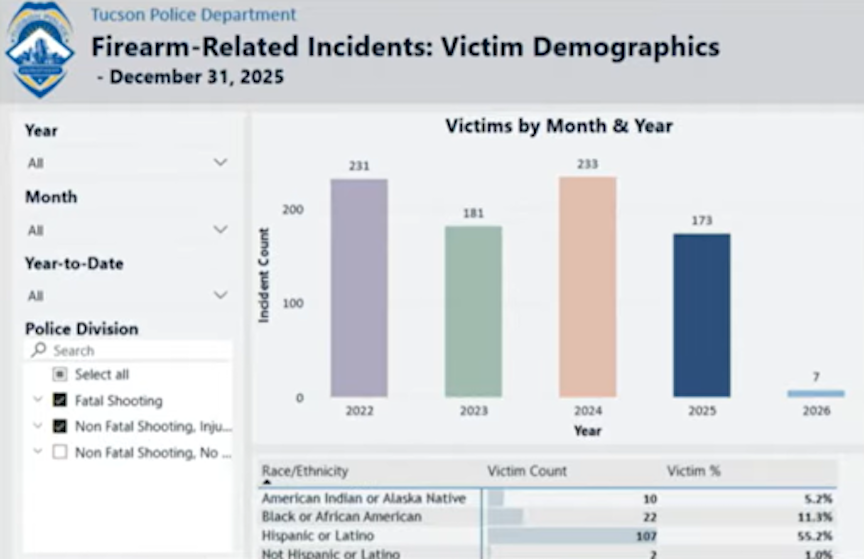
“We took a different route on looking at these things, like how are the offenders going to continue to commit violence? So what other charges could we look at to stop the violence in the community?” Duffy said, adding that 80% of firearm victims were men, 50% were young with ages between 18 and 36, 15% were black and 50% were Latino. “We definitely have some work on our hands um when it comes to these demographics. Some are not proportional. That's really what Goodwill works with is generational trauma.”
Against that backdrop, Duffy noted that local enforcement strategies are unfolding alongside a broader policy debate at the state level.
More than a dozen bills have been proposed in the state Legislature this session regarding firearm laws.
“I see the lives changed every day and I encourage others to participate,” Romero said. “The young people that were at the youth summit, they were not just suffering through trauma of maybe losing a friend, a relative, but also they wanted to be part of finding solutions to this. So I invite the community to participate. There are ways of participating in the safety of our community and intervention and prevention is one of the ways that we do this work.”
Ian Stash is a journalism major at the University of Arizona and Tucson Spotlight intern. Contact him at istash@arizona.edu.
Tucson Spotlight is a community-based newsroom that provides paid opportunities for students and rising journalists in Southern Arizona. Please consider supporting our work with a tax-deductible donation.