Tucson miniatures exhibit explores hoarding disorder
A new exhibition at Tucson's Mini Time Machine Museum uses scratch-built miniatures to explore hoarding disorder, mental health and the memories objects hold.
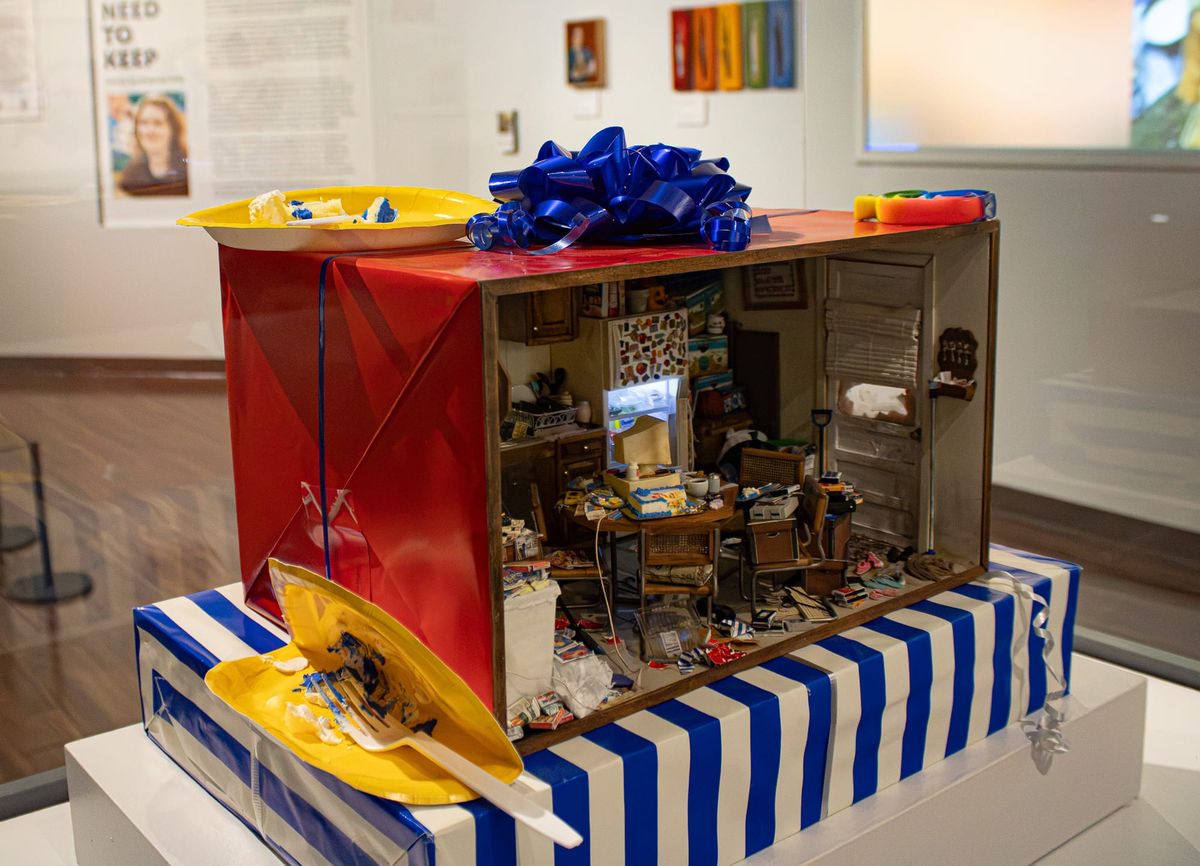
A dollhouse-scale U-Haul towing a coffin. A kitchen buried under clutter, disguised as a birthday present. At Tucson's Mini Time Machine Museum, artist Amanda Kelly's new exhibition uses miniatures to tell the story of hoarding disorder and the people who love someone who has it.
"The Need to Keep" opened in September, using mixed media to dive into themes of mental health and the ways personal objects tie into emotional memories.
Kelly, a New York-based artist, miniaturist and educator, uses her work to show how hoarding disorder affected loved ones who struggled with it, and how it affected her.
"It's been therapeutic for me. Making work based on my own experiences was therapy. Art is definitely like therapy and miniatures can be used as a tool," Kelly said.
The National Alliance on Mental Illness Southern Arizona, a nonprofit that offers free resources to people living with mental health conditions, partnered with the museum to host Kelly's exhibition.
The museum gives visitors a place to work through their own mental health struggles. Inside "The Need to Keep," a desk and writing area invite them to write down their stories and add them to the exhibit.
"I get a lot of feedback from people who see it and relate to the works. That's part of the reason why I made them, to be relatable," Kelly said.
Tucson Spotlight trains the next generation of Southern Arizona journalists and publishes their work free for everyone. No paywalls, no corporate backing — just readers who believe this community deserves better local news.
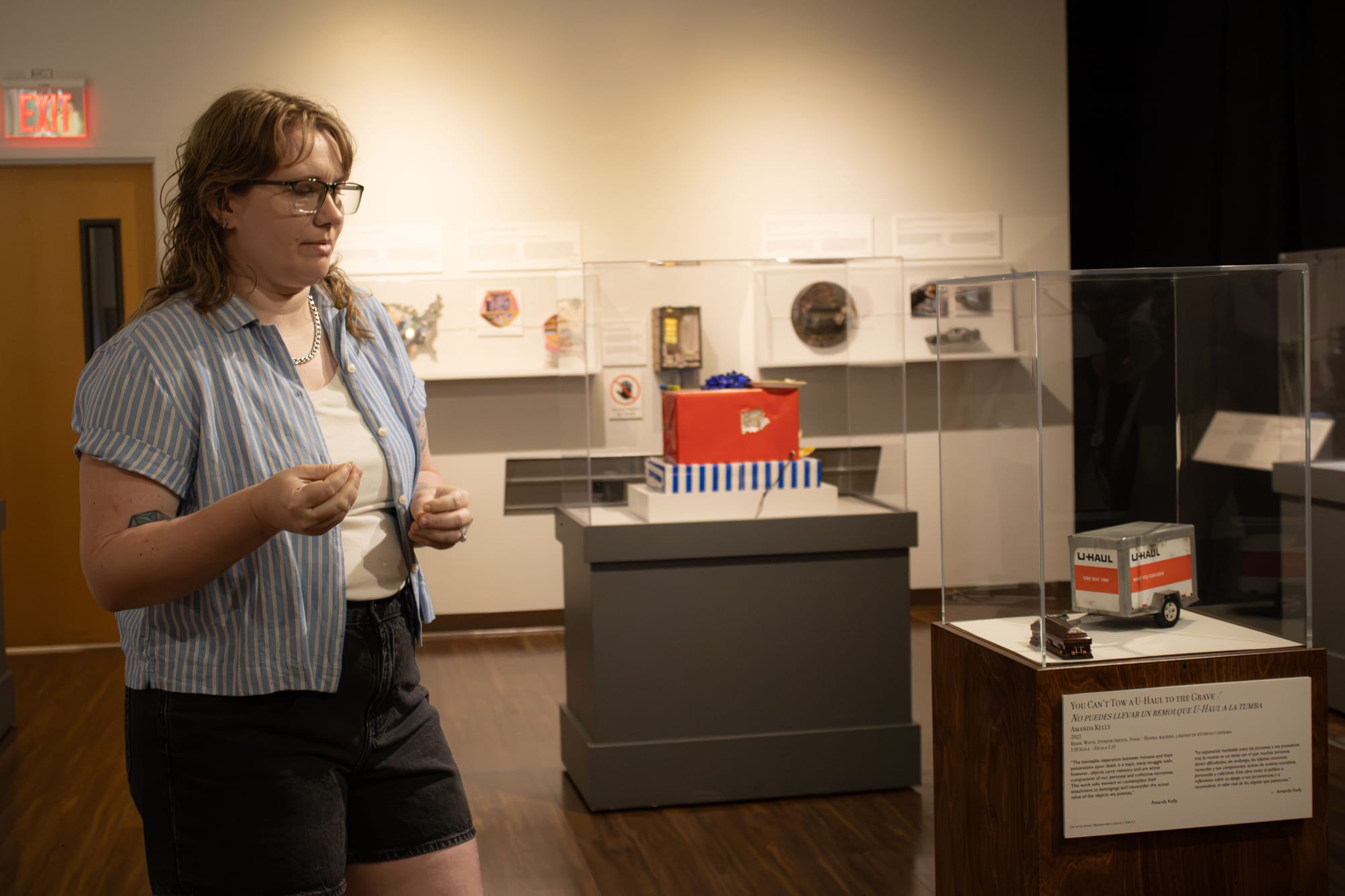
Made from sponges, old pieces of wood and bits of jewelry, every piece of Kelly's art is scratch-built, a miniature-making term for items created from scratch out of other materials.
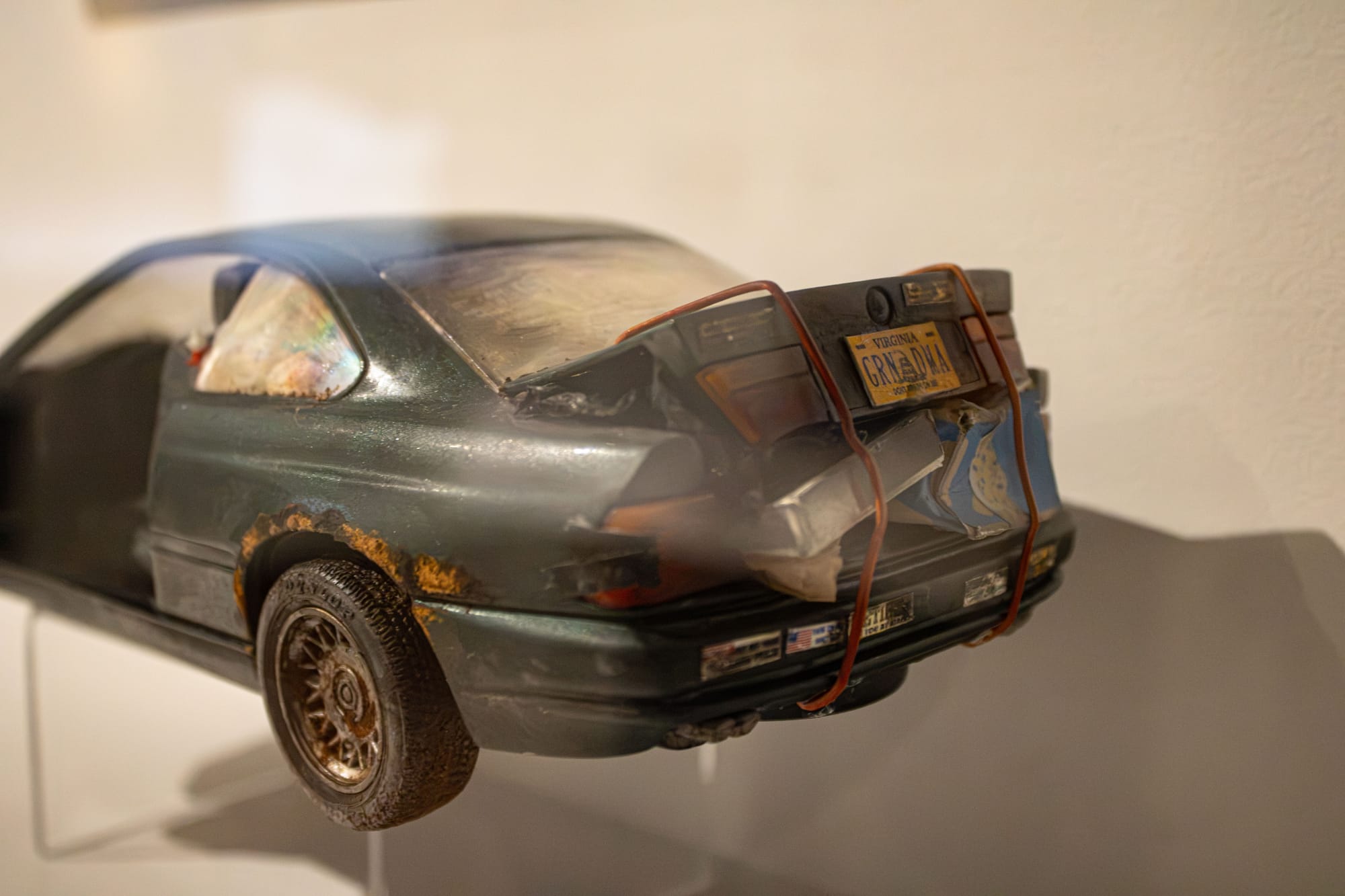
Exhibit pieces include an old car with its trunk and windows overflowing with miniature items. Another, titled "Pocket Hoarder," is a miniature Polly Pocket-style case that resembles the reality of a hoarder's home. A model that looks like a birthday present to the naked eye represents a cluttered kitchen and childhood neglect. The longer visitors look at the miniatures, the more themes and stories each piece reveals.
"Hoarder's Porch" was crafted from an old dollhouse Kelly inherited from her grandmother. Kelly said she has made art since she was a child, and her grandmother's passion for miniatures inspired the work she does today.
Although every piece in the installation conveys deep themes, Kelly said the one that stays with her most is "You Can't Tow a U-Haul to the Grave." The piece features a miniature U-Haul towing a coffin, representing sudden death and how objects carry memories.
"It's one of my favorites and I think it really ties the entire body of work together, with the message you can't take these things with you when you go," she said.
Museum art curator Emily Wolverton said the project has been "a long time in the making." Kelly has worked on the pieces for years, but the collaboration with the museum began about two years ago, after Wolverton saw her work online. The two connected soon after to begin the installation.
"Miniatures can get overly generalized or pigeonholed as objects of whimsy and play but they're also just this incredible instrument for telling more challenging stories," Wolverton said.
The art form has a long history. Miniatures date to Europe in the mid-16th century.
"It was a prestigious pastime for noblewomen and wealthy class. They were cabinets of curiosity," Wolverton said.
Now, miniatures are accessible to everyone. The Industrial Revolution made them more widely available, including as children's toys. Barbie dollhouses are common today, but the museum also shows highly technical work. Kelly, for example, uses 1:12 scale, meaning 1 inch in her model represents 1 foot in real life. Some miniaturists work at even smaller scales.
"It's a fun hobby for a lot of people to get into as a beginner. With miniatures there's a lot of accessibility," Wolverton said.
Kelly said the appeal goes beyond accessibility.
"I feel like with miniatures there's this fascination because you can hold it in your hand, you have this control," Kelly said. "I can actually make something look exactly how I want it. You can make anything, anything."
The exhibit runs through April 11. Kelly's work can be found at PandaMiniatures.com or on social media.
Emma Diaz is a University of Arizona alum and freelance journalist based in Tucson.
Tucson Spotlight is a community-based newsroom that provides paid opportunities for students and rising journalists in Southern Arizona. Please consider supporting our work with a tax-deductible donation.