
Tucson panel explores how storytelling preserves the barrio
Tucson artists and historians say theater and oral history keep a demolished downtown barrio alive, and a proposed cultural center could help.
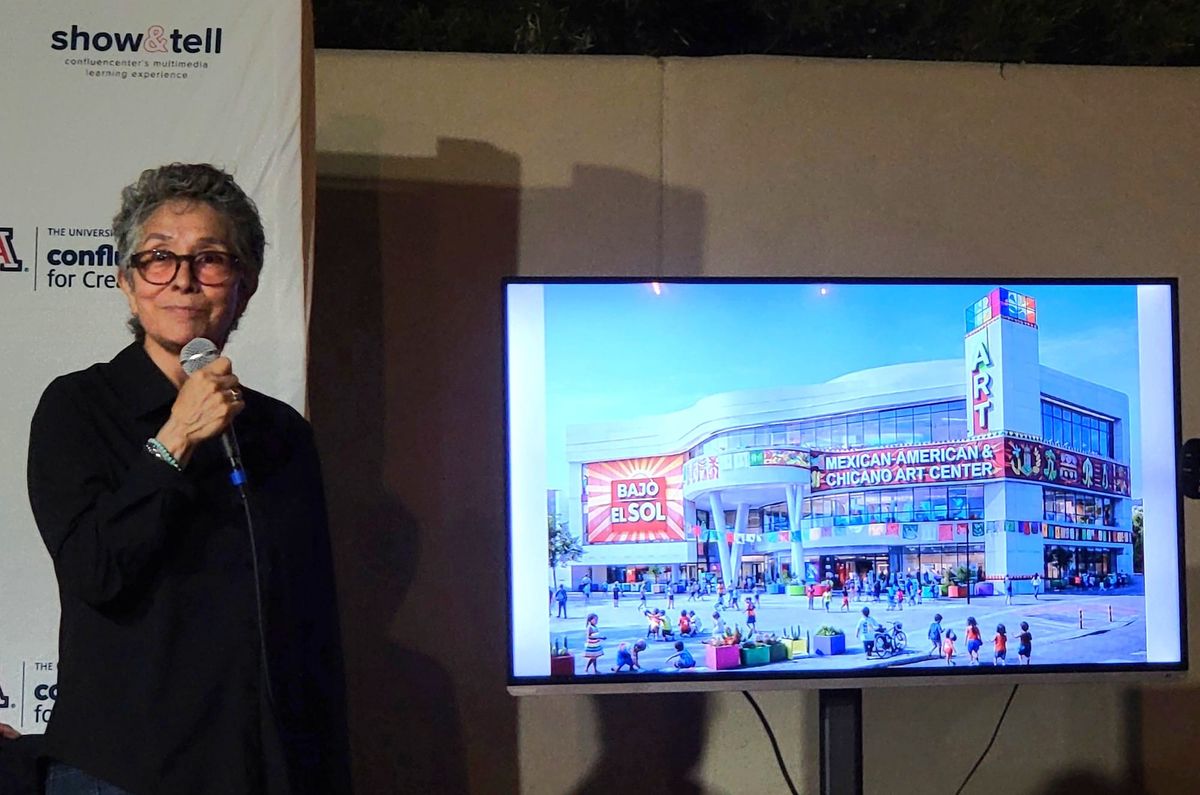
Decades after urban renewal demolished about 80 acres of Tucson’s downtown Barrio, artists and historians gathered Oct. 22 at the Sosa-Carrillo House to discuss how storytelling can keep its memory alive.
The Confluencenter for Creative Inquiry is a University of Arizona hub that brings scholars from different fields together, supports collaborative projects and shares their work with the public through events like its “Show & Tell” panels.
Its recent Show & Tell, “Voices of the Barrio: Stories of Place and Belonging,” centered on the barrios as an integral part of Tucson’s landscape. While development has stripped away some of the original buildings, the people who called the barrios home remain to tell their stories.
Panelists included Borderlands Theater artistic director Marc David Pinate, artist and professor emeritus Alfred Quiroz, historian and activist Lydia Otero, and moderator Raul Aguirre.
Barrios are more than a physical place. They are spaces of identity, panelists said, as they reflected on the importance of the proposed Mexican American Chicano Cultural Center, a City of Tucson project that would honor the city’s Mexican American and Chicano heritage. The project is still in the exploration phase, which began in fall 2025. The city commissioned a feasibility study and is weighing possible sites.
Pinate, creator of “Barrio Stories,” shared his experience studying in California and taking part in the Chicano theater movement in the 1980s and 1990s.
“Barrio Stories” is a site-specific theater festival presented by Borderlands Theater that shares the experiences of the demolished neighborhood and the residents who were displaced. Pinate created the project in 2016 to preserve Tucson’s history through theater. The 10th-anniversary festival followed three weeks after the panel, running Nov. 12-15. It mixed new works with past productions from Barrio Anita, Nogales and the West Side.
Your gift pays student and early-career journalists to report Tucson’s stories in English and Spanish.
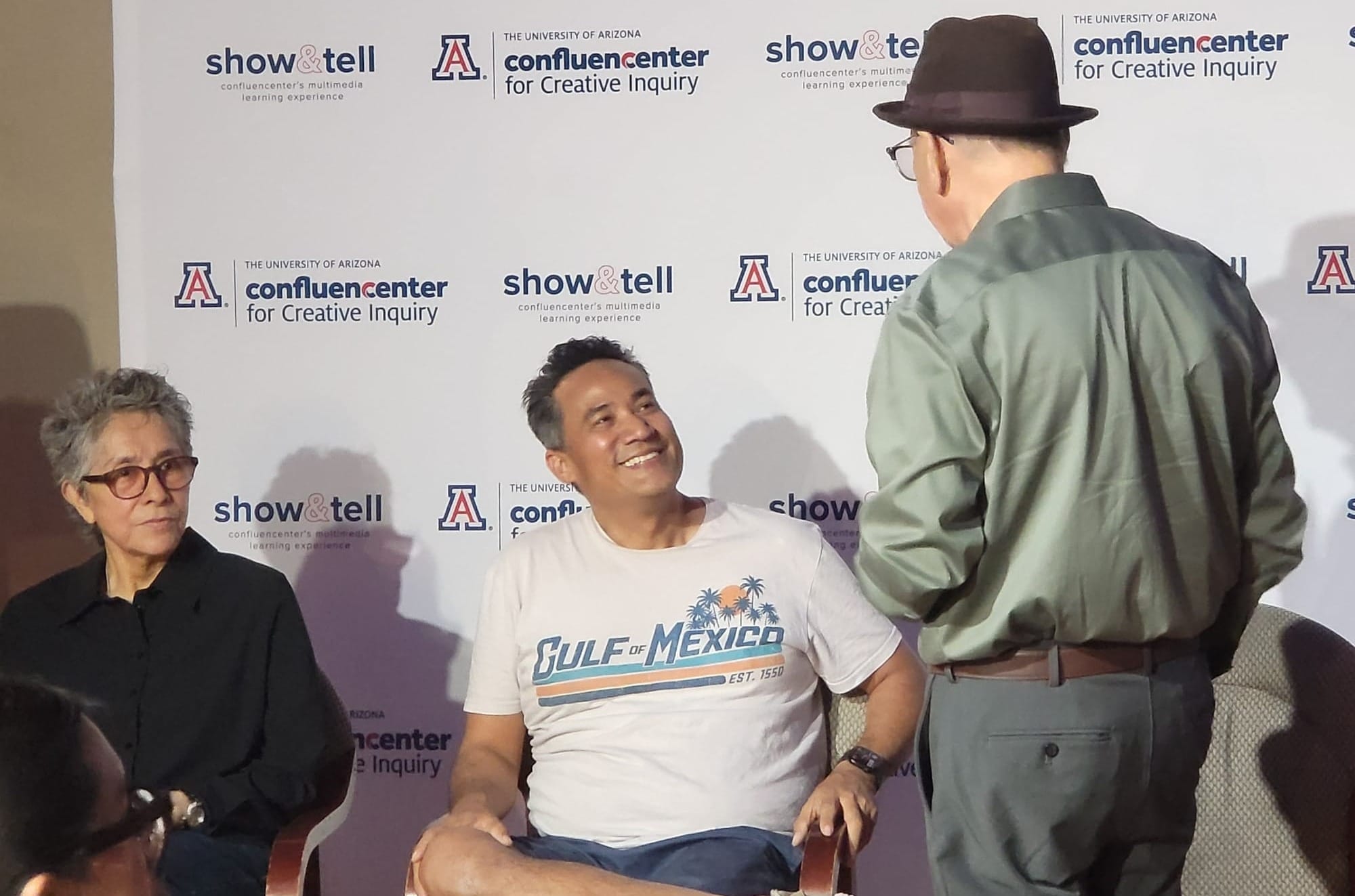
While pursuing his master’s degree in theater directing, Pinate worked as an actor in the Bay Area. It was through his practice and education that he learned about site-specific theater, or theatrical performances that take place in non-traditional spaces.
He also learned about the concept of promenade theater, which allows the audience to walk from place to place, traveling with the actors as their scenes unfold.
All these lessons, combined with the barrios’ history and Otero’s book “La Calle,” led Pinate to resurrect Tucson’s barrios through oral history.
Working with high school students as ethnographers, the group did fieldwork and collected stories, recording the culture of the people who lived in the area.
“Let’s get their stories about what it was like to live in this neighborhood, and what were their heritage practices,” Pinate said. “How did they spend their time, what kinds of celebrations did they do, what were the values that were important?”
Borderlands Theater uses oral histories and visual art to preserve and revive community memories. That honoring of Chicano roots is also at the heart of the proposed cultural center, which could play a critical role in the Tucson and Southern Arizona community.
“We’re obviously stronger together, and so I’m hoping that the (Mexican American Chicano Cultural Center) and this coming ‘Barrio Stories’ is an opportunity for a lot of different groups to work together and show how much more impact we can have when artists and culture bearers and academics and community are all working together,” Pinate said.
Quiroz showed attendees a slideshow of photos of families documented in the Arizona Memory Project. The images, taken on South Meyer Street and at the Broadway underpass, showed what Tucson used to look like. Comparing the past landscape with present-day Tucson, Quiroz reflected on how much has changed.
“I always knew Tucson was going to be an artistic city,” Quiroz said.
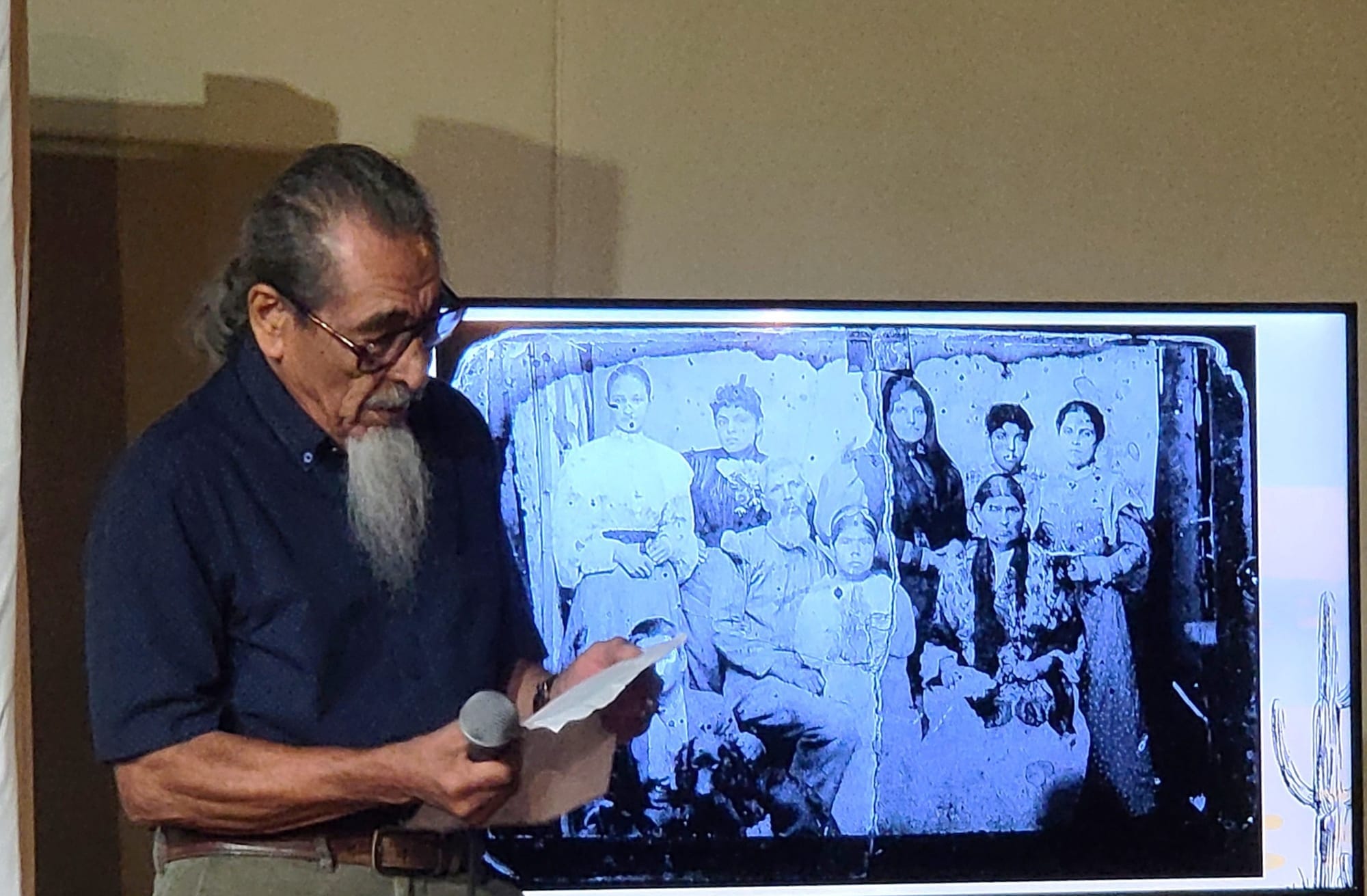
Otero then shared a 10-year retrospective on the site-specific “Barrio Stories” performances and recent developments in Tucson. Her work as a historian connects Mexican American history and urban renewal in Tucson’s past.
She talked about the history of “La Calle,” the term she coined for the 80-acre downtown Tucson neighborhood that was demolished in the 1960s for urban renewal.
That history is why Borderlands Theater stages “Barrio Stories” at the Tucson Convention Center, which was built on the demolished neighborhood.
“Standing and occupying the ground, audiences are asked to confront two landscapes simultaneously, the modern (Tucson Convention Center) and the former neighborhood, that’s brought life through the performances of ‘Barrio Stories,’” Otero said.
Otero emphasized the evolution of Tucson and the impact “Barrio Stories” has had on the city since the first performance.
“The association with ‘Barrio Stories’ in itself becomes a marker,” Otero said. “It creates new reference points, it’s a powerful experience and the projection itself is part of the community’s historical memory.”
Although “Barrio Stories” does not directly result in change, it does inspire the community. These temporary performances create hope that a permanent home for Mexican American and Chicano art is possible. Otero said the proposed cultural center could have a ripple effect on Tucson, Arizona and the nation.
“We have a team that we’ve put together and you’re part of our team whether you know it or not, but it is possible to dream big and to dream it can happen,” Otero said.
Kenia Licea is a University of Arizona journalism student and Tucson Spotlight intern. Contact her at klicea2004@arizona.edu.
Tucson Spotlight is a community-based newsroom that provides paid opportunities for students and rising journalists in Southern Arizona. Please consider supporting our work with a tax-deductible donation.


