
UA students walk out demanding justice for Mississippi cases
UA students marched from the UA Mall to Old Main on Nov. 6 to demand justice for Nolan Wells and Kohen Wiley in a statewide walkout.
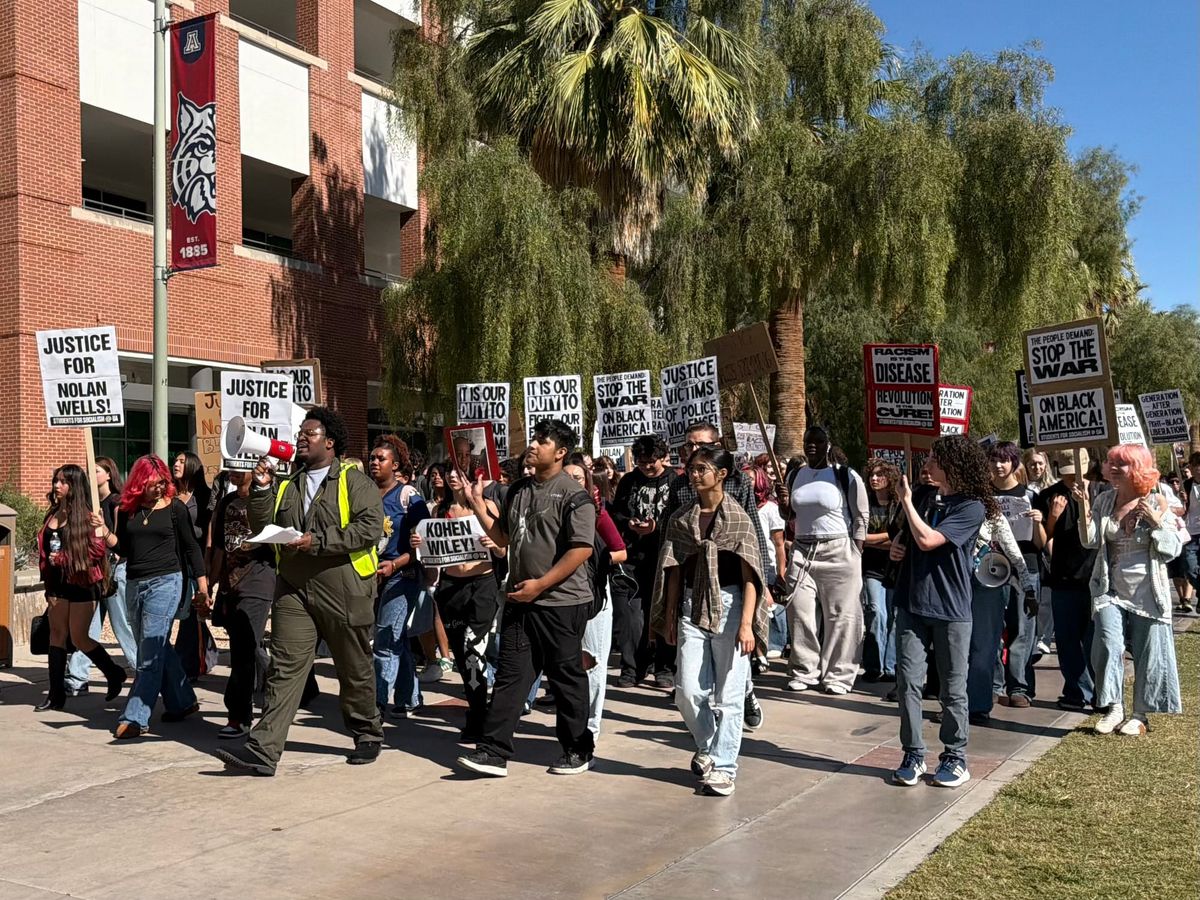
University of Arizona students joined a statewide walkout earlier this month, demanding justice for Nolan Wells, an 18-year-old college student found dead on the Mississippi Gulf Coast, and Kohen Wiley, a 1-year-old shot by a police officer.
The Nov. 6 statewide rally, organized by the Party for Socialism and Liberation, called for an end to the “war on Black America.” At least 19 schools participated in the event, according to the party, including the UA, Arizona State University and several area high schools.
UA’s Students for Socialism led the march in Tucson, walking from the UA Mall to Old Main and shouting, “Nolan Wells did not drown!” and “Justice for Kohen Wiley!”
Wells, a native of Ocean Springs, Mississippi, and a wide receiver at Southwest Mississippi Community College, was last seen July 4 on Horn Island off the Mississippi Gulf Coast. A National Park Service ranger found his body two days later.
Investigators said they found no evidence of foul play, and a grand jury declined to bring criminal charges in a case officials have treated as a drowning.
Wiley, who would have turned 2 on Nov. 1, was shot June 14 by Senatobia, Mississippi, police officer Hunter Foster while he was in a car in a Walmart parking lot. Police were responding to a report that his mother had shoplifted diapers, a claim his family denies.
Mississippi Attorney General Lynn Fitch announced Oct. 19 that Wiley’s killing was legally justified and that no charges would be filed against Foster, who resigned two days later.
Arian Chavez, a UA student and party member, said the walkout fits a long history of student activism.
“Every time there is a significant social movement in this country, whether that was the Civil Rights movement or the movement against the Vietnam War, there has been significant pushback from the youth and students,” Chavez said. “Students are realizing that they can take matters into their own hands and play an important role in shaping the new society we want to see.”
Your gift keeps local news free, bilingual and built for real life.
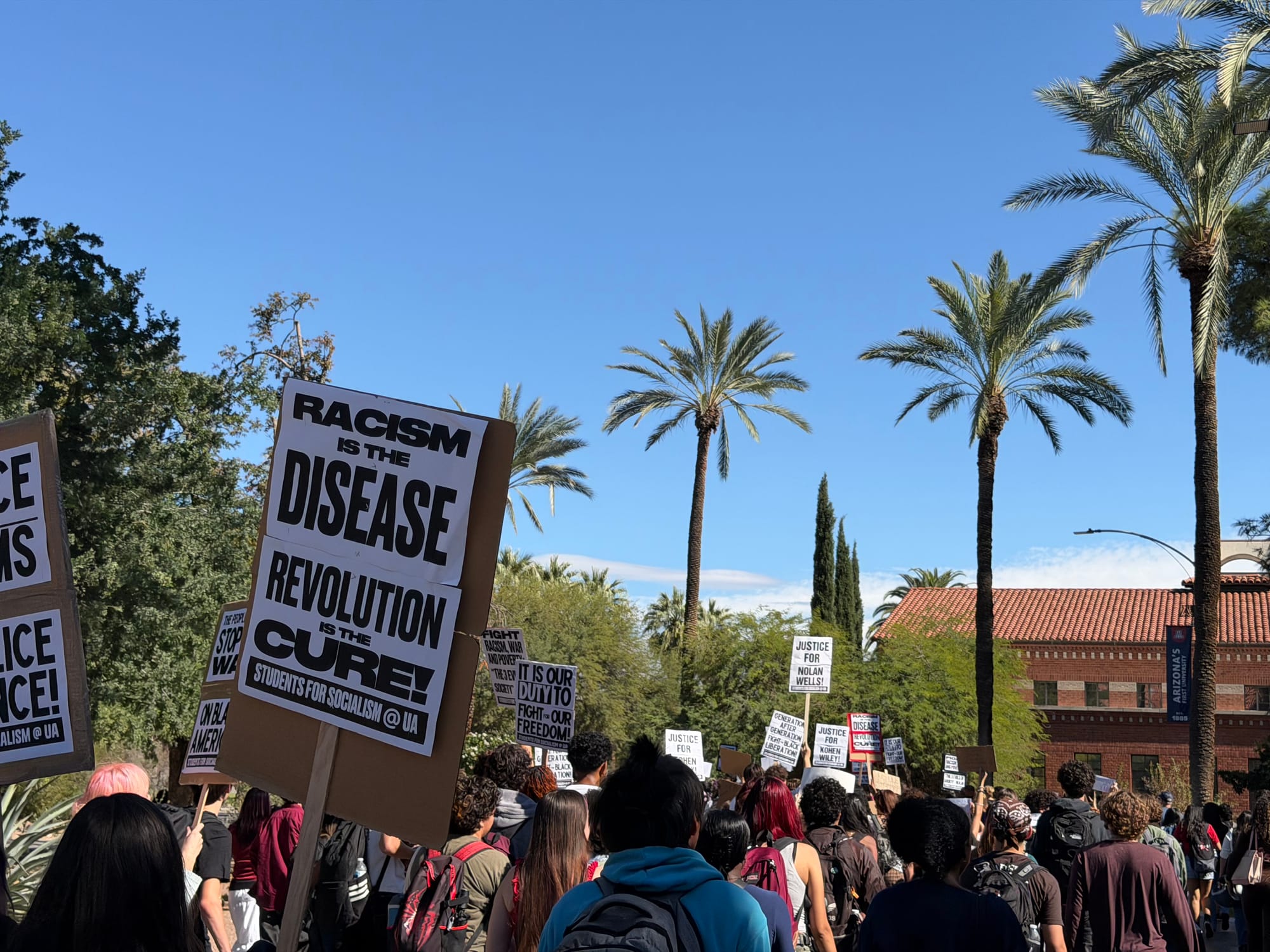
Organizers began preparing for the rally in conversations with student organizers from the NAACP and the Iota Phi chapter of Iota Phi Theta, a historically Black fraternity.
“We were in conversation with fellow comrades in Phoenix, and from that spurred the idea of potentially having our own statewide walkout here,” Chavez said. “When I hear about the cases of Nolan Wells and Kohen Wiley, I think about the babies that I saw being stripped away from their mothers and the other young teenagers that were stripped away from their families.”
He said the rally connected the struggles of oppressed groups in and outside the United States.
“What this represents is an outcry to demand justice for self-determination for Black people in the South, and for the Black nation here in America,” Chavez said. “Connecting the struggles of anti-ICE to the Black liberation struggle was very key in what we were doing here near the borderlands.”
He said that despite the midterm election results, there is more work to do within the education and political systems.
“We still see Black Americans being subjugated to lynchings in the South and here in Arizona, there is still attacks happening on Black education through the Arizona State Board of Education,” Chavez said. “They have continuously been hollowing out of Africana studies, Chicano studies and women in gender studies over the years at the university.”
Chavez said organizing is the most important factor in helping movements succeed. Through the rally, he wants people to understand the benefits of being organized.
“I do hope that it brings a sense of almost revolutionary optimism to people, as well, because we know that while these systems have been in place for quite a long time,” Chavez said. “We know that they haven’t been in place for forever and we know that ever since there has been oppression, there has been resistance against that oppression.”
Iliana Amador is a University of Arizona journalism alum and freelance journalist in Tucson.
Tucson Spotlight is a community-based newsroom that provides paid opportunities for students and rising journalists in Southern Arizona. Please consider supporting our work with a tax-deductible donation.


