Tucson holds housing displacement talks starting Nov. 19
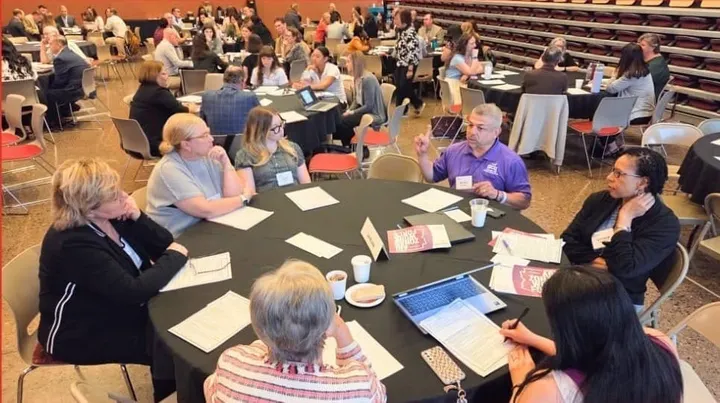
The City of Tucson is holding four community listening sessions, starting Nov. 19, to hear how housing costs and displacement have affected residents.
The City of Tucson wants to hear how housing costs and displacement have affected residents, and it is holding four listening sessions starting Nov. 19 to find out.
“Tucson Talks Displacement” is a series of community events aimed at informing the city’s developing Community Preference Policy, which aims to address lasting impacts of housing inequity and displacement.
A community preference policy can give eligible households with ties to communities that experienced displacement or other historic harms an additional preference for certain affordable housing opportunities. Tucson hasn’t developed one yet. Mayor and Council directed the Housing and Community Development Department on Sept. 22 to begin public engagement, and the city is aiming to bring final recommendations to the council in late spring 2027.
The City of Tucson Housing and Community Development Department will be working closely with University of Arizona urban planning students to explore affordable housing preferences, as well as to help address concerns about urban renewal, rising housing costs, eviction and disasters.
The University of Arizona’s urban planning degree program lasts two years. It ends with a capstone project in which students are organized into teams to address a problem identified by members of the Tucson planning community. These projects require background research, interviews with local groups or agencies in other areas that have completed similar projects, public outreach and technical or demographic analysis.
Students work alongside clients to help guide the work toward something more useful for practice. After the class finishes, all materials are shared with the clients, and the projects may continue to move forward in development depending on the stage of the work and other requirements. Often, this includes additional outreach and public comment, legal analysis, technical analysis or further design work.
The students suggested additional public outreach on the Community Preference Policy, along with technical and legal analysis and refinement.
Stay informed without the overload.

“Tucson Talks Displacement” does just that, through a series of two-hour sessions for residents to show up, speak about their struggles and help the city identify problems.
Kristi Currans, a UA associate professor and urban planning chair, helps oversee projects developed by College of Architecture, Planning and Landscape Architecture students.
“(Housing and Community Development) is leading the community talks and taking the project forward, so the ‘Tucson Talks Displacement’ is now fully in their hands,” Currans said. “Given the amount of background research we know the students put into the project, this has helped support the city being able to move forward and conduct the public outreach fairly quickly.”
Currans said the UA is thrilled to see the project move forward in this way.
“I feel very confident that this process will help support some of the policy questions the city will need to consider as they move this forward,” she said.
Currans said it is “instrumental” for society to listen, ask questions and see the connection between community input and policy development.
“More than anything, I think it’s important for students to listen to people’s real, lived experiences and practice understanding how those different experiences and opinions help shape policy,” Currans said. “Our students do some of this work in their capstone projects and their class on public participation, but nothing beats listening and participating in a real-world discussion.”
The talks will be held:
- Thursday, Nov. 19, at 5:30 p.m. at the Santa Rosa Neighborhood Center.
- Saturday, Nov. 21, at 9 a.m. at the Donna Liggins Recreation Center.
- Monday, Nov. 23, at 5:30 p.m. online.
- Wednesday, Dec. 2, at 5:30 p.m. at the Quincie Douglas Recreation Center.
During the sessions, a workgroup made up of community members, neighborhood representatives, public agencies, academic partners and other local leaders will be on hand to listen, develop and refine policy.
Spanish interpretation will be available at all sessions.
No policy decisions have been made. The city is listening first and will use what it learns to help shape future recommendations, according to the Community Preference Policy website.
“For the community members, I think it’s most important to understand that these discussions contribute to shaping policy,” Currans said. “Sometimes, these discussions can be really challenging both technically and emotionally, and sometimes there are a lot of very different opinions around what matters to different people.”
One of the best ways to help shape policy is to attend, listen and participate when able, Currans said.
“One of the key questions is whether there should be a Community Preference Policy, and so just showing up and offering your opinion will help identify whether there’s support for this policy,” Currans said. “Your opinion matters.”
Gabrielle Cotnoir is a University of Arizona journalism alum and freelance journalist based in Tucson. Contact her at gabriellecnews@gmail.com.
Tucson Spotlight is a community-based newsroom that provides paid opportunities for students and rising journalists in Southern Arizona. Please consider supporting our work with a tax-deductible donation.